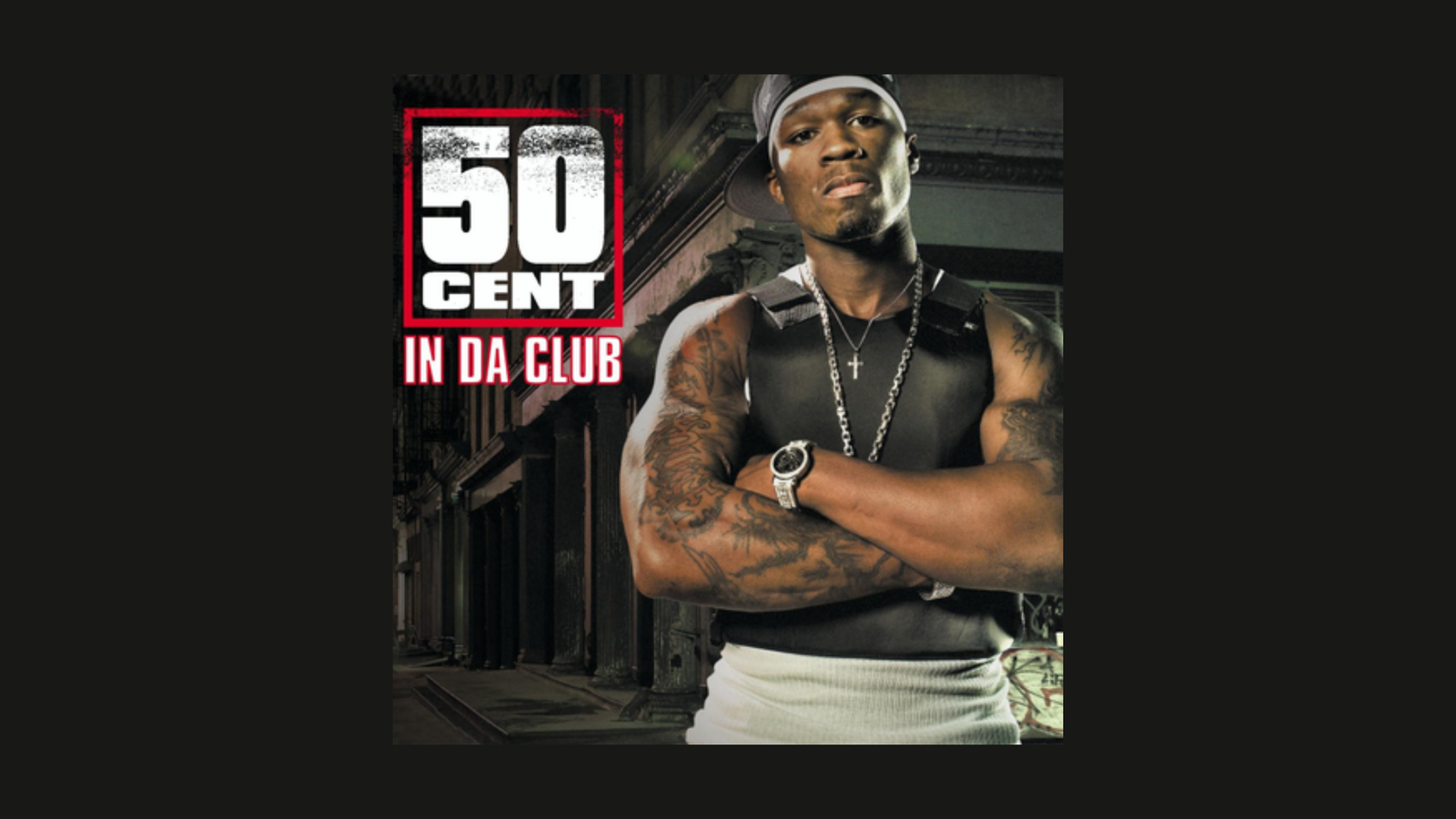
50 Cent’s "In Da Club" remains the definitive hip-hop birthday anthem and a cornerstone of early 2000s club culture. This guide explores the song’s intricate lyrics, Dr. Dre’s legendary production, and its enduring status as a Diamond-certified masterpiece that bridged the gap between street rap and global pop dominance.
The Cultural Significance of In Da Club in 2026
Decades after its initial release in 2003, "In Da Club" has transcended its status as a mere radio hit to become a cultural institution. In 2026, the track is recognized not just for its infectious beat but as the catalyst that launched 50 Cent (Curtis Jackson) into a multifaceted media mogul. When the song first dropped, it signaled a shift in the hip-hop landscape, moving away from the "shiny suit" era toward a more grit-focused yet highly polished commercial sound.
The track served as the lead single for 50 Cent’s major-label debut, Get Rich or Die Tryin'. Backed by the powerhouse duo of Eminem and Dr. Dre, 50 Cent used "In Da Club" to establish a persona that was simultaneously menacing and charismatic. The song’s longevity is evidenced by its consistent presence in film, television, and live sporting events. Its inclusion in the 2022 Super Bowl Halftime Show—where 50 Cent performed hanging upside down, recreating the iconic music video—cemented its place in the pantheon of American pop culture.
For contemporary listeners in 2026, the song represents a masterclass in songwriting efficiency. It manages to deliver a "tough" image while remaining incredibly accessible to the masses. The lyrics are a blend of celebratory escapism and underlying street tension, a combination that has proven timeless across generations of hip-hop fans.
Breaking Down the Iconic Hook
The opening lines of "In Da Club" are perhaps some of the most recognizable in music history. "Go, shorty / It's your birthday / We gon' party like it's your birthday" immediately sets a universal tone. By utilizing the concept of a birthday—an event everyone experiences—50 Cent guaranteed the song’s relevance every single day of the year.
The term "shorty" was a staple of New York slang in the late 90s and early 2000s, used to refer to a beautiful woman or a younger peer. In the context of the hook, it serves as an invitation to the listener. The genius of the hook lies in its simplicity; it is repetitive enough to be memorable but delivered with enough rhythmic variation to avoid becoming grating.
Musically, the hook is supported by a stripped-back arrangement that allows 50 Cent’s voice to sit front and center. This vocal placement was a signature of Dr. Dre’s production style during this era, ensuring that the artist’s personality was never overshadowed by the instrumental. The hook doesn’t just invite people to dance; it establishes the "rules" of the club environment that 50 Cent is inviting us into—one where the drinks are flowing, and the worries of the outside world are temporarily suspended.
Verse One: Establishing the Persona
In the first verse, 50 Cent quickly transitions from the inclusive "birthday" theme to establishing his dominance and wealth. He mentions "Look, mami, I got the X, if you into takin' drugs," which reflects the club scene's reality at the time. This honesty, though controversial, was part of the "realness" that 50 Cent brought to the mainstream.
He continues by addressing his critics and rivals: "I'm that cat by the bar to get the bottle link / Slim shady said I'm hot so I ain't gotta think." Here, he acknowledges the endorsement of Eminem (Slim Shady), which was crucial for his initial industry credibility. This verse is less about the party and more about 50 Cent’s arrival as the "next big thing" in rap.
The line "If you watch how I move you'll mistake me for a player or a pimp" showcases his versatility. He’s aware of how he is perceived—as someone who has moved from the drug trade into the music industry—and he plays with those archetypes. The lyrics here are delivered with a laid-back, almost effortless flow that contrasts with the heavy, driving bassline, creating a sense of "cool" that few artists could replicate.
Verse Two: Street Credibility and Commercial Success
The second verse delves deeper into the dichotomy of 50 Cent’s life. He talks about his physical fitness and his readiness for conflict: "My flow, my show, my dress, my blessing / My luxury, my gun, my drug, my testing." He is reminding the audience that despite the club setting, he is still a product of his environment in South Jamaica, Queens.
A key line in this verse is, "I'm fully focused, man, my money on my mind." This mirrors the sentiment of classic hip-hop like Snoop Dogg’s "Gin and Juice," but updated for the 2000s. He also references his affiliation with G-Unit, the rap collective that would go on to dominate the mid-2000s. The verse reinforces the idea that his success is a result of calculated moves and survival instincts.
The technical delivery in the second verse is notable for its use of internal rhyme schemes. 50 Cent manages to pack a lot of information into each bar without losing the rhythmic bounce required for a club hit. This ability to maintain a street-centric narrative while adhering to a pop structure is what made "In Da Club" a revolutionary track.
Production Analysis: The Dr. Dre and Mike Elizondo Touch
The instrumental for "In Da Club" is a masterwork of minimalist production. Produced by Dr. Dre with co-production by Mike Elizondo, the beat is built around a heavy kick drum, a sharp snare, and a distinctive orchestral string hit. According to Billboard, the beat was originally offered to other artists under the Aftermath label before 50 Cent heard it and immediately recognized its potential.
Dr. Dre utilized a "less is more" philosophy on this track. The bassline is sparse but incredibly powerful, designed specifically to vibrate in high-end club sound systems. The use of horns and handclaps provides a rhythmic texture that keeps the listener engaged even during the sections without vocals.
| Feature | Description | Impact |
|---|---|---|
| BPM | 90-91 Beats Per Minute | Perfectly suited for both dancing and rhythmic head-nodding. |
| Key | C# Minor | Provides a dark, slightly aggressive tone that balances the party lyrics. |
| Instrumentation | Bass, Strings, Horns, Claps | Creates a "cinematic" feel that elevated hip-hop production standards. |
| Mixing | Dry Vocals, Wide Stereo Image | Ensures 50 Cent’s voice sounds intimate yet larger than life. |
| Era | Aftermath/Shady Peak | Represents the height of the Dre-Eminem-50 Cent collaboration. |
The Legacy of Get Rich or Die Tryin'
"In Da Club" was the engine that drove the success of Get Rich or Die Tryin'. The album sold 872,000 copies in its first four days, a staggering number even by today's standards. In 2026, music historians look back at this release as the moment hip-hop fully integrated into the global corporate machine, with 50 Cent leading the way in branding and merchandising.
The song’s music video, directed by Philip Atwell, also played a massive role in its success. Filmed at the "Shady/Aftermath Artist Development Center," it featured cameos from Eminem and Dr. Dre, visually confirming their support of 50 Cent. The video’s depiction of 50 Cent training in a high-tech facility helped build his image as an indestructible, hyper-focused athlete of the rap world.
Beyond the numbers, the legacy of the song is found in its influence on subsequent generations. Artists from Drake to Pop Smoke have cited 50 Cent’s melodic approach to street rap as a primary influence. The "50 Cent formula"—a catchy melodic hook paired with gritty, autobiographical verses—became the blueprint for commercial hip-hop success for the next two decades.
Common Lyric Misinterpretations and Slang
As with many hip-hop tracks, some of the slang in "In Da Club" has evolved or been misunderstood over time.
- "XTC": When 50 Cent mentions "I got the X," he is referring to Ecstasy. In the early 2000s, this was a common drug in the club scene, and mentioning it served as a way to ground the song in contemporary nightlife culture.
- "Shorty": While often used for women, it can also be a general term of endearment for a friend or younger person in New York vernacular.
- "Bub": In the line "We gon' sip Bacardi like it's your birthday," some listeners mishear the subsequent "Bub" as "Pub." "Bub" is short for "Bubbly," referring to champagne, specifically brands like Moët or Dom Pérignon which were status symbols.
- "Hate it or love it": This phrase, which later became the title of a hit song by The Game featuring 50 Cent, was first popularized as a defiant stance against critics who were skeptical of 50’s rapid rise to fame.
Understanding these terms is essential for grasping the full weight of the lyrics. 50 Cent wasn't just rapping; he was documenting a specific time and place in New York City’s history. For a deeper look at the lyrical nuances, the RIAA provides insights into the song's certification journey, highlighting its mass appeal.
FAQ
Why is "In Da Club" often played on birthdays?
The song’s hook explicitly mentions "It's your birthday" and "party like it's your birthday." This universal theme made it the default track for celebrations in clubs, radio stations, and private parties worldwide. It is estimated that the song receives a significant boost in streaming every single day because of users celebrating their birthdays.
Who produced "In Da Club"?
The track was primarily produced by Dr. Dre, with co-production from Mike Elizondo. It is widely considered one of Dr. Dre’s most commercially successful beats, showcasing his ability to create a "clean" but heavy sound that appeals to both hip-hop purists and pop audiences.
What album is "In Da Club" on?
"In Da Club" is the lead single from 50 Cent's 2003 debut studio album, Get Rich or Die Tryin'. The album is often cited as one of the best-selling and most influential hip-hop albums of the 21st century.
Is "In Da Club" Diamond certified?
Yes, as of late 2023, "In Da Club" was officially certified Diamond by the RIAA, meaning it has moved over 10 million units in the United States alone. This puts 50 Cent in an elite group of artists who have achieved this level of commercial success.
What is the BPM of "In Da Club"?
The song has a tempo of approximately 90 BPM. This mid-tempo pace is ideal for "club bouncing," allowing dancers to move comfortably without the frantic energy of faster tracks, which contributed to its longevity in DJ sets.
How to Best Experience the Anthem Today
To truly appreciate the "In Da Club" lyrics and production in 2026, it is recommended to listen to the remastered high-fidelity versions available on premium streaming services. The complexity of the bass frequencies and the crispness of the snare drum are best experienced through high-quality headphones or a dedicated sound system.
For those interested in the history of the track, watching the 4K remastered music video provides essential context for 50 Cent’s "superhero" branding. Additionally, exploring the "Get Rich or Die Tryin'" documentary footage offers a behind-the-scenes look at the recording sessions with Dr. Dre, providing a deeper understanding of the meticulous work that went into creating this ultimate anthem.