Standing 5'9" next to 6'4" creates a significant seven-inch (17.78 cm) gap that is immediately noticeable in any social or professional setting. While a 5'9" individual represents the statistical average for adult males in many Western regions, a 6'4" individual occupies the top 1% to 2% of the population, creating a distinct visual contrast in eye level and physical presence.
The 5'9" versus 6'4" comparison is one of the most frequent "showdowns" discussed in fitness, dating, and ergonomic circles. It represents the divide between being "average" and being "conventionally tall." To understand this difference fully, one must look beyond the raw numbers and examine how seven inches change everything from eye-line perspectives to clothing fit and athletic leverage.
The Numerical Breakdown: Inches, Centimeters, and Percentiles
To establish the baseline for this showdown, we must first look at the precise measurements. In the United States and much of Europe, height is a primary physical descriptor, and the 2026 statistical landscape shows that these two heights occupy very different tiers of the population distribution.
- 5'9" (175.26 cm): This height is often cited as the "global gold standard" for the average male. In the U.S., the CDC and various health longitudinal studies consistently place the average male height right at the 5'9" to 5'10" mark. At 5'9", a person is taller than roughly 50% of the male population and significantly taller than the average female.
- 6'4" (193.04 cm): This height is firmly in the "very tall" category. Statistically, a 6'4" man is in the 98th or 99th percentile. This means that in a room of 100 random men, he will likely be the tallest or second-tallest person present.
The seven-inch difference is equivalent to the height of a standard modern smartphone (like a Pro Max model) stood on its end, or the vertical span of a large grapefruit. When added to a human frame, this distance creates a tiered effect where the shorter person’s eye level usually rests somewhere between the taller person’s chin and the base of their neck.
Visualizing the 7-Inch Gap
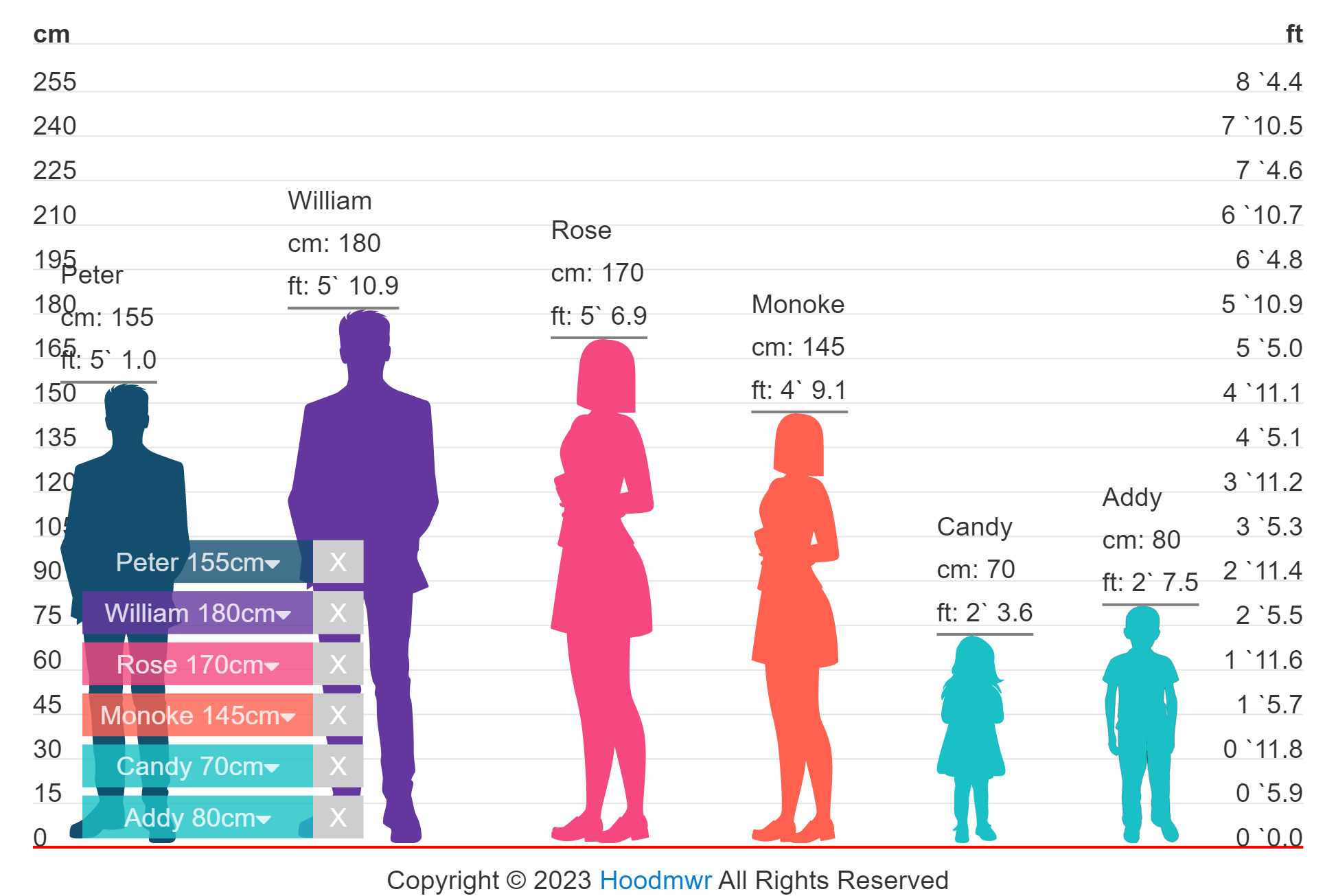
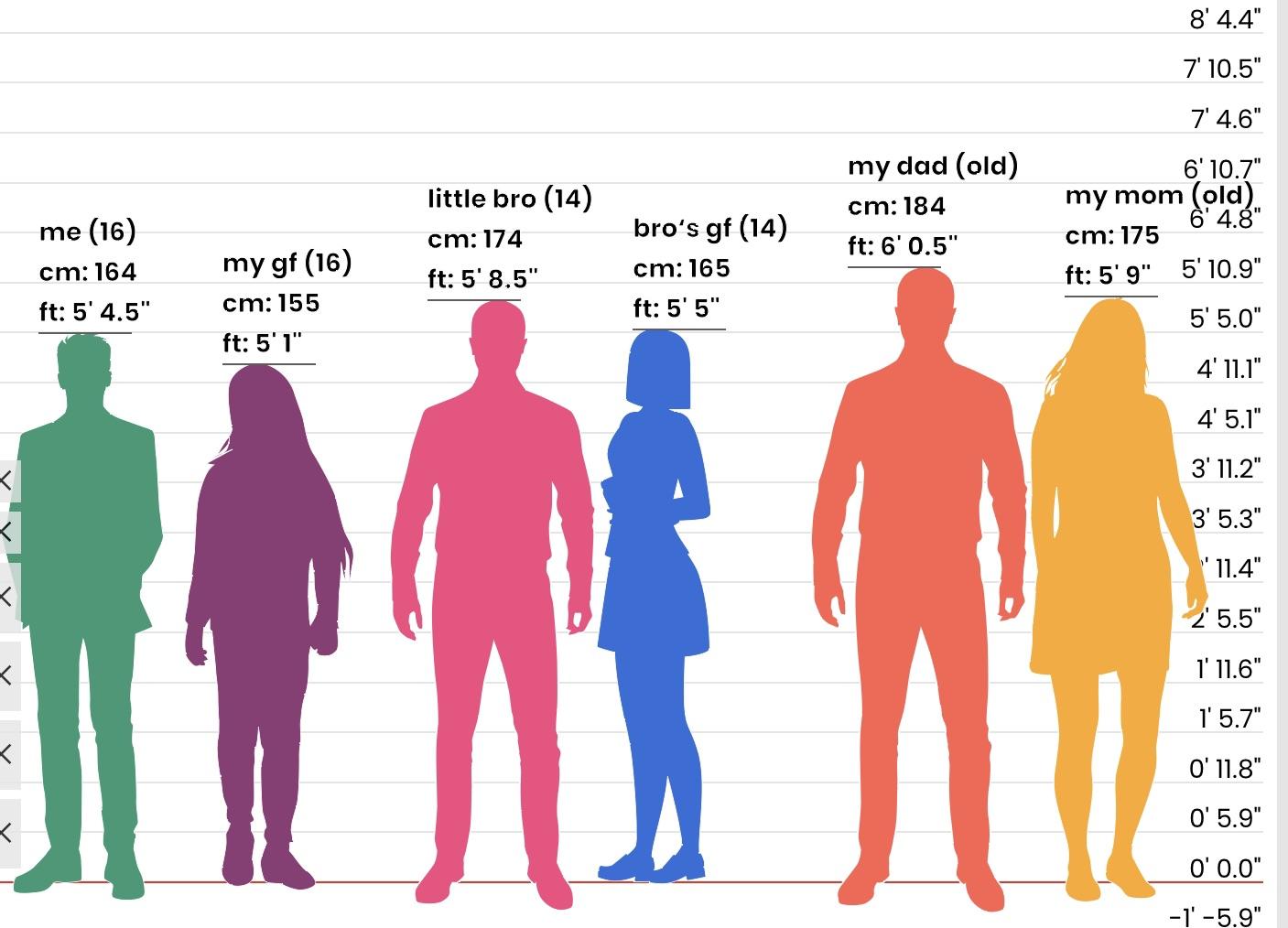
Visualizing a height difference can be difficult without a reference point. When a 5'9" person stands directly next to a 6'4" person, several anatomical landmarks highlight the disparity.
The Eye Level Perspective
For a 5'9" individual, looking at a 6'4" peer requires a noticeable upward tilt of the head. Their line of sight is roughly level with the 6'4" person's collarbone or top of the chest. Conversely, the 6'4" person is looking down at the top of the 5'9" person's forehead. This "looking down" effect is often what creates the psychological perception of dominance or "bigness" associated with the taller individual.
Shoulder and Torso Alignment
Human proportions typically scale with height, though not always linearly. A 6'4" person usually has a significantly longer torso and longer legs. If both individuals sit down at a standard table, the 6'4" person will likely appear much larger because their seated height (torso length) is greater. When standing, the shoulder of the 5'9" person usually lines up with the middle of the upper arm or the bicep area of the 6'4" person.
The "Head" Metric
In art and anatomy, height is often measured in "heads." The average human head is about 8.5 to 9 inches long. Therefore, a 7-inch difference is nearly an entire "head" of height. In photos, this gap is unmistakable; the 5'9" person’s crown will be significantly lower than the 6'4" person’s crown, often creating a "stair-step" visual if a third person of intermediate height is added.
Comparative Metrics: 5'9" vs 6'4"
The following table provides a quick reference for how these two heights compare across various standard metrics as of 2026.
| Metric | 5'9" (175.26 cm) | 6'4" (193.04 cm) | The Difference |
|---|---|---|---|
| Population Percentile (Male) | ~50th Percentile | ~98th-99th Percentile | 48-49 Percentile Points |
| Typical Clothing Size | Medium / Large | XL / XXL (Tall) | 2-3 Size Brackets |
| Standard Reach (Wingspan) | ~69 - 71 inches | ~76 - 78 inches | ~7 inches of reach |
| Eye Level | ~64 - 65 inches | ~71 - 72 inches | 7-inch vertical shift |
| Average Weight (BMI 22) | ~150 lbs (68 kg) | ~180 lbs (82 kg) | ~30 lbs for same build |
Social and Psychological Dynamics
The "showdown" between 5'9" and 6'4" often plays out in social environments, specifically in dating and professional settings. While height is just one physical attribute, the seven-inch gap creates different lived experiences for both parties.
The "Everyman" vs. The "Outlier"
At 5'9", a person is the "Everyman." Architecture, cars, and public transit are designed specifically for this height. A 5'9" individual will never have to worry about hitting their head on a low doorway or feeling cramped in an economy airplane seat. They fit perfectly into the "standard" world.
The 6'4" individual, however, is an "Outlier." They are frequently asked "Do you play basketball?" and often struggle with the physical limitations of a world built for shorter people. While they enjoy the social prestige of being tall—often associated with leadership qualities or attractiveness in Western cultures—they pay for it with physical discomfort in small spaces.
Dating and Height Preference
In the realm of modern dating apps, 6'4" is often viewed as a "premium" height. Research into user preferences on platforms like Tinder or Bumble frequently shows a "height floor" where users filter for 6'0" and above. The 5'9" individual, despite being the average and perfectly functional height, often finds themselves filtered out by these arbitrary digital barriers. However, in person, the 5'9" height is rarely seen as "short," whereas 6'4" can sometimes be perceived as intimidatingly tall depending on the partner's height.
Fitness and Athletic Performance
In the "height difference showdown," athleticism is where the two heights diverge most sharply based on leverage and center of gravity.
The Advantage of 5'9" (Leverage)
In weightlifting and bodybuilding, being 5'9" is often an advantage for building a "full" looking physique. Shorter limbs mean shorter range of motion for exercises like the bench press and squat. A 5'9" person can pack on 20 pounds of muscle and look significantly more "jacked" than a 6'4" person who adds the same amount of weight, as the 6'4" person has more "frame" to fill. In sports requiring agility and a low center of gravity—like soccer, wrestling, or certain positions in football—the 5'9" athlete often has the edge in balance and quickness.
The Advantage of 6'4" (Reach and Power)
The 6'4" athlete dominates in sports where reach and height are force multipliers. In basketball, volleyball, or rowing, the extra seven inches and corresponding longer wingspan provide a massive mechanical advantage. In combat sports, a 6'4" fighter usually possesses a "reach advantage" that allows them to strike from a distance where a 5'9" opponent cannot retaliate. However, the 6'4" athlete often faces higher risks of joint issues and requires more caloric intake to maintain muscle mass.
Practical Daily Challenges: The Ergonomic Reality
The world is not a "one size fits all" environment. The seven-inch gap between 5'9" and 6'4" results in very different daily frustrations.
- Travel: A 5'9" person finds the 31 inches of legroom in standard airline economy quite manageable. For a 6'4" person, their knees are likely pressed firmly against the seat in front of them, leading to a much more taxing travel experience.
- Fashion: Off-the-rack clothing is designed for the 5'9" to 5'11" range. A 5'9" person can walk into any department store and find sleeves and pant legs that fit perfectly. A 6'4" person often has to search for "Tall" sizes to avoid the "high-water" pant look or sleeves that end at the mid-forearm.
- Home Infrastructure: Countertops, showerheads, and mirrors are usually installed at heights comfortable for the average person (5'9"). A 6'4" person often has to hunch over to wash dishes or duck down to get their head under the shower stream.
Frequently Asked Questions
How tall is 5'9" in centimeters compared to 6'4"?
5'9" is exactly 175.26 cm. 6'4" is exactly 193.04 cm. The difference is 17.78 cm. In the metric system, this is a substantial jump, moving from the mid-170s (average) to the 190s (tall/elite height).
Is 6'4" considered "too tall" for daily life?
While "too tall" is subjective, 6'4" is often the threshold where the world starts to become inconvenient. It is generally the maximum height before someone starts having consistent trouble fitting into standard sports cars, airplane seats, and "off-the-rack" clothing. However, it is still within the range of "conventionally attractive" tallness for most people.
Does a 5'9" person look "short" next to a 6'4" person?
Relatively, yes. Because 6'4" is so far above the average, anyone of average height (5'9") will look significantly shorter by comparison. However, 5'9" is not objectively "short" in the context of the general population; it is simply the "average" baseline. The visual "shortness" is an effect of the 6'4" person's extreme height, not the 5'9" person's lack of it.
What is the height difference in terms of household objects?
A 7-inch difference is roughly equivalent to the height of a standard DVD/Blu-ray case, a large 20oz soda bottle, or the length of a standard chef's knife blade. If you place any of these objects on top of a 5'9" person's head, you would reach the top of the 6'4" person's head.
Is the 5'9" vs 6'4" gap the same for women?
While the numerical gap remains 7 inches, the social perception changes. A 5'9" woman is considered very tall (95th percentile for women), while a 6'4" woman is exceptionally rare (99.9th percentile). In the female context, this gap is the difference between a "fashion model" height and a "professional basketball center" height.
Managing the Height Disparity
Whether you are the 5'9" individual looking up or the 6'4" individual looking down, the best way to handle this "showdown" is through posture and wardrobe. If you are 5'9" and standing next to someone 6'4", maintaining excellent upright posture and wearing well-tailored clothing can bridge the "presence" gap, making you look more commanding despite the height difference. For the 6'4" individual, being mindful of "looming" in conversation—perhaps by taking a half-step back to allow for a more comfortable eye-line—can make the 7-inch gap feel less imposing.
Ultimately, the 5'9" vs 6'4" height difference is a study in averages versus extremes. One represents the functionality of the standard world, while the other represents the presence and challenges of being a physical outlier.