The difference between 5'1" and 5'7" is exactly six inches (15.24 cm), representing a significant shift in physical presence, social perception, and daily ergonomics. While 5'1" is typically categorized as "short" or "petite" for both genders, 5'7" sits much closer to the global average for men and is considered quite tall for women.
The Numerical Reality: Breaking Down the Six-Inch Gap
To understand the "showdown" between 5'1" and 5'7", we must first look at the raw data. In the imperial system, 5'1" equals 61 inches, while 5'7" equals 67 inches. When converted to the metric system—used by the vast majority of the world in 2026—these heights are approximately 154.94 cm and 170.18 cm, respectively.
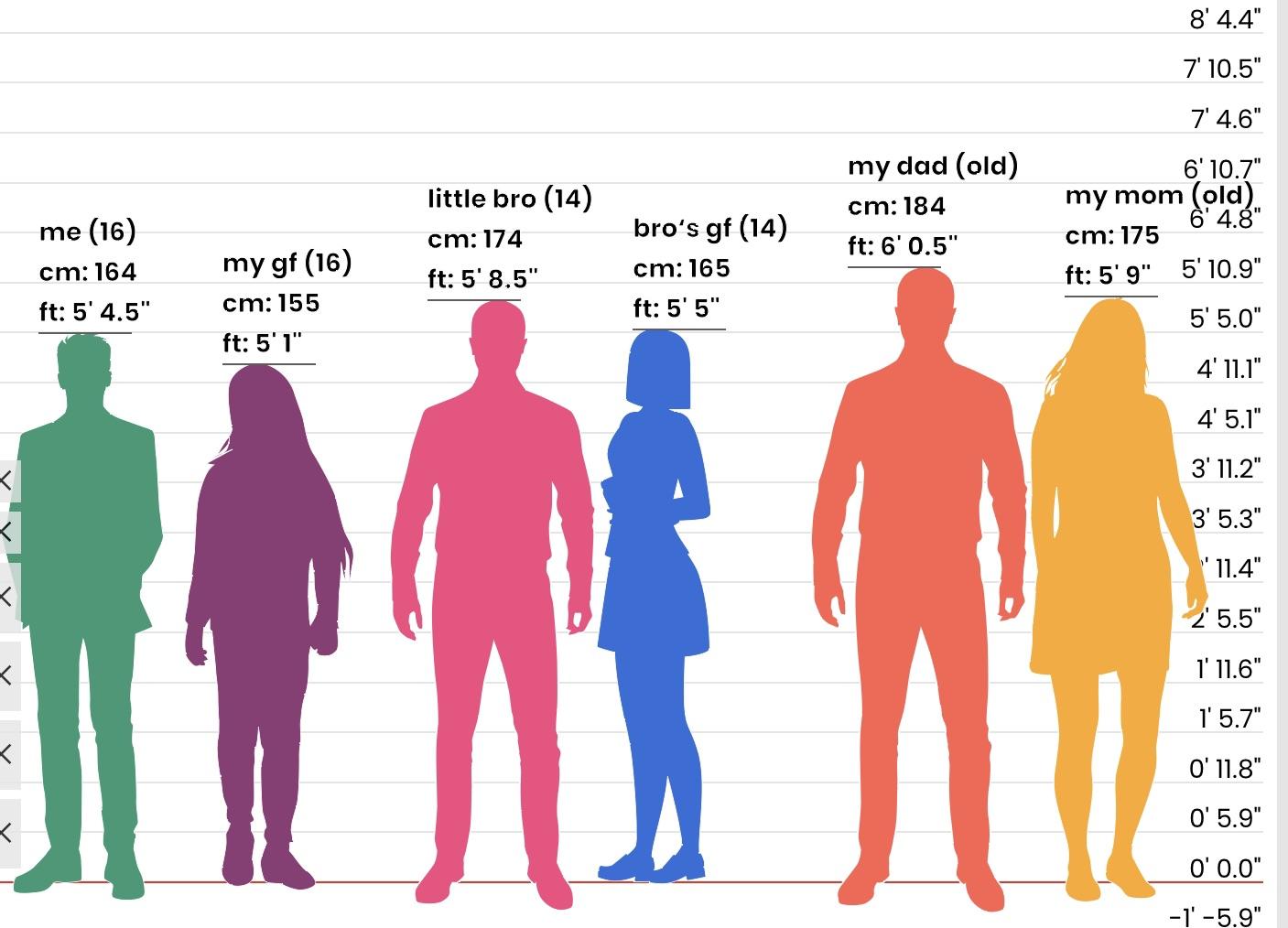
This six-inch gap is not merely a number; it is the approximate length of a standard dollar bill or the height of a smartphone held vertically. When two people of these heights stand next to each other, the 5'7" individual’s eye level is roughly at the top of the 5'1" individual's head. This creates a distinct visual hierarchy that affects everything from line-of-sight in crowds to the angle of a conversation.
Statistical Percentiles and Global Averages
In the United States and much of Europe, the average height for an adult female is approximately 5'4". A woman who is 5'1" is in roughly the 15th to 20th percentile, meaning she is shorter than 80-85% of her peers. Conversely, a woman who is 5'7" is in the 85th to 90th percentile, standing taller than the vast majority of other women.
For men, the average height is approximately 5'9". A man at 5'1" is statistically an outlier, falling well below the 1st percentile for adult males. A man at 5'7" is in approximately the 15th to 20th percentile. While still considered "below average" for a male, 5'7" is a very common height that does not typically require specialized medical or ergonomic intervention in the way 5'1" might in a world designed for larger frames.
Ergonomics and the Built Environment
The world is generally designed for the "average" human, which usually targets a range between 5'4" and 5'10". This means that both the 5'1" and 5'7" individuals experience the world differently, though the 5'1" individual faces significantly more "environmental friction."
Kitchens and Shelving
Standard kitchen counter heights are 36 inches. For someone who is 5'7", this height is usually ergonomically comfortable for chopping and cooking. For someone who is 5'1", these counters can feel slightly too high, potentially causing shoulder strain over long periods. The real challenge, however, is upper cabinetry. The top shelves of standard kitchen cabinets (often reaching 84 or 96 inches high) are entirely inaccessible to a 5'1" person without a step stool. A 5'7" person can usually reach the second shelf with ease and the top shelf with a slight reach or by standing on their toes.
Automotive Design
In the automotive world of 2026, adjustable seats and steering columns have improved, but height still dictates the driving experience. A 5'1" driver often has to move the seat nearly all the way forward to reach the pedals comfortably, which brings them dangerously close to the airbag deployment zone. Visibility over the dashboard can also be a struggle. A 5'7" driver typically finds a "sweet spot" in almost any vehicle, from a compact sedan to a large SUV, with plenty of adjustment room to spare.
Public Transit and Seating
On airplanes and buses, the 5'1" individual actually has a distinct advantage. Legroom is never an issue, and they can often curl up comfortably even in the most cramped economy seats. At 5'7", a person is still relatively comfortable, but they are approaching the limit where their knees might begin to touch the seat in front of them if the pitch is particularly narrow (28-29 inches).
Fashion, Fit, and Clothing Challenges
The clothing industry uses specific "fit models" to design patterns. These standards create a massive divide between the 5'1" and 5'7" experience.
The Petite Struggle (5'1")
At 5'1", a person almost always falls into the "Petite" category. This isn't just about length; it's about proportions. Petite clothing is designed with shorter sleeves, higher waistlines, and narrower shoulders. When a 5'1" person buys "standard" off-the-rack clothing, the knee holes in distressed jeans end up at their shins, and maxi dresses become floor-length gowns that require heavy tailoring. Finding professional attire that doesn't look like "playing dress-up" is a common complaint for those at 5'1".
The "Sweet Spot" (5'7")
For women, 5'7" is often considered the ideal height for fashion. Many "standard" sizes are modeled on women between 5'6" and 5'8". Pants usually have a 30-32 inch inseam, which hits perfectly for a 5'7" frame. For men, 5'7" can be slightly trickier as they are on the shorter end of the male spectrum. "Regular" length shirts might be slightly long in the torso, and trousers often need to be hemmed, but they generally do not require the specialized "Short" or "Extra Short" sizes that a 5'1" man would necessitate.
Visual Comparison Table
| Feature | 5'1" (155 cm) | 5'7" (170 cm) | Difference Impact |
|---|---|---|---|
| Eye Level | Approx. 145 cm | Approx. 160 cm | 15 cm vertical visibility gap |
| US Female Percentile | ~18th Percentile | ~88th Percentile | From "Short" to "Tall" |
| US Male Percentile | <1st Percentile | ~15th Percentile | Extreme outlier vs. slightly below avg |
| Standard Inseam | 25" - 27" | 30" - 32" | 5-inch difference in leg length |
| Reach Height | Approx. 6'2" | Approx. 6'10" | 8-inch difference in vertical reach |
| Crowd Experience | Limited visibility | Generally clear view | 5'7" sees over most shoulders |
Social Perception and Psychology
Height carries a significant amount of social "weight," often referred to as heightism. The experiences of someone who is 5'1" versus 5'7" differ based on gender and cultural context.
The Female Experience
A 5'1" woman is often perceived as "cute" or "dainty." While this can be positive, it often leads to a lack of perceived authority in professional settings—a phenomenon many shorter women combat with power dressing or assertive communication. A 5'7" woman, conversely, is often viewed as having a "model-like" or "athletic" stature. She commands more physical presence in a room and is rarely infantilized.
The Male Experience
The social gap for men is more pronounced. At 5'1", a man faces significant social challenges, as he is much shorter than the average female. This can impact dating dynamics and even professional perceptions of leadership, despite no link between height and competence. At 5'7", a man is shorter than the average, but he is still taller than about 70% of women. While he might feel "short" in a room of 6'0" athletes, he generally fits into the social fabric of "average height" without much friction.
Health and Physical Considerations
There are fascinating physiological differences that come with these two heights, ranging from center of gravity to long-term health outcomes.
- Balance and Center of Gravity: The 5'1" individual has a lower center of gravity. This makes them inherently more stable and often more agile in sports like gymnastics or martial arts. The 5'7" individual has a higher center of gravity but longer levers (limbs), which provides an advantage in sports like swimming or track and field where reach and stride length matter.
- Joint Stress: Shorter individuals often experience less joint stress over a lifetime because their limbs act as shorter levers, putting less torque on knees and hips. However, if a 5'1" person lives in an environment designed for 5'10" people (e.g., high chairs, high pedals), they may develop repetitive strain from overextending.
- Longevity Studies: Interestingly, several biological studies have suggested a correlation between shorter stature and increased longevity. This is often attributed to lower rates of certain cellular mutations and a lower risk of certain types of cancer, as shorter bodies have fewer cells and lower levels of growth hormones like IGF-1. While the difference between 5'1" and 5'7" is not as extreme as the difference between 5'0" and 7'0", the 5'1" individual may theoretically have a slight biological edge in aging.
Frequently Asked Questions
Is 5'7" considered tall or short?
For a woman, 5'7" is considered tall, as it is three inches above the female average in the US. For a man, 5'7" is considered slightly short, as it is two inches below the male average of 5'9". However, in many parts of the world (Southeast Asia, parts of Latin America), 5'7" is the absolute average or even slightly tall for a man.
How much taller does 5'7" look next to 5'1"?
The six-inch difference is very noticeable. It is the difference between someone’s chin and the top of their head. In photos, the 5'7" person will appear significantly larger, and the 5'1" person will likely have to look up at a sharp angle to maintain eye contact during conversation.
Can a 5'1" person use the same furniture as a 5'7" person?
While they use the same furniture, the comfort levels differ. On a standard sofa, a 5'7" person can sit back and have their feet touch the floor. A 5'1" person will often find that if they sit all the way back, their feet dangle, which can lead to lower back pain. Footrests and lumbar support are essential for the 5'1" individual in a "standard" world.
Do 5'1" and 5'7" people have different calorie needs?
Yes, generally. Basal Metabolic Rate (BMR) is heavily influenced by height and lean body mass. A 5'7" person has more bone mass and skin surface area, typically requiring 150-300 more calories per day than a 5'1" person of the same age and activity level just to maintain their weight.
Practical Advice for Navigating the Height Difference
If you find yourself on either side of this comparison, the key to comfort is adaptation. For those at 5'1", the year 2026 offers more ergonomic tools than ever before. Investing in a high-quality adjustable office chair with a footring and utilizing professional tailoring for clothing can bridge the gap created by a world designed for taller frames. Don't be afraid to use step stools; they are a tool for efficiency, not a sign of weakness.
For those at 5'7", recognize that you occupy a versatile middle ground. You are tall enough to navigate most physical environments with ease but short enough to avoid the back pain and cramped quarters experienced by those over 6'2". To maximize your stature, focus on posture; a 5'7" person with poor posture often appears the same height as a 5'4" person with excellent spinal alignment.
Ultimately, whether you are 5'1" or 5'7", height is only one metric of physical presence. Confidence, style, and how you carry yourself in your environment often dictate how others perceive your "height" more than the actual inches measured against a wall.