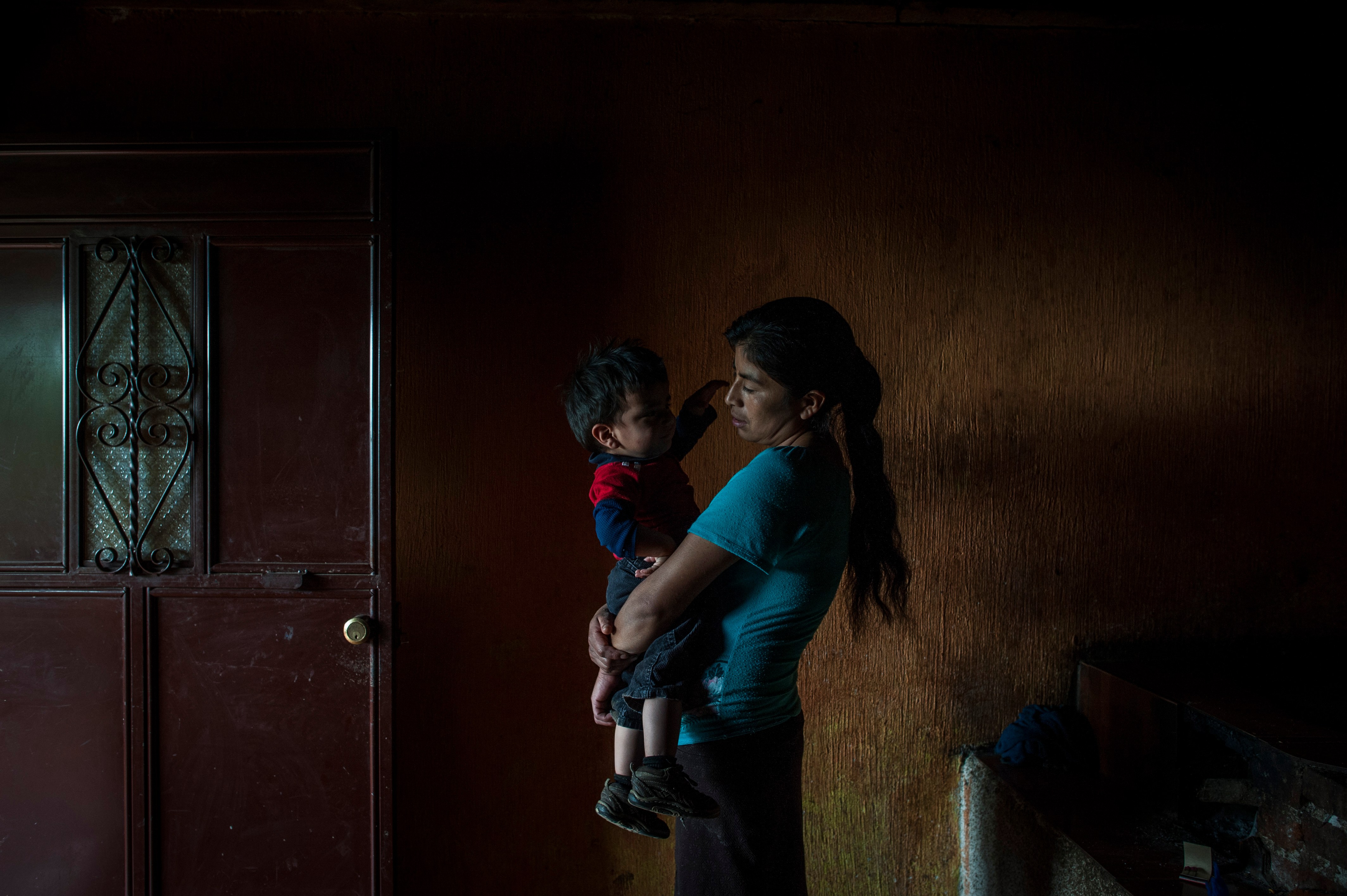
The figure of 471 parents deported without their children stems from federal court filings in the landmark litigation Ms. L v. ICE, which documented parents separated at the U.S.–Mexico border and removed from the country while their minors remained in government custody. Behind this statistic lie complex legal battles, international search operations, profound psychological trauma, and ongoing federal reunification initiatives aimed at resolving one of the most controversial chapters in modern American immigration enforcement.
Contextualizing the Statistic: How 471 Parents Were Separated and Deported
To understand how 471 parents—and eventually hundreds more—were deported without their children, one must examine the operational rollout of the U.S. Department of Justice’s "Zero Tolerance" policy in 2017 and 2018. Under this directive, federal prosecutors were ordered to criminalize all unauthorized border crossings under 8 U.S.C. § 1325. When adults were referred for criminal prosecution, they were transferred from Customs and Border Protection (CBP) to the custody of the U.S. Marshals Service. Because children could not be held in federal criminal detention facilities, federal agencies classified them as "unaccompanied alien children" (UAC) and transferred them to the care of the Office of Refugee Resettlement (ORR), a division of the Department of Health and Human Services (HHS).
The lack of unified record-keeping across federal agencies created a structural failure. CBP, the Department of Justice, Immigration and Customs Enforcement (ICE), and HHS operated separate databases that did not systematically link adult detention profiles with their children's tracking numbers. Consequently, when adult prosecutions concluded or when parents were processed for expedited removal under 8 U.S.C. § 1228, ICE officers frequently executed final orders of removal without verifying whether the parent's child was still in HHS care, had been placed with a domestic sponsor, or wished to return with the parent.
In dozens of documented court filings, parents signed removal documents written in English or technical Spanish without understanding that doing so meant leaving their children behind in the United States. In other instances, parents were falsely informed that their children would join them at the airfield or be deported on a subsequent flight. By the time federal courts intervened to halt the practice, hundreds of adults had already been returned to remote rural communities across Guatemala, Honduras, El Salvador, and Mexico, while their children remained scattered across network shelters in the United States.
The Human Reality Behind the Numbers
The statistic of 471 deported parents represents individual family disruptions marked by severe administrative barriers and emotional distress. Accounts detailed in court declarations, NGO field reports, and congressional testimony reveal the immediate and prolonged consequences of these separations on parents and children alike.
Operational Barriers in Home Countries
Once deported to Central America, parents faced immediate threats to their physical safety and financial survival. Many had originally fled severe gang violence, political persecution, or extorting cartels. Returning to their origin communities without their children exposed them to the very threats they had attempted to escape, often forcing them into hiding.
Furthermore, searching for a child from rural Central America presented immense logistical hurdles:
- Infrastructure Limitations: Limited access to cellular service, electricity, or internet in mountainous regions made communicating with U.S.-based legal representatives exceedingly difficult.
- Economic Strain: Indigenous parents who spoke languages such as Mam, K'iche', or Q'eqchi' faced linguistic barriers, as standard immigration hotlines operated primarily in English and Spanish.
- Information Blackouts: For months, many parents had no verified knowledge of where their children were located, whether they were safe, or if they were receiving medical care.
Psychological and Developmental Impact
Child psychologists and medical professionals who evaluated separated children and returned parents documented systemic psychological trauma. Children placed in ORR contracted shelters often developed symptoms of severe separation anxiety, post-traumatic stress disorder (PTSD), depression, and regression in speech or developmental milestones.
For parents, the inability to protect or communicate with their children produced severe guilt, trauma, and disorientation. Reestablishing trust during eventual telephone calls was frequently difficult; young children, unable to comprehend the structural mechanics of federal immigration enforcement, sometimes felt abandoned by their parents.
- Border Crossing & Criminal Referral
- Parent-Child Separation Link
- Adult in ICE Custody
- Expedited Removal Executed
- Minor Transferred to HHS / ORR
- Placed in Shelter or U.S. Sponsor
- Adult in ICE Custody
- Parent Deported / Child Remains
- In-Country Search & Reunification
Legal Battles and the Role of Ms. L v. ICE
The legal turning point for separated families occurred in the U.S. District Court for the Southern District of California. In Ms. L v. ICE, Civil Action No. 18-cv-00428, U.S. District Judge Dana Sabraw issued a nationwide preliminary injunction ordering the federal government to halt family separations and reunite all affected children with their parents.
However, executing this order proved exceedingly difficult for parents who had already been removed from the United States. To address the 471 parents—and subsequent cohorts identified through expanded class definitions—the court mandated structural oversight:
- Establishment of the Steering Committee: Judge Sabraw appointed an independent Steering Committee composed of legal organizations, including the American Civil Liberties Union (ACLU), Paul, Weiss, Rifkind, Wharton & Garrison LLP, and Justice in Motion.
- Data Sharing Orders: The court ordered the U.S. Department of Homeland Security (DHS) and HHS to turn over all available contact information, phone numbers, addresses, and flight manifests to assist in tracking down deported parents.
- In-Country Field Operations: Because federal agencies initially lacked an operational mechanism to locate individuals abroad, NGOs deployed physical search teams on the ground in Central America, traveling to remote villages to locate parents, verify their identities, and establish contact with legal counsel.
Through court disclosures filed periodically between 2018 and 2023, the Steering Committee submitted detailed progress reports outlining how many of the 471 parents had been located, how many wished to have their children returned to their home country, and how many sought the return of the parent to the United States for unified legal proceedings.
Overview of Family Separation, Deportation, and Reunification Data
The following table summarizes key metrics, agency roles, and operational phases associated with the 471 deported parents and broader family separation tracking under federal litigation.
| Operational Phase | Responsible Entities | Key Legal / Administrative Actions | Primary Metrics & Outcomes |
|---|---|---|---|
| Initial Separation (2017–2018) | CBP, U.S. Marshals, ICE, HHS/ORR | Zero Tolerance Policy execution; classification of children as UACs under 8 U.S.C. § 1232. | Over 3,000–5,000 children separated; initial cohort of 471+ parents deported without minors. |
| Litigation Injunction (2018) | U.S. District Court (S.D. Cal.), ACLU | Injunction in Ms. L v. ICE; mandate to halt separations and create accounting databases. | Federal government ordered to track, locate, and process all separated class members. |
| Ground Search Phase (2018–2021) | NGO Steering Committee, Justice in Motion | Human rights investigators conducted door-to-door ground searches across Central America. | Located hundreds of deported parents; identified high-risk cases requiring urgent legal intervention. |
| Federal Task Force Era (2021–2026) | DHS Interagency Task Force, HHS, DOJ | Executive Order 14011; authorization of Humanitarian Parole (8 U.S.C. § 1182(d)(5)(A)). | Granted legal entry, work authorization, and behavioral health coverage for reunited families. |
| Global Class Settlement (2023–Present) | U.S. Department of Justice, ACLU Legal Counsel | Final settlement agreement in Ms. L v. ICE; established long-term structural bans on family separation. | Prohibits policy-based family separations for 8 years; provides ongoing parole renewal options. |
The Mechanics of Location and Reunification
Locating 471 parents distributed across international jurisdictions required multi-agency coordination, specialized legal instruments, and private-public cooperation. The physical search process evolved into a systematic operational pipeline.
- Ground Search and Identification: On-the-ground NGOs locate parent in origin country via phone records, community leaders, and field investigators.
- Legal Counseling and Decision Formulation: Attorneys advise parent on choices: reunification in home country OR petition for return to the U.S. to seek asylum.
- Federal Parole Processing: DHS processes Humanitarian Parole application under 8 U.S.C. § 1182(d)(5)(A) and issues travel documentation.
- Re-Entry and Wraparound Services: Parent flies to U.S.; reunited with child; receives initial housing support, trauma care, and employment authorization.
In-Country Search Strategy
Because initial contact information provided by federal agencies was frequently outdated, incorrect, or missing, non-profit networks relied on local investigators called "on-the-ground managers." These professionals traveled to high-migration regions in Guatemala, Honduras, and El Salvador. They coordinated with local municipal leaders, parish networks, and regional human rights organizations to locate parents based on minimal identifying data.
Humanitarian Parole Framework
Under United States immigration law, a deported individual is subject to statutory re-entry bars—typically 5, 10, or 20 years under 8 U.S.C. § 1182(a)(9). To bring deported parents back to the United States to reunite with their children, the executive branch utilized Humanitarian Parole under section 212(d)(5)(A) of the Immigration and Nationality Act (8 U.S.C. § 1182(d)(5)(A)).
This discretionary authority allows the Secretary of Homeland Security to permit non-citizens to enter the United States temporarily for urgent humanitarian reasons. Under Executive Order 14011, signed in February 2021, the federal government established the Interagency Task Force on Reunification of Families, streamlining the parole application process for qualified Ms. L class members.
Wraparound Support Services
Reunification extends beyond physical transit. Reunited families are provided temporary behavioral health services, legal representation for their pending asylum claims, and legal employment authorization documents (EADs) under 8 C.F.R. § 274a.12(c)(11). Specialized trauma-informed care is often required to address the lingering effects of multi-year separations.
Systemic Policy Lessons and Ongoing Legal Remedies
The administrative failures that led to the deportation of 471 parents without their children prompted structural changes within the federal immigration apparatus. Both judicial rulings and administrative policy changes have been implemented to prevent similar outcomes in the future.
Comprehensive Class Settlement Agreements
In late 2023, the federal government and plaintiffs reached a landmark final settlement agreement in Ms. L v. ICE. Key terms of the settlement include:
- Eight-Year Separation Restriction: Prohibits the federal government from implementing policies that separate parents from their minor children at the border, with narrow exceptions for child safety, criminal warrants, or severe medical emergencies.
- Extended Parole and Pathways to Relief: Allows reunited families to reside and work legally in the United States while their asylum or alternative immigration claims are adjudicated.
- Medical and Legal Assistance: Grants families access to dedicated medical coverage, behavioral therapy, and pro bono legal assistance through government-funded partner networks.
Interagency Database Integration
To address the operational breakdown between CBP, ICE, and HHS, federal agencies implemented unified tracking protocols. Under revised operational guidelines, an adult custody transfer cannot occur without a verified system check linking the individual to any accompanying minor's unique identification code maintained by ORR.
Navigating Family Reunification and Immigration Resources
For legal practitioners, community organizations, and affected families seeking information regarding family separation resolution and parole mechanisms, specific steps and official channels must be utilized.
Step-by-Step Guidance for Affected Class Members
Verify Class Member Status: Confirm whether the parent or child is an identified class member in Ms. L v. ICE. Class members generally include non-citizen parents separated from their children by DHS at the U.S. border between July 1, 2017, and June 26, 2018 (with certain extensions for early pilot programs).
Contact Official Reunification Channels: Registry and assistance are managed directly through official task force portals and court-appointed legal representatives.
- Registrations can be submitted via the official DHS Family Reunification Task Force Portal.
- Legal inquiries can be directed to the Ms. L Steering Committee or designated non-profit legal assistance providers.
Prepare Identity and Custody Documentation: Gather foundational evidence, including birth certificates, government-issued IDs, detention records, ORR placement paperwork, and any historical deportation orders (Form I-205).
File for Humanitarian Parole and Administrative Relief: Attorneys representing class members file Form I-131 (Application for Travel Document) with U.S. Citizenship and Immigration Services (USCIS), designated under the Ms. L settlement criteria for fee waivers and expedited processing.
Access Behavioral and Local Resettlement Support: Upon re-entry, coordinate with non-profit resettlement agencies to secure local housing, enroll children in school districts, and establish ongoing behavioral health care.
Frequently Asked Questions
Why were parents deported while their children remained in the United States?
Parents were deported without their children due to a lack of interagency record-keeping between CBP, ICE, and HHS. Adult immigration processing and criminal prosecutions proceeded on accelerated timelines without cross-referencing whether children were still held in HHS facilities or sponsor care. Additionally, language barriers and fast-tracked removal documentation led many parents to sign exit orders without knowing their children would remain behind.
What was the role of the Steering Committee in finding deported parents?
The Steering Committee was established by federal court order in Ms. L v. ICE to locate parents who had already been removed from the United States. Composed of civil rights attorneys and human rights organizations, the committee conducted extensive ground searches across Central America, established toll-free international hotlines, and gathered contact details to reconnect parents with their children and legal representatives.
Can deported parents return to the United States to reunite with their children?
Yes. Under Executive Order 14011 and the final Ms. L v. ICE settlement agreement, parents who were deported without their children are eligible to apply for Humanitarian Parole under 8 U.S.C. § 1182(d)(5)(A). This allows them to return to the United States legally, receive employment authorization, and pursue immigration relief alongside their children.
What legal protections exist to prevent future family separations?
The 2023 Ms. L v. ICE settlement agreement establishes an eight-year ban on broad policy-driven family separations. It restricts DHS from separating parents and children at the border except in strictly defined scenarios, such as when the parent presents a direct safety threat to the child, has an outstanding criminal warrant for a violent offense, or requires emergency medical isolation.
Next Steps for Legal Counsel and Community Advocates
Organizations and legal advocates working with individuals affected by past family separation policies should take the following actions:
- Audit Case Files: Review client archives for non-citizen parents deported between 2017 and 2021 who reported leaving minor children in the United States, checking their details against the Ms. L class criteria.
- Coordinate with Designated Counsel: Connect potential class members with the court-appointed Steering Committee or authorized Task Force non-profits to ensure formal registration and intake.
- Monitor Administrative Deadlines: Ensure all applications for Humanitarian Parole, employment authorization renewals, and asylum filings adhere to the timelines established under federal court orders.