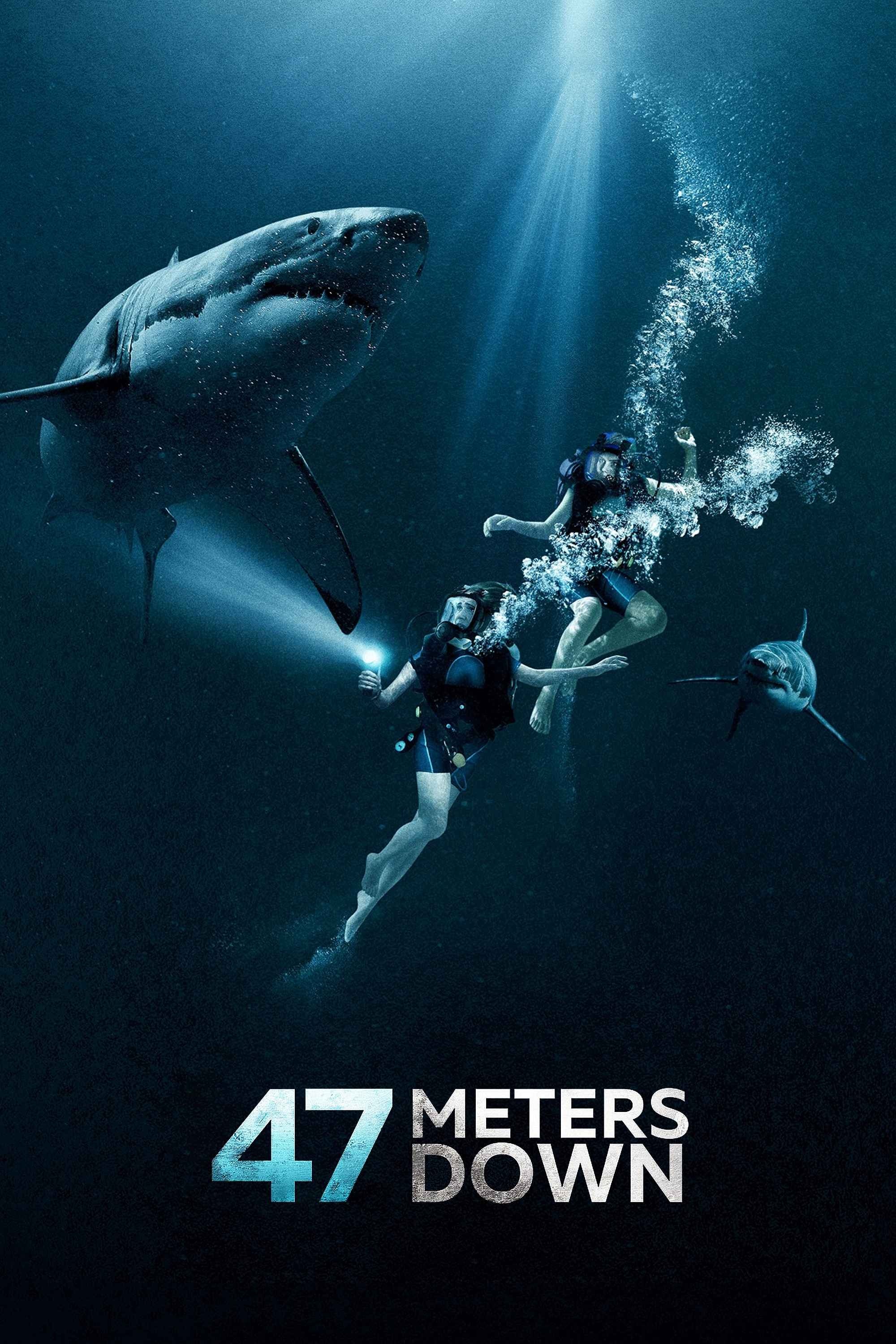
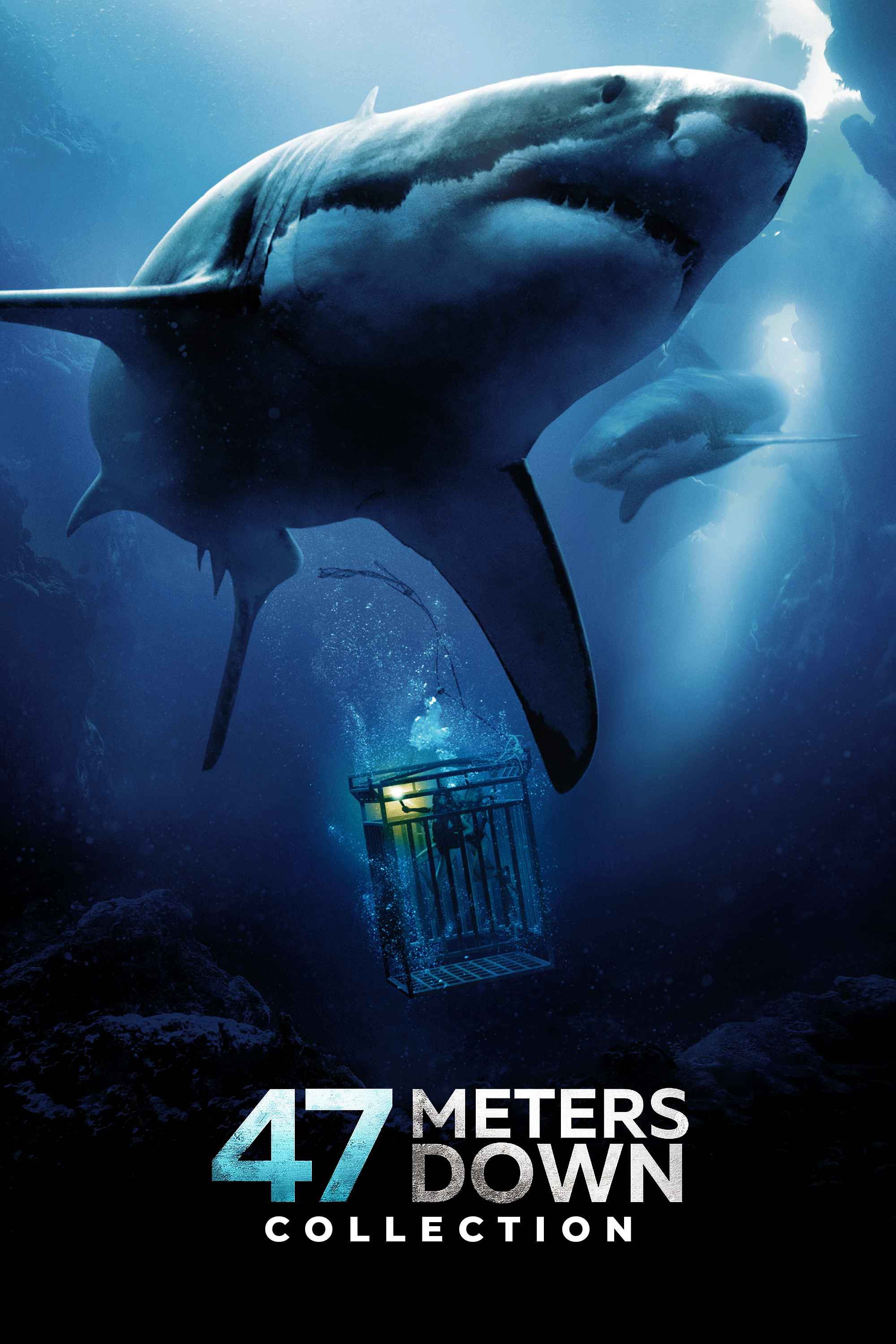
47 Meters Down is a 2017 survival horror film directed by Johannes Roberts and starring Mandy Moore and Claire Holt. The movie follows two sisters trapped in a shark cage on the seafloor off the coast of Mexico after their boat’s winch cable snaps. Stranded at a depth of 47 meters (154 feet), they must combat aggressive Great White Sharks, rapidly dwindling oxygen, and severe pressure-induced physiological hazards.
Synopsis and Narrative Arc of 47 Meters Down
The narrative of 47 Meters Down centers on sisters Lisa (Mandy Moore) and Kate (Claire Holt), who are vacationing in Mexico. Lisa is coping with a recent breakup, spurred by her ex-partner's claim that her life lacks excitement. In an effort to push Lisa out of her comfort zone and create memorable experiences, Kate convinces her to join a shark-cage diving excursion hosted by a local boat captain named Taylor (Matthew Modine) aboard the vessel Sea King.
Upon arriving at the dive location, the crew chum the waters to attract Great White Sharks. Kate, an experienced certified scuba diver, reassures Lisa, who has no prior diving experience. The sisters enter an rusted iron observation cage and are lowered beneath the surface. Initially, the experience is exhilarating, allowing them to view a large Great White Shark at close range. However, as the cage is being winched back aboard, the rusty crane supporting the apparatus breaks free from the boat's frame, sending the cage and the sisters plunging down to the ocean floor.
- Surface (Boat: Sea King)
- 5 Meters / 16 Feet — Standard Safety Stop Level
- 40 Meters / 130 Feet — Recreational Scuba Diving Depth Ceiling
- 47 Meters / 154 Feet — Seafloor: Trapped Cage Location
Trapped at a depth of 47 meters (approximately 154 feet), the sisters face an immediate crisis: the heavy cage metal prevents them from easily swimming free, their communications with Captain Taylor are severely limited by water depth, and their scuba tanks hold a finite supply of compressed air. Because ocean water attenuates high-frequency radio signals, communication is only possible when a diver swims several meters above the cage toward the surface, leaving them fully exposed to predators.
As the narrative progresses, the sisters attempt multiple survival strategies. Kate leaves the cage first to establish radio contact, learning that the captain is sending a crew member down with a heavier replacement cable. However, the rescue attempt fails when the crew member is attacked by a shark, leaving the winch hook unattached. Lisa is forced to retrieve the hook and attach it to the cage frame, but the replacement cable breaks under tension, pinning Lisa's leg underneath the cage frame and causing her oxygen supply to deplete even faster.
The Ending Explained: Hallucination vs. Reality
The climax of 47 Meters Down features a key twist centered on the physiological effects of deep-sea diving. After Lisa’s tank drops to critical levels, Captain Taylor drops a spare cylinder down to their depth via a winch line. He warns her over the comms that switching to a fresh tank at 47 meters dramatically increases the risk of nitrogen narcosis—an intoxicating condition caused by breathing gases under extreme pressure.
The Nitrogen Narcosis Hallucination
In the film's final act, Lisa manages to free her leg, switch to the new tank, and rescue an injured Kate from a shark attack. Together, the sisters fight off multiple Great White Sharks, ignite flare lights for visibility, and begin a emergency ascent to the surface. They perform a crucial three-minute safety stop at a shallow depth to prevent decompression sickness, during which they defend themselves against another predator attack. They eventually reach the surface, get pulled onto Captain Taylor’s vessel, and receive emergency treatment for severe injuries.
However, this triumphant sequence is revealed to be a vivid hallucination. In reality, Lisa never freed herself from the cage, nor did she rescue Kate. The high partial pressure of nitrogen from the fresh tank induced severe narcosis, causing her mind to construct an elaborate survival fantasy while she remained alone on the ocean floor.
The Actual Resolution
The film snaps back to reality inside the darkened cage at 47 meters. Lisa is sitting alone, staring at her bleeding hand, fully delusional and talking to an absent Kate. Coast Guard saturation divers arrive on the seafloor, locate the trapped cage, and safely extract Lisa. They attach her to a specialized recovery line and lift her to the surface while managing her ascent to treat her for trauma and decompression illness. Kate’s ultimate fate is left grimly implied, as she was dragged away by a shark earlier in the underwater ordeal.
Diving Physics vs. Cinematic Fiction: Fact-Checking the Survival Thriller
While 47 Meters Down delivers intense cinematic suspense, its representation of scuba diving physics, physiological limits, and marine life behavior mixes authentic diving principles with Hollywood dramatization.
1. Recreational Depth Limits and Gas Consumption
In recreational scuba diving, the standard maximum depth limit recommended by organizations such as PADI and NAUI is 40 meters (130 feet) for deep-diver certified individuals. At 47 meters (154 feet), divers enter the realm of technical diving, which requires specialized gas mixtures (such as Trimix) to reduce nitrogen narcosis and oxygen toxicity hazards.
At a depth of 47 meters, the ambient hydrostatic pressure is approximately 5.7 atmospheres absolute (ATA). According to Boyle’s Law, gas volume decreases inversely with pressure, meaning a diver consumes air roughly 5.7 times faster at 47 meters than at the surface. In the film, the characters survive at depth far longer than standard 80-cubic-foot aluminum tanks would allow under high-stress conditions without switching to high-capacity technical rigs.
2. Decompression Sickness (DCS) and Ascent Rates
Decompression sickness—commonly referred to as "the bends"—occurs when dissolved inert nitrogen in body tissues forms gas micro-bubbles during a rapid reduction in ambient pressure. To avoid DCS, divers must ascend at rates no faster than 9 to 18 meters (30 to 60 feet) per minute and perform mandatory decompression stops.
- Film Depiction: Characters express immediate fear of their "heads exploding" or instantly dying if they swim upward too fast.
- Scientific Reality: Ascending rapidly from 47 meters without decompression stops does not cause explosive trauma. Instead, it leads to severe DCS, arterial gas embolisms (AGE), potential lung over-expansion injuries, neurological damage, or loss of consciousness. Emergency ascents require controlled exhalation to release expanding air from the lungs.
3. Nitrogen Narcosis ("Rapture of the Deep")
The film’s portrayal of nitrogen narcosis is scientifically grounded, though its onset and dramatic timing are exaggerated for cinematic effect. Nitrogen narcosis affects cognitive function, motor control, and sensory perception as the partial pressure of nitrogen ($ppN_2$) increases in the bloodstream. While narcosis can cause euphoria, confusion, and vivid hallucinations at extreme depths, its onset is typically gradual rather than functioning as a sudden, narrative narrative device.
4. Great White Shark Behavior
The predatory behavior depicted in 47 Meters Down relies heavily on exaggerated horror tropes:
- Aggression Levels: Great White Sharks (Carcharodon carcharias) rarely target divers inside protective cages repeatedly or stalk humans relentless in low-visibility conditions. Most real-world shark interactions consist of exploratory bumps or single investigative bites rather than calculated, deliberate pack attacks.
- Visual Acuity and Lighting: The film features sharks ambushing divers out of complete pitch-black darkness. In reality, Great Whites are primarily visual apex predators that hunt near the surface using ambient sunlight to silhouette prey.
Technical Breakdown of Scuba Hazards Featured in the Film
The operational environment shown in 47 Meters Down presents several real-world physiological and mechanical risks. The following table contrasts the movie's portrayal of these hazards against established diving physiology and safety protocols.
| Hazard / Phenomenon | Film Depiction | Real-World Technical Reality | Standard Safety Protocol |
|---|---|---|---|
| Depth Ceiling | 47 meters reached unintentionally via broken winch equipment. | Exceeds the standard recreational limit (40m/130ft); requires technical certifications. | Avoid diving beyond qualified limits; use redundant backup equipment. |
| Nitrogen Narcosis | Causes sudden, hyper-realistic survival hallucinations. | Impairs reasoning, reaction speed, and spatial awareness; symptoms subside upon ascending to shallower depths. | Ascend slowly to a shallower depth to reduce partial pressure of inert gases. |
| Decompression Sickness | Framed as an immediate, fatal consequence of leaving the bottom. | Gas bubbles form in tissues during rapid ascents, causing severe joint pain, paralysis, or embolisms. | Follow dive computer algorithms, monitor ascent rates, and perform decompression stops. |
| Air Consumption | Tanks last through extended physical struggle and distress. | High ambient pressure (5.7 ATA) depletes standard scuba tanks rapidly under physical exertion. | Monitor submersible pressure gauges (SPG) constantly; plan conservative bottom times. |
| Communication | Direct voice comms inside full-face masks with limited surface range. | Hardwired or acoustic comm systems exist, but radio waves attenuate rapidly in seawater. | Rely on line signals, slate writing, or redundant acoustic transceivers. |
Production Background and Cinematic Execution
Directed by Johannes Roberts and co-written with Ernest Riera, 47 Meters Down was produced on a modest budget of approximately $5.5 million. The production faced an unusual release history before achieving commercial success.
From Direct-to-Video to Theatrical Release
The film was initially acquired by Dimension Films under the title In the Deep. Dimension planned a direct-to-video release on DVD and Video on Demand (VOD) scheduled for July 2016. Home video discs had already been printed and shipped to retailers under the original title when Entertainment Studios purchased the rights from Dimension. Entertainment Studios canceled the home release, changed the title back to 47 Meters Down, and committed to a wide theatrical release in June 2017.
- Initial Title: "In the Deep" (Direct-to-Video Plan)
- Acquired by Entertainment Studios (2016)
- Retitled: "47 Meters Down"
- Theatrical Premiere: June 16, 2017
- Global Box Office: ~$62.1 Million
Underwater Production Mechanics
Filming deep-water sequences poses significant logistical challenges. To recreate the ocean floor, the production built specialized underwater sets inside large tanks.
- Principal Sets: The majority of the underwater scenes were filmed at the Underwater Stage at Pinewood Studios in the United Kingdom, alongside outdoor tank facilities in Basildon, Essex, and underwater tanks in the Dominican Republic.
- Cast Training: Mandy Moore and Claire Holt had limited scuba experience prior to filming. They underwent intensive dive training to manage extended underwater shooting schedules while wearing custom full-face masks designed to keep their faces visible to the camera.
- VFX Integration: Practical cage props were lowered into water tanks, while the Great White Sharks were created primarily using computer-generated imagery (CGI) overseen by visual effects supervisors to maintain lighting continuity beneath the surface.
The 47 Meters Down Franchise Context
The commercial success of 47 Meters Down—grossing over $62 million worldwide against its $5.5 million budget—established it as a profitable entry in the modern sub-genre of aquatic horror thrillers.
The Sequel: 47 Meters Down: Uncaged (2019)
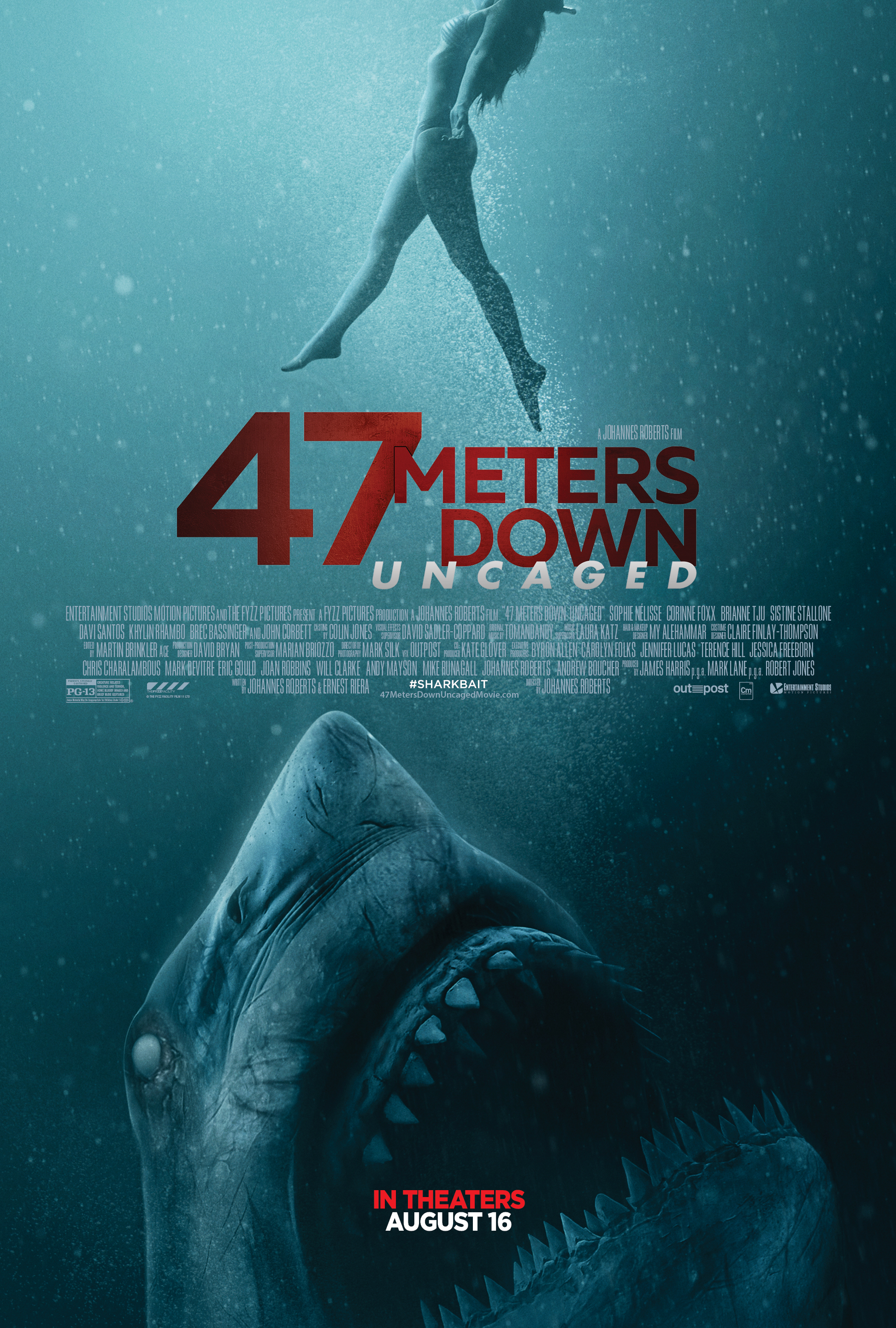
In 2019, Johannes Roberts returned to direct a standalone thematic sequel titled 47 Meters Down: Uncaged. Featuring an entirely new cast—including Sophie Nélisse, Corinne Foxx, Brianne Tju, and Sistine Stallone—the film shifts the setting from open-ocean cage diving to a submerged Mayan archaeological site.
- 47 Meters Down (2017)
- Setting: Open Ocean / Mexico (Cage Diving)
- Key Hazard: Broken Winch, Ocean Floor Trap, DCS
- Main Antagonist: Great White Sharks
- 47 Meters Down: Uncaged (2019)
- Setting: Submerged Ruined Mayan City (Caves)
- Key Hazard: Cave Disorientation, Low Air, Tight Passages
- Main Antagonist: Blind Cave-Adapted Great Whites
While Uncaged shares similar survival themes, gas management tensions, and underwater hazards with the original, it relies more heavily on tight cave-diving suspense and jump scares within enclosed underwater structures.
Frequently Asked Questions About 47 Meters Down
Did Mandy Moore and Claire Holt do their own underwater stunts?
Yes, Mandy Moore and Claire Holt performed a significant portion of their underwater scenes inside dedicated studio water tanks. They spent up to eight hours a day submerged in water during production, requiring them to learn basic scuba equipment handling and specialized underwater communication protocols.
Is 47 Meters Down based on a true story?
No, 47 Meters Down is a completely fictional narrative written by Johannes Roberts and Ernest Riera. While shark cage diving accidents and winch cable failures have occurred historically, the specific events, characters, and dramatic hallucination twist in the film are entirely scripted.
How deep is 47 meters in feet?
47 meters equals approximately 154.2 feet. In standard scuba diving terms, this depth is significantly below the maximum recreational limit of 40 meters (130 feet) and exposes divers to elevated physiological risks, including rapid air consumption and nitrogen narcosis.
What is the song playing at the beginning of 47 Meters Down?
The opening sequence of the movie features ambient electronic tracks composed by tomandandy, who scored the film's official soundtrack. The score relies on synth tones designed to build atmospheric tension both above and below the water.
Recommended Viewing for Survival Thriller Fans
For viewers interested in survival cinema, tension-driven thrillers, or aquatic horror films, 47 Meters Down offers a tightly paced, highly focused narrative. To get the most out of viewing the film and related sub-genre titles, consider the following approach:
- Watch with Context: Pay close attention to the early dialogue regarding oxygen gauge readings ($bar/psi$) and communication limits; these details directly set up the third-act tension and physiological twist.
- Compare Related Aquatic Thrillers:
- The Shallows (2016): Focuses on surface-level isolation, shark territoriality, and immediate shoreline survival tactics.
- Open Water (2003): Delivers a minimalist, realistic portrayal of stranded divers based on actual events.
- The Descent (2005): Explores claustrophobic, enclosed-space survival dynamics similar to underwater cage and cave traps.
- Explore Technical Diving Insights: Review standard safety documentation from official diving bodies like PADI or DAN (Divers Alert Network) to better understand how hyperbaric pressure, decompression stops, and gas mixtures operate during actual deep-sea excursions.