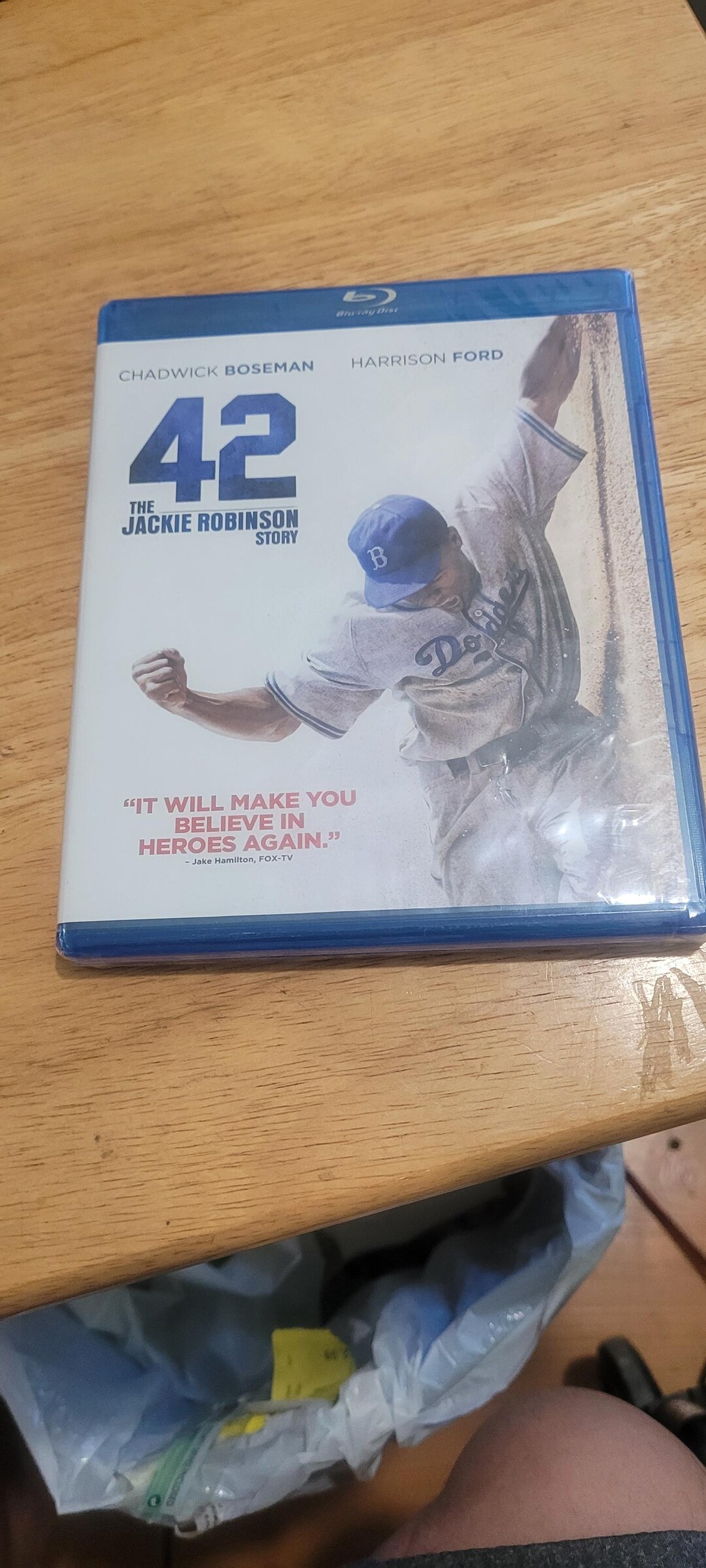
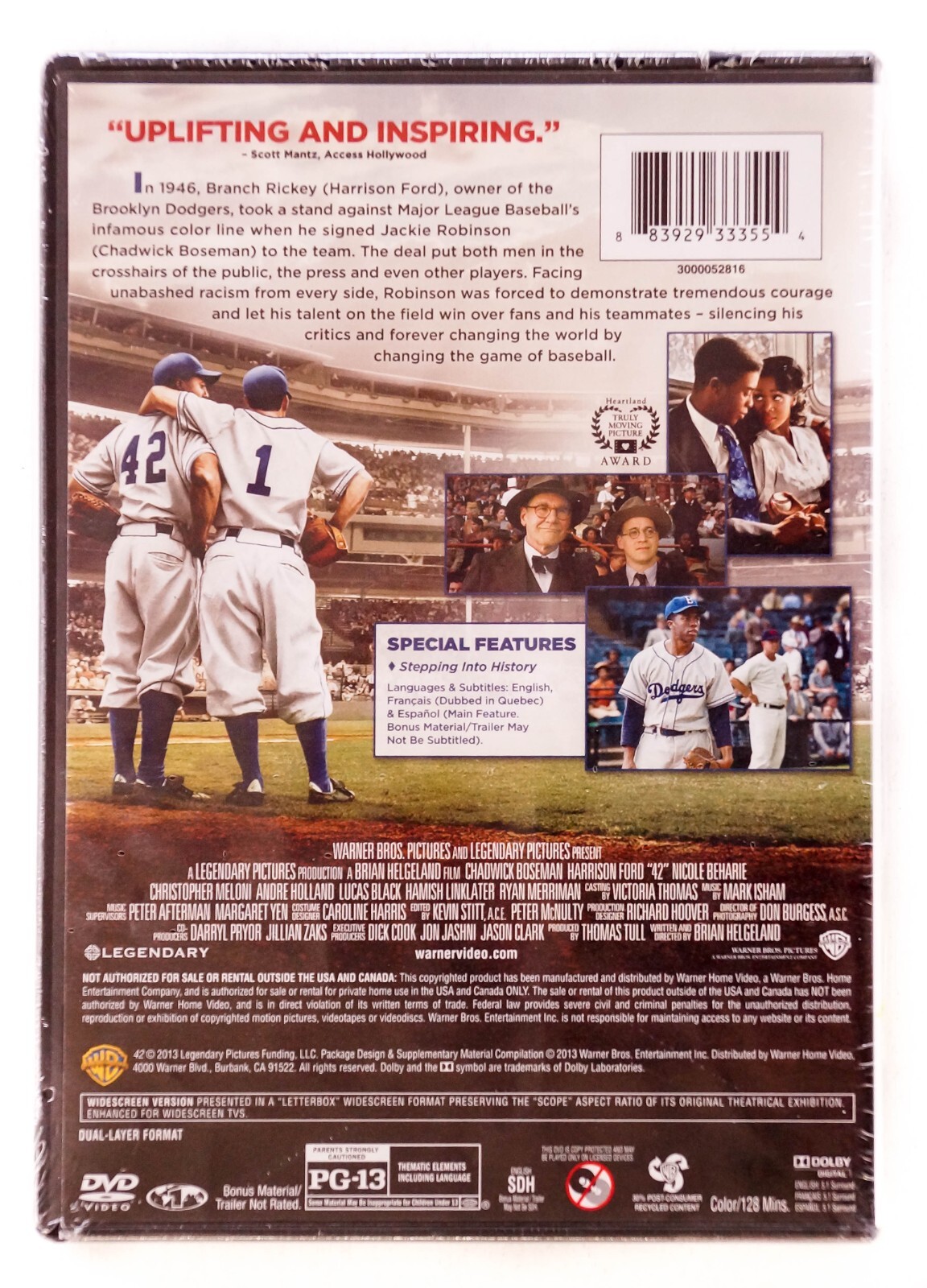
The actor who played Jackie Robinson in the 2013 biographical film 42 was Chadwick Boseman. This career-defining performance catapulted Boseman from a relatively unknown television actor to a major Hollywood star, establishing his reputation for portraying iconic Black historical figures with immense dignity, physical precision, and emotional depth.
The film 42, directed by Brian Helgeland, tells the story of Jackie Robinson’s courageous journey as he broke the Major League Baseball (MLB) color barrier in 1947. While the film features a powerhouse performance by Harrison Ford as Branch Rickey, it is Boseman’s portrayal of Robinson that serves as the movie’s soul. From his rigorous physical training to his nuanced handling of Robinson’s inner turmoil, Boseman’s work in 42 remains a gold standard for sports biopics.
The Casting of Chadwick Boseman as Jackie Robinson
Before the release of 42 in 2013, Chadwick Boseman was not a household name. He had appeared in various television procedurals and had a recurring role on the series Lincoln Heights, but he was far from a leading man in the eyes of major studios. Director Brian Helgeland, however, was not looking for a superstar; he was looking for an actor who could embody the quiet strength and "fire" that Jackie Robinson was known for.
The casting process was exhaustive. Helgeland reportedly considered many actors but was drawn to Boseman because of his "old-soul" quality and his ability to convey complex emotions without saying a word. During his audition, Boseman demonstrated that he could capture the stillness required for the scenes where Robinson had to endure racial taunts without retaliating—a core theme of the film.
Choosing a lesser-known actor was a calculated risk for Warner Bros. and Legendary Pictures, but it paid off. By not having a "star" persona attached to the role, audiences were able to see Jackie Robinson rather than a famous actor playing dress-up. This authenticity allowed the historical weight of the 1947 season to take center stage.
Preparation and Physical Training for the Role
Playing a professional athlete requires more than just acting talent; it requires a believable physical presence. Chadwick Boseman took this challenge seriously, embarking on a grueling training regimen that lasted several months before production began.
Mastering the Game of Baseball
Boseman was not a natural baseball player at the professional level. To prepare, he worked with professional coaches to learn Robinson’s specific movements. Jackie Robinson was known for his unique stance and his aggressive, pigeon-toed running style. Boseman spent hours studying archival footage to mimic Robinson’s lead-offs from first base and his famous "dancing" style on the basepaths, which was designed to distract pitchers.
The Psychological Burden
Beyond the physical requirements, Boseman delved into the psychological state of a man who was told he could not fight back. The film focuses heavily on Branch Rickey’s requirement that Robinson have "the guts not to fight back." Boseman spent time with Rachel Robinson, Jackie’s widow, to understand the private man behind the public figure. This collaboration helped him portray the domestic scenes with Nicole Beharie (who played Rachel) with a level of intimacy and vulnerability that balanced the high-tension scenes on the field.
Narrative Focus: The 1947 Integration of MLB
The film 42 is not a traditional birth-to-death biopic. Instead, it focuses specifically on the narrow window of 1946 to 1947, during which Branch Rickey signed Robinson to the Brooklyn Dodgers’ Triple-A affiliate, the Montreal Royals, and subsequently called him up to the big leagues.
This focus allows the film to explore the systemic racism of the era in detail. Key sequences, such as the Ben Chapman (manager of the Philadelphia Phillies) incident, show the sheer volume of verbal abuse Robinson faced. Boseman’s performance in these scenes is haunting; the camera often lingers on his face as he absorbs the vitriol, showing the physical toll of repressed anger.
The film also highlights the internal dynamics of the Brooklyn Dodgers. Initially, several teammates signed a petition refusing to play with Robinson. The narrative tracks the gradual shift in clubhouse culture, led by players like Pee Wee Reese (played by Lucas Black). The iconic moment where Reese puts his arm around Robinson in Cincinnati is a pivotal emotional beat that Boseman handles with a mix of surprise and stoic gratitude.
Key Relationships: Boseman and Harrison Ford
One of the most praised aspects of the film is the chemistry between Chadwick Boseman and Harrison Ford. Ford, playing the legendary Dodgers executive Branch Rickey, provided a veteran presence that mirrored the mentor-protege relationship of the real-life figures.
| Feature | Chadwick Boseman (Jackie Robinson) | Harrison Ford (Branch Rickey) |
|---|---|---|
| Role in Narrative | The "Turning Point" Athlete | The "Architect" of Integration |
| Acting Style | Internalized, physical, restrained | Gruff, charismatic, verbose |
| Key Scene | The tunnel breakdown after being heckled | "I want a player who's got the guts not to fight back" |
| Character Goal | To prove he belongs through performance | To win games and do "socially right" business |
Boseman later noted in interviews that working with Ford was an education in itself. The dynamic between the two actors created a sense of historical gravity; Ford’s Rickey was the unstoppable force, and Boseman’s Robinson was the immovable object. Together, they depicted the calculated strategy required to dismantle Jim Crow in professional sports.
Critical and Commercial Impact of the Portrayal
Upon its release, 42 was a commercial success, grossing over $97 million worldwide against a budget of approximately $40 million. More importantly, it solidified Boseman’s status as a top-tier actor. Critics praised his ability to carry the film, noting that while the script sometimes leaned into sentimentality, Boseman’s performance remained grounded and gritty.
The film's success led to a string of biographical roles for Boseman, earning him the nickname "The King of the Biopic." Following 42, he portrayed:
- James Brown in Get On Up (2014)
- Thurgood Marshall in Marshall (2017)
Each of these roles required a different energy—Brown’s electric showmanship and Marshall’s legal brilliance—but they all shared the DNA of the dignity Boseman first showcased as Jackie Robinson. In many ways, the success of 42 provided the foundation for his eventually being cast as T'Challa in the Marvel Cinematic Universe’s Black Panther.
The Legacy of the Performance in 2026
As of 2026, the legacy of Chadwick Boseman’s performance in 42 has only grown. Following his tragic passing in 2020, the film has become a cornerstone of his memorialization. Every year on Jackie Robinson Day (April 15), the film sees a massive resurgence in streaming viewership as fans and educators use it to teach the history of the Civil Rights Movement through the lens of sport.
Boseman’s Robinson is now viewed as more than just a character; it is seen as a cultural touchstone. The "tunnel scene" in 42—where Robinson smashes his bat in frustration away from the public eye—is frequently cited by acting students as a masterclass in portraying the breaking point of human endurance. The film managed to humanize a legend who had often been treated as a marble statue in history books.
Frequently Asked Questions
Did Chadwick Boseman actually play baseball in the movie?
Yes, Chadwick Boseman performed many of the baseball maneuvers seen in the film. While stunt doubles and professional players were used for some high-intensity action and complex slides to ensure safety, Boseman underwent five months of baseball camp to ensure his hitting, running, and fielding looked authentic to a professional athlete of the 1940s.
How historically accurate is Boseman's portrayal?
Boseman’s portrayal is widely considered highly accurate in terms of temperament. The film takes some cinematic liberties with the timeline of certain events, but the depiction of the racial abuse Robinson suffered and his restrained response is backed by historical records and the testimony of Rachel Robinson. Boseman intentionally captured Robinson's "fire," which was often hidden behind his stoic exterior.
Who else was considered for the role of Jackie Robinson?
Before Boseman was cast, several other actors were rumored for the role or auditioned, including Michael B. Jordan. However, director Brian Helgeland felt that Boseman possessed a specific "stillness" and "weight" that made him the perfect fit for a man who had to carry the hopes of a nation on his shoulders.
Where was 42 filmed?
To capture the 1940s aesthetic, the production filmed at several historic locations, including Rickwood Field in Birmingham, Alabama (the oldest professional baseball park in the U.S.) and Engel Stadium in Chattanooga, Tennessee. These real-world locations helped Boseman and the cast immerse themselves in the era.
Did Jackie Robinson's family approve of the actor?
Yes, Rachel Robinson was deeply involved in the production. She met with Chadwick Boseman and praised his performance, stating that he captured the essence of her husband’s character. Her approval was a significant factor in the film's acceptance by the baseball community and historians.
How to Watch and Study the Performance
For those looking to analyze Boseman’s work in 42, the film is widely available on major streaming platforms and remains a staple of high-definition physical media collections. When watching, pay close attention to the scenes where Boseman is not speaking. His performance is largely built on "active listening" and physical reactions, which are the hallmarks of a sophisticated screen actor.
If you are a student of film or history, compare Boseman’s portrayal to the 1950 film The Jackie Robinson Story, in which Jackie Robinson played himself. You will find that Boseman brings a modern psychological depth to the role that was perhaps too dangerous or controversial to explore in the cinema of the early 1950s.