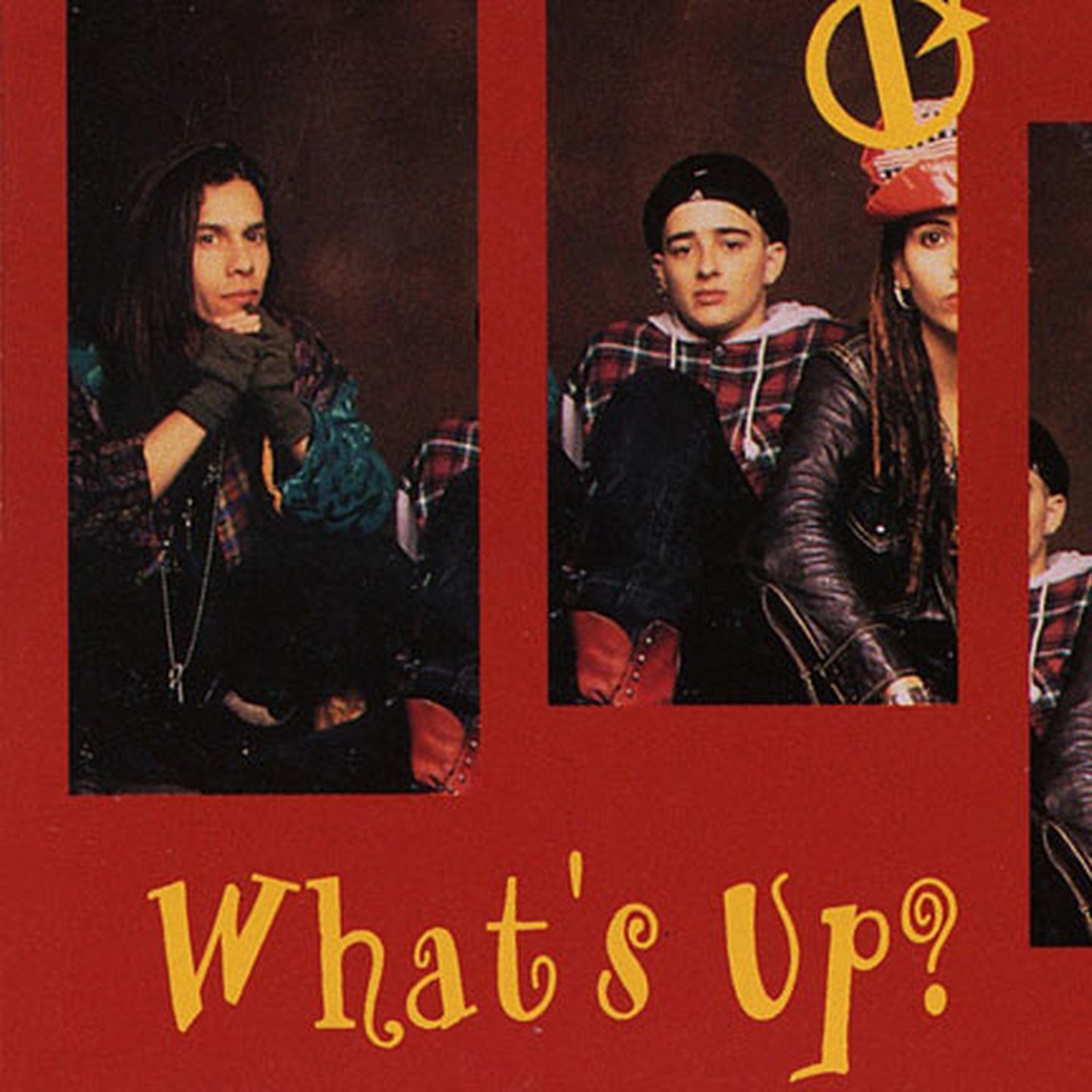
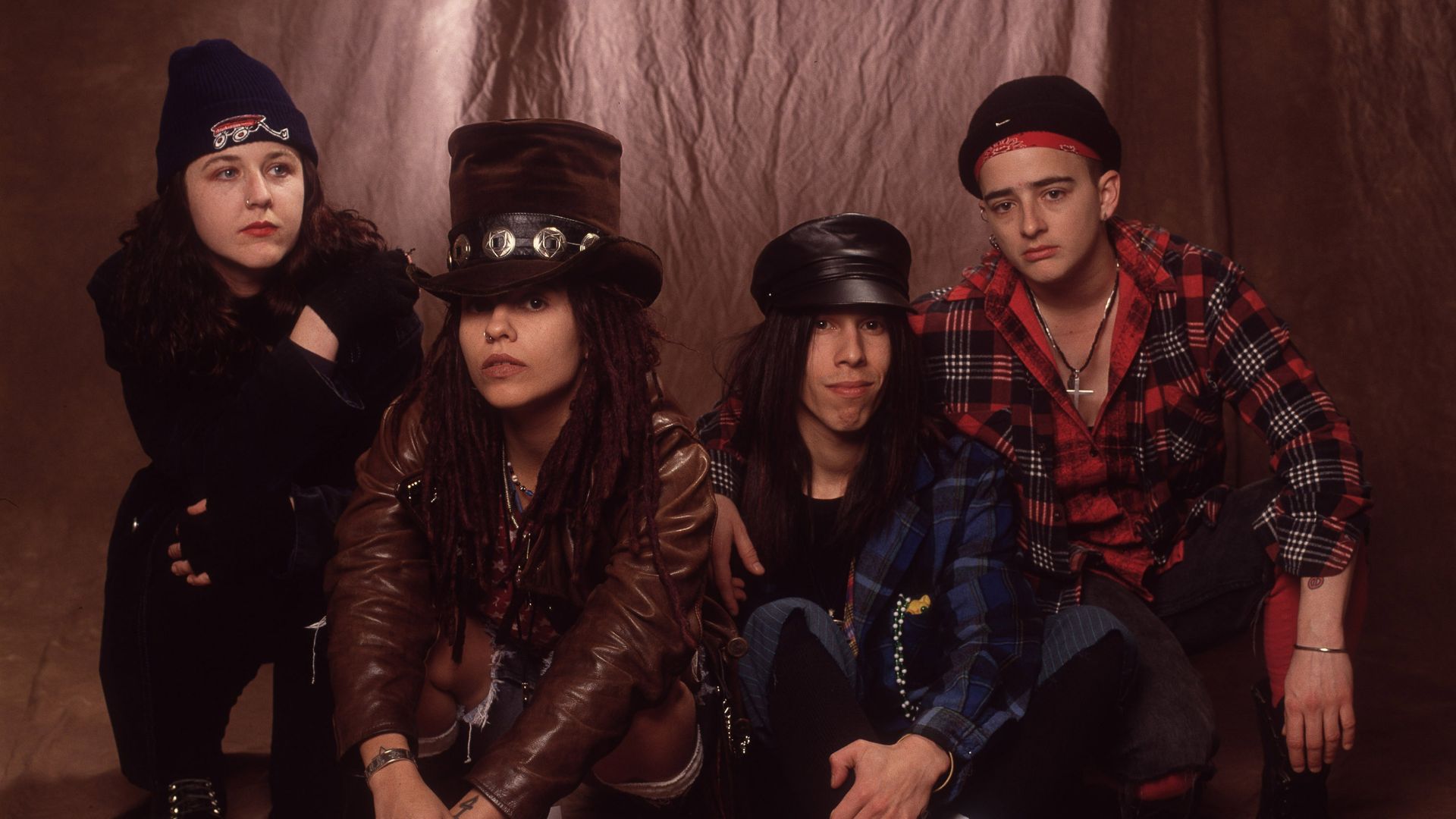
The 4 Non Blondes' 1993 hit "What's Up?" remains one of the most enduring anthems of existential angst and social yearning ever recorded. Written by lead singer Linda Perry, the song captures the universal feeling of being stuck in a world that feels increasingly incomprehensible, blending folk-rock sensibilities with a powerful, soul-baring vocal performance.
The Genesis of an Alternative Rock Landmark
To understand the lyrics and impact of "What's Up?", one must look back at the landscape of the early 1990s. While grunge was dominating the airwaves from Seattle, San Francisco-based 4 Non Blondes offered a different flavor of rebellion. Their sound was rooted in classic rock and blues, yet it carried the same disillusionment found in the works of Nirvana or Pearl Jam.
Linda Perry wrote the song in her hallway while living in San Francisco, long before she became a powerhouse producer for artists like P!nk and Christina Aguilera. At its core, the song is a snapshot of a young person trying to find their footing in a society that offers plenty of "institutions" but very little spiritual or emotional fulfillment. Released as the second single from their only studio album, Bigger, Better, Faster, More!, it propelled the band to international stardom, reaching the top of the charts in several countries and becoming a staple of 90s nostalgia that continues to resonate in 2026.
The song is often mistakenly referred to as "What’s Going On" because of its iconic chorus. However, the title was intentionally chosen as "What's Up?" to avoid confusion with the legendary 1971 Marvin Gaye track of the same name. This distinction is crucial for understanding the song's identity—it isn't just a question about the state of the world, but a personal cry for clarity.
Technical Specifications and Musical Structure
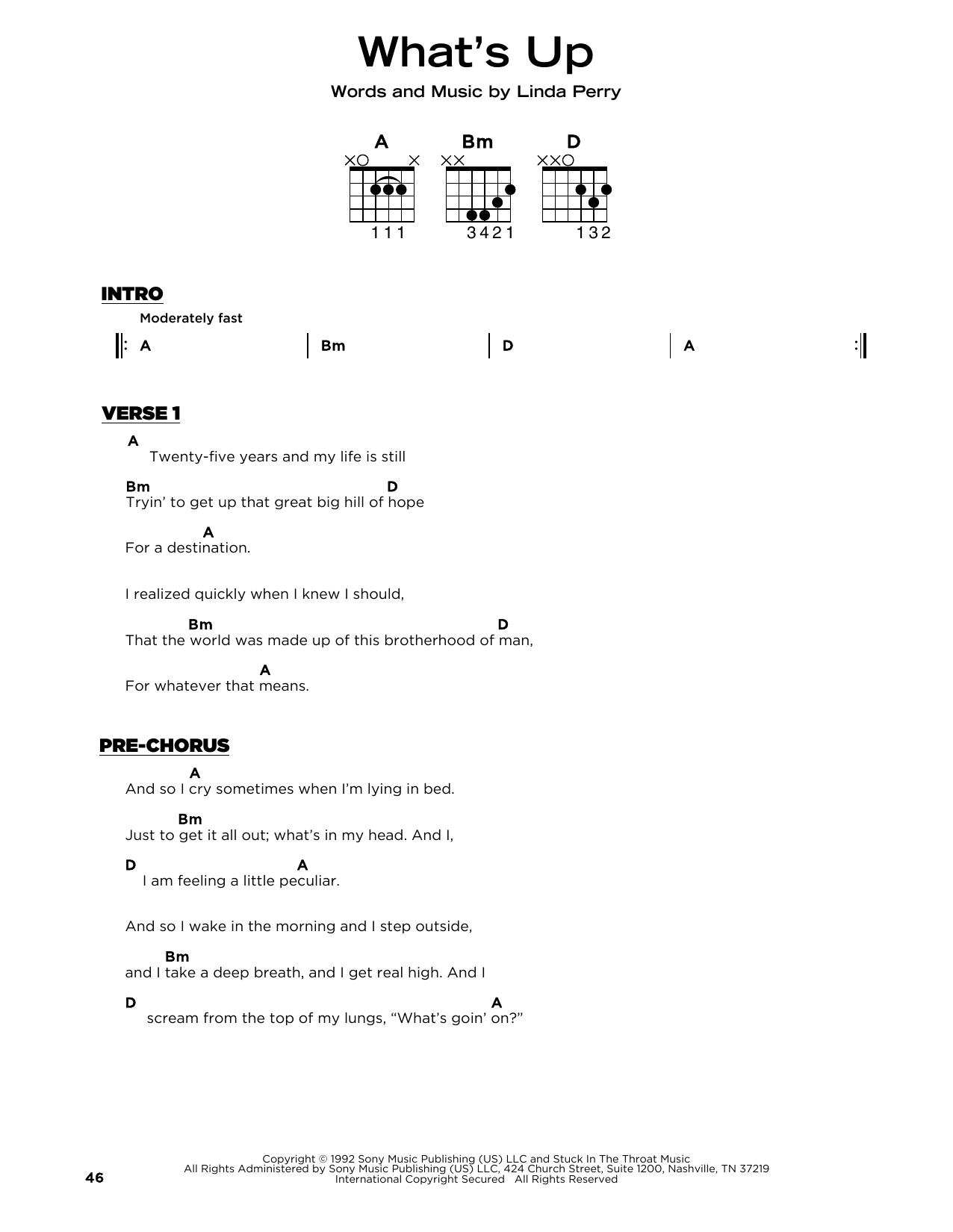
Musically, "What's Up?" is deceptively simple, which is perhaps why it has become such a campfire and karaoke staple. It relies on a three-chord progression that repeats throughout the entire song, allowing the vocal dynamics to provide the necessary tension and release.
| Technical Element | Specification |
|---|---|
| Primary Key | A Major |
| Tempo | 134 BPM |
| Time Signature | 4/4 |
| Chord Progression | A - Bm - D - A |
| Genre | Alternative Rock / Folk Rock |
| Original Release Year | 1993 |
| Vocal Range | E3 to E5 (Alto/Mezzo-Soprano) |
The song’s structure follows a standard Verse-Chorus-Verse-Chorus-Bridge-Chorus format. However, the "bridge" is more of a rhythmic breakdown that builds back into the final explosive choruses. The simplicity of the A - Bm - D - A progression provides a stable foundation for Linda Perry's acrobatic vocal delivery, which transitions from a low, contemplative rumble to a high-pitched, rasping belt.
Comprehensive Lyric Breakdown and Interpretation
The lyrics of "What's Up?" are a masterclass in relatable vagueness. They describe a specific feeling without pinning it to a single political or social event, which allows listeners from different eras to project their own struggles onto the words.
Verse 1: The Weight of Time
“Twenty-five years and my life is still / Trying to get up that great big hill of hope / For a destination”
In 2026, these opening lines still strike a chord with young adults. The "twenty-five years" represents that quarter-life crisis where the optimism of childhood meets the harsh realities of adulthood. The "hill of hope" is a metaphor for the social ladder or the pursuit of a traditional "successful" life—a destination that feels perpetually out of reach despite the effort exerted to climb toward it.
Verse 2: The Institutional Struggle
“And I realized quickly when I knew I should / That the world was made up of this brotherhood of man / For whatever that means”
Here, Perry touches on the concept of social structures. The phrase "brotherhood of man" is used somewhat cynically, followed by the dismissive "for whatever that means." This reflects a feeling of being an outsider in a world designed by and for a status quo that doesn't include the narrator. It’s a subtle nod to the gender and social politics of the early 90s, where marginalized voices were just starting to break into the mainstream.
The Chorus: The Emotional Release
“And I say, hey-ey-ey-ey / Hey-ey-ey / I said hey, what's going on?”
The chorus is the heart of the song. It isn't a complex philosophical statement; it is a visceral scream. The repetition of "hey" serves as a call to anyone listening, a way to break the silence of isolation. The question "what’s going on?" acts as a plea for honesty in an era where people often feel like they are "going through the motions."
Verse 3: The Internalized Panic
“And I try, oh my god do I try / I try all the time, in this institution / And I pray, oh my god do I pray / I pray every single day / For a revolution”
This section highlights the desperation of the narrator. The use of the word "institution" suggests that the narrator feels like a prisoner—whether of their own mind, their job, or society at large. The "revolution" they pray for isn't necessarily a violent political one, but a fundamental shift in how people relate to one another and how they find meaning in their lives.
The Cultural Longevity of "What's Up?"
Few songs have transitioned from 90s radio hits to internet memes and cinematic motifs as successfully as "What's Up?". Its survival into the mid-2020s is due to several distinct factors.
First, the "He-Man" meme of the late 2000s gave the song a second life. A remix featuring footage from the He-Man and the Masters of the Universe animated series became a viral sensation, introducing the track to a generation that wasn't alive when the original music video debuted on MTV. This bizarre juxtaposition of high-fantasy animation and soulful alt-rock cemented the song's place in digital folklore.
Second, the song has been used effectively in prestige television. One of the most famous examples is its use in the Wachowskis' Netflix series Sense8. In a pivotal scene, characters from across the globe sing the song simultaneously, highlighting its themes of connection and shared human experience. This usage reminded audiences that beneath the catchy "hey-ey-ey" hooks, there is a profound message about empathy and collective longing.
Finally, the song’s status as a vocal showcase keeps it relevant. Aspiring singers often use "What's Up?" to demonstrate their power, control, and ability to convey raw emotion. It remains a high-rotation track in singing competitions and cover sets because it allows for significant stylistic interpretation while remaining instantly recognizable.
Common Misconceptions and Troubleshooting the Lyrics
When discussing "What's Up?", several common errors frequently arise among fans and researchers.
- The Title Error: As mentioned, many believe the song is titled "What's Going On." If you are searching for official sheet music or licensing information, you must use the title "What's Up?".
- The "25 Years" Lyric: Some listeners hear "Twenty-five years of my life and still..." as "Twenty-five years, my life is still..." or even "Twenty-five years, my life is a steal." The correct lyric is "Twenty-five years and my life is still / Trying to get up..."
- The Key and Capo: While the studio recording is in A Major, many guitarists play it in G Major with a capo on the second fret to achieve a "janglier" folk sound. If your version sounds slightly off-pitch compared to the record, check if you are playing in G without the capo.
- The Genre Label: While often categorized as "One-Hit Wonder" pop, the song’s roots are firmly in the San Francisco blues-rock scene. Understanding it as a rock song rather than a pop song changes how a performer should approach the vocal delivery.
Performance Guide: How to Approach the Song
For musicians and vocalists looking to tackle this guide in 2026, focus on the dynamic arc. The song begins quietly, almost tentatively, with an acoustic guitar and a steady beat. The vocals should start in a conversational tone.
As you move into the second verse, increase the intensity. The bridge is where the "growl" comes in. Linda Perry uses a technique known as vocal fry and distortion to emphasize the word "revolution." If you are a singer, ensure you are using proper breath support from the diaphragm to avoid vocal strain during the repeated choruses, as the "hey-ey-ey" sections require significant stamina.
For instrumentalists, the key is the "shuffle" feel of the rhythm. It isn't a straight 4/4 beat; there is a slight swing to the strumming pattern that gives the song its campfire, folk-rock energy. Avoid overcomplicating the arrangement—the power of "What's Up?" lies in its simplicity.
Frequently Asked Questions
Why is the song called "What's Up?" when the lyrics say "What's Going On?"
The band chose the title "What's Up?" to prevent confusion with Marvin Gaye’s classic "What's Going On." At the time of the song's release in 1993, Marvin Gaye’s estate was very protective of his work, and the band wanted to ensure their track had its own distinct identity in the charts and music catalogues.
Who wrote the lyrics to "What's Up?"
The song was written entirely by Linda Perry, the lead singer of 4 Non Blondes. Perry has noted in various interviews that she wrote the song quickly, and it was a reflection of her personal feelings of frustration and her search for a deeper purpose during her early twenties in San Francisco.
What is the meaning behind the "Revolution" line?
The "revolution" referred to in the third verse is generally interpreted as a personal or spiritual awakening rather than a political coup. It represents the narrator's desire for a massive change in how the world operates, moving away from "institutions" and toward a more authentic, connected way of living.
Is 4 Non Blondes a one-hit wonder?
In terms of massive mainstream chart success in the United States, "What's Up?" was their only major hit. However, the band was highly respected in the San Francisco music scene, and Linda Perry went on to have a legendary career as a songwriter and producer for other A-list artists, effectively making her one of the most successful figures in the industry.
What instruments are used in the original recording?
The original track features a heavy acoustic guitar presence, which provides the main rhythmic drive. It also includes electric bass, drums, and a subtle use of electric guitar for fills and texture. The most prominent "instrument," however, is Linda Perry’s versatile and powerful voice.
Analyzing the 2026 Perspective on "What's Up?"
In the current year of 2026, "What's Up?" has moved beyond its status as a 90s relic to become a "modern standard." Its themes of existential dread and the search for meaning are arguably more relevant today than they were thirty years ago. As digital fatigue and social isolation have become more prevalent, the song’s call for "what's going on" serves as a reminder of the human need for transparency and genuine connection.
If you are a listener or a performer engaging with this song today, your best course of action is to focus on the emotional honesty of the lyrics. Whether you are analyzing the text for a project or learning it for a performance, remember that the technical details are secondary to the raw, unpolished feeling that Linda Perry captured in that San Francisco hallway. The song's enduring power is proof that a simple three-chord progression, when paired with a universal truth, can define a generation and continue to speak to those that follow.