A 4-car crash is a multi-vehicle collision, often referred to as a chain-reaction accident, where the impact of one collision triggers subsequent impacts between following or stationary vehicles. In 2026, these incidents remain a significant concern on high-speed corridors, typically requiring complex forensic analysis of vehicle telematics and "black box" data to determine liability across multiple involved parties.
Understanding the Dynamics of 4-Car Multi-Vehicle Collisions
Multi-vehicle accidents involving four or more cars are fundamentally different from standard two-vehicle collisions due to the compounding forces involved. In a 4-car "pile-up," the physics of momentum transmission means that the vehicles in the middle of the chain—specifically cars two and three—often experience two separate points of impact: a primary strike from the rear and a secondary strike when they are propelled into the vehicle ahead.
As of 2026, the complexity of these crashes has shifted. While older vehicle models relied entirely on human reaction times, the modern fleet consists of a mix of legacy internal combustion vehicles and advanced electric vehicles (EVs) equipped with varying levels of Autonomous Emergency Braking (AEB). When a 4-car crash occurs today, investigators must determine whether automated systems engaged correctly or if a system failure contributed to the severity of the chain reaction. The weight distribution of modern EVs, which are often significantly heavier than older gasoline cars, also changes the force of impact, frequently leading to more severe structural damage in multi-car scenarios.
Latest Updates in Multi-Vehicle Accident Trends for 2026
The landscape of road safety in 2026 reflects a transition period in automotive history. While total accident frequency has seen a marginal decline due to the proliferation of V2X (Vehicle-to-Everything) communication, the severity of 4-car crashes on major interstate highways has remained steady.
One of the most significant updates in how these accidents are handled involves the use of real-time data. Most vehicles manufactured after 2022 now feature standardized Event Data Recorders (EDRs) that provide a millisecond-by-millisecond account of braking, steering, and acceleration leading up to a crash. In 2026, insurance adjusters and legal teams prioritize this digital evidence over eyewitness testimony, which has historically been unreliable in the chaos of a multi-car pile-up.
Furthermore, "Smart Infrastructure" updates in many urban centers now allow traffic management centers to detect the initial impact of a 4-car crash almost instantly. This triggers immediate speed limit reductions on digital gantry signs and alerts the navigation systems of approaching drivers to prevent the 4-car incident from escalating into a 10 or 20-car pile-up. Despite these technological strides, human factors like "rubbernecking" on the opposite side of the highway continue to cause secondary multi-vehicle incidents.
Common Causes of Chain-Reaction Crashes
To effectively prevent or navigate the aftermath of a 4-car crash, one must understand the specific triggers that lead to these events. They rarely result from a single error; rather, they are the culmination of several environmental and behavioral factors.
Tailgating and Insufficient Following Distance
The most prevalent cause of 4-car crashes remains tailgating. On modern highways, drivers often rely too heavily on their car’s proximity sensors, leading to a "false sense of security." When the lead vehicle (Car 1) performs an emergency stop, the second vehicle may stop in time, but the third or fourth vehicles, following too closely, lack the physical space to dissipate their kinetic energy, initiating the chain reaction.
Distracted Driving and "Tech Fatigue"
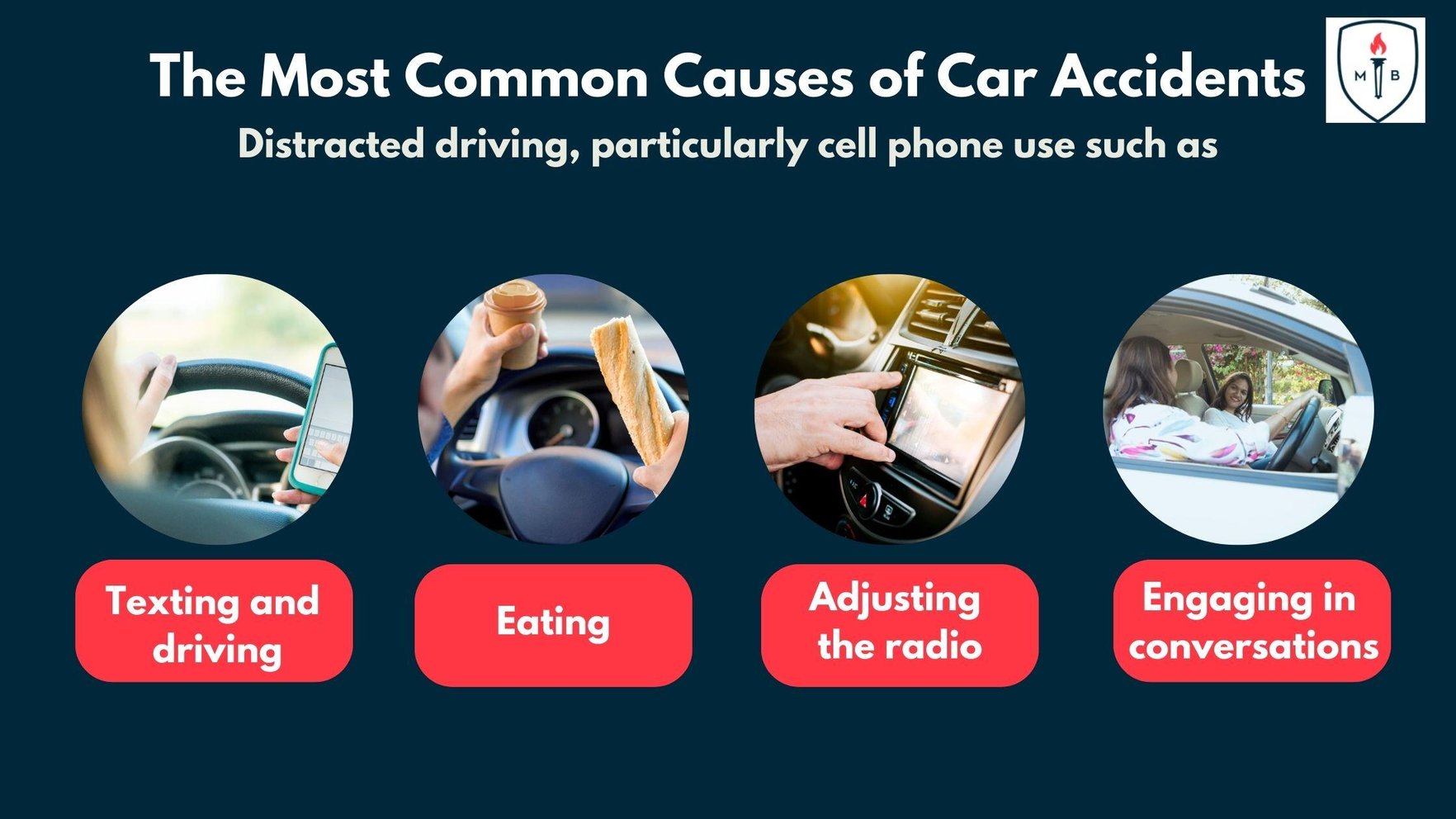
In 2026, distracted driving has evolved beyond simple smartphone use. "Tech fatigue" involves drivers becoming overwhelmed or overly reliant on in-dash infotainment systems and Level 2 driving assistance. A momentary lapse in attention—even just two seconds—at 65 mph means a vehicle travels over 190 feet. In a 4-car scenario, if the fourth driver is distracted, they often hit the third car at full speed, causing a much more violent accordion effect than if they had been braking.
Environmental Conditions and Hydroplaning
Weather remains a deterministic factor. In 2026, localized "micro-burst" storms and flash flooding have become more frequent. When the first car hits a patch of standing water and hydroplanes, it loses velocity unpredictably. If the following three cars are traveling at high speeds without adjusting for wet pavement, the resulting 4-car crash is almost inevitable due to the increased stopping distance required on slick surfaces.
Determining Liability in a 4-Car Accident
Assigning fault in a 4-car crash is one of the most challenging tasks in personal injury and insurance law. Because multiple impacts occur, the legal system must determine "proximate cause"—the primary act of negligence that set the entire event in motion.
| Vehicle Position | Common Liability Role | Investigation Focus |
|---|---|---|
| Car 1 (Lead) | Rarely at fault | Did they have working brake lights? Was the stop "sudden and arbitrary" or a legitimate emergency? |
| Car 2 (Middle) | Partially at fault | Did they hit Car 1 before being hit by Car 3? EDR data determines the timing of the "two thumps." |
| Car 3 (Middle) | Partially at fault | Following distance check. Did they contribute to the force that pushed Car 2 into Car 1? |
| Car 4 (Rear) | Often primary fault | Did their initial impact trigger the entire chain? Speed and distraction levels are scrutinized. |
In many jurisdictions in 2026, the "Comparative Negligence" rule applies. This means a jury or insurance company might find Car 4 to be 70% at fault for failing to stop, while Car 3 is 30% at fault for following too closely. This distribution of fault directly impacts the compensation available for vehicle repairs and medical expenses.
Essential Safety Tips to Avoid and Survive Pile-ups
Safety in a 4-car crash context involves two phases: prevention and post-impact survival. Adhering to these guidelines can significantly reduce the risk of becoming part of a highway statistic.
- The 4-Second Rule: While the old standard was two or three seconds, the increased weight of modern vehicles and higher highway speeds in 2026 make a 4-second gap the new safety benchmark. Pick a stationary object; when the car in front passes it, you should not reach that object for at least four seconds.
- Monitor the "Two-Car Ahead" Space: Don't just watch the car directly in front of you. Look through their windshield or to the side to see the brake lights of the vehicle ahead of them. This gives you an extra second of reaction time if a chain reaction starts.
- Identify Escape Routes: Always maintain an "out." If you notice traffic slowing abruptly, check your side mirrors. Is the shoulder clear? Swerving into a clear breakdown lane is often safer than hitting the car in front of you, provided you can do so without clipping another vehicle.
- Post-Impact: Stay in the Vehicle: If you are involved in a 4-car crash on a busy highway, your car is your best shield. Do not exit the vehicle to inspect damage until you are certain that all traffic has stopped and there is no risk of a fifth or sixth car joining the pile-up. Keep your seatbelt fastened until emergency services arrive.
Frequently Asked Questions
Who pays for the damage in a 4-car crash?
Liability is typically split among the drivers found negligent. If the fourth car pushed everyone else into each other, their insurance may be responsible for the bulk of the claims. However, if Car 2 hit Car 1 first, and then Car 3 hit Car 2, there are essentially two separate accidents, and multiple insurance policies will be involved. In 2026, "No-Fault" insurance states simplify this by having each driver's own PIP (Personal Injury Protection) cover their immediate medical costs, regardless of who caused the chain.
Can I be held liable if I was pushed into the car in front of me?
Generally, no, provided you had come to a complete and safe stop before being struck. If you were stopped behind Car 1 and Car 3 slammed into you, forcing you into Car 1, you are considered a victim of the collision. However, if you were still moving when you were hit, or if you were following so closely that even a minor tap pushed you into the lead car, you may be assigned a percentage of comparative negligence.
What should I do immediately after a multi-vehicle accident?
First, check for injuries and call 911. Second, if the vehicles are operable and in a dangerous flow of traffic, move them to the shoulder (the "Steer It, Clear It" law remains in effect in 2026). Third, document the scene thoroughly with photos and video, ensuring you capture the license plates and positions of all four vehicles. Finally, seek a medical evaluation, as the "double impact" of a 4-car crash often results in delayed-onset whiplash or internal bruising.
How is V2X technology changing 4-car crash outcomes in 2026?
V2X allows cars to "talk" to each other. In 2026, if Car 1 engages in emergency braking, it sends a signal to Cars 2, 3, and 4 instantly—even if the drivers can't see the brake lights yet. This technology has significantly reduced the speed of impacts in chain reactions, turning what would have been fatal high-speed crashes into lower-speed "fender benders."
Next Steps for Affected Drivers
If you have been involved in a 4-car crash, the complexity of the insurance claims process cannot be overstated. Because multiple insurance companies will be trying to shift blame to other parties to protect their bottom line, you should avoid giving recorded statements until you have consulted with a legal professional.
Prioritize gathering your vehicle's telematics data or dashcam footage immediately. In 2026, this digital evidence is the most potent tool in proving you maintained a safe distance and were a victim of the chain reaction rather than a contributor to it. Lastly, ensure all medical screenings are completed within 48 hours; multi-impact crashes create unique physical stresses that may not be immediately apparent due to adrenaline.