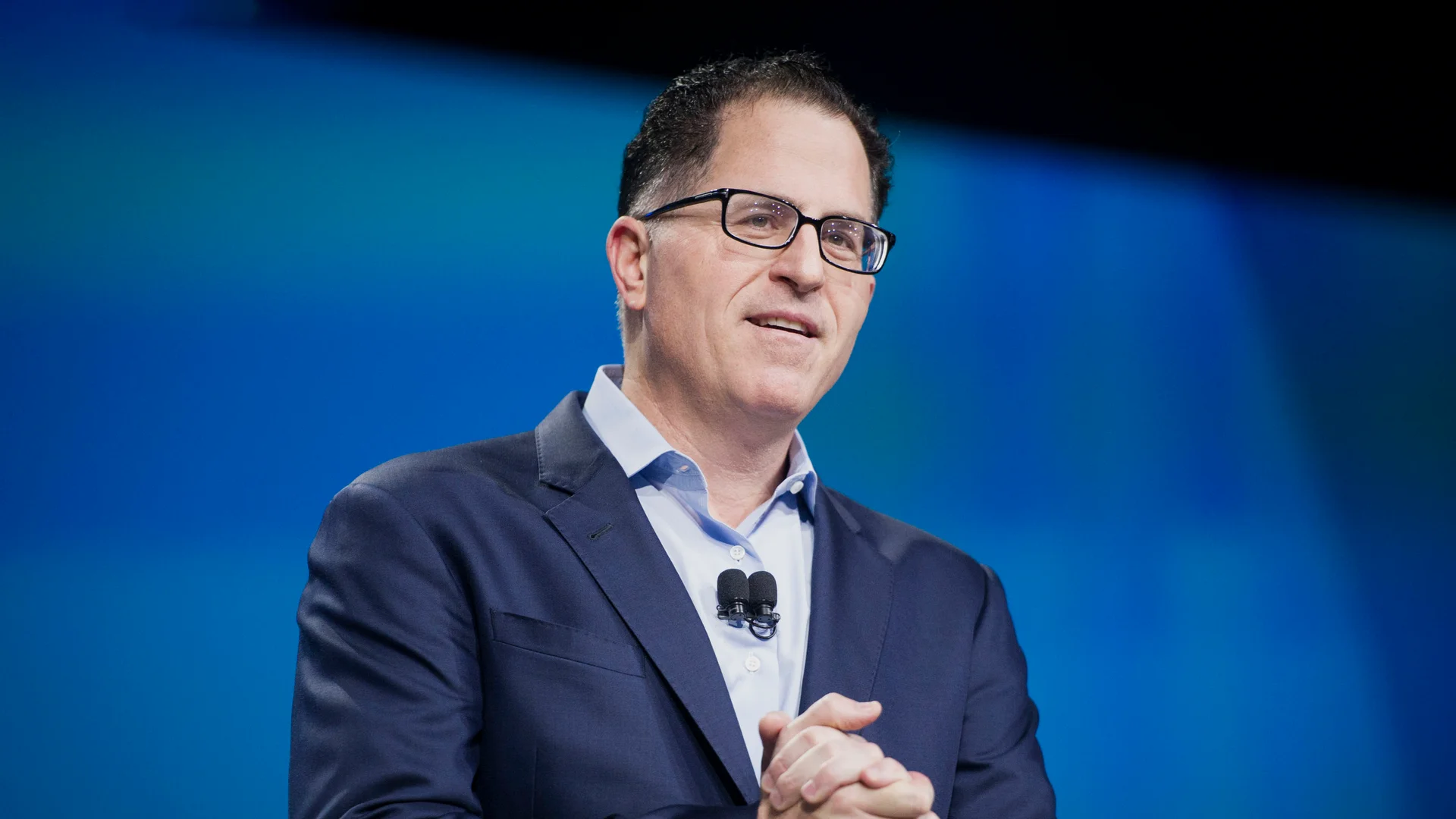
Achieving massive wealth requires a combination of disciplined capital allocation, strategic risk-taking, and the mastery of specific mental models. By studying the frameworks of Warren Buffett, Jeff Bezos, Elon Musk, and Bill Gates, individuals can implement the "secrets" of compounding, first principles thinking, long-term regret minimization, and deep strategic focus to build sustainable success.
The Foundational Mindsets of Global Wealth
Wealth at the billionaire level is rarely the result of simple labor; it is the product of leverage—leveraging capital, people, technology, and media. As we navigate the economic landscape of 2026, where artificial intelligence and automated systems have shifted the value of human effort toward high-level decision-making, understanding these foundational mindsets is more critical than ever.
The common thread among the world’s most successful individuals is not just hard work, but the ability to see the world through a lens of systems and probabilities. They do not view "success" as a finish line, but as an ongoing process of optimizing inputs to maximize outputs. To replicate even a fraction of their success, one must move away from linear thinking (trading time for money) and toward exponential thinking (building assets that grow independently of one’s presence).
1. Warren Buffett: The Secret of Compounding and Economic Moats
Warren Buffett, the chairman of Berkshire Hathaway, has built one of the largest fortunes in history by adhering to a philosophy that is deceptively simple: compounding. While many investors seek "get-rich-quick" schemes, Buffett’s secret lies in his ability to wait. He views time as the most potent ingredient in wealth creation.
The Power of the "Circle of Competence"
Buffett’s success is rooted in his refusal to stray outside his "Circle of Competence." This concept dictates that an individual should only invest in businesses or assets they thoroughly understand. By ignoring the "noise" of speculative trends—which in 2026 often involves volatile digital assets or unproven biotech—Buffett focuses on companies with predictable cash flows and "economic moats."
An economic moat is a structural advantage that protects a company from competitors. This could be a brand (like Coca-Cola), a high switching cost (like enterprise software), or a cost advantage (like GEICO). For the average person, building a "personal moat" means developing rare, valuable skills that cannot be easily replaced by automation or outsourced.
The Rule of Reinvestment
Buffett does not treat his earnings as spending money; he treats them as "seed corn." By reinvesting every dollar of profit back into high-quality assets, he allows the mathematical power of compounding to take over. This requires extreme patience. In a world of 24-hour news cycles and instant gratification, the billionaire secret here is the ability to ignore short-term fluctuations in favor of multi-decade growth.
2. Jeff Bezos: Regret Minimization and the Long-Term Flywheel
Jeff Bezos, the founder of Amazon, famously utilized a mental model called the Regret Minimization Framework to decide whether to leave his high-paying Wall Street job to start an online bookstore. This secret to success involves projecting oneself forward to age 80 and looking back at the current decision. If the 80-year-old version of you would regret not trying, the decision is clear.
The Long-Term Focus (Day 1 Mentality)
Bezos’s wealth was built on the back of "long-term thinking." While most public companies focus on quarterly earnings, Bezos focused on 10-year cycles. This allowed Amazon to operate at a loss for years while building the infrastructure that eventually dominated global commerce.
In 2026, the "Day 1" philosophy remains a cornerstone of the Amazon culture. It suggests that even the largest company must maintain the urgency, curiosity, and risk-taking spirit of a startup. For individuals, this means treating every day as an opportunity to innovate and refusing to settle into the complacency of "Day 2," which Bezos describes as a "stasis, followed by irrelevance, followed by excruciating, painful decline."
The Flywheel Effect
Bezos also emphasizes the "Flywheel Effect." In business, this means that a small amount of effort in one area (like lowering prices) leads to more customers, which leads to more sellers, which further lowers prices. Once the flywheel is spinning, it generates its own momentum. Identifying your personal or professional flywheel—where one success naturally feeds into the next—is a primary secret to scaling wealth without a proportional increase in effort.
3. Elon Musk: First Principles Thinking and Radical Risk
Elon Musk’s path to massive wealth through Tesla and SpaceX is defined by First Principles Thinking. This is the act of breaking a problem down to its fundamental truths and building a solution from the ground up, rather than reasoning by analogy (doing something because that's how it's always been done).
Breaking Down the Cost of Innovation
When Musk founded SpaceX, the conventional wisdom was that rockets were too expensive. By applying first principles, he looked at the raw material costs of a rocket (aluminum, titanium, copper, carbon fiber) and realized they were only a tiny fraction of the market price of a rocket. This realization led to the secret of vertical integration: making almost everything in-house and reusing hardware to collapse the cost of space travel.
For the modern professional, first principles thinking involves questioning the "standard" path to wealth. Instead of following the traditional career ladder, ask: "What are the core components required to generate value in 2026?" Often, the answer involves mastering niche technology, direct-to-consumer distribution, or proprietary intellectual property.
Asymmetric Risk-Taking
Musk is also known for his "all-in" approach. During the 2008 financial crisis, he put his last remaining millions into Tesla and SpaceX to keep them afloat. While this level of risk is not recommended for everyone, the billionaire secret here is the pursuit of asymmetric risk—opportunities where the potential upside is 100x or 1,000x the potential downside. In 2026’s economy, this often manifests in entrepreneurship or equity-based compensation rather than a fixed salary.
4. Bill Gates: Strategic Focus and Continuous Learning
Bill Gates’s rise to wealth with Microsoft was characterized by an almost obsessive level of strategic focus. During the early years of the company, Gates was known for "Think Weeks," where he would retreat into isolation to read, research, and plan the future of the industry without any distractions.
The Intellectual Compound Interest
Gates’s primary secret is his commitment to being a "learning machine." He reportedly reads 50 books a year and spends hours synthesizing complex information. He understands that in a knowledge-based economy, the person who can synthesize information from disparate fields (e.g., biology and software) will have a massive competitive advantage.
This "Deep Work" philosophy is increasingly rare in 2026. With the constant pull of social media and fragmented attention, the ability to focus on a single complex task for several hours is a "superpower" that leads to disproportionate wealth. Gates didn't just build a product; he built a standard (Windows), and he did so by seeing the strategic landscape years before his competitors.
Scaling Through Systems
Gates also understood the importance of high-margin software. Unlike physical goods, software costs almost nothing to replicate once the first copy is written. This secret—choosing industries with low marginal costs and high scalability—is how he maintained his status as the world’s richest person for decades. To apply this today, one should look for "permissionless" leverage, such as code or content, which works for you while you sleep.
Comparison of Billionaire Wealth Strategies
| Billionaire | Core Wealth Secret | Key Mental Model | Primary Form of Leverage | Risk Tolerance |
|---|---|---|---|---|
| Warren Buffett | Compounding | Circle of Competence | Capital (Investing) | Conservative/Calculated |
| Jeff Bezos | Long-term Thinking | Regret Minimization | Systems/Infrastructure | Moderate/Strategic |
| Elon Musk | First Principles | Physics-based Logic | Technology/Engineering | High/Existential |
| Bill Gates | Strategic Focus | Deep Work/Synthesis | Software/Standardization | Calculated/Aggressive |
Practical Implementation: Building Your Wealth in 2026
Applying these secrets does not require an initial million-dollar investment. It requires a shift in how you allocate your most precious resource: time.
- Audit Your Circle of Competence: Identify the intersection of what you are good at, what you enjoy, and what the 2026 market actually pays for. Avoid "shiny object syndrome" and stay within this circle until you have mastered it.
- Establish a Learning System: Following Bill Gates’s example, schedule non-negotiable time for deep learning. In the age of AI, the ability to prompt, manage, and synthesize automated outputs is the new "literacy."
- Find Your Flywheel: Look for activities that have cumulative effects. For instance, creating a professional network or a portfolio of digital assets provides more value the larger it grows.
- Embrace Asymmetric Bets: While maintaining a safety net, look for opportunities where the downside is limited (like starting a side business in your spare time) but the upside is uncapped wealth.
Common Pitfalls to Avoid
Many people attempt to copy the actions of billionaires without understanding the principles. Buying a stock just because Buffett did is not "value investing" if you don't understand the business. Similarly, taking "Musk-level" risks without his technical foundational knowledge is a recipe for financial ruin. The secret is to adapt their logic, not just their portfolio.
Frequently Asked Questions
Can these wealth secrets be applied with zero starting capital?
Yes. Both Bill Gates and Jeff Bezos started with relatively small amounts of capital compared to their eventual net worths. The key is to leverage "labor" and "code" (skills, software, or content) initially, which require time rather than money. Once you generate a surplus, you transition into "capital leverage" by investing that money to compound over time.
Why is "First Principles Thinking" better than following experts?
Experts often rely on "analogy"—what worked in the past. In a rapidly changing economy like that of 2026, the past is a poor predictor of the future. First principles allow you to see opportunities that experts miss because they are too tied to "the way things have always been done."
Is "Regret Minimization" better than a standard Cost-Benefit Analysis?
A cost-benefit analysis is often biased toward the short term and emotional comfort. Regret minimization forces you to take a macro perspective on your life. It helps you overcome the "fear of the unknown," which is the primary barrier preventing most people from pursuing high-wealth opportunities.
How much time should I spend on "Deep Work"?
Most billionaires suggest that even 2 to 4 hours of uninterrupted, high-intensity focus per day can produce more results than 12 hours of distracted work. In 2026, the value of focus has increased as the "noise" in the digital environment has become more pervasive.
What is the biggest mistake people make when trying to get wealthy?
The most common mistake is interrupting compounding. People often build a small amount of wealth and then spend it on liabilities (cars, luxury goods) instead of allowing it to reinvest. As Warren Buffett teaches, the first rule of wealth is to keep the "snowball" rolling.
Focus on Systems, Not Just Goals
To achieve massive success by the end of 2026 and beyond, stop focusing solely on a specific dollar amount and start focusing on the systems that produce wealth. Build a system for learning, a system for investing, and a system for long-term decision-making. By adopting the patience of Buffett, the vision of Bezos, the logic of Musk, and the focus of Gates, you align yourself with the fundamental laws of financial growth. Your next action should be to identify one "moat" you can build around your current career or business to ensure you are creating value that the market cannot easily replicate.