3D content refers to digital assets built with spatial data (width, height, and depth), while avatars are the user-controlled digital personae that inhabit these spaces. Together, they constitute the fundamental building blocks of the spatial web, enabling immersive interaction, virtual commerce, and cross-platform identity through real-time rendering and standardized interoperability.
The Evolution of 3D Content Creation
As of 2026, the creation of 3D content has moved beyond the exclusive domain of professional technical artists. While traditional polygonal modeling remains the gold standard for high-fidelity assets, several technological shifts have democratized the production pipeline. The primary methods for generating 3D content now include traditional modeling, spatial capture, and generative AI.
Traditional Modeling and Real-Time Engines
Professional-grade 3D content is still largely produced using software like Autodesk Maya, Blender, and Cinema 4D. These tools allow for precise control over topology, UV mapping, and texture application. However, the most significant change in 2026 is the ubiquitous use of real-time engines like Unreal Engine 5.x and Unity. These engines no longer just "play" the content; they serve as the primary environment for lighting, physics simulation, and assembly. The industry has shifted toward "What You See Is What You Get" (WYSIWYG) workflows, where lighting and material changes are viewed instantly rather than requiring lengthy render times.
Spatial Capture: Photogrammetry and Gaussian Splatting
The rise of mobile spatial computing has made 3D capture accessible to the average user. Photogrammetry, the process of stitching multiple 2D photos into a 3D model, has been largely augmented or replaced by 3D Gaussian Splatting. This technique allows for the rapid capture of complex environments and objects with high levels of transparency and reflection—areas where traditional photogrammetry often failed. By 2026, standard smartphones are equipped with LiDAR and specialized processing chips to convert real-world objects into high-fidelity digital twins in seconds.
Generative AI Pipelines
Generative AI has fundamentally altered the 3D asset pipeline. Tools that use "Text-to-3D" or "Image-to-3D" prompts now produce clean, rigged, and textured meshes. These AI models are trained on massive datasets of 3D geometry, allowing creators to bypass the tedious "blocking out" phase of modeling. While AI-generated models still require human refinement for high-stakes professional use, they have reduced the time-to-market for indie developers and individual creators by up to 80%.
Digital Personae: The Architecture of Modern Avatars
In 2026, an avatar is more than a 3D model; it is a complex data container representing a user’s identity, permissions, and social presence across the metaverse. The sophistication of an avatar is determined by its rigging, its ability to reflect the user's physical movements, and its visual fidelity.
Rigging and Skeletal Structures
For an avatar to move, it must have an internal "skeleton" or rig. Standardized skeletal structures are essential for interoperability. Most modern avatars use a humanoid bone structure that allows them to share animations—such as walking, dancing, or sitting—regardless of their outer appearance. This standardization is what allows a user to buy a digital garment on one platform and wear it on another without the mesh "clipping" through the avatar's body.
Facial Expression and Blendshapes
Emotional resonance in digital interactions depends on facial fidelity. Modern avatars utilize blendshapes (morph targets) that correspond to specific facial muscle movements. Combined with the eye and face-tracking sensors found in 2026-era headsets like the Meta Quest Pro 2 or Apple Vision Pro, these blendshapes allow avatars to mimic a user’s micro-expressions in real-time. This level of "social presence" is what distinguishes current avatars from the static or poorly animated representations of the early 2020s.
Stylized vs. Hyper-Realistic Avatars
The market for avatars is split between two primary aesthetic directions:
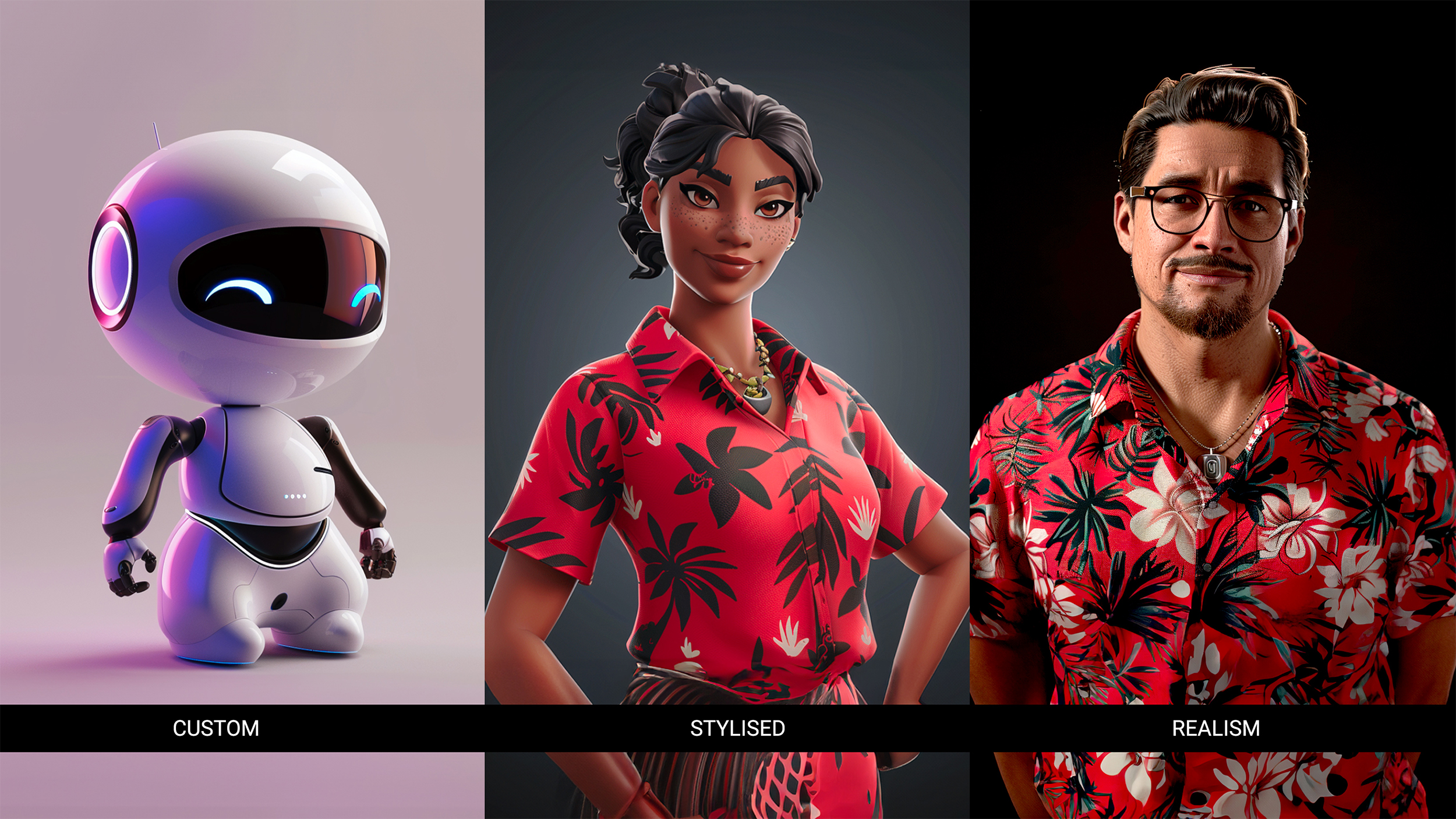
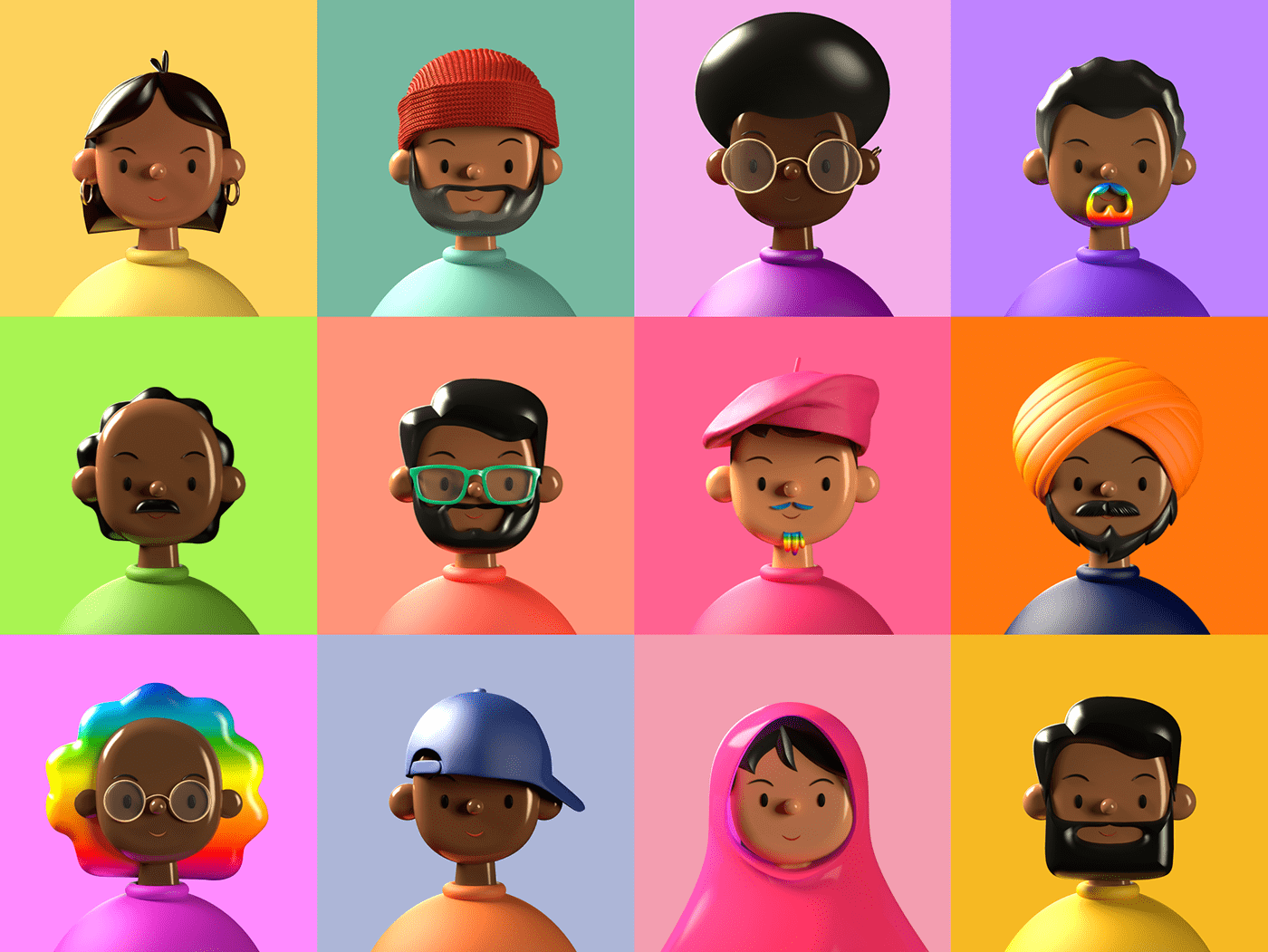
- Stylized Avatars: These are often cartoonish or artistic (e.g., Ready Player Me or Roblox styles). They are computationally "cheap," meaning they run smoothly on low-power devices and are preferred for massive social gatherings.
- Hyper-Realistic Avatars: Utilizing technologies like Epic Games' MetaHuman, these avatars are nearly indistinguishable from real humans. They are used primarily in high-end corporate telepresence, cinematic storytelling, and virtual influencer marketing.
Technical Standards and Interoperability
The greatest challenge for 3D content and avatars has historically been the "walled garden" problem. In 2026, the industry has largely converged on a few key standards to ensure that assets purchased or created in one environment can function in another.
Universal Scene Description (OpenUSD)
Originally developed by Pixar, OpenUSD has become the primary standard for 3D content. It acts as a powerful framework that describes how 3D scenes are structured, including geometry, materials, lighting, and physics. The Alliance for OpenUSD (AOUSD)—comprising Apple, NVIDIA, Pixar, and others—has been instrumental in making this the foundation for the spatial web, ensuring that complex 3D scenes are portable across different software ecosystems.
glTF and VRM
While USD is for complex scene descriptions, glTF (GL Transmission Format) remains the "JPEG of 3D." It is an efficient, compact format designed for fast loading on the web. A specialized extension of glTF, known as VRM, is the leading standard for avatars. VRM files include specific metadata for avatar height, eye position, and license permissions, making it the preferred format for the Vtubing community and cross-platform social VR.
Industry Applications of 3D Assets
The utility of 3D content and avatars extends far beyond gaming. By 2026, these technologies have become integrated into the core workflows of several major industries.
| Industry | Primary Use Case | Key 3D Technology Used |
|---|---|---|
| Retail & E-commerce | Virtual try-on and 3D product previews | glTF, WebXR, AR Overlay |
| Manufacturing | Digital Twins and spatial training | OpenUSD, LiDAR Scanning |
| Healthcare | Surgical simulation and patient visualization | High-fidelity volumetric rendering |
| Corporate | Remote collaboration and telepresence | MetaHuman, Spatial Audio |
| Education | Immersive history and science labs | Real-time interactive 3D assets |
Enterprise and Digital Twins
In manufacturing and urban planning, 3D content takes the form of Digital Twins. These are exact 3D replicas of physical objects or systems that are updated with real-time data from IoT sensors. Engineers use these models to simulate stress tests or optimize factory floor layouts before making any physical changes.
Virtual Commerce and "Direct-to-Avatar"
The "Direct-to-Avatar" (D2A) economy is a multi-billion dollar industry in 2026. Fashion brands like Nike and Gucci release digital-only collections that users buy for their avatars. These assets are often secured via blockchain technology to prove ownership and rarity, allowing users to trade or sell their digital wardrobe in secondary markets.
Implementation: Costs and Requirements
Developing or acquiring 3D content and avatars requires a strategic approach to hardware, software, and talent.
Hardware Prerequisites
For creators, a high-performance workstation is non-negotiable. This typically includes:
- GPU: NVIDIA RTX 50-series or equivalent (essential for real-time ray tracing).
- Memory: Minimum 64GB RAM for handling high-resolution USD stages.
- Input: LiDAR-enabled mobile devices for object capture and VR headsets for spatial editing.
Software and Licensing
Software costs can range from free (Blender) to several thousand dollars per year for enterprise suites. Furthermore, businesses must consider the licensing of 3D assets. Many marketplaces offer "royalty-free" assets, but use in commercial broadcasts or large-scale games often requires extended licenses to protect against intellectual property disputes.
Human Capital
The demand for "Technical Artists"—professionals who bridge the gap between pure art and coding—is at an all-time high. A successful 3D project requires a team capable of 3D modeling, rigging, material science (PBR texturing), and optimization for real-time performance.
Security, Privacy, and Ethical Considerations
The rise of high-fidelity avatars brings significant ethical challenges. As avatars become more realistic, the risk of identity theft and "deepfake" impersonation in virtual spaces increases.
- Identity Verification: In 2026, many enterprise platforms require "Verified Avatars," where the digital representation is tied to a legal identity through biometric hashing. This prevents bad actors from assuming the likeness of executives or public figures.
- Data Privacy: Avatars are driven by sensitive data—eye movements, gait, and even heart rate (via wearable sensors). Standardizing how this "biometric data" is stored and processed is a major focus for regulators.
- Digital Consent: The ability to "re-skin" or modify someone else’s 3D capture without permission is a growing legal concern. Copyright laws have been updated to include the specific "likeness and motion" of digital personae.
Strategic Recommendations for 2026
For organizations and individuals looking to enter the 3D space, the focus should be on flexibility and standards. Do not build for a single platform; instead, build for the ecosystem.
Adopt an "Open First" Policy
When creating or purchasing 3D assets, ensure they are delivered in open formats like glTF or OpenUSD. Avoid proprietary formats that lock your assets into a single vendor's ecosystem. This ensures that your digital inventory remains valuable as new platforms emerge and old ones fade.
Invest in Optimization
The most beautiful 3D model is useless if it cannot run on a mobile VR headset or a standard smartphone. Prioritize "performance budgets," which limit the number of polygons and the size of textures. Effective use of Level of Detail (LOD) systems—where the model becomes less complex as it moves further from the camera—is essential for creating smooth, accessible 3D experiences.
Focus on Authenticity
For personal and professional branding, choose an avatar style that matches your intent. A stylized avatar is often better for playful social interaction as it avoids the "uncanny valley," while a high-fidelity MetaHuman is more appropriate for a keynote address or a formal board meeting in a virtual office.
FAQ
How do I turn a real person into a 3D avatar?
In 2026, the most common method is using a mobile-based spatial capture app that utilizes the phone’s LiDAR and camera. Users perform a "head sweep" and a full-body scan, which is then processed in the cloud using AI to generate a rigged mesh. For professional results, high-end studios use multi-camera photogrammetry rigs consisting of 50 or more DSLR cameras to capture every angle simultaneously.
What is the difference between a mesh and a rig?
A mesh is the visible "skin" or outer shell of a 3D object, made up of thousands of tiny triangles or polygons. A rig is the invisible internal structure of "bones" and "joints" that tells the mesh how to move. You can have a beautiful mesh, but without a rig, it is a static statue that cannot be animated or used as an interactive avatar.
Can I use the same avatar across different metaverses?
Yes, provided the platforms support interoperable standards like VRM or are part of a unified ecosystem like Ready Player Me. However, some platforms still restrict avatars to their own proprietary styles to maintain visual consistency. Before investing in expensive digital clothing, check if the platform allows for "interoperable asset export."
How much does it cost to have a custom 3D avatar made?
Costs vary wildly based on complexity. A basic stylized avatar from a generator might be free or cost under $50. A custom-designed, rigged character from a professional freelance artist typically ranges from $1,000 to $5,000. High-end, hyper-realistic MetaHumans for corporate use can exceed $20,000 when factoring in custom clothing, facial rigging, and unique animations.
What is PBR and why does it matter for 3D content?
PBR stands for Physically Based Rendering. It is a shading method that calculates how light interacts with surfaces based on real-world physics. It uses "maps" for roughness, metalness, and base color to ensure that a 3D object looks realistic under any lighting condition. Without PBR, 3D content often looks "flat" or "plastic" when moved from one environment to another.