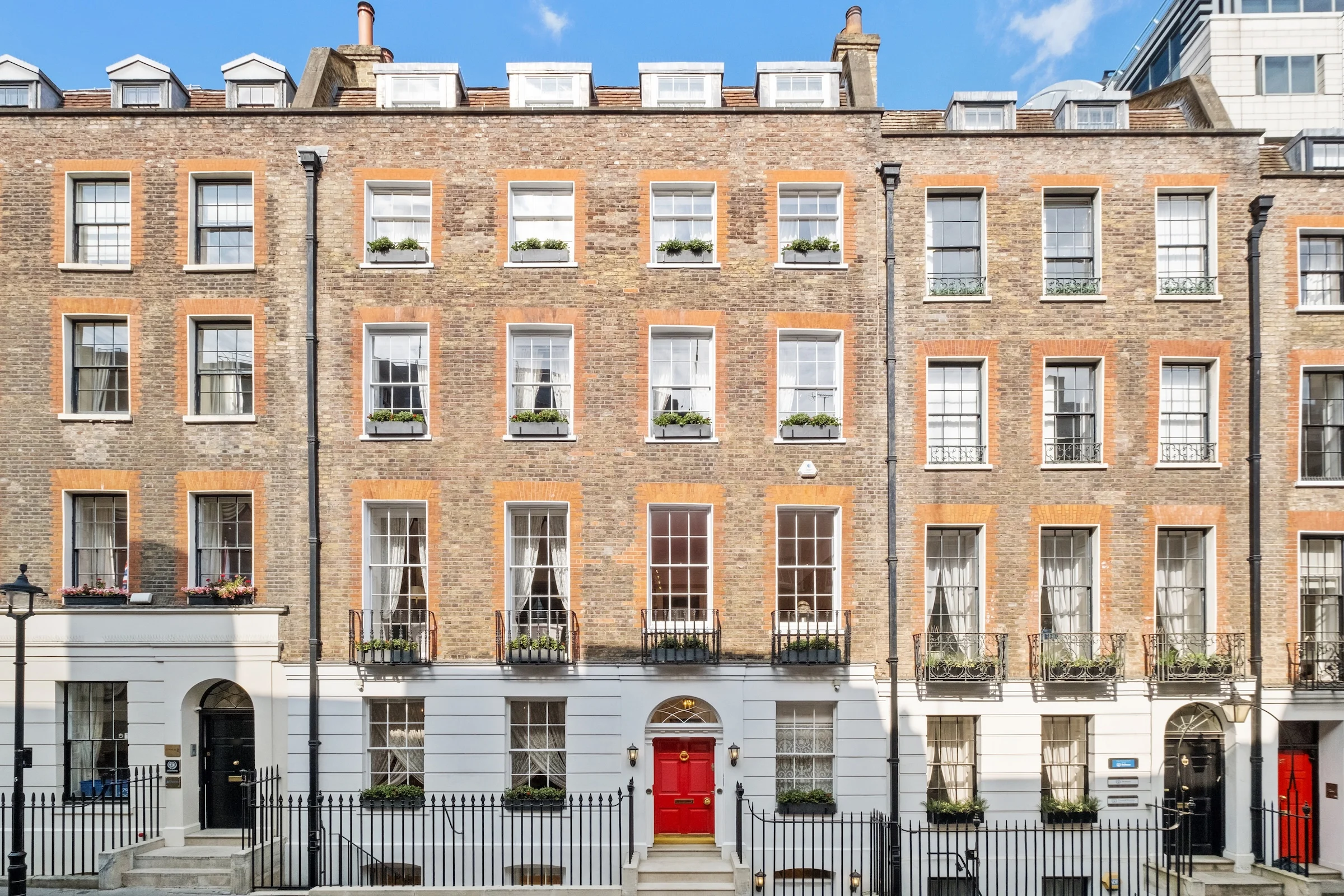
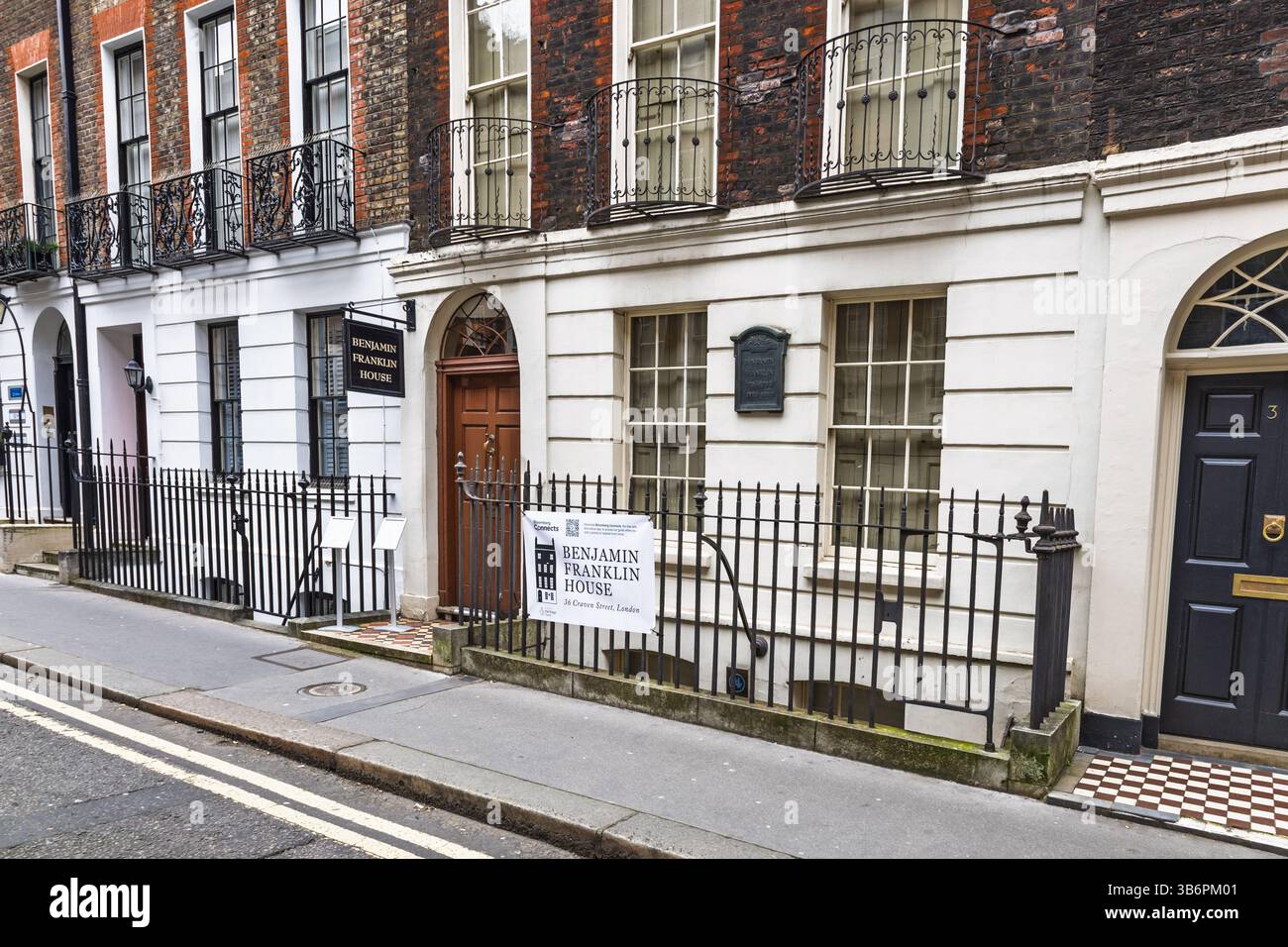
36 Craven Street is the world’s only remaining residence of Benjamin Franklin, serving as his home and diplomatic base in London between 1757 and 1775. Today, it operates as a Grade I listed museum and educational center, showcasing Franklin’s scientific discoveries, political negotiations, and the building's remarkable 18th-century anatomical history.
Historical Context: The Genesis of 36 Craven Street
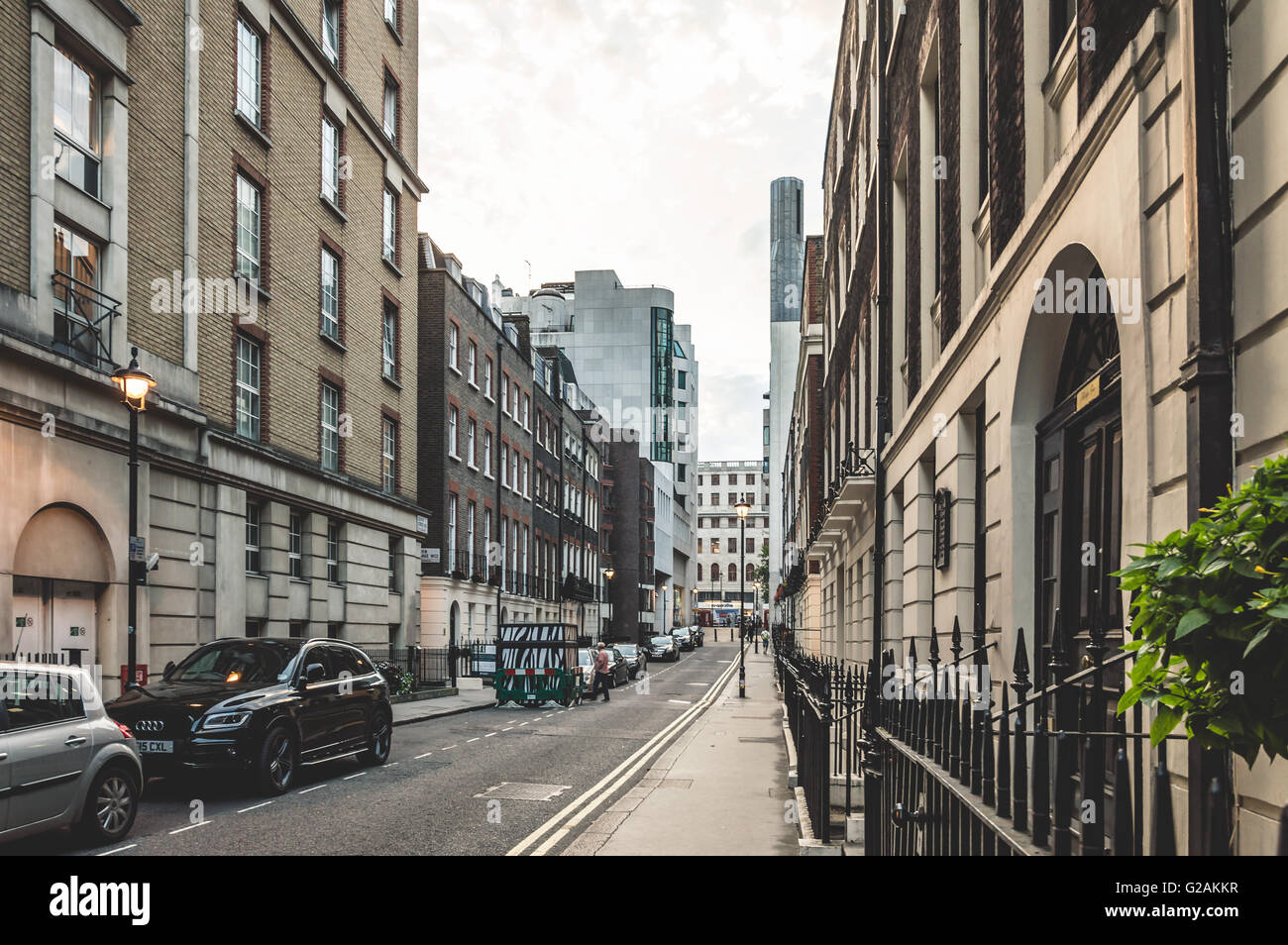
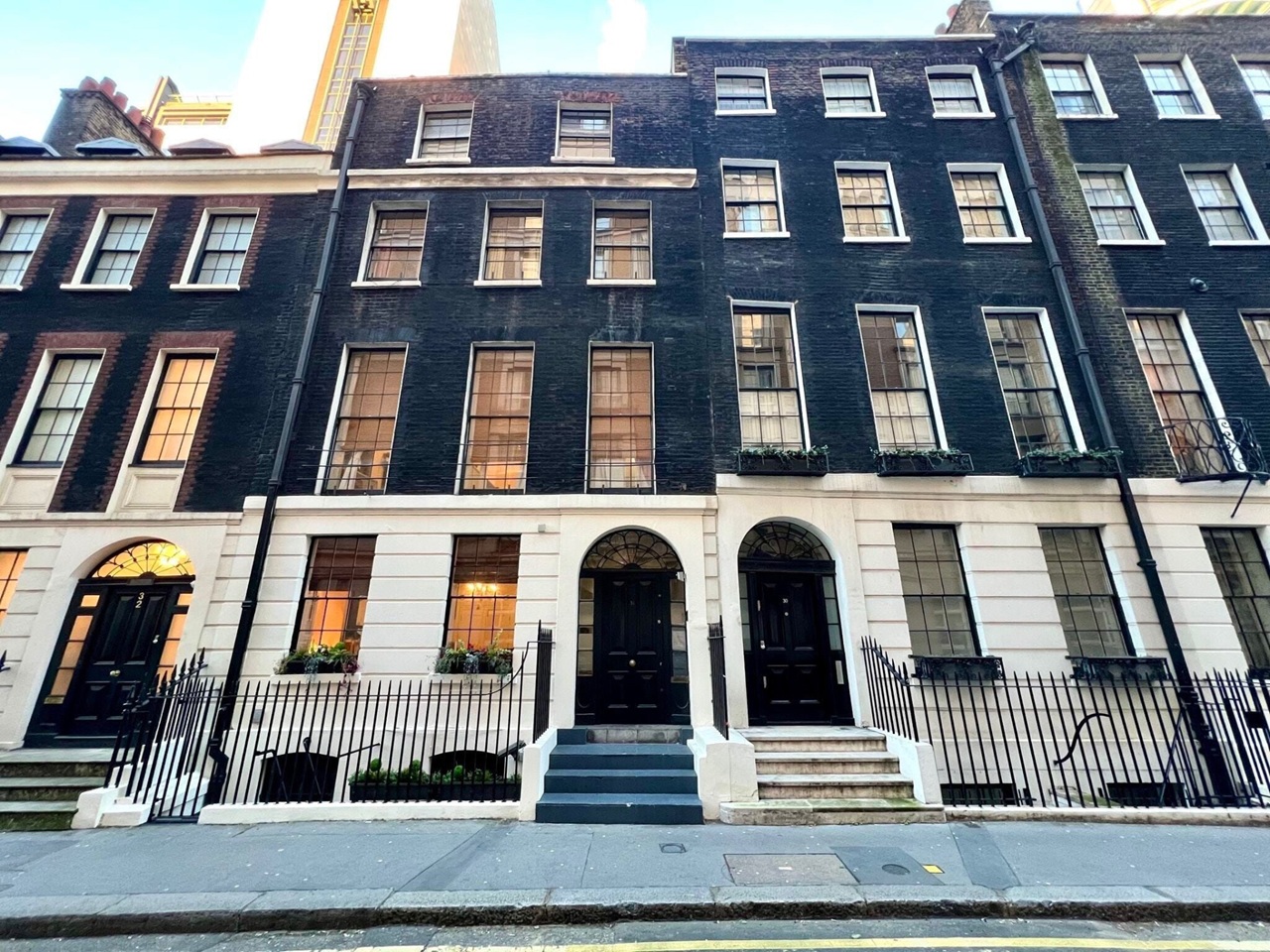
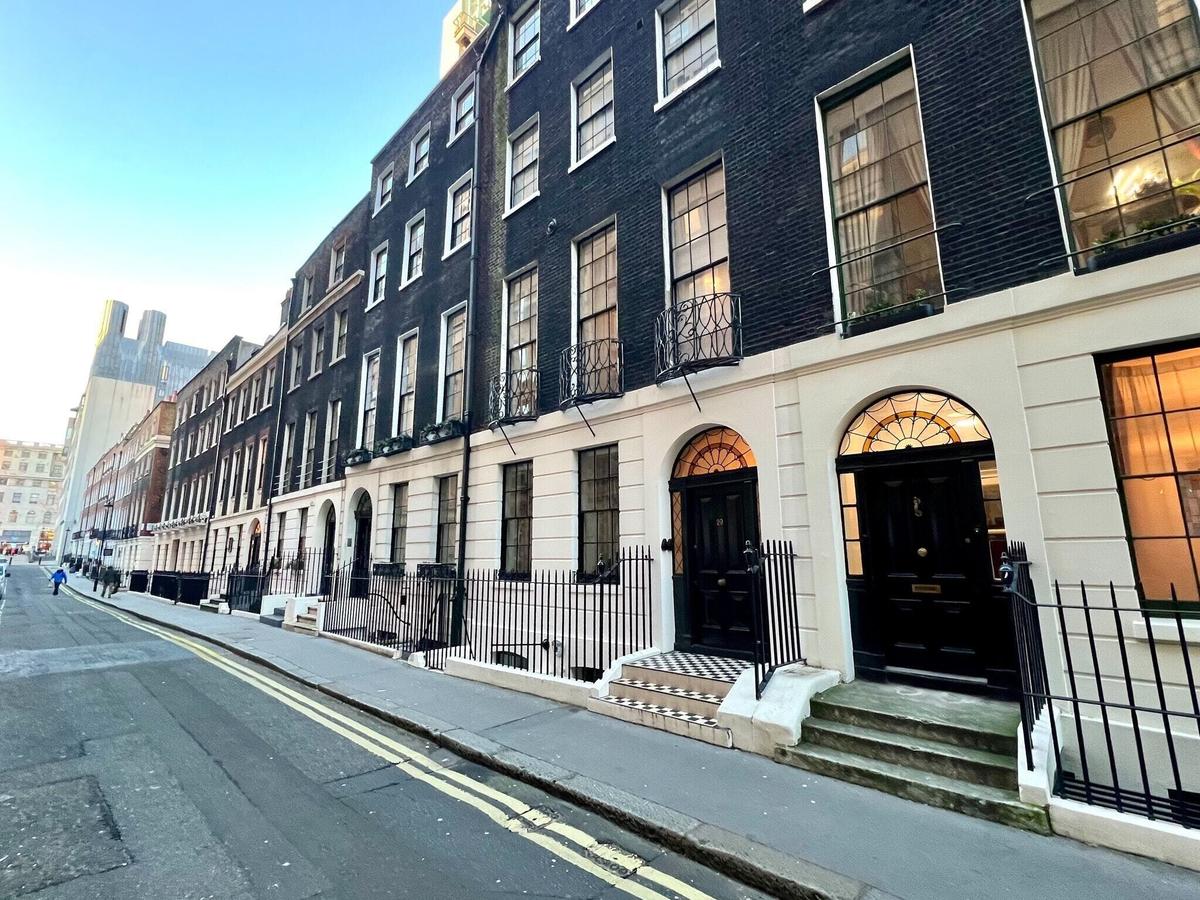
Located just steps from Trafalgar Square and Charing Cross, 36 Craven Street is a quintessential example of Georgian terrace architecture. Built circa 1730 by William Craven, the street was part of a larger development intended to provide housing for the growing professional classes and visiting dignitaries in the heart of Westminster. The house itself is a four-story structure (plus a basement and attic) that has survived nearly three centuries of urban transformation, including the Blitz during World War II.
In the mid-18th century, the house was operated as a lodging establishment by Margaret Stevenson. It was to this address that Benjamin Franklin arrived in July 1757, initially sent as a colonial agent for the Pennsylvania Assembly. What was intended to be a short-term diplomatic mission evolved into a nearly 16-year residency. During this period, 36 Craven Street functioned as the first de facto American embassy, a laboratory for scientific inquiry, and a vibrant social hub for the Enlightenment's greatest minds.
The preservation of the site is a testament to its cultural weight. By the 20th century, the building had fallen into significant disrepair. It was only through the dedicated efforts of the Friends of Benjamin Franklin House, a charity established in the late 1980s, that the property was saved from potential redevelopment. The restoration project, which culminated in the house opening to the public on January 17, 2006 (Franklin’s 300th birthday), focused on maintaining "honest" conservation—preserving original features like the floorboards, paneling, and fireplaces without over-modernizing the interior.
Benjamin Franklin in London: A Diplomatic and Scientific Hub
Benjamin Franklin’s time at 36 Craven Street represents a pivotal era in both American and British history. Franklin moved into the house during the height of his international fame as the "man who tamed lightning." His presence in London was primarily political; he was tasked with negotiating with the Penn family (the proprietors of Pennsylvania) regarding taxation and governance. However, his role quickly expanded to represent several other colonies, including Georgia, New Jersey, and Massachusetts.
Inside the walls of 36 Craven Street, Franklin balanced high-stakes diplomacy with tireless scientific curiosity. It was here that he refined the "Franklin Stove" and conducted extensive work on his theories of electricity. One of his most whimsical yet enduring inventions created at this address was the glass armonica, a musical instrument made of spinning glass bowls. The instrument became a sensation in Europe, with composers like Mozart and Beethoven eventually writing pieces for it.
The house also bore witness to Franklin’s attempts to prevent the American Revolution. He hosted countless meetings with British politicians and intellectuals, including Joseph Priestley and David Hume, in a desperate bid to reconcile the growing divide between the Crown and the colonies. As of 2026, historians still view 36 Craven Street as the location where the foundations of modern American diplomacy were laid. When the political climate became untenable following the "Hutchinson Letters" scandal and his public rebuke at the Cockpit in 1774, Franklin finally departed London in March 1775, returning to Philadelphia just as the first shots of the Revolution were fired.
The Mystery of the Craven Street Bones: William Hewson’s Anatomy School
One of the most startling discoveries in the history of 36 Craven Street occurred in 1998, during the initial phases of the house's restoration. Workers discovered a pit in the basement containing more than 1,200 human and animal bones. Initial speculation was sensational, but archaeological analysis quickly linked the find to William Hewson, the son-in-law of Franklin’s landlady, Margaret Stevenson.
Hewson was a pioneering anatomist who worked alongside William Hunter. In the early 1770s, he ran a private anatomy school from the Craven Street premises. At the time, the study of anatomy was heavily restricted, and the legal supply of cadavers (primarily executed criminals) was insufficient to meet the demands of medical students. Private anatomy schools often operated in a legal gray area, frequently sourcing bodies through "resurrection men" or grave robbers.
Key features of the Craven Street Bone find include:
- Evidence of Dissection: Many of the bones showed precise marks from saws and trepanning drills.
- Diverse Samples: The pit contained remains from both adults and children, as well as various animals used for comparative anatomy.
- Discreet Disposal: Disposing of remains on-site was a common, albeit clandestine, practice for 18th-century anatomy schools to avoid public outcry or legal prosecution.
While Benjamin Franklin was likely aware of the anatomy school operating in the basement, there is no evidence he participated in the dissections. However, his friendship with Hewson—and his general support for scientific progress—suggests he viewed the school as a necessary, if gruesome, component of medical advancement. Today, the "Science Center" within the house provides a detailed look at this archaeological discovery, offering a sobering glimpse into the history of medical education.
Architectural Significance and Structural Preservation
36 Craven Street is a Grade I listed building, a designation reserved for structures of exceptional architectural or historic interest. It remains one of the finest examples of a mid-Georgian terraced house in London. The architectural integrity of the building is unique because it was never substantially altered in the 19th or 20th centuries to accommodate modern plumbing or extensive internal remodeling.
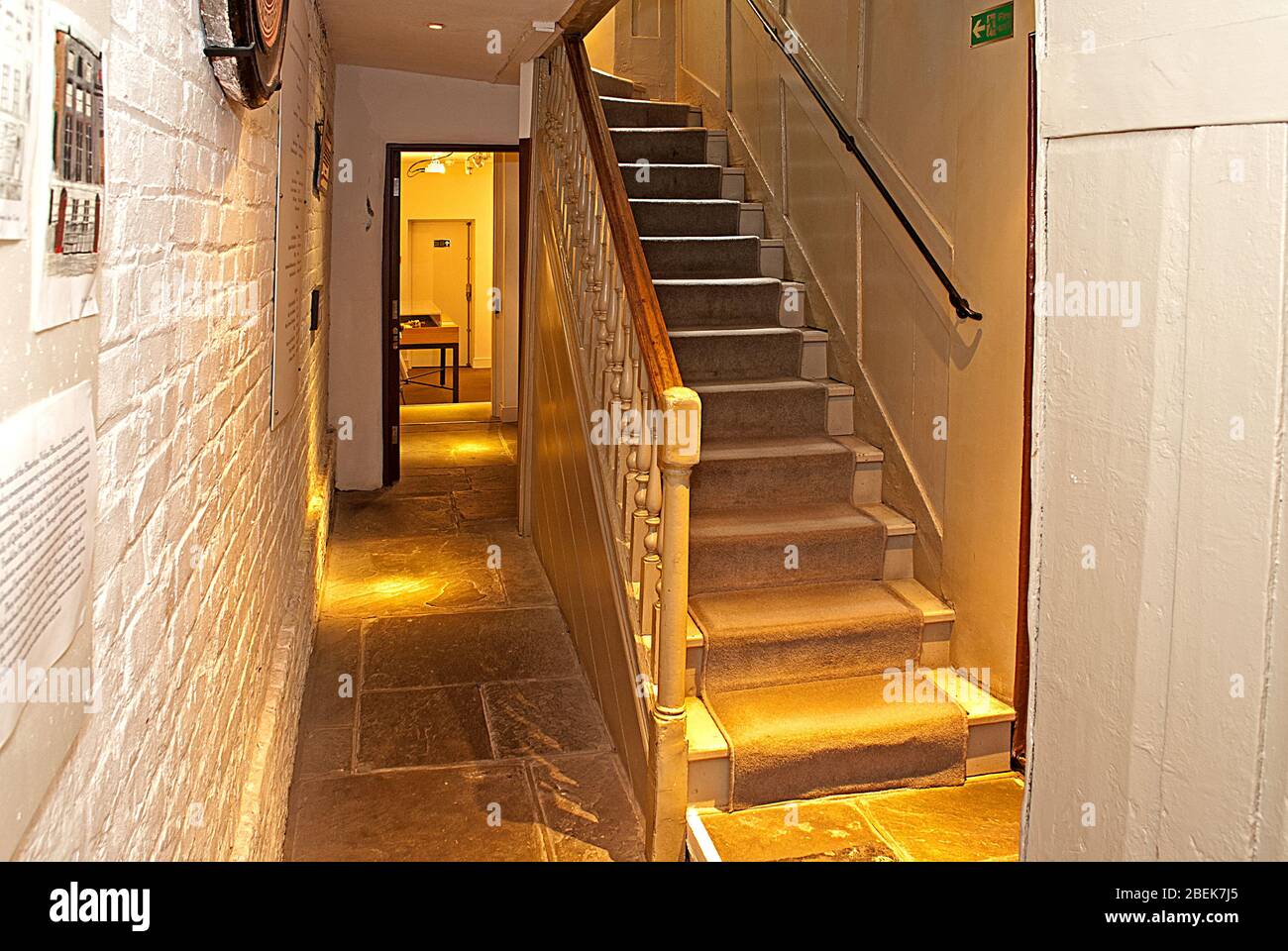
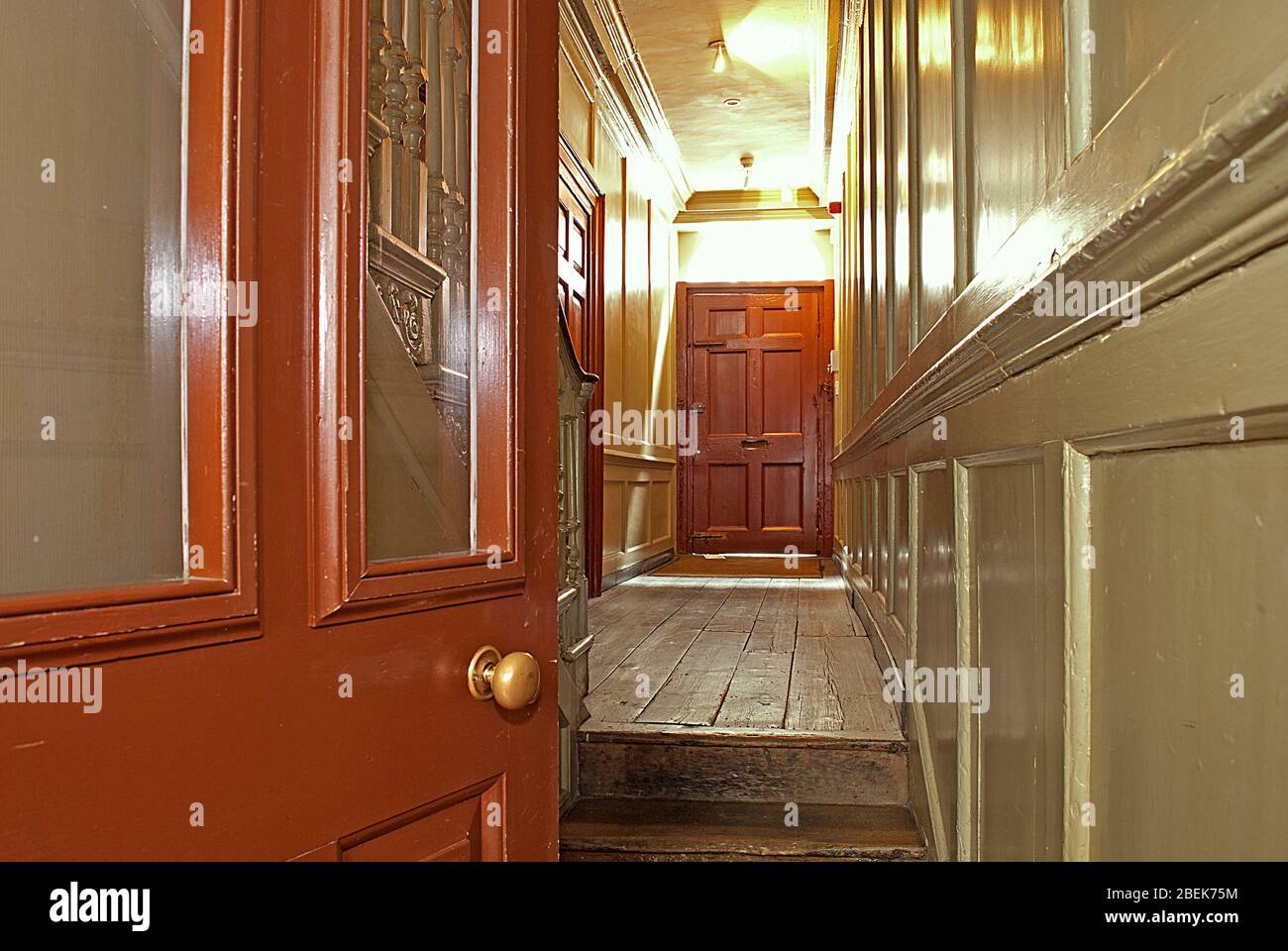
The restoration philosophy at 36 Craven Street is known as "arrested decay." Rather than filling the house with period-correct furniture that didn't belong to Franklin, the conservators decided to keep the rooms largely empty. This allows the building's "bones" to speak for themselves. Visitors can see the original 18th-century floorboards—the very boards Franklin walked upon—and the intricate wood paneling that has survived for nearly 300 years.
Notable architectural features include:
- The Central Staircase: A narrow, winding timber staircase that connects the five levels, typical of the vertical living arrangements of Georgian London.
- The Card Room: A refined space where Franklin entertained guests, featuring well-preserved decorative moldings.
- The Basement Laboratory: The area where both Franklin’s scientific experiments and Hewson’s dissections occurred, characterized by thick brickwork and original flagstones.
In 2026, the house continues to use innovative conservation techniques to manage the impact of humidity and foot traffic on the ancient timber. Structural reinforcements made during the 1990s restoration are carefully hidden, ensuring the house retains its 1700s silhouette while meeting modern safety standards.
Engaging with History: Tours and Educational Programs in 2026
The Benjamin Franklin House does not operate like a traditional museum. Instead, it utilizes a "Historical Experience" that combines live performance with cutting-edge technology. As of 2026, the house offers several distinct ways for visitors to engage with the site's rich history.
The Historical Experience is the flagship tour. It uses the house as a stage, where an actress playing the role of Polly Hewson (Margaret Stevenson's daughter) leads visitors through the rooms. This narrative is enhanced by "spatial audio" and seamless projections on the walls, bringing Franklin’s letters and inventions to life without the need for physical clutter.
For those interested in the technical aspects of the site, the Architectural Tour provides an in-depth look at Georgian construction and the challenges of Grade I conservation. Meanwhile, the Science Tour focuses on the Craven Street Bones and Franklin’s various experiments. The house also maintains a robust educational program for schools, focusing on the "Enlightenment Science" curriculum, which explores the transition from alchemy and superstition to the empirical scientific method.
| Tour Type | Focus Area | Best For | Duration |
|---|---|---|---|
| Historical Experience | Franklin's life, politics, and social circle | Families and general history enthusiasts | 45-60 Minutes |
| Architectural Tour | Georgian design and restoration techniques | Architects, historians, and students | 60 Minutes |
| Science Tour | Anatomy, the Craven Street Bones, and inventions | Science buffs and medical history fans | 60 Minutes |
| Student Workshops | Enlightenment-era scientific methodology | School groups and educators | 90+ Minutes |
Planning Your Visit: Practical Information and Accessibility
Visiting 36 Craven Street requires some advance planning, as the small footprint of the Georgian terrace limits the number of guests allowed inside at any one time. In 2026, pre-booking via the official Benjamin Franklin House website is highly recommended, especially during the peak summer months and around Franklin’s birthday in January.
Location and Access
The house is located at 36 Craven Street, London WC2N 5NF.
- By Tube: The nearest station is Charing Cross (Bakerloo and Northern lines), which is less than a two-minute walk away. Embankment Station (District, Circle, Bakerloo, and Northern lines) is also nearby.
- By Rail: Charing Cross mainline station provides easy access for those traveling from outside London.
- Accessibility: Due to its status as a Grade I listed 18th-century building, 36 Craven Street has significant physical limitations. The house features many narrow, steep stairs and no elevator. However, the ground floor is accessible, and the museum provides a virtual reality version of the upper-floor tours for visitors with limited mobility.
Visitor Guidelines
To protect the historic fabric of the building, visitors are often asked to wear protective coverings over their shoes or to avoid wearing stiletto heels, which can damage the original 18th-century floorboards. Photography is generally permitted for personal use, but flash and professional equipment are restricted to ensure the preservation of the delicate wood and plasterwork.
Nearby Historical Sites
A visit to 36 Craven Street can easily be paired with other nearby historical landmarks. The National Gallery and the National Portrait Gallery are located at the top of the street in Trafalgar Square. Additionally, the Royal Society of Arts, where Franklin was a fellow, is located just a short walk away on John Adam Street, offering a broader context of the intellectual landscape of 18th-century London.
Scheduling and Hours
In 2026, the house typically operates Wednesday through Sunday. Morning sessions are often reserved for school groups, with public tours commencing in the afternoon. It is advisable to check the current schedule for any special events, such as evening candlelit tours or "Founding Father" lectures, which occur periodically throughout the year.
FAQ
Why did Benjamin Franklin live at 36 Craven Street?
Franklin moved to 36 Craven Street in 1757 to serve as a diplomat representing the Pennsylvania Assembly. He chose the location because it was close to the centers of British power in Whitehall and Westminster. Over time, his role expanded to represent other colonies, and he remained there for nearly 16 years because the Stevenson family, who owned the house, became like a second family to him.
Can you see the "Craven Street Bones" at the house?
Yes, the Science Center at the Benjamin Franklin House includes an exhibit dedicated to the 1998 discovery of the bones. While not all 1,200 fragments are on display, the exhibit features key specimens that show evidence of 18th-century surgical techniques, along with detailed explanations of William Hewson’s anatomy school and the historical context of medical research during that era.
Is the house a reconstruction or the original building?
The house is the original 18th-century structure. Unlike many historic sites that have been heavily rebuilt, 36 Craven Street is remarkably well-preserved. Most of the internal woodwork, including the staircase and floorboards, dates back to the 1730s. The restoration focused on preserving these original elements rather than replacing them with modern replicas.
What inventions did Franklin work on while living in London?
While at 36 Craven Street, Franklin worked on several major projects, most notably the glass armonica. He also developed a more efficient version of the Franklin Stove, experimented with the effects of oil on water to calm waves, and continued his extensive studies into electricity. Many of these experiments were conducted in the house's basement or back garden.
Is Benjamin Franklin House suitable for children?
Yes, the "Historical Experience" is designed to be engaging for all ages, using light and sound to tell a story rather than relying on dry museum plaques. The house also offers specific educational days and "Science Discovery" sessions tailored for younger audiences, making it a popular destination for families interested in history and science.
Recommendations for a Meaningful Visit
To get the most out of a trip to 36 Craven Street in 2026, visitors should prioritize the Historical Experience tour. This unique format provides an emotional and intellectual connection to Franklin that traditional museums often lack. Because the rooms are sparsely furnished, the "drama" of the house comes from the narrative and the physical space itself.
If you are a student of history or medicine, booking a specialized Science Tour is essential. The story of William Hewson is a fascinating counterpart to Franklin's diplomatic narrative, offering a more complex look at the Enlightenment—a period of both brilliant discovery and ethically murky practices. Finally, allow time to explore the surrounding streets of Westminster; the area's layout remains largely unchanged since Franklin's day, providing a rare opportunity to walk the same paths as one of history's most influential figures.