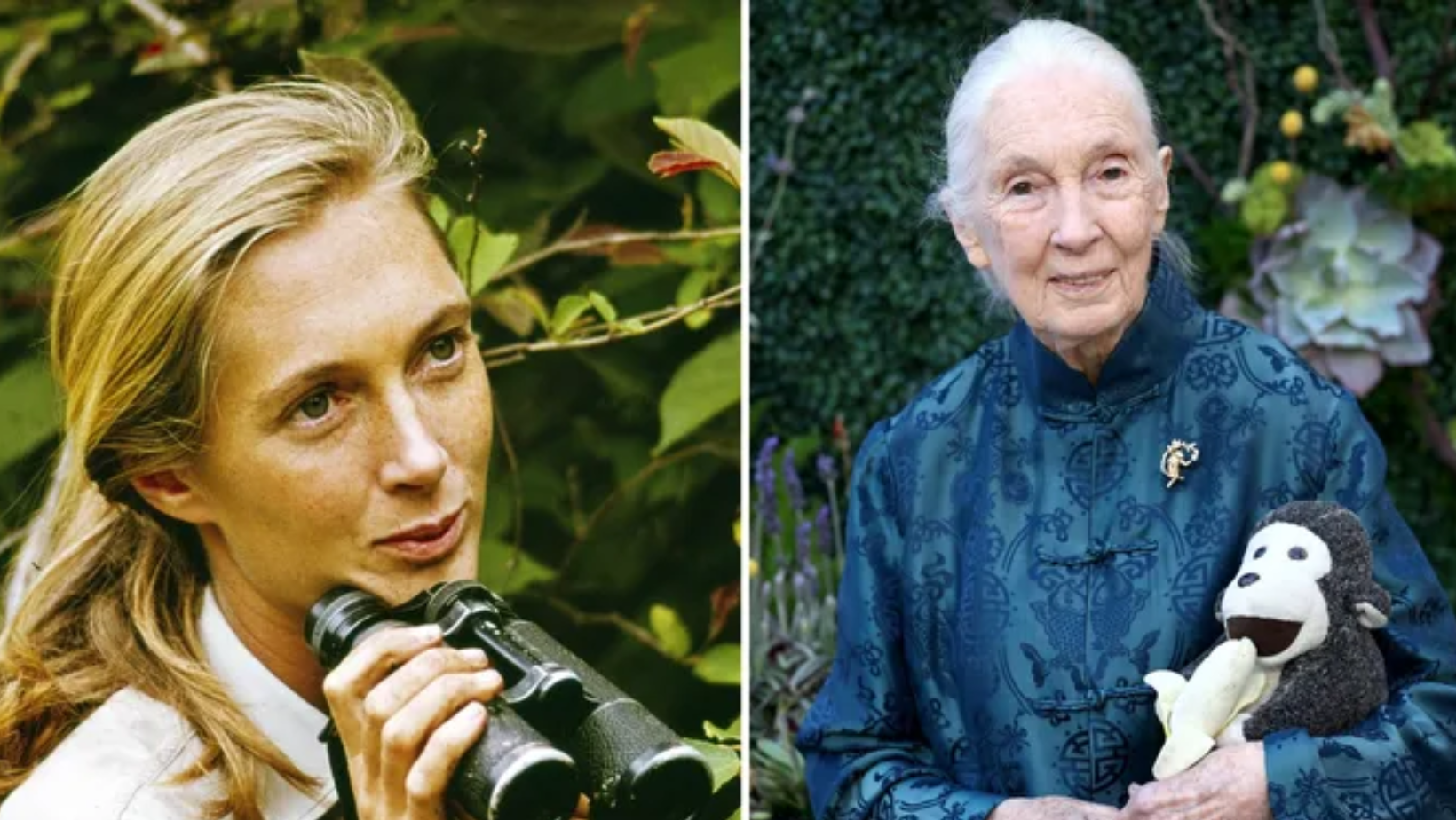
Jane Goodall’s groundbreaking research at Gombe Stream National Park redefined the boundary between humans and animals. The three most fascinating facts about her career are that she began her revolutionary field research without a formal university degree, she discovered that chimpanzees create and use tools—a trait previously thought unique to humans—and she documented the "Gombe Chimpanzee War," proving that primates are capable of organized, long-term conflict.
As we look at her legacy from the vantage point of 2026, Jane Goodall remains the most influential primatologist in history. Her transition from a young, untrained observer in the forests of Tanzania to a global icon of conservation demonstrates how unconventional approaches can dismantle long-standing scientific dogmas. This guide explores the depths of her most significant discoveries, the controversies they sparked, and why her work continues to resonate in the fields of ethology and environmentalism today.
1. The Power of the Unbiased Mind: Research Without a Degree
One of the most remarkable aspects of Jane Goodall’s entry into the world of primatology is that she possessed no formal scientific training when she first arrived at Gombe in 1960. While modern field researchers typically require years of postgraduate study before leadings expeditions, Goodall’s path was forged through passion, observation, and the mentorship of the famed paleoanthropologist Louis Leakey.
Louis Leakey’s Visionary Gamble
Louis Leakey, who was then searching for the "missing link" in human evolution, believed that studying great apes in the wild would provide invaluable clues about the behavior of early hominids. However, Leakey was skeptical of the academic establishment of the time. He felt that university-trained scientists often carried rigid preconceptions that could bias their observations.
Leakey specifically sought out a researcher with a "mind uncluttered by theory." When he met Jane Goodall, who was working as his secretary in Kenya, he recognized her patience, her keen eye for detail, and her profound empathy for animals. Despite the skepticism of the British government—which initially refused to let a young woman live alone in the wilderness—Leakey secured the funding and permissions necessary for Goodall to begin her work, provided she was accompanied by her mother, Vanne, for the first few months.
Breaking the Rules of Ethology
Because Goodall was not "indoctrinated" by the standard practices of 1960s ethology, she engaged in behaviors that the scientific community initially deemed scandalous. Most notably, she gave her subjects names—such as David Greybeard, Goliath, and Flo—rather than assigning them numbers. She also described their personalities, emotions, and social bonds in terms that were previously reserved only for humans.
When Goodall eventually enrolled at Cambridge University to pursue a PhD (skipping the undergraduate requirement due to her extraordinary field results), her professors criticized her for "anthropomorphizing" the chimpanzees. However, her data was so meticulous and her insights so profound that she eventually forced the scientific world to accept that animals possess distinct personalities and emotional lives. This shift paved the way for the modern study of animal cognition and welfare.
2. Redefining Humanity: The Discovery of Tool-Making
Before October 1960, the scientific definition of "Man" was "the tool-maker." It was widely believed that the ability to conceptualize, create, and use tools was the singular dividing line between humans and the rest of the animal kingdom. Jane Goodall’s second most fascinating contribution shattered this definition in a single afternoon of observation.
The Moment at the Termite Mound
While observing a chimpanzee she had named David Greybeard, Goodall witnessed him crouching over a termite mound. She watched as he picked up a blade of grass and carefully poked it into a hole in the mound. When he withdrew the grass, it was covered in termites, which he then licked off. Even more significantly, she later saw him take a small twig, strip the leaves off it to make it more effective, and use it as a fishing tool.
This was not just tool use; it was tool construction. By stripping the leaves, the chimpanzee was modifying an object to suit a specific purpose—a cognitive leap that had been attributed solely to the human lineage.
"Now We Must Redefine Man"
Goodall immediately sent a telegram to Louis Leakey detailing her observation. Leakey’s famous response was: "Now we must redefine tool, redefine Man, or accept chimpanzees as humans."
This discovery sent shockwaves through the scientific community. It forced a total re-evaluation of human evolution and the cognitive capabilities of non-human primates. We now know that various animals use tools—including crows, octopuses, and dolphins—but Goodall’s discovery was the catalyst that ended the era of "human exceptionalism" in biology.
Broader Implications of the Discovery
The discovery of tool-making led to further observations of complex chimpanzee behaviors, including:
- Medicinal Plant Use: Goodall observed chimps swallowing specific leaves to rid themselves of intestinal parasites.
- Hunting and Meat-Eating: Prior to Goodall, chimps were thought to be vegetarians. She documented them hunting colobus monkeys and sharing the meat, revealing a complex social hierarchy based on food distribution.
- Regional Cultures: Her work laid the foundation for understanding that different chimpanzee groups develop unique "cultures" and traditions passed down through generations.
3. The Gombe Chimpanzee War: The Dark Side of Primate Nature
Perhaps the most startling and "fascinating" fact about Jane Goodall’s research is her documentation of the Gombe Chimpanzee War (1974–1978). This four-year conflict between two rival groups of chimpanzees fundamentally changed our understanding of primate aggression and the evolutionary roots of human warfare.
The Schism of the Kasakela and Kahama
In the early 1970s, the large chimpanzee community Goodall had been studying began to fracture. A group of eight males and several females split off to the southern part of the range, forming what Goodall called the Kahama community. The remaining chimpanzees in the north became the Kasakela community.
What followed was a period of brutal, systematic violence. The Kasakela males began launching "raids" into Kahama territory. Unlike the impulsive brawls often seen in animal groups, these were calculated ambushes. The Kasakela males would travel in silence, surround a lone Kahama male, and beat him to death.
The Impact on Goodall’s Philosophy
By the end of the four years, every male in the Kahama community had been killed, and the group ceased to exist. Goodall was deeply traumatized by what she witnessed. She had previously viewed chimpanzees as "rather nicer" versions of humans—peaceful, cooperative, and gentle. The discovery of their capacity for "warfare"—complete with kidnapping, infanticide, and cannibalism—was a profound shock.
She wrote in her memoir, Through a Window, that she often woke up in the night haunted by the memories of the violence. However, as a scientist, she refused to look away. Her documentation of these events proved that the roots of human conflict—territoriality, tribalism, and lethal aggression—have deep evolutionary origins.
Understanding the Roots of Peace and Violence
While the war revealed a dark side of primate nature, it also highlighted the importance of social stability and early childhood bonding. Goodall noted that the most aggressive individuals often lacked strong maternal bonds or grew up in unstable social environments. This underscored the fact that, like humans, chimpanzee behavior is a complex mix of genetics and environment.
| Observation Category | Traditional Scientific Belief (Pre-Goodall) | Goodall’s Verified Findings |
|---|---|---|
| Tool Use | Exclusive to the genus Homo. | Chimps make and use tools for termite fishing and hunting. |
| Diet | Chimpanzees are strict herbivores. | Chimps are omnivores that hunt and eat meat regularly. |
| Social Structure | Simple, instinct-driven interactions. | Complex social hierarchies with deep emotional bonds and "personalities." |
| Aggression | Random acts of individual violence. | Capable of organized, territorial warfare and systematic killing. |
| Language/Communication | Limited to basic vocalizations. | Subtle, nuanced communication involving gestures, touch, and specific calls. |
Jane Goodall’s Work in 2026: Advocacy and Conservation
As of 2026, Jane Goodall has successfully transitioned from a field researcher to a global diplomat for the planet. Her primary focus is no longer just the chimpanzees of Gombe, but the survival of all species in the face of climate change and habitat loss. Through the Jane Goodall Institute (JGI), her work emphasizes "community-centered conservation."
The TACARE Program
One of the most significant evolutions in her work is the TACARE (Take Care) program. Goodall realized that it was impossible to save the chimpanzees if the people living around the forest were struggling for survival. By providing local communities with healthcare, education, and sustainable livelihoods, JGI ensures that the local population becomes the primary guardians of the ecosystem.
Roots & Shoots
Goodall’s legacy is perhaps most alive in her youth program, Roots & Shoots. Founded in 1991, the organization has grown by 2026 into a massive global network of young people working on local environmental and humanitarian projects. Her philosophy is simple: every individual makes an impact every day, and we have a choice as to what kind of impact we want to make.
Frequently Asked Questions
Is Jane Goodall still active in her research today?
While she no longer spends her days in the forests of Gombe, Goodall remains incredibly active as an advocate. In 2026, she continues to travel globally (both virtually and in person) to promote environmental protection and animal welfare. The data collection at Gombe, however, continues uninterrupted, making it the longest-running continuous study of any animal group in the wild.
Why was her lack of a degree such a major issue?
In the 1960s, the scientific community was highly insular and male-dominated. A woman without a degree challenging established biological definitions was seen as an affront to professional standards. Her success proved that "citizen science" and observational empathy are just as vital to discovery as theoretical education.
What happened to the chimpanzees she first studied?
Most of the original "Gombe chimps" have passed away, but their lineages continue. Flo’s descendants, for example, have been tracked for several generations, providing scientists with rare data on primate aging, maternal influence, and hereditary social status.
How did she survive the Gombe war?
Goodall and her team were observers, not participants. While the chimpanzees were comfortable in her presence, they generally did not direct their lethal aggression toward humans. However, the emotional toll on Goodall was immense, leading her to advocate more fiercely for the understanding of primate psychology.
What is the primary goal of the Jane Goodall Institute in 2026?
The institute focuses on "One Health"—the idea that the health of people, animals, and the environment are interconnected. Their 2026 initiatives prioritize reforestation, ending the illegal wildlife trade, and empowering young environmental leaders through the Roots & Shoots program.
Continuing the Legacy: How to Support Primate Conservation
For those inspired by Jane Goodall's life, the most effective next step is to engage with community-led conservation efforts. Supporting the Jane Goodall Institute directly funds the protection of the Gombe ecosystem and the ongoing research that Goodall began over six decades ago. Additionally, consumers can make a significant impact by choosing products that are "Chimpanzee-friendly," specifically avoiding unsustainably sourced palm oil, which is a leading cause of primate habitat destruction.
By understanding the deep emotional and social lives of chimpanzees—discoveries made possible by Goodall’s persistence—we are better equipped to protect our closest living relatives and, in doing so, better understand ourselves.