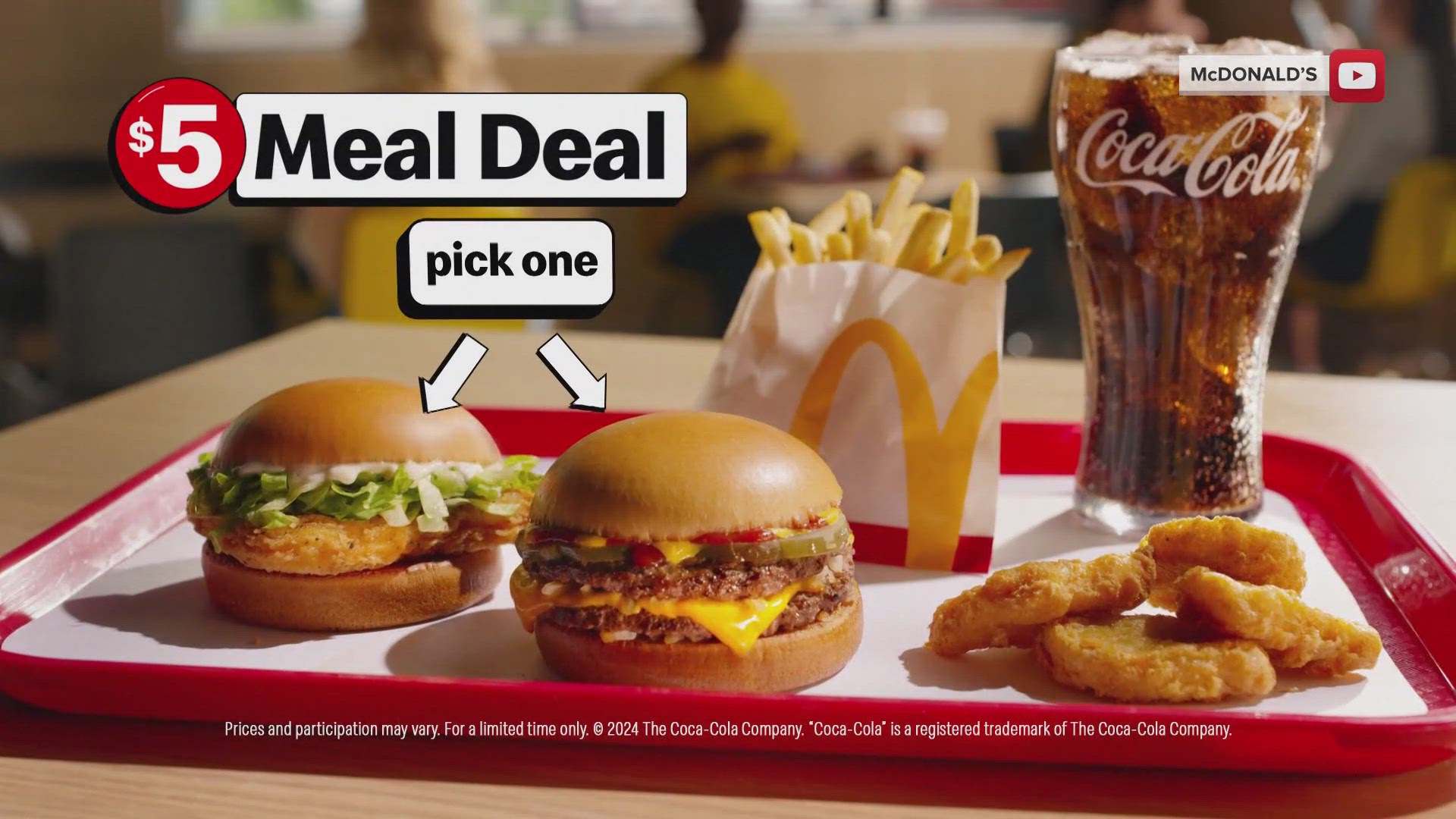
The 3.99 deal primarily refers to specialized value bundles in the fast-food industry, most notably Burger King’s "Your Way" meal variations and various "Mix and Match" promotions. These deals typically include a combination of a small entree, side, and drink, or two premium snack items, designed to provide a complete meal experience under the $4 threshold.
In 2026, the landscape of fast-food pricing has undergone a significant transformation. As inflation moderated but operational costs remained elevated, major chains like Burger King, Wendy’s, and McDonald’s shifted their focus from $5 "Biggie" or "Share" boxes toward more aggressive sub-$4 price points to capture the high-frequency "snack-meal" demographic. The 3.99 deal has emerged as the psychological "sweet spot" for consumers who find $5 too expensive for a light lunch but desire more substance than a single a la carte item from a traditional dollar menu.
Understanding the Economics of the 3.99 Deal in 2026
To understand why the 3.99 deal is so prevalent today, one must look at the shift in "loss leader" strategies. A loss leader is a product sold at a price below its market cost to stimulate other sales of more profitable goods. In 2026, the 3.99 deal functions as a digital hook. While the profit margin on a $3.99 bundle consisting of a cheeseburger, four-piece nuggets, small fries, and a small drink is razor-thin, it serves two primary corporate purposes: foot traffic and data acquisition.
Most 3.99 deals are now "App-Only" or "Digital-Exclusive." By requiring the use of a proprietary mobile app to access these savings, corporations can track consumer behavior, push personalized notifications, and upsell premium items like milkshakes or limited-time dessert offerings. The "deal" is essentially a trade: the consumer gets a low-cost meal, and the corporation gets a permanent digital link to the consumer's spending habits.
Furthermore, the 3.99 price point represents a tactical retreat from the $5 "Value Meal Wars" of 2024 and 2025. As consumers became "value-fatigued," brands realized that offering a slightly smaller portion for under $4 felt like a significantly better bargain than a larger portion for $5 or $6. This psychological pricing strategy relies on the "left-digit effect," where consumers perceive a price starting with a 3 as significantly cheaper than one starting with a 4 or 5, even if the difference is only a few cents.
Leading 3.99 Deals and Brand Specifics
While many local franchises may offer their own variations, several national brands have standardized their 3.99 offerings in 2026. These deals are usually structured around high-volume, low-cost components that are easy for kitchen staff to assemble quickly.
Burger King’s $3.99 "Your Way" Meal
Burger King remains the most consistent provider of the 3.99 deal. Their current iteration typically includes a choice of a Rodeo Burger, a Bacon Cheeseburger, or a Chicken Junior. This is paired with a four-piece order of chicken nuggets, a small order of french fries, and a small fountain drink. This specific configuration is designed to offer maximum variety (beef/chicken, potato, and beverage) which makes it feel more substantial than a single sandwich.
Wendy’s Morning and Snack Deals
Wendy’s has utilized the 3.99 price point to dominate the "in-between" meal times. Their "2 for $3.99" breakfast croissant deal has become a staple for commuters. Additionally, in the afternoon "snack window" (2:00 PM to 4:30 PM), Wendy’s often runs app-exclusive 3.99 deals that combine a small Frosty with a small fry and a junior hamburger, targeting students and afternoon workers looking for a quick energy boost.
McDonald’s "McValue" Variations
McDonald’s has moved away from a static national 3.99 menu in favor of dynamic pricing within their app. Depending on the user's location and purchase history, the "3.99 Deal" might manifest as a "Buy One, Get One for $1" on premium items like the Quarter Pounder or Big Mac, effectively bringing the per-item cost down to roughly $3.99 when averaged. Alternatively, many regions offer a 2-for-$3.99 mix-and-match on McDouble or McChicken sandwiches.
Comparing Current 3.99 Value Bundles
The following table provides a breakdown of what a consumer can typically expect from a 3.99 deal across major chains in 2026. Note that participation may vary by location and digital membership status.
| Brand | Primary 3.99 Deal Components | Availability | Best For |
|---|---|---|---|
| Burger King | Burger/Chicken Jr, 4pc Nuggets, Small Fry, Small Drink | National (App + In-Store) | Full Meal Variety |
| Wendy's | 2 Breakfast Croissants OR Small Frosty/Fry/Junior Burger | App-Exclusive | Breakfast or Snacks |
| McDonald's | 2 Mix-and-Match (McDouble/McChicken/6pc Nuggets) | Regional/App-Only | Protein-Heavy Choice |
| Taco Bell | "Cravings Trio": Cheesy Bean & Rice Burrito, Taco, Medium Drink | National (Digital Only) | High Caloric Value |
| Arby's | 2 Classic Roast Beef Sandwiches (Limited Time) | Rotating Seasonal | Meat Enthusiasts |
Prerequisites and How to Claim the 3.99 Deal
To consistently access these prices in 2026, customers must navigate a more complex landscape than simply looking at a plastic menu board. The "sticker price" on the drive-thru menu is often 20% to 30% higher than the prices available through digital channels.
- Download the Official App: Every major chain requires its specific app (e.g., the BK App, MyMcDonald’s Rewards) to unlock the 3.99 tier. Guest checkout options rarely include these deep discounts.
- Enable Location Services: Many 3.99 deals are geo-fenced. The app must verify you are within a reasonable distance of a participating franchise before the deal becomes "active" in your digital wallet.
- Check the "Offers" or "Rewards" Tab: These deals are rarely the default items on the home screen. Users must often navigate to a specific "Deals" section and "Add to Mobile Order" to apply the discount.
- Verify Participation: Before driving to a location, use the app to select that specific store. If the 3.99 deal disappears from the menu, that franchise has opted out of the national promotion due to local labor or supply costs.
- Scan at the Register: If you are not ordering through the app for pickup, you must generate a QR code within the app and scan it at the kiosk or register to have the 3.99 pricing applied to your in-person order.
Potential Limitations and "The Catch"
While the 3.99 deal offers undeniable savings, consumers should be aware of the operational limitations and hidden trade-offs associated with these low-cost bundles.
Upselling Pressure: The primary goal of the 3.99 deal is to get the consumer into the ecosystem. Once the deal is selected in an app, the interface will often prompt for "Upgrades." For an extra $0.99, you can "Medium-size" your meal. For another $1.50, you can add a dessert. These incremental additions can quickly turn a $3.99 budget lunch into a $7.50 expense, neutralizing the value of the original deal.
Nutritional Density vs. Caloric Count: Most 3.99 deals rely heavily on processed carbohydrates (bread and potatoes) and fried proteins. While they are effective at providing a sense of fullness, they often lack fresh vegetables or high-quality fiber. In 2026, as health-conscious eating remains a priority for many, the 3.99 deal is best viewed as a functional, occasional solution rather than a dietary staple.
Data Privacy: By using the apps necessary to claim these deals, users are consenting to significant data harvesting. Chains track not only what you eat, but when you eat, where you are when you get hungry, and how much you are willing to pay. For privacy-focused individuals, the "cost" of the 3.99 deal includes the surrender of these personal behavioral metrics.
Troubleshooting Common Issues with the 3.99 Deal
Even with the correct app and location, users frequently encounter issues when trying to redeem these promotions.
- "Deal Not Available at This Time": Many 3.99 deals are time-restricted. For example, Burger King's lunch bundles may not activate until 10:30 AM, while Wendy's breakfast deals expire exactly at 10:30 AM.
- Missing Items: Because these bundles involve multiple small components (nuggets, fries, burger, drink), kitchen errors are more common. Always check the bag before leaving the window to ensure all four or five components of the 3.99 deal are present.
- App Glitches: If a deal shows as "Unavailable," try logging out and logging back in, or clearing the app's cache. In 2026, server-side updates can sometimes "break" active coupons for a few hours.
- Price Discrepancy: In high-cost-of-living areas (like airports, toll road plazas, or Manhattan), the "3.99 Deal" may be adjusted to $4.49 or $4.99. The corporate office allows "market adjustments" for specific high-rent zones.
FAQ
Is the 3.99 deal available for delivery?
Usually no. Most 3.99 deals are restricted to "Order Ahead & Pickup" or "In-Store" orders. Delivery services like DoorDash or UberEats often apply a significant markup to the base price of value items, and the specific "bundle" pricing rarely carries over to third-party platforms. To get the actual 3.99 price, you must physically go to the restaurant.
Can I swap items in a 3.99 bundle?
Swaps are very limited. Most systems will allow you to change a drink flavor or choose between different dipping sauces for nuggets. However, you generally cannot swap fries for a side salad or a burger for a premium chicken sandwich without the system automatically voiding the 3.99 promotional price and charging you a la carte rates.
Why is my local Burger King charging $4.49 for the 3.99 deal?
Franchisees are independent business owners. While national advertising promotes the 3.99 price, individual owners in regions with high minimum wages or high transport costs can opt to increase the price of the bundle. The app will usually reflect the local price once you select your specific store.
Does the 3.99 deal include a drink?
In the case of the Burger King "Your Way" meal, a small fountain drink is included. However, for "Mix and Match" deals (like McDonald’s 2-for-$3.99), the drink is usually not included and must be purchased separately. Always check the specific terms in the app to see if a beverage is part of the bundle.
Can I use a 3.99 deal and a rewards coupon at the same time?
Generally, no. Most fast-food POS (Point of Sale) systems are programmed to accept only one "offer" per transaction. Since the 3.99 deal is considered a promotional offer, you usually cannot stack it with a "Free Large Fry" reward or a "10% Off" coupon. You must choose the deal that offers the highest total savings.
Strategy for Maximizing Your 3.99 Value
To get the most out of the 3.99 deal, consumers should adopt a "Digital First" approach. Before leaving your home or office, open your top three fast-food apps and compare the "Offers" tab. In 2026, the most successful savers are those who are "brand agnostic"—willing to go to whichever chain is offering the most protein for the $3.99 price point on that specific day.
Additionally, always check for "Survey Rewards." Many chains print a survey code on the back of the receipt for the 3.99 meal. Completing these 2-minute surveys often yields a coupon for a "Free Sandwich with Purchase," which can be used on your next visit, effectively lowering your average meal cost even further. By layering these tactics, the 3.99 deal becomes the foundation of a highly efficient personal food budget.