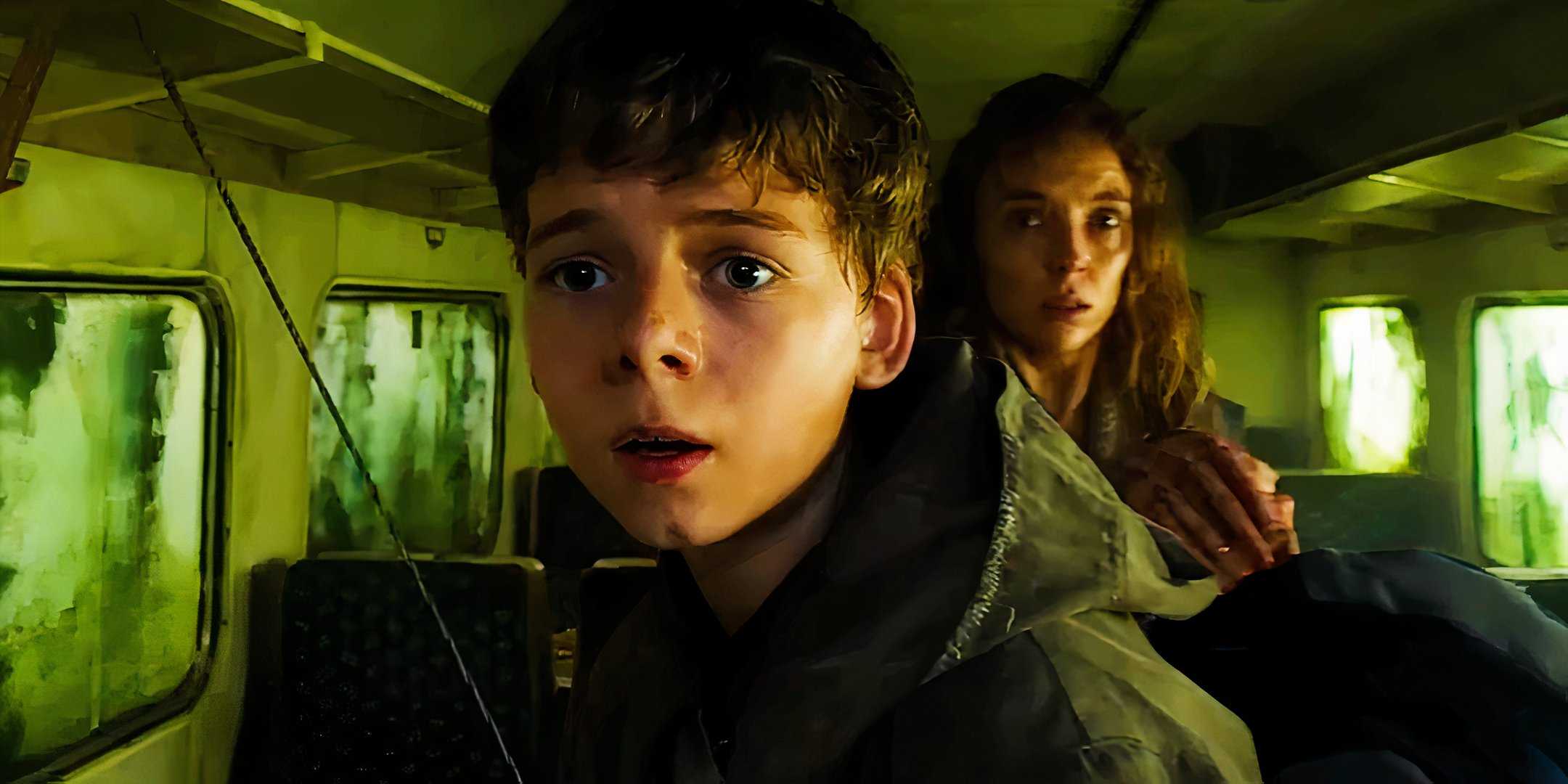
By 2026, the world in the 28 Days Later universe has transitioned from the immediate panic of a localized outbreak to a permanent state of global fragmentation. The Rage Virus, once confined to the British Isles, decimated continental Europe and beyond, forcing humanity into isolated, militarized enclaves where survival depends on rigorous containment and a complete abandonment of pre-outbreak globalization.
The Legacy of the Rage Virus: From London to a Global Pandemic
The story of the global collapse begins not with a slow decay, but with a sudden, violent explosion of fury. To understand the state of the rest of the world 28 years later, one must revisit the initial failure of containment. The Rage Virus, a highly contagious blood-borne pathogen developed in a Cambridge research facility, was designed as a delivery system for inhibitors to combat extreme aggression. Instead, it became the ultimate catalyst for it.
When the virus was first unleashed in the early 2000s, Britain was effectively neutralized within weeks. The "28 days" of the original title represented the time it took for the infrastructure of a modern G7 nation to evaporate. While the United States and other international powers initially attempted to quarantine the UK, the events of 28 Weeks Later proved that human error and the virus’s sheer virulence were a lethal combination. The breach at the District 1 quarantine zone in London led to the virus jumping the English Channel. Once the Rage Virus reached mainland Europe—signaled by the haunting image of infected sprinting toward the Eiffel Tower—the fate of the "rest of the world" was sealed.
Unlike traditional "zombie" narratives where the undead move slowly and decay over time, the Rage Virus creates "infected"—living, breathing humans driven by a singular, metabolic need to attack. This distinction is crucial for the state of the world 28 years later. Because the infected are still living organisms, the pandemic did not result in a world of shuffling corpses, but rather a world of high-speed, predatory threats that necessitated a total redesign of human civilization.
The Long Silence: What Happened Between 28 Weeks and 28 Years
The nearly three-decade gap between the initial outbreaks and the current state of the world in 2026 represents a period known to survivors as "The Long Silence." During these years, the global communication grid collapsed. Undersea cables were left unmaintained, satellite arrays drifted out of alignment or failed without ground control, and the internet as a unified global resource ceased to exist.
In the first decade, the "Rest of the World" attempted to maintain traditional borders. However, the speed of the Rage Virus meant that by the time a nation recognized an outbreak, it was often too late to mobilize the military effectively. Traditional warfare was useless against an enemy that did not occupy territory but simply liquidated the population. Large-scale evacuations often served as "super-spreader" events, as a single asymptomatic carrier (or someone hiding a bite) could turn a rescue ship or an aircraft into a slaughterhouse mid-transit.
By the second decade, the focus shifted from "stopping the virus" to "living with the threat." This era saw the rise of the "Citadel Cities"—heavily fortified urban centers, often built in geographically defensible locations like islands, mountain plateaus, or peninsulas. The rest of the world became a "Grey Zone," where the ruins of the old world stood as silent monuments to a lost age of connectivity.
Continental Collapse: The State of the Rest of the World
The state of the world 28 years after the initial outbreak is characterized by extreme regionalism. While some areas have achieved a semblance of stability, others have descended into permanent anarchy.
The Americas
North America’s vast geography initially provided a buffer, but the reliance on interstate travel became its downfall. In 2026, the United States exists as a series of autonomous "Federal Recovery Zones." The interior of the country, particularly the Great Plains, is largely abandoned, while coastal cities like Seattle and parts of the Northeast have established maritime-based economies. South America faced similar challenges, with the Amazon rainforest acting as a natural barrier for some indigenous groups, while mega-cities like São Paulo and Buenos Aires suffered catastrophic losses.
Eurasia
Continental Europe remains a patchwork of horror and hope. The "Great Alpine Wall" serves as a colloquial name for the fortified passes that protect remnants of Southern European populations. Northern Europe, with its lower population densities in certain areas, has seen the emergence of "Neo-Agrarian" societies that prioritize local food security and rigorous border checks. Russia’s vastness has allowed for "Siberian Redoubts," where the extreme cold provides a seasonal defense against the infected, who lack the cognitive ability to seek warmth.
Africa and Oceania
Africa’s experience has been diverse. Countries with existing experience in managing viral outbreaks (such as Ebola) were, in some cases, more psychologically and logistically prepared for quarantine measures than Western nations. However, the density of cities like Lagos led to high mortality rates. In Oceania, Australia and New Zealand’s island status allowed for some of the most successful long-term isolation strategies, though they remain hyper-vigilant against any incoming maritime traffic.
Biological Persistence: Why the Infected Haven't Died Out
A major question for those observing the world 28 years later is why the threat remains. In the original 28 Days Later, the infected in Britain eventually died of starvation because they were still biologically human and required food. However, as the virus spread globally, it encountered new environments and potential mutations.
In 2026, the scientific consensus among the remaining research hubs is that the virus has entered an "Endemic Persistence" phase. Several factors contribute to this:
- Metabolic Adaptation: There is evidence that some strains of the virus have slightly lowered the host’s metabolic rate when not in a state of pursuit, allowing the infected to survive longer on minimal caloric intake.
- Environmental Reservoirs: In some parts of the world, the virus may have jumped to local animal populations, creating reservoirs that can potentially reinfect humans, though this remains a subject of intense study.
- Cyclical Outbreaks: Because the virus is so fast-acting, "new" infected are constantly being created in the Grey Zones. A single survivor stumbling into a dormant group of infected can start a chain reaction that produces a fresh wave of threats.
| Feature | 28 Days Later (The Outbreak) | 28 Weeks Later (The Failed Recovery) | 28 Years Later (The New Normal) |
|---|---|---|---|
| Geographic Scope | Southern England / London | London (District 1) and Paris | Global (Fragmented Enclaves) |
| Population Status | Massive sudden mortality | Attempted repopulation | Generational survivalists |
| Technology | Fully functional but abandoned | Limited military support | Pre-digital/Mechanical/Solar |
| The Infected | Fresh, fast, starving | High density, aggressive | Persistent, environmental threats |
| Primary Goal | Escape and rescue | Reconstruction and containment | Sustainability and fortification |
Survivors and the New Geopolitical Order in 2026
The world 28 years later is no longer governed by the United Nations or NATO, but by "Security Compacts." These are agreements between surviving enclaves to trade essential resources—such as seeds, medical supplies, and fuel—in exchange for mutual defense.
Communication is now handled primarily via short-wave radio and occasional courier ships. This has led to a massive divergence in culture and language. A survivor in the "London Ruins" may have a completely different understanding of the world than a citizen of the "New Zealand Exclusion Zone."
Resources are the new currency. In 2026, the most valuable assets are not gold or digital credits, but:
- Antibiotics and Vaccines: With large-scale pharmaceutical manufacturing gone, "Old World" medicine is dwindling.
- Clean Soil: In many areas, the violence of the collapse led to chemical leaks and environmental degradation, making unpolluted farmland a strategic prize.
- Technical Knowledge: "Legacy Engineers"—those who remember how to maintain 20th-century machinery—are treated as high-value assets by any governing body.
The Psychological and Cultural Shift of Three Decades
Perhaps the most profound change in the state of the rest of the world is the psychological makeup of the population. In 2026, a significant portion of the living population was born after the "Long Silence" began. For them, a world where you can walk safely through a city at night is a fairy tale.
This has resulted in a "Fortress Mentality." Social structures are highly disciplined and often authoritarian, as any lapse in security can mean the death of the entire community. There is a deep-seated distrust of outsiders, and "The Rest of the World" is often viewed through a lens of fear and myth.
Art and culture have become localized and oral-based. Without the mass media of the 2000s, stories are passed down through families, leading to a new folklore surrounding the "Red-Eyed Ones" and the "Great Fall." The world is smaller now, limited to the distance one can travel and return from before sunset.
Frequently Asked Questions
Has a cure for the Rage Virus been found by 2026?
No definitive cure exists. While various enclaves have developed experimental suppressants or "early-stage" treatments, the speed at which the virus takes hold (seconds to minutes) makes a reactive cure almost impossible to administer. Research now focuses on passive immunity and long-term environmental sterilization.
Is the United States government still in control?
The federal government as it existed in 2002 is gone. In its place are regional "Recovery Admiralties" and "Continental Councils." While they claim the lineage of the old US government, their authority is limited to the physical reach of their local militias and the efficiency of their trade networks.
What happened to the world's nuclear power plants?
In the initial months of the outbreak, many plants underwent automatic shutdowns. However, without long-term maintenance and "cold-keeping" of spent fuel, some facilities experienced localized meltdowns, creating "Hot Zones" that survivors must avoid. These zones added another layer of complexity to the "Grey Zone" geography of 2026.
Are there any "safe" countries left?
"Safe" is a relative term. Island nations like Iceland, New Zealand, and various Caribbean territories have the highest levels of safety due to maritime borders. However, these nations are often "Safety Prisons," where the population is trapped and resources are strictly rationed to prevent collapse from within.
How do people travel between enclaves in 28 Years Later?
Travel is almost exclusively maritime or via heavily armored overland convoys. Air travel is nearly non-existent due to the lack of refined aviation fuel and the high risk of mechanical failure without specialized parts. Sailing vessels have seen a massive resurgence as a reliable, fuel-independent way to move goods between coastal settlements.
Adopting a Survivalist Protocol for the New World
For those navigating the world 28 years after the initial Rage Virus outbreak, the "New Normal" requires a complete overhaul of personal and communal safety protocols. The primary recommendation for any surviving community is the "Three Pillars of Persistence": local self-sufficiency, redundant communication, and uncompromising quarantine.
If you are part of a reconstruction effort, prioritize the salvage of physical libraries and mechanical blueprints. The digital age has passed, and the survival of the rest of the world now depends on the preservation of tangible knowledge. The state of the world in 2026 is one of fragility, but also of incredible resilience. Human beings have proven that even in the face of a virus designed to strip away our humanity, the instinct to build, protect, and remember remains.