28 Years Later is the 2025 post-apocalyptic horror film directed by Danny Boyle and written by Alex Garland. Serving as the direct sequel to 28 Days Later, it stars Cillian Murphy, Jodie Comer, and Aaron Taylor-Johnson. The film explores a transformed Britain nearly three decades after the initial Rage Virus outbreak.
The Long-Awaited Reunion of Boyle and Garland
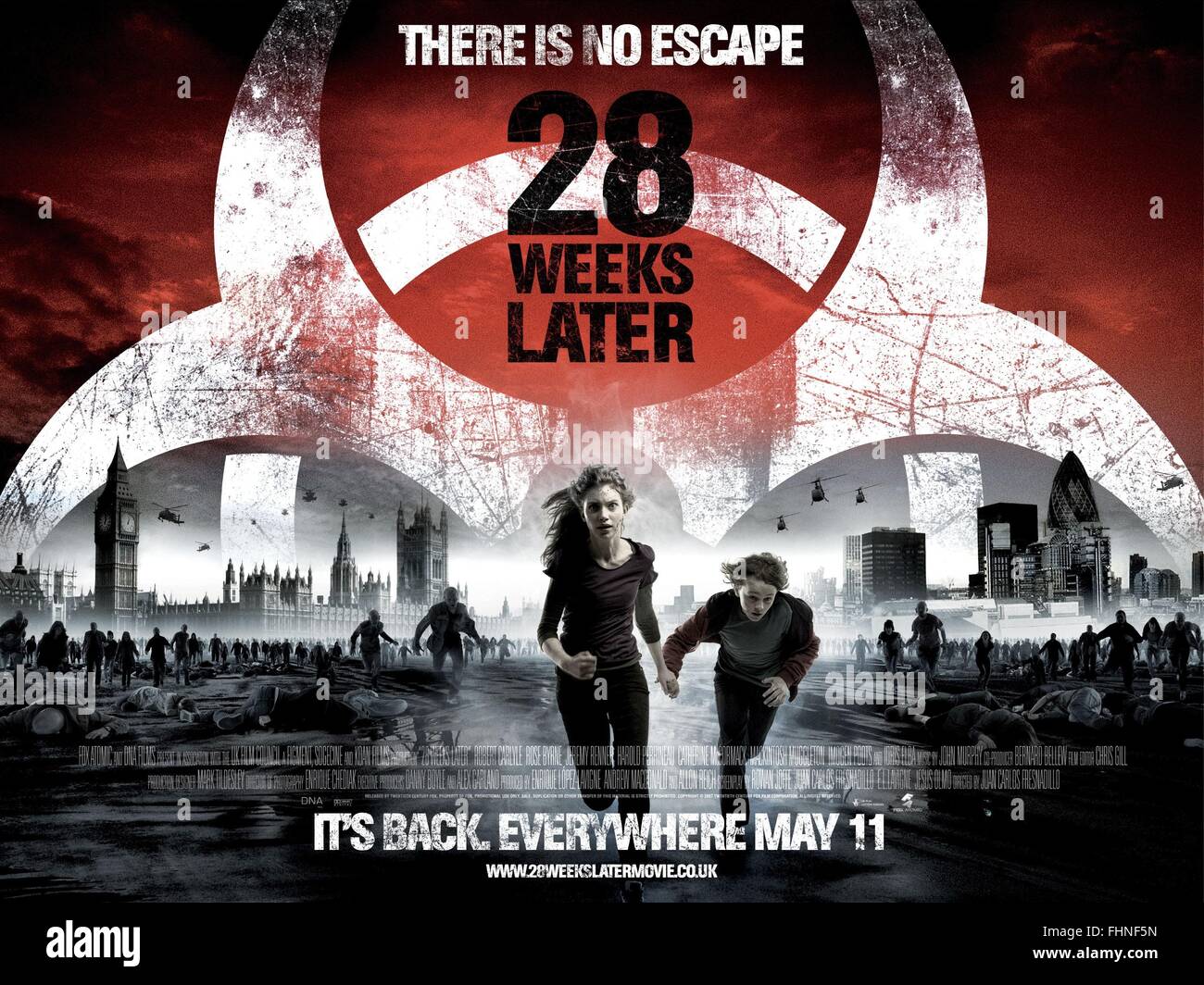
The release of 28 Years Later in 2025 marked a significant cinematic milestone: the official reunion of director Danny Boyle and screenwriter Alex Garland. The duo originally collaborated on the 2002 cult classic 28 Days Later, a film credited with revitalizing the zombie subgenre by introducing "fast-running" infected individuals driven by pure rage rather than the traditional slow-moving undead. While a sequel, 28 Weeks Later, was released in 2007, Boyle and Garland only served as executive producers for that installment.
For nearly two decades, rumors of a third film—variously titled 28 Months Later—circulated within the industry. However, it wasn't until the early 2020s that the creative alignment between Boyle, Garland, and original star Cillian Murphy solidified into a concrete production plan. The decision to skip "months" and jump straight to "years" was a deliberate narrative choice. It allowed the filmmakers to explore a world that has moved past the immediate collapse of civilization and into a sustained, albeit fractured, era of post-apocalyptic existence.
The production was backed by Sony Pictures after a high-profile bidding war, signaling the massive commercial expectations for the revival. With a budget estimated at approximately $75 million—a staggering increase from the original film's $8 million—the scale of the project shifted from a localized survival horror to a sprawling epic that examines the long-term biological and societal consequences of the Rage Virus.
Comprehensive Cast and Character Breakdown
The casting for 28 Years Later was designed to bridge the gap between the original fans and a new generation of viewers. The central draw is the return of Cillian Murphy as Jim. Murphy, whose career reached new heights following his Academy Award-winning performance in Oppenheimer, returns not just as the lead but also as an executive producer. His involvement ensures a tonal continuity with the 2002 film, grounding the high-concept sequel in the perspective of the man who first woke up to a deserted London.
Joining Murphy are several high-profile actors who represent the "new world" born out of the infection. Jodie Comer, known for her versatile work in Killing Eve, plays a pivotal role as a survivor navigating the complex social structures that have emerged in the decades following the outbreak. Aaron Taylor-Johnson and Ralph Fiennes provide additional gravitas to the ensemble, with Fiennes reportedly playing a character tied to the remnants of the British government or medical authority trying to maintain order.
| Actor | Role | Significance |
|---|---|---|
| Cillian Murphy | Jim | The original protagonist; a symbol of survival and the link to the past. |
| Jodie Comer | (Lead Survivor) | Represents the generation raised within the "New Normal" of the Rage Virus. |
| Aaron Taylor-Johnson | (Key Protagonist) | A high-energy role central to the film’s action-driven narrative. |
| Ralph Fiennes | (Authority Figure) | Explores the political and ethical dilemmas of a post-outbreak society. |
| Jack O'Connell | (Supporting Survivor) | Adds grit and realism to the ensemble of those living on the fringes. |
| Erin Kellyman | (Supporting Role) | Brings a youthful perspective to the ongoing struggle for resources. |
Narrative Premise and World-Building
The timeline of 28 Years Later is its most defining feature. By setting the story nearly 30 years after the events of the first film, Alex Garland moves away from the "initial panic" tropes common in the genre. Instead, the film focuses on a Britain that has learned to live with the Rage Virus as a permanent environmental hazard. Much of the country is divided into "Safe Zones" and "Infected Zones," with a stark contrast between the fortified communities and the wild, unmonitored territories where the virus still lingers.
The "Rage Virus" itself has undergone evolution. In the original films, the infected were human beings who eventually succumbed to starvation. In this new era, the film addresses how the virus has persisted. Whether through animal reservoirs, dormant carriers, or biological mutations, the threat remains ever-present. The plot reportedly follows a young man (Jack O'Connell) seeking medical assistance for his dying mother, a quest that forces him to cross dangerous territories and eventually cross paths with a grizzled, older Jim.
This narrative structure allows the film to explore themes of legacy, isolation, and the resilience of the human spirit. It asks the question: what does "normal" look like when the world has been broken for longer than many of its inhabitants have been alive? The British landscape, specifically the rugged terrains of Northumberland where filming took place, serves as a character in itself—beautiful, desolate, and fraught with hidden dangers.
Technical Innovation: The iPhone 15 Pro Max Cinematography
One of the most discussed technical aspects of 28 Years Later is its cinematography. Cinematographer Anthony Dod Mantle, who won an Oscar for Slumdog Millionaire and shot the original 28 Days Later on the then-revolutionary Canon XL1 digital camera, returned for this sequel. To maintain the "guerrilla" feel and digital grit of the original while utilizing modern advancements, large portions of 28 Years Later were filmed using the iPhone 15 Pro Max.
The choice to use smartphones for a $75 million blockbuster was not a gimmick but a deliberate artistic decision. The iPhone 15 Pro Max, equipped with professional-grade Log recording and external storage capabilities, allowed the crew to capture high-speed, frantic movements in cramped or difficult-to-reach locations that traditional cinema cameras (like the Arri Alexa) would struggle to navigate.
This technical choice mirrors the low-fidelity aesthetic of the 2002 film, which was shot on standard-definition digital video to create a sense of immediacy and realism. By using the iPhone, Boyle and Dod Mantle have bridged the gap between the "prosumer" tech of the early 2000s and the high-end mobile tech of the mid-2020s, ensuring the film feels both modern and stylistically consistent with its predecessor.
The First Step in a New Trilogy
Unlike its predecessors, which were largely standalone stories, 28 Years Later was conceived from the outset as the first chapter of a trilogy. This strategic planning allows for a more expansive story that cannot be contained within a single two-hour runtime. Sony Pictures and the creative team have already moved forward with the second installment, tentatively titled 28 Years Later Part II: The Bone Temple.
While Danny Boyle directed the first part, the sequel duties for the second film were handed to Nia DaCosta (Candyman, The Marvels). This "relay race" approach to directing allows for different stylistic interpretations of Garland’s scripts while maintaining a cohesive narrative arc. The trilogy format suggests that the stakes of the Rage Virus are no longer just about individual survival, but about the potential rebirth—or final extinction—of the human race in the British Isles.
The third film remains in development, but the roadmap indicates a shift in focus from the UK to a more global perspective. By establishing a firm foundation in 28 Years Later, the filmmakers have created a sustainable platform for a franchise that could potentially define the horror landscape for the late 2020s.
Filming Locations and Production Scale
Production for 28 Years Later primarily took place in the United Kingdom, with a heavy emphasis on the North of England. Locations in Northumberland, including Rothbury and the Holy Island of Lindisfarne, provided the necessary mix of ancient history and desolate wilderness. The choice of these locations was vital to establishing the "28 years later" aesthetic—nature reclaiming the structures of man.
The production scale involved massive set pieces, including overgrown urban centers and sophisticated quarantine walls. Unlike the original film, which relied on the eerie silence of empty London streets (achieved by briefly closing roads at dawn), the new film utilizes advanced CGI to show the decay of decades. The juxtaposition of high-tech military remnants and primitive survivor camps creates a visual language that is unique to this installment.
The filming process was also notable for its secrecy. Working under the code name "Holy Island," the production managed to keep many plot twists under wraps despite the high profile of the cast. The involvement of local communities in the North of England also added a layer of authenticity to the "regional" feel of the survivalist groups depicted in the movie.
Frequently Asked Questions
Does Cillian Murphy have a lead role in 28 Years Later?
Yes, Cillian Murphy reprises his role as Jim. While the film introduces a new ensemble cast including Jodie Comer and Aaron Taylor-Johnson, Jim serves as a central figure and a narrative bridge to the original 2002 film. Murphy's role is significant both on-camera and behind the scenes as an executive producer, ensuring the character’s legacy is handled with care.
Is 28 Years Later a sequel to 28 Weeks Later?
28 Years Later is a sequel to the original 28 Days Later. While it exists in the same universe as 28 Weeks Later, it is primarily designed as a continuation of the story and themes established by the original creators, Danny Boyle and Alex Garland. It effectively functions as the start of a new timeline or a "legacy sequel" that prioritizes the original's tone and characters.
Why was the movie filmed on an iPhone?
Director Danny Boyle and cinematographer Anthony Dod Mantle chose to use the iPhone 15 Pro Max to replicate and evolve the "digital grit" aesthetic of the first film. The original was shot on low-resolution digital cameras to create a sense of urgency and realism; using modern smartphone technology allows for the same maneuverability and unique visual texture while meeting 2025's high-definition theatrical standards.
When was 28 Years Later released?
The film was released theatrically on June 20, 2025. Following its successful box office run, it became available on major streaming platforms and physical media in late 2025 and early 2026. It serves as the opening chapter of a planned trilogy of films written by Alex Garland.
Do I need to watch the previous movies to understand this one?
While 28 Years Later is designed to stand on its own for new audiences, watching the original 28 Days Later provides essential context regarding the Rage Virus and Jim’s backstory. The film contains numerous references to the events of the 2002 outbreak that enhance the viewing experience for longtime fans of the franchise.
Where to Watch and Future Outlook
As of 2026, 28 Years Later has transitioned from its successful theatrical window to home entertainment and streaming. Viewers looking to catch up on the start of the new trilogy can find the film on major premium streaming services. For the best experience, it is recommended to watch the film in a setting that supports high-dynamic-range (HDR) video, which highlights the unique "iPhone-shot" cinematography and the detailed production design of the reclaimed British landscapes.
For those interested in the future of the series, the next step is to look toward the release of 28 Years Later Part II: The Bone Temple. With the foundation laid by Boyle and Garland, the franchise is currently the leading voice in the "biological horror" genre. Fans are encouraged to revisit the original 2002 film to appreciate the full evolution of the characters and the virus over the nearly three-decade narrative gap.