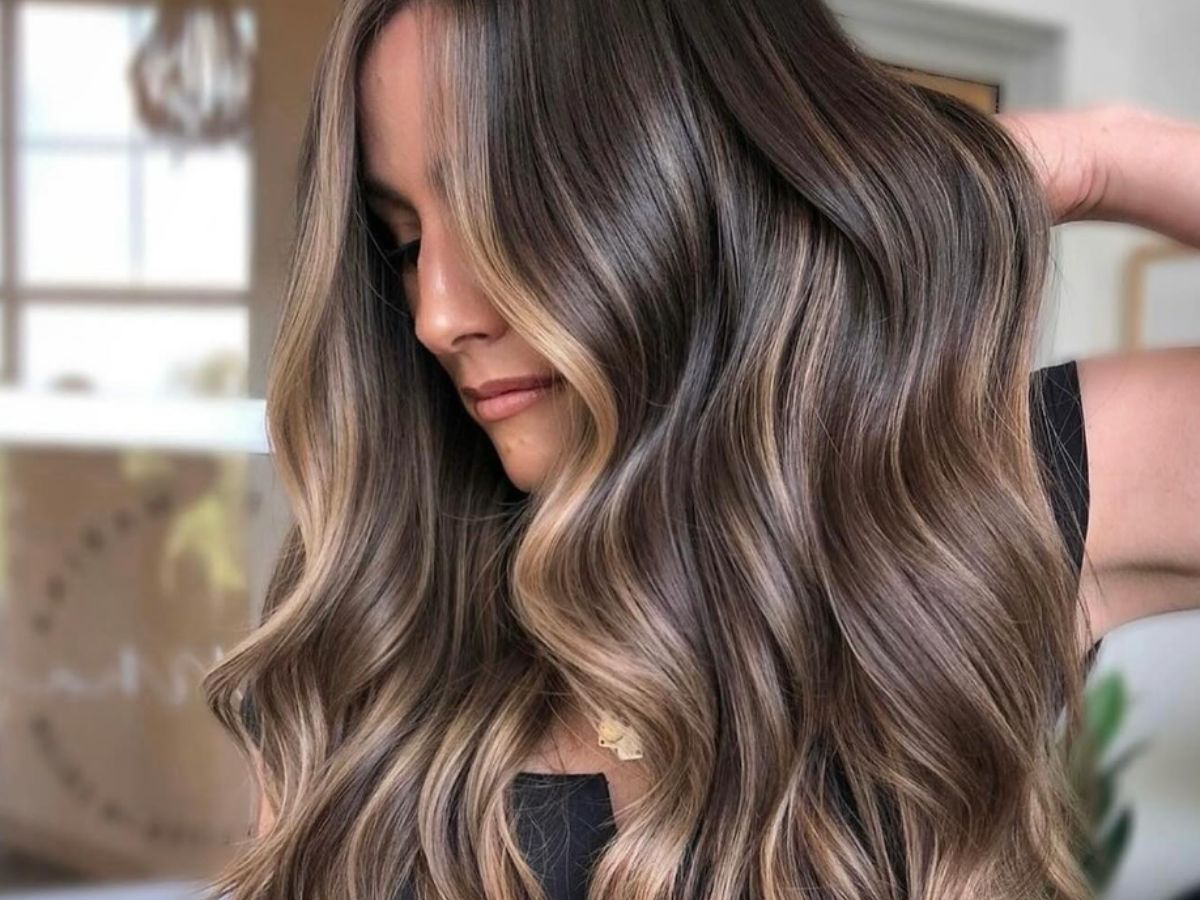
Achieving 26 inches of hair provides a dramatic, waist-grazing silhouette that represents the pinnacle of length for many enthusiasts. To reach this length, you must either commit to a four-to-five-year natural growth journey or invest in high-quality professional extensions. Success depends on rigorous moisture retention, scalp health optimization, and strategic structural support to manage the significant weight of the hair.
Understanding the Visual Impact and Reach of 26-Inch Hair
When discussing 26-inch hair, the first consideration is how that length translates to the human body. Because hair length is measured from the crown to the tips, a 26-inch strand does not mean 26 inches of growth from the nape of the neck. On an average-height individual (approximately 5'5"), 26-inch hair typically falls at the small of the back or even touches the top of the hips.
The visual impact is "show-stopping" because it bypasses the common mid-back lengths and enters the realm of "extra-long" hair. In 2026, the aesthetic preference has shifted toward high-density, blunt-cut ends even at these extreme lengths, rather than the "fairytale ends" (naturally thinning tips) seen in previous decades. This requires a meticulous trimming schedule to ensure the hair looks healthy and intentional rather than merely long.
Furthermore, the texture of the hair significantly affects how 26 inches appears. Straight hair displays its full length immediately, while wavy or curly textures (Types 2 and 3) may require 30 to 32 inches of actual strand length to appear as 26 inches when dry due to "shrinkage." Understanding this discrepancy is vital for anyone purchasing extensions or setting growth goals.
Natural Growth vs. Extensions: Choosing Your Path
Achieving 26 inches of hair can be approached through two primary methods: biological growth and cosmetic enhancement. Each path has distinct requirements, costs, and maintenance levels.
The Biological Growth Timeline
The average human hair grows at a rate of approximately half an inch per month, or six inches per year. Starting from a standard shoulder-length cut (roughly 12 inches), it would take nearly three years of perfect retention to reach 26 inches. However, "retention" is the operative word. Most individuals struggle to reach 26 inches because the hair tips, which would be over four years old at that length, become fragile and break off. To achieve this naturally, one must focus on a "length retention" strategy rather than just a "growth" strategy.
The Extension Shortcut
For those desiring immediate results in 2026, hair extensions are the standard solution. 26-inch extensions are considered a "specialty length" and are often more expensive than the standard 18-inch or 20-inch options. They provide not only the length but also the necessary volume to prevent the hair from looking "stringy." Because 26-inch hair is heavy, the method of attachment must be chosen carefully to avoid tension alopecia or damage to the natural follicle.
Technical Specifications: Weight, Texture, and Methods
Managing 26 inches of hair requires an understanding of the technical load placed on the scalp. The following table compares the most popular methods for achieving this length through extensions in 2026.
| Feature | Natural Growth | Clip-in Extensions | Tape-in Extensions | K-Tip (Keratin) |
|---|---|---|---|---|
| Time to Result | 3–5 Years | Instant | 2–3 Hours | 4–6 Hours |
| Weight Distribution | Natural/Uniform | Heavy on specific points | Even/Flat | Very discrete/Individual |
| Typical Cost (2026) | Low (Maintenance only) | $300 - $600 | $800 - $1,500 | $1,500 - $3,000+ |
| Maintenance | High (Daily Care) | Low (Occasional use) | Moderate (6-week move-up) | High (3-month lifespan) |
| Primary Risk | Breakage/Split ends | Traction from weight | Adhesive buildup | Heat damage during install |
When selecting 26-inch extensions, "Remy" hair remains the gold standard. This indicates that the hair cuticles are kept intact and aligned in the same direction, which is essential at 26 inches to prevent the catastrophic tangling that occurs with lower-quality hair. In the 2026 market, ethically sourced human hair is the primary choice for show-stopping lengths due to its ability to be heat-styled and its natural movement.
Essential Maintenance Protocols for Ultra-Long Hair
The longer the hair, the further the ends are from the scalp's natural oils (sebum). By the time hair reaches 26 inches, the ends are essentially "starved" of natural moisture. Maintenance must be proactive and disciplined.
Hydration and Sealing
At 26 inches, a standard conditioning routine is insufficient. A "L.O.C." (Liquid, Oil, Cream) or "L.C.O." method is often necessary to lock in moisture. This involves applying a water-based leave-in conditioner, followed by an oil (like argan or jojoba) to seal the cuticle, and finally a cream to provide a protective barrier. This prevents the ends from becoming brittle and snapping, which is the most common reason people fail to maintain 26-inch lengths.
Detangling Strategy
Detangling 26 inches of hair requires patience. One should always start from the tips and work upward toward the roots using a wide-tooth comb or a specialized detangling brush. Brushing from the top down on hair this long creates "knots on knots," leading to significant shedding. In 2026, many experts recommend detangling only when the hair is saturated with conditioner or with the help of a high-slip detangling spray to minimize mechanical stress.
Protective Styling for Sleep
Friction against cotton pillowcases is the "silent killer" of long hair. To maintain 26 inches, sleeping with a silk or satin bonnet or on a silk pillowcase is non-negotiable. Furthermore, hair of this length should be secured in a loose braid or a "pineapple" (a high, loose ponytail) to prevent it from tangling during sleep. This also reduces the risk of the hair getting caught under the body, which can cause tension on the roots.
Scalp Health and Biology: Supporting Length from the Root
You cannot have 26 inches of luscious hair without a healthy foundation. The scalp is an extension of the skin, and in 2026, "skinification" of hair care—treating the scalp with the same rigor as the face—is the standard for length seekers.
According to the American Academy of Dermatology, hair health is often a reflection of internal nutrition and scalp environment. For 26-inch hair, the follicles must be robust enough to support the physical weight of the strands. This weight can actually cause microscopic inflammation in the follicle if the hair is constantly pulled back into tight styles.
Key Scalp Requirements:
- Exfoliation: Removing dead skin cells and product buildup ensures that follicles are not "choked," allowing for optimal hair diameter.
- Circulation: Scalp massages (either manual or with 2026-era sonic devices) help bring oxygenated blood to the hair bulb.
- Nutrient Intake: Biotin, Collagen, and Iron are essential, but they must be balanced. Excessive biotin without a deficiency can sometimes lead to skin breakouts, so a targeted approach is preferred.
Styling and Managing 26-Inch Tresses without Damage
Styling 26 inches of hair presents unique challenges. The sheer surface area means that heat styling takes longer, exposing the hair to more cumulative heat damage.
Heatless Styling
In 2026, heatless curling sets (such as silk-wrapped rods) have become the preferred method for styling ultra-long hair. These sets allow the hair to take shape overnight without the use of high temperatures. If a blow-dryer is necessary, it should always be used with a professional-grade heat protectant and a concentrator nozzle to keep the cuticle flat.
Managing Weight
The physical weight of 26-inch hair can lead to neck strain or "tension headaches" if worn in a high ponytail for extended periods. When styling, it is better to use low ponytails, side braids, or "claw clip" styles that distribute the weight more evenly across the back of the head. For those with extensions, ensuring the "bonds" are placed in areas of the scalp with high hair density is crucial to prevent the extension from pulling out the natural hair.
The Importance of the "Dusting" Trim
Many people avoid the salon when trying to achieve 26 inches, fearing the stylist will "cut it all off." However, "dusting"—the process of cutting only the bottom 1/8th of an inch—is necessary every 8 to 12 weeks. This removes the very beginning of split ends before they have a chance to travel up the hair shaft. Once a split end travels several inches up the strand, the only solution is a significant chop, which resets the growth clock.
Common Mistakes to Avoid
- Over-Washing: Washing 26 inches of hair every day strips essential oils and leads to mechanical damage from the washing process itself. Twice a week is generally sufficient for most hair types at this length.
- Using Thin Hair Ties: Traditional rubber bands or thin elastics can "saw" through the hair shaft. Use silk scrunchies or "tele-ties" to minimize friction.
- Ignoring the Scalp: Focusing entirely on the ends while ignoring scalp buildup leads to thinning at the roots, making the 26-inch length look sparse and unhealthy.
- Rough Towel Drying: Rubbing hair with a standard terry cloth towel creates frizz and breakage. Instead, "squeeze" the water out using a microfiber towel or an old cotton T-shirt.
FAQ
How long does 26-inch hair look on a 5'4" woman?
On a woman of average height (5'4"), 26-inch hair usually reaches the top of the hip bones or the very small of the back. It is significantly longer than "bra-strap length" and is considered an "ultra-long" or "waist-length" style.
Is 26-inch hair too heavy for thin natural hair?
It can be. Natural 26-inch hair is rarely too heavy, but 26-inch extensions can weigh between 150g and 300g. If your natural hair is very fine or thinning, the weight of the extensions may cause "traction alopecia." It is vital to consult with a specialist to determine if your roots can support the load.
How do I wash 26-inch hair without it matting?
To prevent matting, never "pile" your hair on top of your head while shampooing. Instead, keep the hair hanging straight down. Focus the shampoo on the scalp and let the suds rinse through the lengths. Apply conditioner from the mid-shaft down and detangle with your fingers while the conditioner is still in the hair.
Can I swim with 26-inch hair?
Yes, but precautions are necessary. Saltwater and chlorine are extremely drying. Before swimming, wet your hair with fresh water and apply a leave-in conditioner to "fill" the hair shaft so it absorbs less chemicals. Always wear the hair in a tight braid to prevent the massive tangles that occur from movement in the water.
What is the best brush for 26-inch hair in 2026?
Brushes with a mix of boar bristles and nylon pins are currently favored. The boar bristles help distribute natural oils from the scalp down the 26-inch length, while the nylon pins help detangle without snagging.
Moving Forward: Your 26-Inch Strategy
Whether you choose the discipline of natural growth or the immediate gratification of extensions, 26-inch hair is a lifestyle commitment. For those just starting their journey in 2026, the first step should be a professional "hair health audit." A stylist can assess your current hair density and scalp health to determine if your goal is biologically sustainable or if extensions are the better route.
If opting for extensions, prioritize "Double Drawn" hair, which ensures the strands are the same thickness from top to bottom, providing that luxurious, show-stopping volume. If growing it naturally, invest in high-quality silk accessories and a professional-grade moisture regimen. Achieving this length is a marathon, not a sprint, but the result is a timeless, dramatic aesthetic that remains a gold standard in the beauty industry.