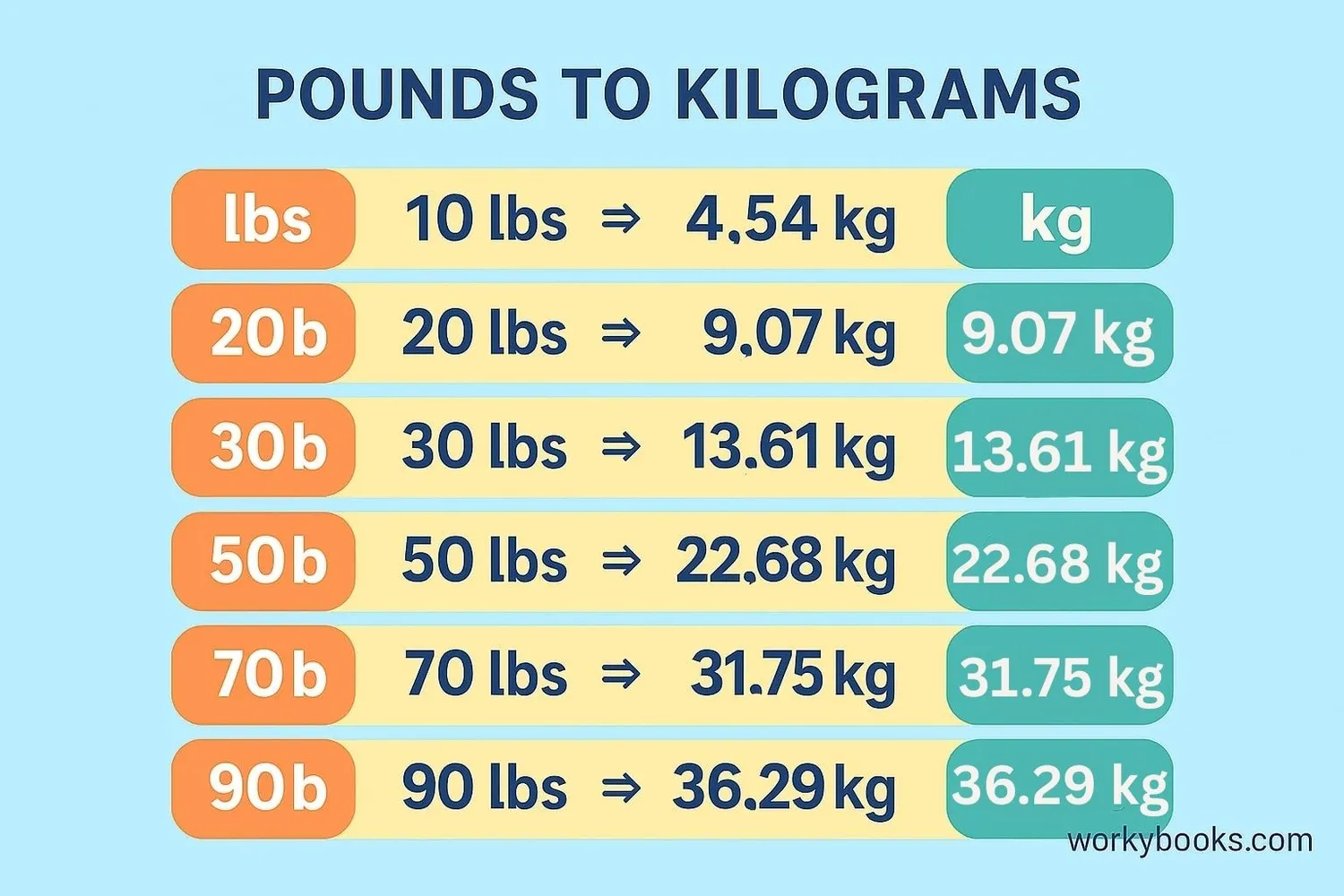
To convert 203 pounds to kilograms, you multiply the mass in pounds by the international standard conversion factor of 0.45359237. Consequently, 203 pounds is equal to 92.07925111 kilograms, which is typically rounded to 92.08 kg for most practical applications, including medical records, shipping manifests, and fitness tracking.
The Mathematical Foundation of Converting 203 lbs to kg
Understanding the conversion from pounds (lbs) to kilograms (kg) requires a grasp of the relationship between the United States Customary System and the International System of Units (SI). While the pound is a unit of force or mass depending on the context, the "avoirdupois pound"—which we use for body weight and commercial goods—is strictly defined in relation to the kilogram.
Since the International Yard and Pound Agreement of 1959, one pound has been legally defined as exactly 0.45359237 kilograms. This precision is not merely a mathematical curiosity; it ensures that scientific data and trade agreements remain consistent across borders. When you convert 203 pounds, you are applying this definitive constant to find the metric equivalent.
The formula is expressed as: m(kg) = m(lb) × 0.45359237
For 203 lbs: 203 × 0.45359237 = 92.07925111 kg
In most 2026 laboratory settings, you might keep four or five decimal places, but for general health and consumer use, two decimal places (92.08 kg) provide more than enough accuracy.
Why 203 Pounds is a Significant Weight Metric
In the context of human health and performance, 203 pounds (92.08 kg) often represents a pivotal threshold. For many adult males of average to tall height, this weight may place them in specific categories for Body Mass Index (BMI) or athletic weight classes.
Athletic and Combat Sports Classifications
In professional combat sports such as Mixed Martial Arts (MMA) or boxing, 92.08 kg sits very close to the Light Heavyweight or Cruiserweight limits, depending on the specific organization’s rules. For instance, the Light Heavyweight limit in many MMA promotions is 205 pounds (93.0 kg). A person weighing 203 pounds is effectively "on weight" for this category, allowing them a small margin for hydration and maintenance before a weigh-in.
Medical and Dosage Requirements
As of 2026, medical protocols increasingly rely on kilograms for weight-based medication dosing to minimize errors. A weight of 92.08 kg is used to calculate the volume of distribution for various pharmaceuticals. If a patient is recorded at 203 pounds, a healthcare provider must convert this to 92 kg to ensure that intravenous fluids or anesthesia are administered safely, as an error in conversion could lead to sub-therapeutic or toxic levels of a drug.
Quick Reference Conversion Table: 200 lbs to 210 lbs
When tracking weight fluctuations or shipping goods, it is helpful to see where 203 pounds sits in relation to surrounding values. The following table provides the conversion for the range of 200 to 210 pounds into kilograms and grams.
| Pounds (lb) | Kilograms (kg) | Grams (g) | Precision Notes |
|---|---|---|---|
| 200 lbs | 90.718 kg | 90,718 g | Standard "Round" Number |
| 201 lbs | 91.172 kg | 91,172 g | +0.454 kg increment |
| 202 lbs | 91.626 kg | 91,626 g | |
| 203 lbs | 92.079 kg | 92,079 g | Target Conversion |
| 204 lbs | 92.533 kg | 92,533 g | |
| 205 lbs | 92.986 kg | 92,986 g | Common Sport Limit |
| 206 lbs | 93.440 kg | 93,440 g | |
| 207 lbs | 93.894 kg | 93,894 g | |
| 208 lbs | 94.347 kg | 94,347 g | |
| 209 lbs | 94.801 kg | 94,801 g | |
| 210 lbs | 95.254 kg | 95,254 g |
Methods for Mental Conversion and Estimation
While calculators are ubiquitous in 2026, being able to estimate the conversion of 203 pounds to kilograms mentally is a valuable skill for travelers and professionals. There are several "shortcut" methods to arrive at a near-accurate figure without a digital device.
The "Divide by 2.2" Method
The most common approximation is to divide the pound value by 2.2.
- 203 / 2 = 101.5
- 101.5 / 1.1 ≈ 92.2 This method yields 92.2 kg, which is an error of only about 0.12 kg from the actual value. For casual conversations or checking luggage weight, this is perfectly acceptable.
The "Double and Move" Method
Another strategy involves treating the conversion as a 10% reduction after halving the number:
- Halve the weight: 203 / 2 = 101.5
- Calculate 10% of that half: 10.15
- Subtract the 10% from the half: 101.5 - 10.15 = 91.35 This result (91.35 kg) is slightly less accurate than the 2.2 method but is often easier to perform mentally while standing at a check-in counter or in a gym.
Technical Precision in Global Logistics
In the world of 2026 logistics, the difference between 203 pounds and 92 kilograms can impact shipping costs and safety regulations. Cargo planes and freight vessels operate on strict mass and balance calculations.
Dimensional Weight and Metric Standardization
Most international carriers, such as DHL or FedEx, use metric measurements for their primary billing systems outside of the United States. If you are shipping a crate weighing 203 pounds, the carrier's system will likely log it as 92.1 kg (rounding up). In high-volume logistics, these small fractions add up. For instance, if a shipment contains 1,000 units of 203 lbs each, the total weight is 92,079 kg. Using a simplified conversion of 0.45 instead of the precise 0.45359237 would result in a calculation of 91,350 kg—an error of over 700 kg, which could compromise the structural safety of an aircraft or the stability of a shipping container.
Compliance with NIST and ISO Standards
The National Institute of Standards and Technology (NIST) in the U.S. and the International Organization for Standardization (ISO) globally mandate the use of the 0.45359237 factor. Any commercial scale used to weigh a 203-lb object must be calibrated to these standards to ensure that the buyer and seller are transacting based on accurate mass.
Common Errors in Converting 203 lbs to kg
Despite the simplicity of the math, several common mistakes occur when people attempt to convert 203 pounds.
- Confusing Pounds with Newtons: In physics, pounds are often a measure of force (lbf), while kilograms are a measure of mass. On Earth, they are functionally interchangeable for casual use, but in engineering contexts, one must ensure they are not accidentally converting force to mass without accounting for gravity.
- Using Overly Simplified Ratios: Some people use 0.5 as a conversion factor (simply halving the weight). Using this for 203 lbs would give you 101.5 kg, which is nearly 10 kg off the mark. This can lead to significant errors in health assessments or weight-restricted activities.
- Rounding Too Early: If you are performing a multi-step calculation (such as finding the weight of 50 items at 203 lbs each), always use the full conversion factor before rounding the final result. Rounding 92.0792... to 92 before multiplying by 50 creates a cumulative error.
FAQ: Frequently Asked Questions about 203 lbs to kg
How much is 203 lbs in kg and grams?
203 pounds is equal to 92 kilograms and 79 grams. When using the exact conversion, it is 92,079.25 milligrams, but in standard metric notation, it is written as 92.08 kg.
Is 92 kg considered heavy for a human?
Weight is relative to height, age, and body composition. According to standard BMI scales, 92.08 kg (203 lbs) would be considered "Overweight" for an individual of 5'10" (178 cm), but it could be an ideal weight for a person over 6'4" (193 cm) or a highly muscular athlete.
Why do some countries use lbs and others use kg?
The United States, Liberia, and Myanmar are the primary nations still using the imperial system for daily measurements. Most of the world transitioned to the metric system (SI) because of its decimal-based logic (units of 10), which simplifies scientific and international trade calculations.
How do I convert 203 lbs to kg on a standard calculator?
Simply type "203" followed by the multiplication sign "×", then type "0.45359", and press equals. This will give you a highly accurate result of 92.07877, which is sufficient for almost all non-scientific purposes.
Does the weight of 203 lbs change at different altitudes?
While your mass remains 92.08 kg regardless of location, your weight (the force of gravity on that mass) changes slightly depending on altitude and local gravity. However, for the purposes of a weight conversion guide, we treat the mass as a constant defined at standard sea-level gravity.
Next Steps for Using Your Conversion Data
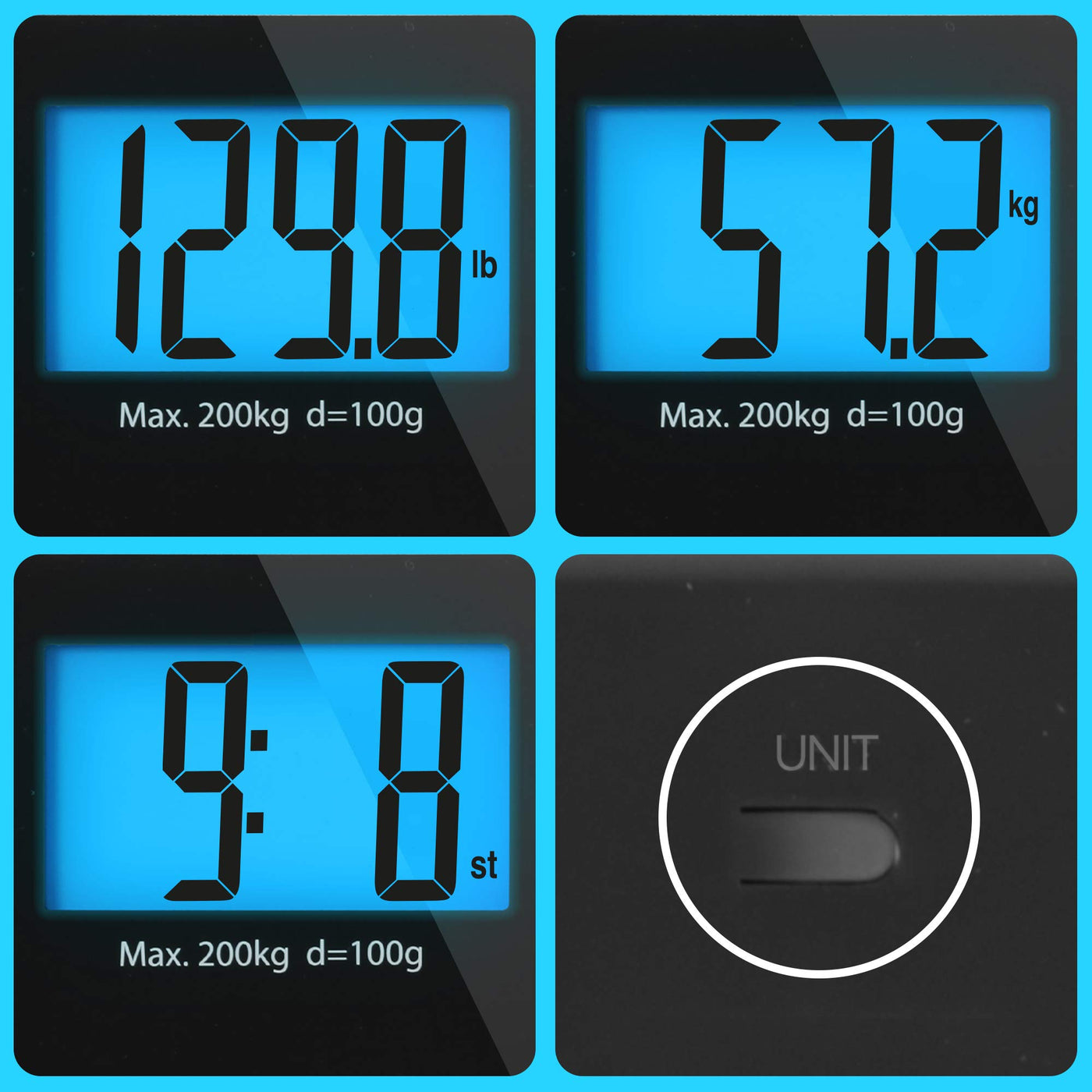
Now that you have the precise conversion of 203 pounds to 92.08 kilograms, you can apply this data to your specific needs. If you are tracking fitness progress, ensure your digital scale is set to the unit you are most comfortable with to avoid conversion fatigue. If you are preparing for international travel in 2026, remember that most airlines cap "heavy" checked bags at 23 kg (approx. 50 lbs) or 32 kg (approx. 70 lbs). At 92.08 kg, a single piece of luggage would be significantly over the limit for standard commercial flights and would require special freight handling.
For those in professional fields, always double-check your conversion against official NIST or ISO 80000-4 standards to maintain compliance and safety. Precision in measurement is the bridge that allows for global cooperation and scientific advancement.