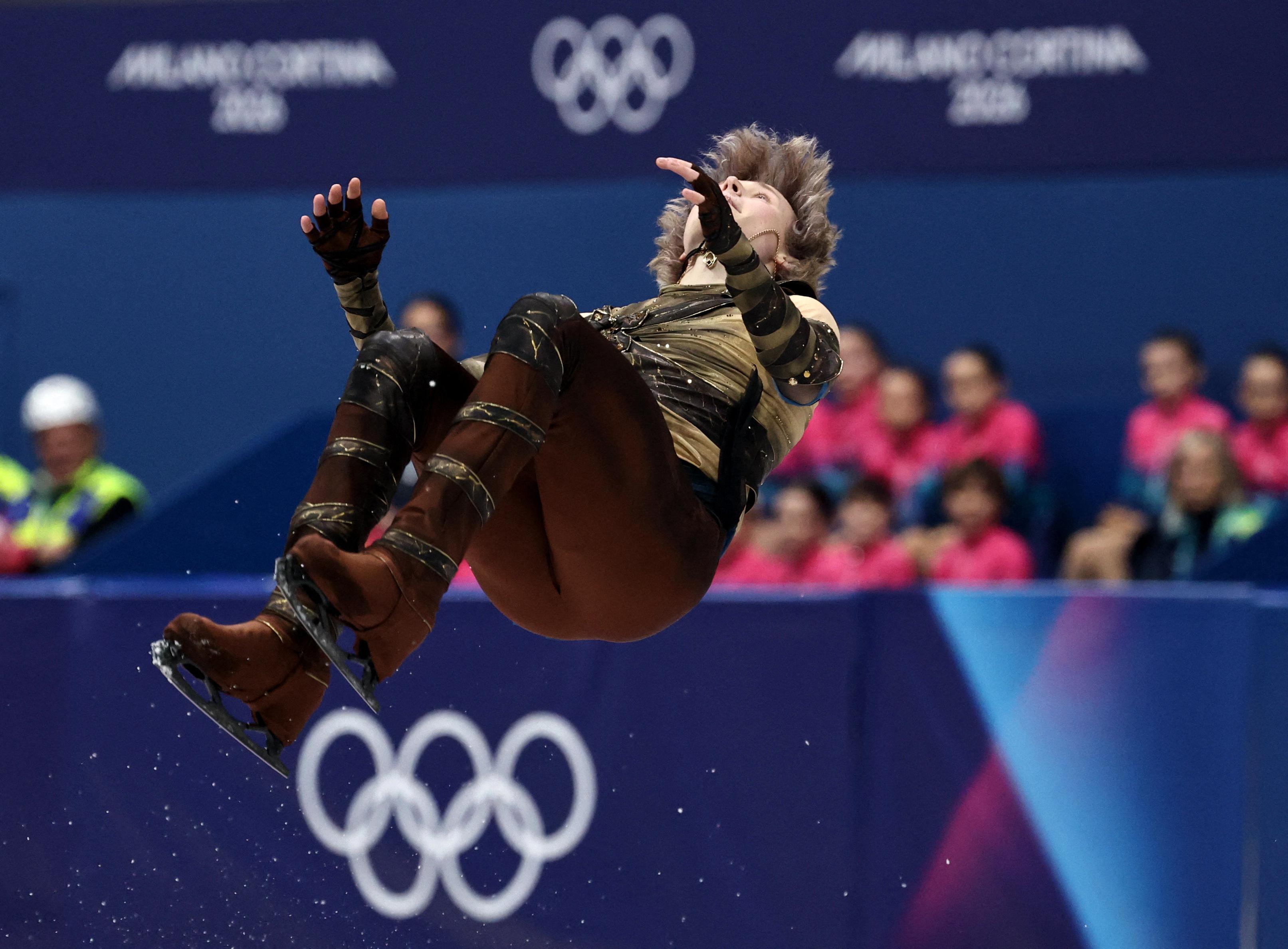
As the Milano-Cortina 2026 Winter Olympics approach, figure skating gold medal predictions favor Ilia Malinin (USA) for Men’s Singles and Kaori Sakamoto (Japan) for Women’s Singles. In Ice Dance, Madison Chock and Evan Bates (USA) lead the field, while Stellato-Dudek and Deschamps (Canada) are frontrunners in the Pairs discipline.
The 2026 Winter Games mark a pivotal moment in the evolution of figure skating. Since the 2022 Beijing Games, the sport has undergone a significant transformation, characterized by a shift in technical boundaries and a renewed emphasis on artistic maturity. The absence of certain traditional powerhouses from the international circuit has opened the door for new nations to rise, creating one of the most unpredictable and exciting Olympic cycles in decades. This year, the focus isn't just on who can land the most revolutions in the air, but who can balance that extreme athleticism with the sophisticated storytelling required by the current judging system.
Men’s Singles: The Reign of the Quad God vs. Artistic Mastery
The battle for the Men’s Singles gold medal in 2026 is widely viewed as a clash of ideologies. On one side is the sheer technical dominance of American Ilia Malinin, and on the other is the refined, high-component skating of Japan’s Yuma Kagiyama and France’s Adam Siao Him Fa.
Ilia Malinin (USA) enters the 2026 Olympic season as the definitive favorite. Known as the "Quad God," Malinin changed the sport forever by becoming the first skater to land the quadruple Axel in competition. His technical ceiling is currently unmatched; he is capable of performing programs that include six quadruple jumps, including the Axel and the Lutz. To secure the gold, Malinin has spent the last two years focusing on his Program Components Score (PCS). By working with world-class choreographers, he has bridged the gap between his jumping prowess and his skating skills, making him nearly impossible to beat if he stays vertical.
Yuma Kagiyama (Japan) represents the most significant threat to Malinin’s dominance. Kagiyama, a silver medalist from the 2022 Games, possesses a rare combination of explosive jumping power and exceptionally soft knee action. His landings are often cited by judges as the gold standard for "flow out," which earns him high Grade of Execution (GOE) points. While he may not attempt the quadruple Axel, his consistency and superior basic skating skills allow him to capitalize on any mistakes Malinin might make.
Adam Siao Him Fa (France) has emerged as a powerhouse in the latter half of the quadrennial. He is known for his creative, often avant-garde choreography and his ability to land difficult combinations late in the program. His rise to the top of the European rankings has proven that he has the mental fortitude to handle the pressure of the Olympic stage.
Women’s Singles: A New Era of Consistency and Power
In the Women’s discipline, the narrative has shifted away from the "quad or bust" mentality toward a focus on powerful, high-quality triple jumps and exquisite artistry. This change has benefited veteran skaters who have mastered the longevity required for a sustained career.
Kaori Sakamoto (Japan) is the reigning queen of the ice. Heading into 2026, she is seeking to cement her legacy by adding an Olympic gold to her multiple World Championship titles. Sakamoto’s greatest strength is her speed; she covers more ice than almost any other female skater, and her triple-triple combinations are massive. Because she does not rely on quadruple jumps, her training has been more sustainable, allowing her to maintain peak physical condition into her mid-20s.
Isabeau Levito (USA) is the primary challenger for the podium. Levito brings a classical, almost balletic style to the ice that resonates deeply with judges. While she lacks the raw power of Sakamoto, her flexibility and intricate spin positions often earn her the maximum level of difficulty. Her challenge will be maintaining technical precision under the immense pressure of the Olympic spotlight, as the American hope for a ladies' medal rests largely on her shoulders.
Loena Hendrickx (Belgium) has made history for her country over the last few seasons. As one of the most expressive performers in the world, Hendrickx excels in the short program, where her charismatic presence can lead to huge scores. Her path to the gold involves maximizing her GOE on every element, as she typically skates a slightly lower technical difficulty than Sakamoto but matches her in presentation.
Pairs Skating: Experience and Innovation
The Pairs discipline has seen a resurgence of teams from North America and Europe. The technical requirements for pairs—including the twist lift, throw jumps, and side-by-side spins—demand a level of synchronization that takes years to perfect.
Deanna Stellato-Dudek and Maxime Deschamps (Canada) are the sentimental and statistical favorites. Stellato-Dudek’s story is legendary in the sport; she returned to competition in her 30s after a long retirement and, alongside Deschamps, has become a world leader. Their programs are characterized by high-risk elements, including huge throw triple loops and a level of intensity that few can match. At 42 years old, Stellato-Dudek is aiming to become the oldest figure skating Olympic medalist in history, a feat that would be a monumental achievement for the sport.
Riku Miura and Ryuichi Kihara (Japan) provide the stiffest competition. The 2023 World Champions have a natural chemistry that translates into high scores for "Composition" and "Presentation." Their technical strength lies in their triple twist and their ability to stay perfectly in sync during difficult side-by-side jumping passes. Their rivalry with the Canadian pair has been the highlight of the Grand Prix circuit leading up to 2026.
Ice Dance: The Battle for the Top Step
Ice Dance is often the most predictable discipline, yet the 2026 landscape features a fascinating battle between established legends and rising stars. Unlike the other disciplines, Ice Dance does not feature jumps; instead, it focuses on edges, lifts, and the "Rhythm Dance" requirements set by the ISU.
Madison Chock and Evan Bates (USA) are the gold medal favorites. Having competed together for over a decade, their "on-ice telepathy" is their greatest asset. They are known for their innovative, story-driven programs and unique, high-difficulty lifts. As the reigning World Champions, they have the "judging momentum" that is so critical in Ice Dance.
Charlène Guignard and Marco Fabbri (Italy) will have the immense advantage of a home crowd in Milan. The Italian duo has been remarkably consistent, known for their precise technical footwork and deep edges. In a discipline where the margins are often hundredths of a point, the energy of the home fans could be the factor that pushes them onto the top of the podium.
2026 Olympic Figure Skating Medal Contenders Summary
| Discipline | Gold Medal Favorite | Top Challenger | Key Technical Factor |
|---|---|---|---|
| Men's Singles | Ilia Malinin (USA) | Yuma Kagiyama (JPN) | The Quadruple Axel and total quad count. |
| Women's Singles | Kaori Sakamoto (JPN) | Isabeau Levito (USA) | Skating skills and triple-triple GOE. |
| Pairs | Stellato-Dudek / Deschamps (CAN) | Miura / Kihara (JPN) | Throw jump height and synchronization. |
| Ice Dance | Chock / Bates (USA) | Guignard / Fabbri (ITA) | Level 4 Twizzles and lift innovation. |
The Impact of Judging Changes and Technical Evolution
Heading into 2026, the International Skating Union (ISU) has implemented several refinements to the judging system that will impact the gold medal race. One of the most significant changes is the continued adjustment of the Program Components Score (PCS), which has been condensed from five categories to three: Composition, Presentation, and Skating Skills. This was intended to make the scoring more transparent and to reward skaters who truly excel in artistry, rather than simply giving high PCS to anyone with high technical scores.
Furthermore, the "Technical Minimums" and the way Grade of Execution (GOE) is applied have become more stringent. In 2026, a fall is more "expensive" than ever before. A skater like Ilia Malinin can no longer rely solely on the base value of a quadruple Axel to win; if the jump is landed poorly or results in a fall, the negative GOE and the subsequent deduction can neutralize the jump's high value.
This shift has forced athletes to reconsider their program layouts. We are seeing more "balanced" programs where the most difficult jumps are placed in the first half to ensure freshness, while the second half—which receives a 10% bonus for jumps—is reserved for reliable elements that can be performed with high artistic flair.
How Age and Experience Play a Role
In previous cycles, figure skating was often dominated by teenagers, particularly in the Women's discipline. However, the 2026 Games show a trend toward older, more experienced athletes. With the minimum age for senior competition raised to 17, the field has stabilized. Skaters like Kaori Sakamoto and Deanna Stellato-Dudek have shown that maturity brings a level of emotional depth to a program that younger skaters often struggle to replicate. This "maturity's reward" is expected to be a major theme of the 2026 podiums.
Frequently Asked Questions
Who is the favorite for the Men's gold in 2026?
Ilia Malinin of the United States is the primary favorite. His ability to land the quadruple Axel gives him a technical base value that no other skater can currently match. However, he must skate cleanly, as his Japanese rivals, Yuma Kagiyama and Shoma Uno (if competing), possess higher scores in skating skills and artistry that can close the gap if Malinin falters.
Can Kaori Sakamoto win the Olympic gold?
Yes, she is the heavy favorite. Having won three consecutive World Championships in the 2022-2026 cycle, Sakamoto has proven she is the most consistent female skater in the world. Her lack of quadruple jumps is compensated for by her immense speed, massive triple-triple combinations, and high component scores.
Will there be a "Home Ice" advantage for Italian skaters?
Historically, host-country skaters receive a boost in performance and occasionally in scores due to the crowd's energy. In 2026, the Ice Dance team of Charlène Guignard and Marco Fabbri are the most likely beneficiaries. They are already top-tier contenders, and the Italian environment could help them challenge the Americans for gold.
What happened to the quadruple jumps in the Women's discipline?
Since the 2022 Olympics, the frequency of quadruple jumps in the Women's field has decreased significantly on the international circuit. This is due to the age-limit increase and a shift in focus toward longevity and "complete" skating. While some skaters still train quads, the 2026 gold medal is more likely to be won with high-quality triple jumps and superior artistry.
Is Deanna Stellato-Dudek really competing at age 42?
Yes, Deanna Stellato-Dudek has become a trailblazer for longevity in the sport. Alongside her partner Maxime Deschamps, she has remained at the top of the world rankings throughout the 2026 cycle. Her participation is one of the most anticipated stories of the Milano-Cortina Games, as she challenges the traditional age boundaries of elite figure skating.
Tracking the Lead-Up to the Games
To stay informed as the 2026 Winter Olympics begin, fans should monitor the results of the ISU Grand Prix Final and the European and Four Continents Championships held in early 2026. These events serve as the ultimate "rehearsal" for the Olympic Games. Pay close attention to the Technical Controller reports, which often highlight which skaters are receiving "edge calls" on their jumps or "level deductions" on their spins. These small details frequently decide the difference between a gold and a silver medal on the Olympic stage.
Ultimately, the 2026 Games will be a celebration of both the extreme athletic potential of the human body and the timeless beauty of performance art on ice. Whether it is a teenager landing a historic jump or a veteran winning their first gold after two decades in the sport, Milano-Cortina is set to be a landmark event in figure skating history.