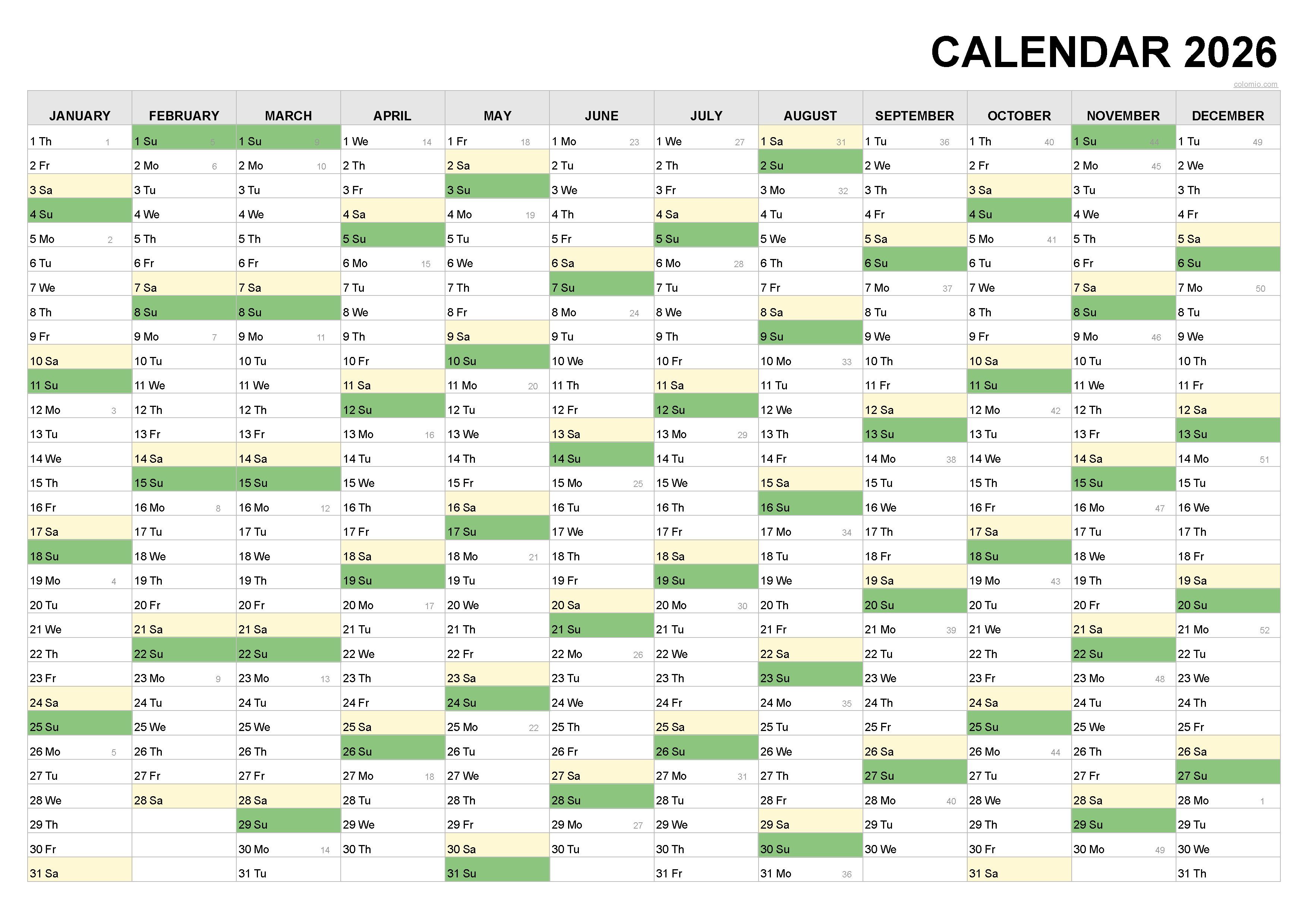
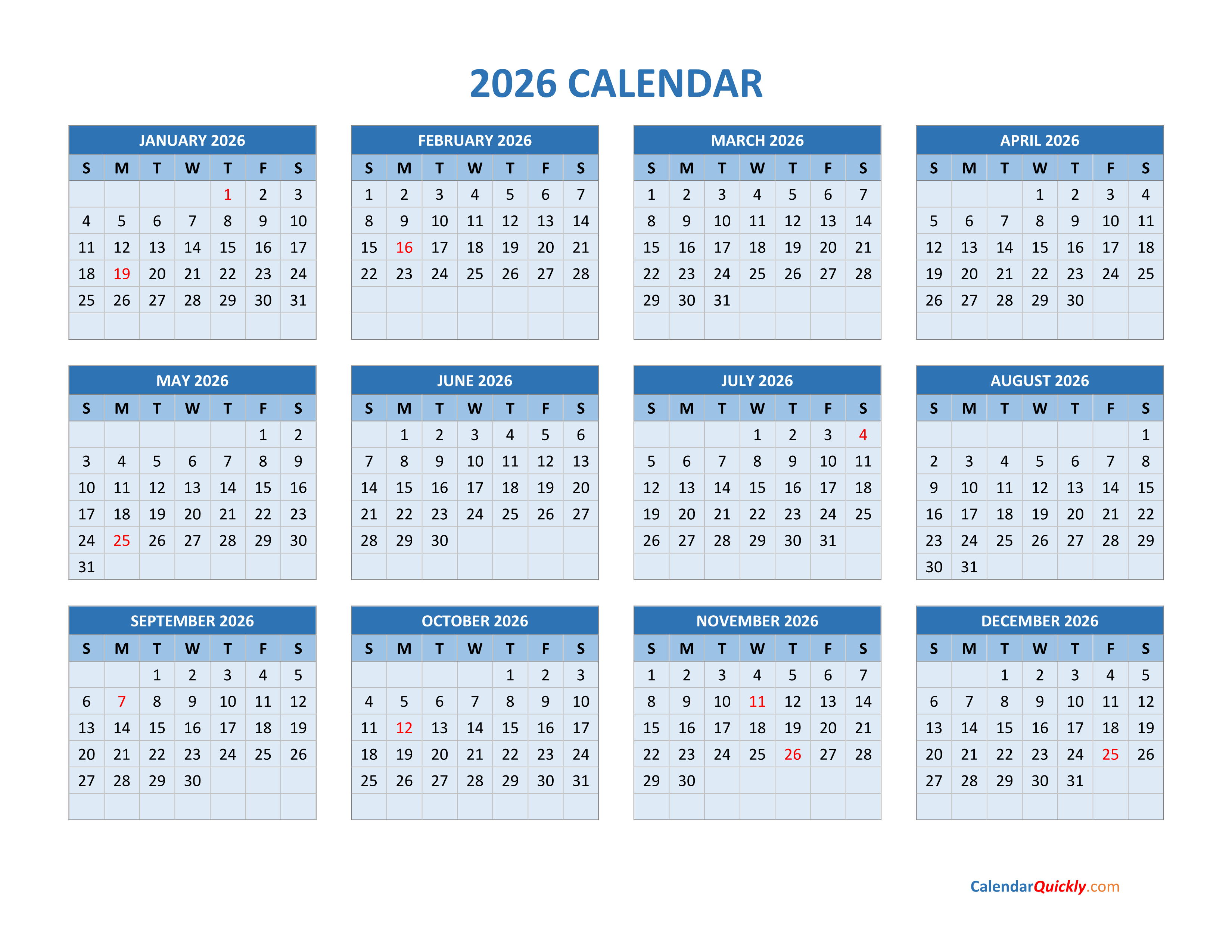
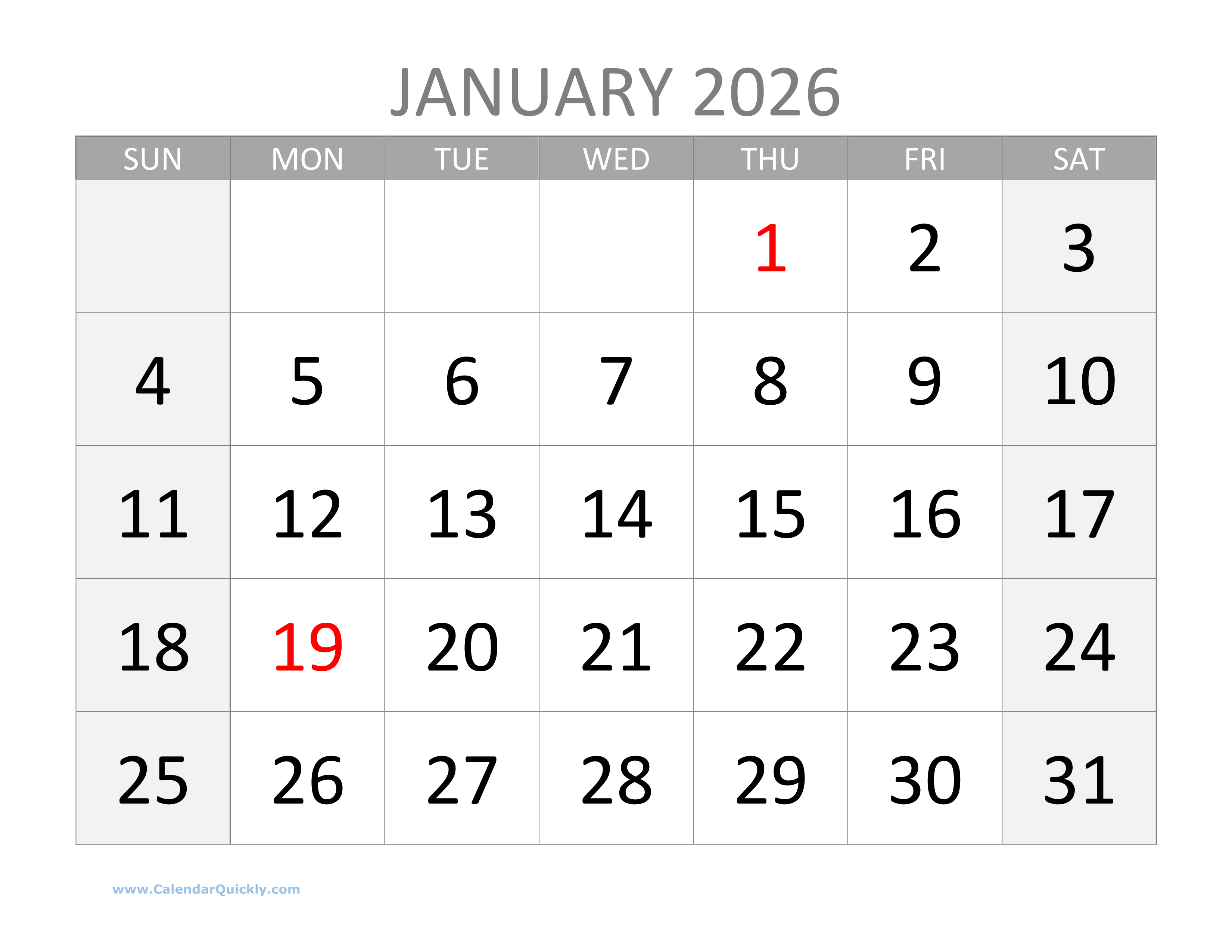
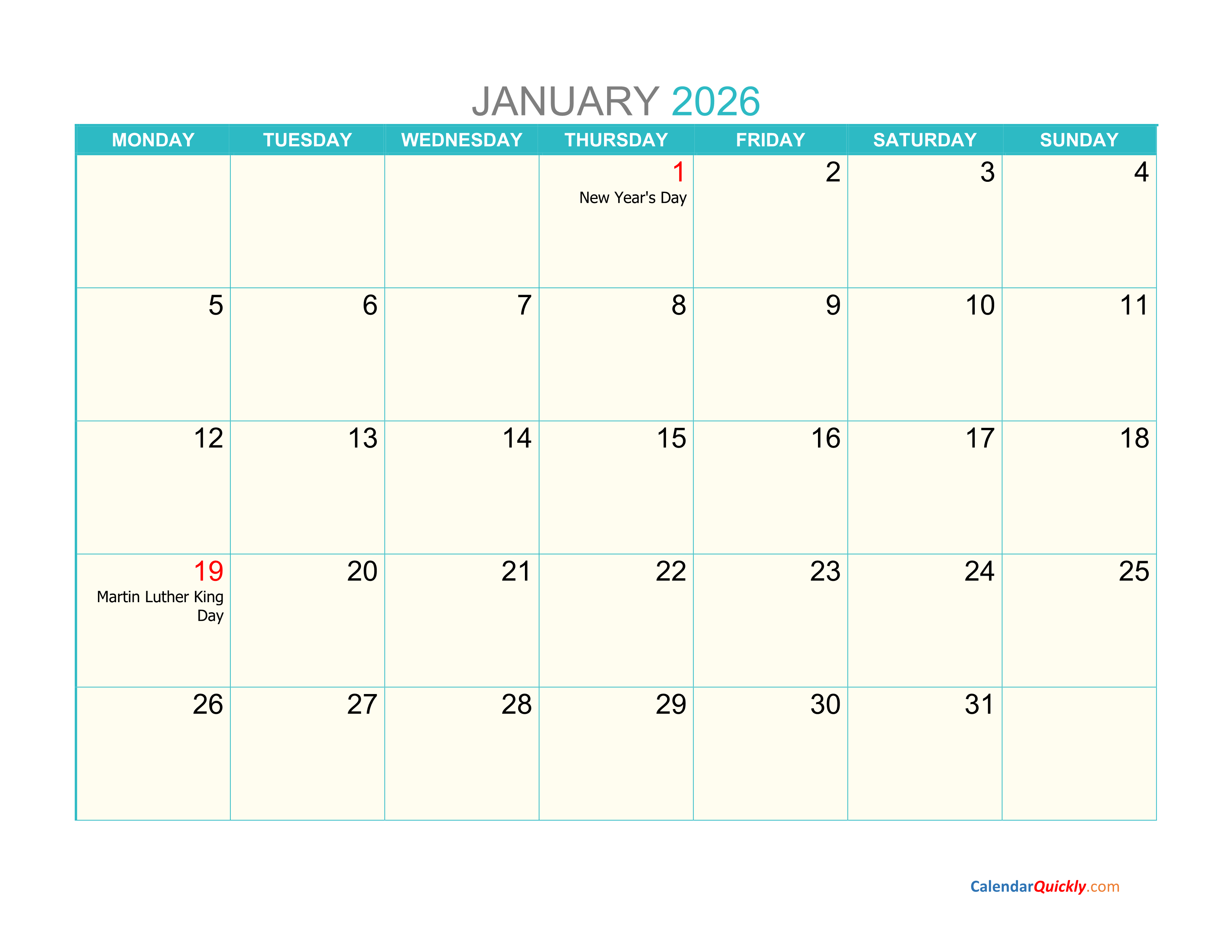
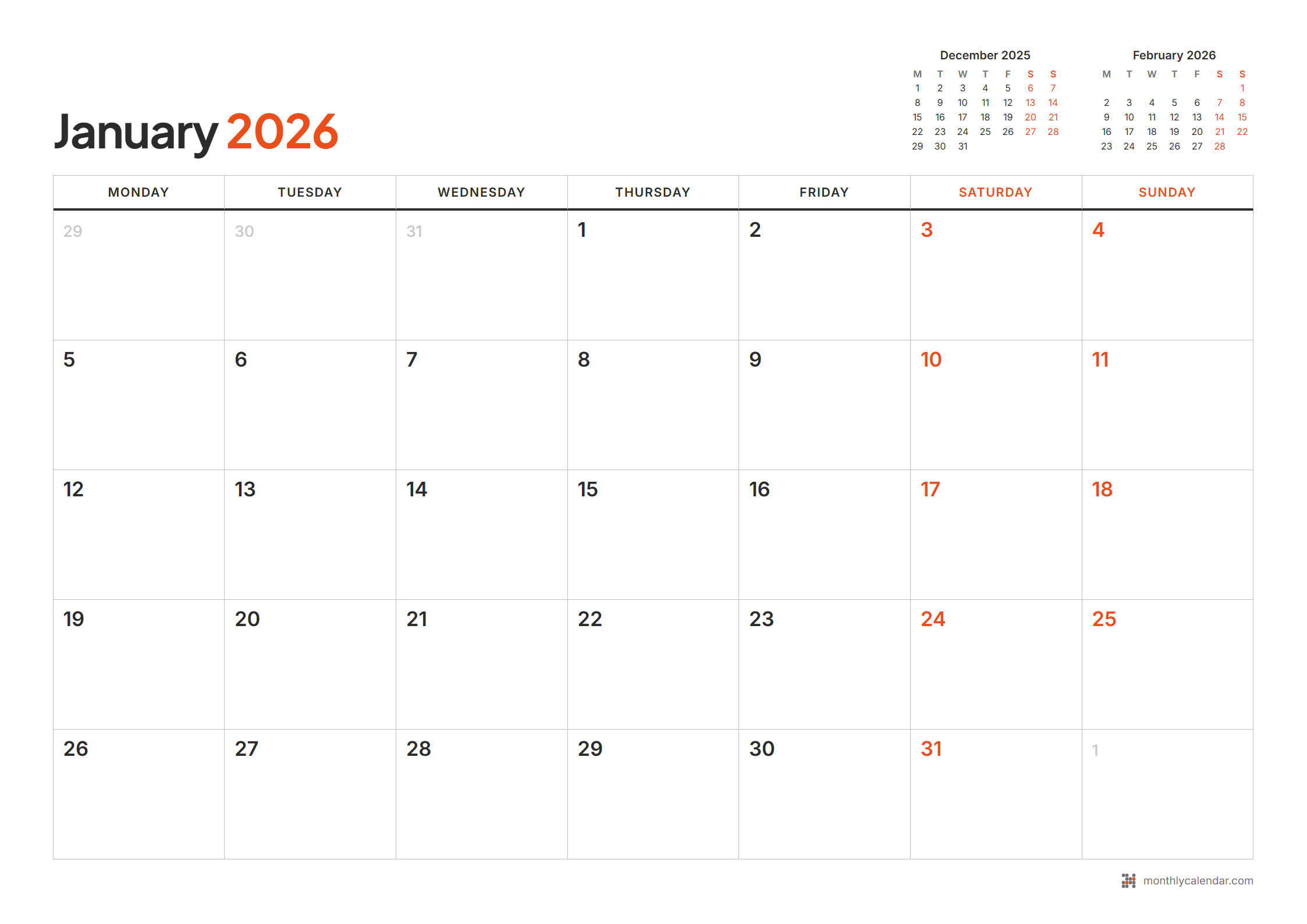
The 2026 calendar is a common year consisting of 365 days, beginning and ending on a Thursday. As a non-leap year, February contains 28 days. This year features 11 US federal holidays, several significant celestial events including a total solar eclipse in August, and 52 full weeks for professional and personal scheduling.
Structural Overview of the 2026 Calendar Year
Understanding the mathematical and astronomical structure of 2026 is the first step toward effective long-term planning. Because 2026 begins on a Thursday, it follows a specific Gregorian cycle that repeats periodically. This "Thursday-start" configuration dictates the placement of nearly every major event, from the mid-week position of New Year’s Day to the Friday arrival of Christmas.
For professionals calculating payroll, interest, or project deadlines, 2026 contains 261 working days and 104 weekend days, assuming a standard Monday-to-Friday work week. There are 52 weeks in the year, with a "remainder" day that pushes the start of 2027 to a Friday. In terms of the ISO week date system, 2026 is an ISO leap year (a 53-week year) in some regional contexts, though most standard business calendars will treat it as a 52-week cycle.
The absence of a leap day (February 29) simplifies quarterly reporting. Each quarter remains relatively balanced, though the placement of holidays like Easter (which falls on April 5) can shift consumer behavior and travel patterns between the first and second quarters. Planning for 2026 requires an awareness of these fixed and floating dates to optimize time management and resource allocation.
US Federal Holidays and Long Weekend Strategy
Federal holidays in 2026 offer several opportunities for extended breaks, but the specific days they fall on require careful attention. When a holiday falls on a Saturday, it is usually observed on the preceding Friday; when it falls on a Sunday, it is observed on the following Monday. In 2026, the most notable instance of this is Independence Day.
Major Federal Holidays in 2026
- New Year’s Day: Thursday, January 1
- Martin Luther King Jr. Day: Monday, January 19
- Presidents' Day: Monday, February 16
- Memorial Day: Monday, May 25
- Juneteenth National Independence Day: Friday, June 19
- Independence Day: Saturday, July 4 (Observed Friday, July 3)
- Labor Day: Monday, September 7
- Indigenous Peoples' Day (Columbus Day): Monday, October 12
- Veterans Day: Wednesday, November 11
- Thanksgiving Day: Thursday, November 26
- Christmas Day: Friday, December 25
The 2026 calendar is particularly favorable for "bridge" holidays. For instance, because New Year’s Day falls on a Thursday, many organizations may observe a four-day weekend by including Friday, January 2. Similarly, Thanksgiving always provides a four-day window. Independence Day falling on a Saturday means the federal observation occurs on Friday, July 3, creating a standard three-day weekend for most government and corporate employees. Veterans Day falls mid-week on a Wednesday, which may disrupt the flow of the work week but offers a mid-week respite for those in the public sector.
Comprehensive 2026 Planning Table
The following table breaks down the 2026 calendar by month, highlighting the number of days, primary federal holidays, and key seasonal or celestial milestones.
| Month | Days | Major Federal Holiday | Seasonal / Astronomical Event |
|---|---|---|---|
| January | 31 | New Year's Day, MLK Day | Perihelion (Jan 3) |
| February | 28 | Presidents' Day | Lunar New Year (Feb 17) |
| March | 31 | None | Vernal Equinox (March 20) |
| April | 30 | None | Easter Sunday (April 5) |
| May | 31 | Memorial Day | Eta Aquariid Meteor Shower |
| June | 30 | Juneteenth | Summer Solstice (June 21) |
| July | 31 | Independence Day | Aphelion (July 3) |
| August | 31 | None | Total Solar Eclipse (Aug 12) |
| September | 30 | Labor Day | Autumnal Equinox (Sept 22) |
| October | 31 | Indigenous Peoples' Day | Partial Lunar Eclipse (Oct 26) |
| November | 30 | Veterans Day, Thanksgiving | Daylight Saving Ends (Nov 1) |
| December | 31 | Christmas Day | Winter Solstice (Dec 21) |
Religious and Cultural Observances
The 2026 calendar includes a variety of floating religious dates that are determined by lunar cycles or specific liturgical traditions. Planning for these dates is essential for schools, businesses, and community organizations to ensure inclusivity and operational readiness.
Easter and Christian Observances: Easter falls relatively early in 2026, on Sunday, April 5. This places Ash Wednesday on February 18 and Good Friday on April 3. These dates influence the "Spring Break" schedules for many K-12 and collegiate institutions across North America and Europe.
Islamic Holidays: In 2026, the Islamic calendar (Hijri) continues to shift earlier in the Gregorian year. Ramadan is expected to begin around February 18, 2026, concluding with Eid al-Fitr on or about March 20. Eid al-Adha is anticipated to fall around May 27. Because these dates depend on the sighting of the moon, they may vary by one day depending on the region.
Jewish Holidays: The Jewish year 5786/5787 features major observances throughout 2026. Passover (Pesach) begins at sundown on Thursday, April 2. Rosh Hashanah (The Jewish New Year) starts at sundown on Friday, September 11, followed by Yom Kippur on Sunday, September 20. Hanukkah begins early in the winter, with the first candle being lit on the evening of Friday, December 4.
Celestial and Astronomical Events of 2026
For many, the 2026 calendar is defined by significant astronomical events that draw international attention. The most prominent of these is the Total Solar Eclipse on August 12, 2026. This eclipse will be visible across parts of the Arctic, Greenland, Iceland, Spain, and a small portion of Portugal. This is the first total solar eclipse visible in continental Europe since 1999, making it a major travel and logistical event for the summer of 2026.
In addition to the solar eclipse, 2026 features two lunar eclipses. A total lunar eclipse will occur on March 3, 2026, visible from parts of the Americas, East Asia, and Australia. Later in the year, a partial lunar eclipse will take place on August 28, followed by another lunar event on October 26.
The solstices and equinoxes, which mark the official change of seasons, occur as follows:
- Vernal Equinox: March 20, 14:02 UTC
- Summer Solstice: June 21, 07:42 UTC
- Autumnal Equinox: September 22, 23:33 UTC
- Winter Solstice: December 21, 20:03 UTC
Tracking these dates is vital for sectors such as agriculture, renewable energy, and tourism, where seasonal light cycles directly impact productivity and revenue.
Quarterly Business and Financial Milestones
Managing a 2026 calendar for professional purposes requires breaking the year into fiscal quarters (Q1–Q4). Each quarter in 2026 presents unique logistical challenges and opportunities for growth.
Q1: January – March
The first quarter of 2026 is dominated by the "post-holiday" recovery and tax preparation. With New Year’s Day on a Thursday, the first "full" work week begins on January 5. Businesses should prepare for the Lunar New Year on February 17, which often impacts global supply chains, particularly those involving manufacturing in East Asia. Q1 ends on Tuesday, March 31.
Q2: April – June
Second-quarter planning is often influenced by the early April Easter holiday. April 15 remains the standard deadline for US individual income tax filings. This quarter contains 91 days and features two major federal holidays: Memorial Day and Juneteenth. The transition to summer schedules typically begins following the Memorial Day weekend in late May.
Q3: July – September
Q3 2026 is characterized by the summer travel season and the significant solar eclipse in August. Businesses in the travel and hospitality sectors should expect a peak around July 4th and mid-August. The quarter concludes with Labor Day in early September, marking the transition into the "Back to School" season and the start of the final fiscal push.
Q4: October – December
The final quarter of 2026 is the busiest for retail and logistics. Daylight Saving Time ends on Sunday, November 1, providing an "extra" hour. Thanksgiving (Nov 26) and Christmas (Dec 25) fall on Thursdays and Fridays, respectively. This configuration is highly efficient for retail, as it creates a long "Black Friday" weekend and a full three-day Christmas weekend, potentially boosting end-of-year consumer spending.
Productivity Frameworks for 2026
To maximize the 2026 calendar, individuals and organizations should adopt specific productivity frameworks that account for the year's unique layout. Because the year ends on a Thursday, the "final week" of December is shorter than usual for project completion.
- The 12-Week Year: Divide 2026 into four distinct 12-week cycles. This prevents the "end-of-year" rush by creating artificial deadlines every three months.
- Time Blocking for Mid-Week Holidays: With Veterans Day and New Year's Day falling mid-week (Wednesday and Thursday), use "time blocking" to protect the surrounding days from low-productivity meetings, as these are common "bridge" days where staff availability may be low.
- Digital Syncing: Ensure all digital calendars (Google, Outlook, Apple) are updated with the 2026 federal holiday schedule, especially the "observed" dates for July 4th.
- Batch Planning: Use the quiet period in early January (starting Monday, Jan 5) to batch-plan marketing and financial goals for the entire first half of the year.
FAQ
Is 2026 a leap year?
No, 2026 is a common year. It contains 365 days, and February has the standard 28 days. The next leap year will be 2028. This means there is no February 29 on the 2026 calendar, simplifying date calculations for annual anniversaries and legal contracts.
When is the 2026 total solar eclipse?
The total solar eclipse occurs on August 12, 2026. The path of totality will pass over the Arctic Ocean, Greenland, Iceland, the Atlantic Ocean, and northern Spain. It is expected to be one of the most viewed astronomical events of the decade in Europe.
How many work days are in the 2026 calendar?
There are 261 potential work days in 2026 for a standard Monday-to-Friday schedule. After accounting for the 11 US federal holidays, there are 250 standard business days. This number may vary based on local or state-specific holiday observances.
What day of the week is Christmas on in 2026?
Christmas Day, December 25, 2026, falls on a Friday. This provides a natural three-day weekend for most employees. Consequently, Christmas Eve falls on Thursday, and the "observed" holiday for many corporate offices will remain on the Friday.
When does Daylight Saving Time start and end in 2026?
In the United States, Daylight Saving Time 2026 begins on Sunday, March 8, when clocks "spring forward" one hour. It ends on Sunday, November 1, 2026, when clocks "fall back" one hour. Note that some states, like Arizona and Hawaii, do not observe these changes.
Implement a 2026 Master Schedule
To ensure a successful 2026, the first action you should take is to audit your existing recurring commitments against the 2026 day-of-week structure. Since the year starts on a Thursday, verify that your automated billing, subscription renewals, and payroll cycles are adjusted for any weekend or holiday overlaps, particularly the observed July 3rd holiday. Establishing this "Master Schedule" in early January will prevent scheduling conflicts during the busier mid-year periods.