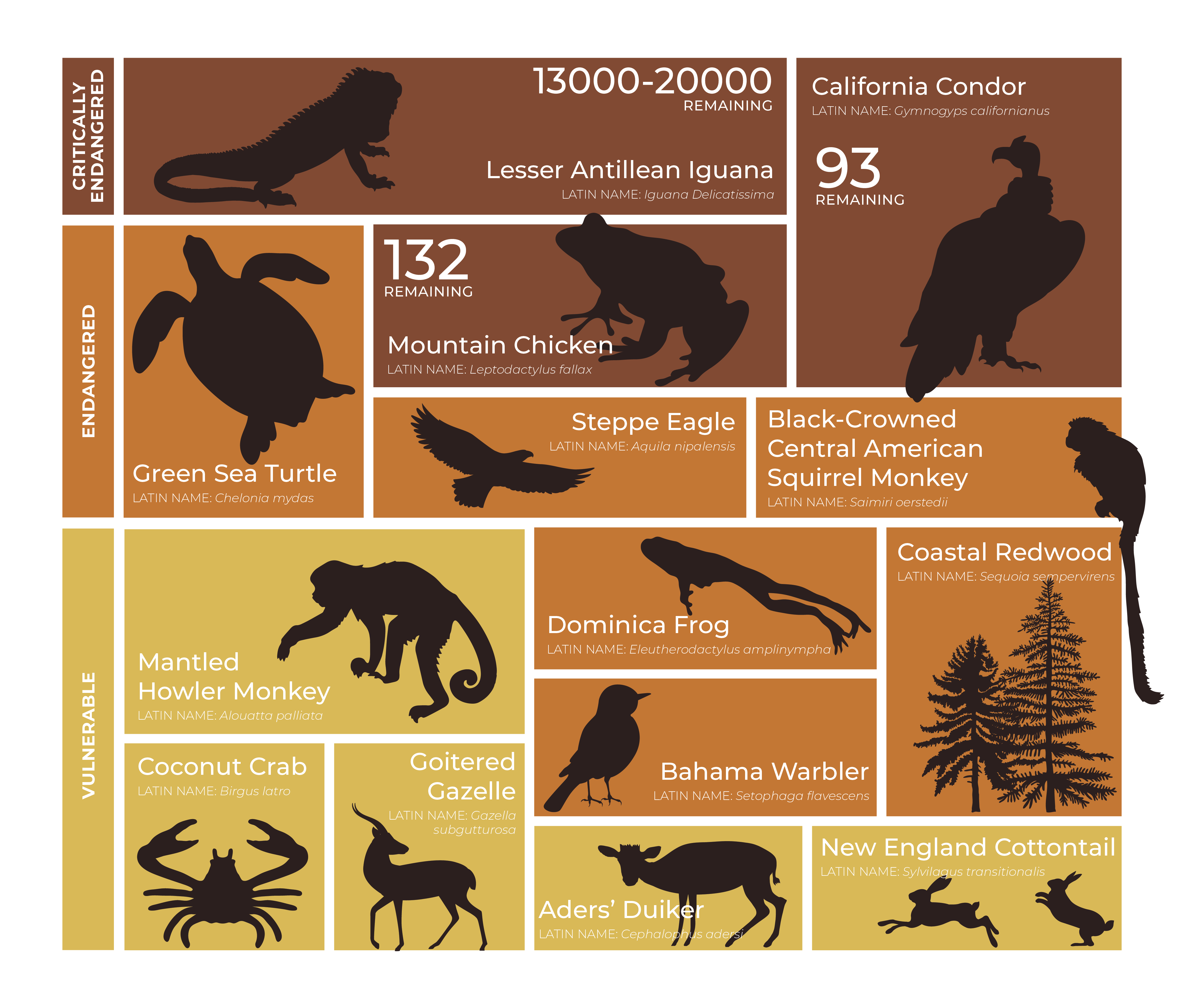
In 2026, global animal trends are defined by the convergence of advanced satellite AI tracking, the stabilization of high-profile rewilding projects, and significant breakthroughs in de-extinction science. Conservation efforts have shifted toward proactive ecosystem engineering, focusing on restoring functional biodiversity rather than merely protecting isolated species from further decline.
The Technological Renaissance in Field Biology
The landscape of wildlife observation has undergone a radical transformation in 2026. The integration of "Edge AI" into remote camera traps and acoustic sensors has enabled researchers to process data in situ, reducing the need for manual card retrieval and allowing for real-time poaching alerts. These devices can now identify individual animals by unique coat patterns or vocal signatures with over 98% accuracy, providing population density estimates that were previously impossible to calculate without invasive tagging.
Furthermore, the deployment of 5G-connected "bio-loggers" has revolutionized our understanding of migratory patterns. By 2026, the International Cooperation for Animal Research Using Space (ICARUS) initiative has expanded its sensor network to include smaller avian species and even large insects. This "Internet of Animals" allows scientists to track the movement of millions of organisms simultaneously, revealing how climate-induced shifts are altering traditional flyways and breeding grounds. These insights are critical for establishing "mobile protected areas" that move with the species, rather than remaining fixed on a map.
The use of environmental DNA (eDNA) has also reached a point of commercial and scientific maturity. In 2026, handheld eDNA sequencers allow field technicians to sample a liter of river water or a gram of soil and identify every vertebrate species that has passed through the area within the last 48 hours. This has led to the "rediscovery" of several species previously thought extinct, particularly in the dense rainforests of the Congo Basin and the Mekong Delta, where traditional surveying is difficult.
Rewilding the Continents: Large-Scale Predator and Megaherbivore Reintroductions
Rewilding has moved from a fringe ecological theory to a central pillar of national environmental policies in 2026. The focus is on "ecosystem engineers"—species that fundamentally alter their environment to the benefit of other flora and fauna. In Europe, the expansion of the European bison (Bison bonasus) into the UK and parts of the Balkans has created mosaic landscapes that support increased insect and bird biodiversity.
In North America, the 2026 status of the "Western Rewilding Network" shows promising results in the restoration of apex predators. The managed migration of gray wolves into Colorado and the continued expansion of grizzlies in the North Cascades are being monitored with sophisticated drone technology to mitigate human-wildlife conflict. These programs emphasize the "trophic cascade" effect, where the presence of predators regulates herbivore populations, leading to the regeneration of riparian vegetation and the stabilization of riverbanks.
In India, Project Cheetah has entered a critical stabilization phase. By 2026, the second and third generations of African cheetahs born on Indian soil are being tracked across the Kuno National Park and beyond. This project serves as a global case study for intercontinental translocation. While challenges regarding habitat connectivity and prey density remain, the project has successfully galvanized local support through "Cheetah Mitra" (Cheetah Friends) community programs, proving that large-scale restoration requires deep social integration.
Deep-Sea Exploration and the Race for Oceanic Protection
As terrestrial habitats become increasingly managed, the deep sea has emerged as the wildest frontier of 2026. The ratification and implementation of the United Nations High Seas Treaty have finally provided a legal framework for protecting international waters. This has spurred a wave of scientific expeditions to the "Twilight Zone" (200–1,000 meters deep) and the Abyssal Plain.
In 2026, researchers using autonomous underwater vehicles (AUVs) have documented hundreds of new species in the Clarion-Clipperton Zone (CCZ) of the Pacific. These include translucent "glass sponges" and specialized mollusks that thrive on polymetallic nodules. The discovery of these species has added significant weight to the ongoing debate over deep-sea mining. Conservationists argue that the unique biodiversity of the seabed, which plays a massive role in carbon sequestration, is too valuable to risk for mineral extraction.
Marine protected areas (MPAs) are also being redesigned in 2026 to account for the "shifting ranges" caused by ocean warming. Dynamic MPAs now use satellite temperature data to shift their boundaries, ensuring that protecting zones follow the actual movement of schools of tuna, sharks, and whales. This fluid approach to conservation is essential as the 2026 data confirms that many marine species are moving toward the poles at an average rate of 50 kilometers per decade.
Urban Adaptation: The New Frontier of Biodiversity
The concept of the "Smart City" in 2026 now includes biodiversity as a key performance indicator. Urban environments are no longer viewed as ecological deserts but as adaptive habitats for "synanthropes"—species that live near humans. In cities like Singapore, London, and New York, the integration of wildlife corridors into architectural design has become standard practice.
Green bridges and "living walls" are now designed with specific species in mind, such as pollinator highways for native bees or flight paths for urban bats. In 2026, the trend of "Sponge Cities" (designed to absorb rainwater) has inadvertently created thriving wetland micro-habitats for amphibians and migratory waterfowl.
There is also an increased focus on managing "urban-adapted" predators. Coyotes in Chicago and leopards in Mumbai are being monitored via high-resolution GPS collars that integrate with city infrastructure. These programs aim to predict and prevent interactions with domestic pets and humans, moving away from culling toward high-tech coexistence. The "2026 Urban Wildlife Index" now ranks global cities based on their ability to host diverse species without compromising human safety, with Vancouver and Amsterdam currently leading the list.
De-Extinction Milestones: The Mammoth and Thylacine Projects in 2026
One of the most controversial and captivating animal stories of 2026 is the progress made by de-extinction companies like Colossal Biosciences. While the birth of a woolly mammoth remains a future goal, 2026 has seen the successful generation of "mammoth-like" elephant embryos containing key functional genes for cold resistance, such as those for subcutaneous fat and shaggy hair.
The thylacine (Tasmanian tiger) project has also reached a major milestone. Researchers in 2026 have successfully completed the high-fidelity reconstruction of the thylacine genome and have begun the first stages of cell-line differentiation into reproductive tissues using the fat-tailed dunnart as a surrogate model. These developments have sparked intense ethical debates within the IUCN (International Union for Conservation of Nature) regarding the status of these "proxied" species.
Critics argue that de-extinction distracts from the urgent need to protect existing endangered species. However, proponents suggest that the technologies developed—such as advanced CRISPR gene editing and artificial wombs—are already being used to save "edge-of-extinction" species like the northern white rhino. In 2026, the first successful embryo transfer in a northern white rhino surrogate represents a triumph of these crossover technologies, offering a biological lifeline to a species that was effectively extinct a decade ago.
Comparative Impact of 2026 Conservation Strategies
The following table compares the primary conservation strategies currently deployed in 2026, highlighting their primary goals, technological reliance, and current status.
| Strategy | Primary Goal | Key Technology | 2026 Status |
|---|---|---|---|
| Rewilding | Restore ecosystem function | GPS tracking & DNA monitoring | Widespread implementation in EU/NA |
| De-Extinction | Restore lost lineages | CRISPR & Synthetic Biology | Functional embryos and cell lines |
| eDNA Surveying | Biodiversity monitoring | Portable sequencers | Standardized in field research |
| Urban Corridors | Habitat connectivity | IoT sensors & Smart Architecture | Mandatory in new "Green" developments |
| Marine Dynamics | Ocean protection | Satellite thermal imaging | Shift to mobile protected zones |
Climate Resilience and the Shifting Ranges of Global Species
In 2026, the primary challenge for conservationists is no longer just habitat loss, but "phenological mismatch." This occurs when the timing of animal life cycles—such as migration or hibernation—gets out of sync with the availability of their food sources due to climate change. For example, some songbirds are arriving at their northern breeding grounds in 2026 only to find that the insects they rely on have already peaked and disappeared.
To combat this, "assisted migration" has become a viable, albeit controversial, trend. Conservationists are now physically moving species to new habitats that will be climatically suitable for them in 20 to 30 years. This "future-proofing" of biodiversity is particularly prevalent in the flora of the Pacific Northwest and the alpine species of the Swiss Alps.
The 2026 data from the World Wildlife Fund (WWF) suggests that while some populations are declining, others are showing remarkable "plasticity" or the ability to adapt to changing conditions. The rise of "generalist" species—those that can thrive in a variety of environments—is a dominant trend. Species like the red fox and various corvids (crows and ravens) are expanding their ranges significantly, often outcompeting "specialist" species that require very specific niche conditions.
Frequently Asked Questions
What are the most significant new species discovered in 2026?
The most significant discoveries in 2026 have primarily occurred in the deep-sea trenches and the upper canopies of tropical rainforests. Notable finds include the "Nebula Squid," a bioluminescent cephalopod found at 4,000 meters, and several new species of "sky-islander" amphibians in the Andes. These discoveries are largely credited to the use of autonomous ROVs and high-resolution drone mapping.
How is AI being used to stop poaching in 2026?
AI is used to power "Predictive Policing" for wildlife. By analyzing years of poaching data, terrain maps, and real-time sensor feeds, AI models can predict where poachers are likely to strike next. Furthermore, acoustic sensors can now distinguish between a chainsaw, a gunshot, and a truck engine, automatically deploying drones to the location within seconds of the sound being detected.
Can we really bring back extinct animals like the mammoth in 2026?
While "bringing back" a 100% identical mammoth is biologically impossible, "proxy" species are a reality in 2026. These are Asian elephants edited with mammoth DNA to perform the same ecological role. In 2026, we have reached the stage of viable embryos and stabilized cell lines, with the first births of these hybrid species expected within the next few years.
What is "eDNA" and why is it important for conservation?
Environmental DNA (eDNA) refers to the genetic material shed by organisms into their environment (water, soil, air). In 2026, eDNA technology allows scientists to detect the presence of elusive or endangered animals without ever seeing them. It is the most efficient way to map biodiversity at scale and monitor the health of ecosystems in real-time.
Why is rewilding predators like wolves and lynx so controversial?
The controversy stems from the potential for human-wildlife conflict, particularly regarding livestock predation and public safety. However, in 2026, the use of "smart fences," compensation programs funded by ecotourism, and GPS-based early warning systems have significantly reduced these tensions, allowing for more successful reintroductions.
Implementing Personal Conservation Actions
As we move through 2026, the most effective way for individuals to contribute to these trends is through "Citizen Science" and local habitat support. The data required to power 2026's AI models depends on millions of observations from people around the world.
To take action, consider the following:
- Contribute to Global Databases: Use apps like iNaturalist or eBird to record local sightings. In 2026, these platforms are directly linked to global conservation monitoring systems.
- Support Connectivity: If you own land, participate in "backyard rewilding" by planting native species and creating "hedgehog highways" or pollinator patches that connect to larger corridors.
- Advocate for Deep-Sea Protection: Support organizations pushing for a moratorium on deep-sea mining, as the 2026 discoveries prove the high biological cost of these activities.
- Adopt Coexistence Tech: If you live in an urban-wildlife interface, utilize smart deterrents rather than lethal control to manage interactions with local species.