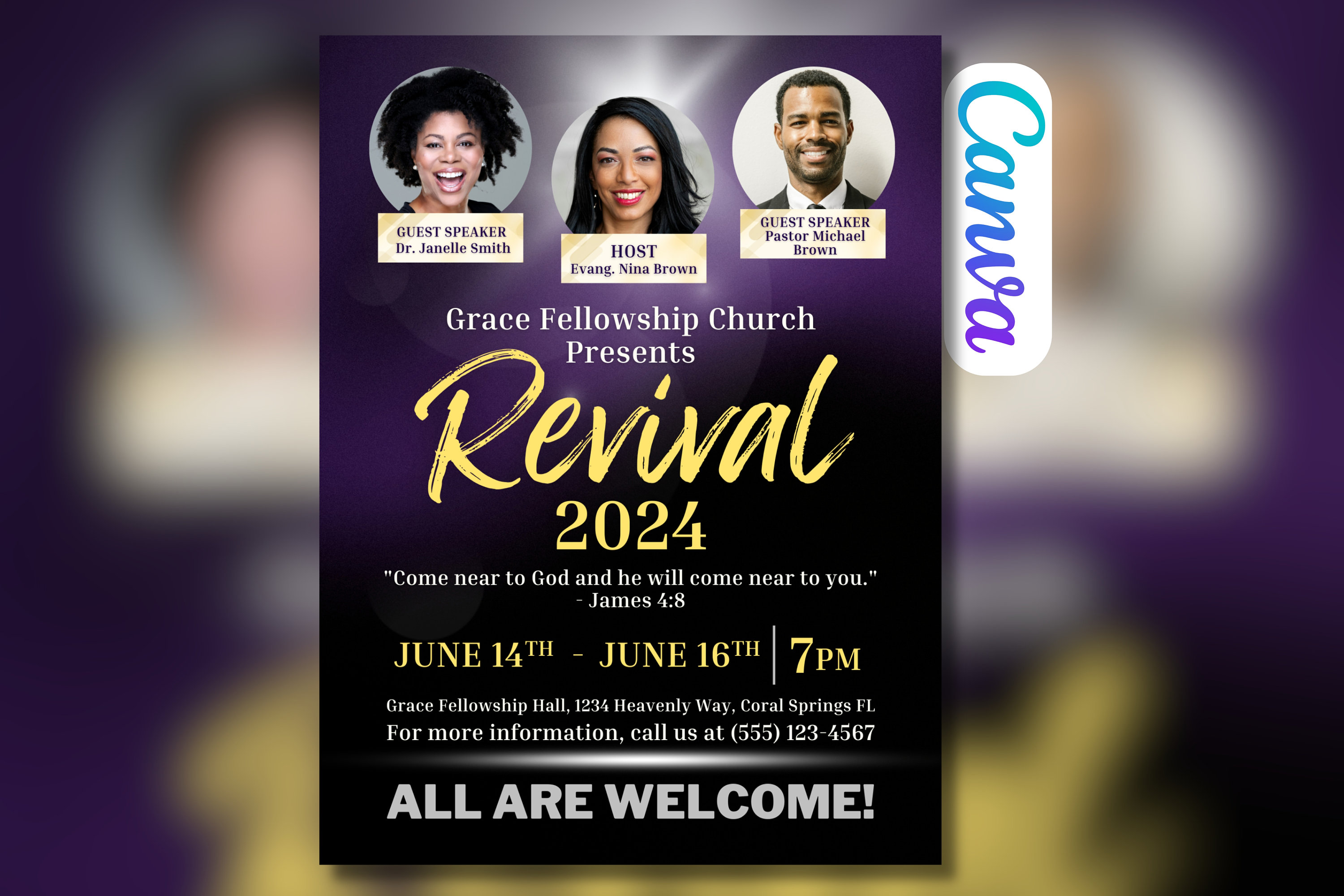
The 2025 revival refers to a multifaceted convergence of widespread spiritual movements, a significant industrial "onshoring" economic shift, and a cultural pivot toward analog experiences that defined the previous calendar year. From our perspective in 2026, it represents the definitive moment when global social and industrial trends transitioned away from hyper-digital immersion toward localized, high-touch community models and national self-reliance.
Understanding the Scope of the 2025 Revival
When historians and cultural analysts look back at the events of 2025, they describe it not as a single event, but as a "revival of the core"—a return to fundamental values across religious, economic, and social sectors. The term "2025 Revival" initially gained traction in late 2024, largely driven by the final phase of the National Eucharistic Revival in the United States and the parallel "Great American Revival" economic movement. These disparate threads wove together a narrative of renewal that resonated with a population exhausted by the volatility of the early 2020s.
The movement was characterized by three distinct pillars: the Year of Mission (the spiritual pillar), the Industrial Resurgence (the economic pillar), and the Human-Centric Pivot (the cultural pillar). Each of these sectors sought to "revive" lost or neglected standards—community over social media, domestic production over global dependence, and tangible faith over digital moralism. As we navigate the landscape of 2026, the ripple effects of these shifts are visible in everything from our local supply chains to our communal gatherings.
The Spiritual Pillar: The "Year of Mission" and Beyond
Perhaps the most visible aspect of the 2025 revival was the spiritual awakening that swept through diverse denominations and age groups. Following the National Eucharistic Congress in mid-2024, the religious landscape in 2025 transitioned into what was formally designated as the Year of Mission. This period saw a transition from large-scale gatherings to localized, grassroots activation. The focus shifted from "attending" to "going out," which redefined the role of religious institutions in local neighborhoods.
This spiritual resurgence was particularly pronounced among Gen Z. Statistics from 2025 indicate a 15% increase in communal participation among adults aged 18 to 26, a demographic that had previously been trending toward "religious disaffiliation." The "revival" in this context wasn't just about traditional worship; it was about the search for "unfiltered" truth and embodied community. This was a direct reaction to the perceived artificiality of AI-generated content and the isolation of the "remote-everything" era.
The United States Conference of Catholic Bishops (USCCB) provided a framework that many other denominations mirrored: a focus on "encounter" rather than just "information." This meant that in 2025, small-group gatherings, local service projects, and public processions became common sights in urban and suburban areas alike, fostering a sense of shared public identity that had been missing since the pre-pandemic era.
The Economic Pillar: The Great Industrial Revival
Simultaneously, 2025 marked the peak of the "Great American Revival" in the economic sector. This movement was rooted in a massive shift toward industrial reshoring—the process of bringing manufacturing back to domestic soil. After decades of globalized supply chains, the vulnerabilities exposed in the early 2020s led to a 2025 policy environment that prioritized "Revival Zones." These zones provided tax incentives and streamlined regulatory paths for companies that moved production back to North America.
The revival of the manufacturing sector was not merely a return to the 20th-century factory model. Instead, the 2025 industrial revival integrated advanced robotics and "Clean-Tech" into localized hubs. This created a new class of technical jobs that bridged the gap between blue-collar labor and high-tech engineering. The impact on the "Rust Belt" was transformative; cities that had seen decades of decline experienced a 2025 boom in housing starts and retail growth, driven by a new generation of skilled workers.
This economic revival was also intrinsically linked to energy independence. In 2025, the proliferation of modular nuclear reactors and expanded domestic natural gas production provided the stable energy grid necessary to support these new industrial hubs. As we analyze the data in 2026, it is clear that 2025 was the year the "Just-in-Time" global supply chain was officially replaced by the "Just-in-Case" domestic model.
The Cultural Pillar: The Analog and Human-Centric Shift
Culture in 2025 underwent what many called the "Analog Revival." This was a reactionary movement against the total digitization of human experience. After the "AI Boom" of 2023 and 2024, the year 2025 saw a massive surge in demand for physical goods, printed media, and in-person experiences. Independent bookstores saw their most profitable year in decades, and "phone-free" social clubs became the standard for urban nightlife.
This cultural revival was driven by a need for verifiable reality. In an era where deepfakes and generative AI made digital content untrustworthy, people sought "high-fidelity" experiences that could not be replicated by an algorithm. This included a revival of traditional craftsmanship, from hand-made furniture to artisanal textiles. The "Slow Movement"—which advocated for slower consumption, slower travel, and more intentional living—graduated from a niche lifestyle choice to a mainstream cultural value in 2025.
| Feature of the 2025 Revival | 2023-2024 Status (The Prelude) | 2025 Status (The Revival Year) | 2026 Current State (The Outcome) |
|---|---|---|---|
| Religious Engagement | Digital/Online streaming focus | Localized "Year of Mission" and in-person ritual | Decentralized community hubs |
| Manufacturing | Global dependence/Supply chain issues | Rapid reshoring and "Revival Zones" | Stabilized domestic production |
| Technology Use | Unchecked AI integration | The "Analog Pivot" and phone-free movements | Integrated, human-centric tech limits |
| Employment | Remote/Gig economy dominance | Return to technical craftsmanship and hubs | Hybrid models with high technical depth |
| Social Trust | Record lows in institutional trust | Focus on "Verify and Encounter" | Rebuilding of local civic institutions |
Key Requirements for Sustaining the Revival
For the trends of 2025 to survive into 2026 and beyond, several structural requirements had to be met. The "2025 Revival" was not a self-sustaining phenomenon; it required intentional participation from civic leaders, religious organizers, and the general public.
- Investment in Local Infrastructure: The move toward domestic manufacturing required a revival of physical infrastructure—roads, power grids, and high-speed local data networks that could support advanced industry without relying on centralized offshore hubs.
- Civic Participation: For the spiritual and cultural movements to take root, there was a necessary shift from "consumer" to "contributor." In 2025, we saw a record number of people joining local boards, volunteer organizations, and neighborhood associations.
- Educational Reform: The industrial revival created a "Skills Gap." Throughout 2025, trade schools and community colleges had to rapidly overhaul their curricula to include "mechatronics" and "human-AI collaboration" to prepare the workforce for the new industrial landscape.
- Digital Boundaries: Sustaining the "Analog Revival" required individuals to set strict boundaries on their digital consumption. The "Digital Sabbath" movement, which encouraged 24 hours of disconnection each week, became a cornerstone of the 2025 wellness movement.
Challenges and Critiques of the 2025 Movement
Despite its successes, the 2025 revival was not without friction. Critics at the time argued that the "onshoring" economic policies led to short-term inflationary pressures as domestic labor costs were higher than their overseas counterparts. In the spiritual sector, the focus on tradition and ritual was sometimes seen as exclusionary by those who preferred more modern, flexible religious expressions.
Furthermore, the "Human-Centric Pivot" faced resistance from major tech conglomerates whose business models relied on maximum screen time. Throughout 2025, there was a visible tension between the "revivalists" who wanted to reclaim their attention and the platforms that sought to capture it. However, the sheer volume of the movement—particularly among parents concerned about their children’s mental health—forced many companies to introduce "Hard-Stop" features and more robust parental controls by the end of the year.
FAQ: Common Questions About the 2025 Revival
What was the primary catalyst for the 2025 revival?
The primary catalyst was a "compounding exhaustion" from the volatility of the early 2020s. This included the social isolation of the pandemic era, the economic instability of 2022-2023, and the digital overwhelm of the 2024 AI explosion. People collectively sought a "return to center," which manifested as a revival of faith, industry, and analog life.
Did the "Year of Mission" only apply to the Catholic Church?
While the National Eucharistic Revival was a formal initiative of the US Catholic Church, the concept of a "2025 Year of Mission" was adopted by many Protestant denominations and even secular community groups. It became a broader cultural shorthand for moving from passive observation to active, local engagement.
How did the 2025 industrial revival affect the average worker?
For the average worker, 2025 saw a shift toward "higher-value" labor. While some traditional roles were automated, the "Revival Zones" created a high demand for technicians who could manage that automation. Real wages in these sectors grew by nearly 6% in 2025, though this was tempered by the rising costs of domestic-made goods.
Is the revival still happening in 2026?
In 2026, we are in the "Integration Phase." The explosive energy of the 2025 revival has stabilized. The "Year of Mission" has become the "Standard of Community," and the industrial shifts are now permanent fixtures of the national economy. We are no longer "reviving" these concepts; we are now living within the new structures they created.
What happened to the "Analog Revival" with the rise of newer AI models?
The newer AI models of late 2025 and early 2026 are actually being designed with the "Analog Revival" in mind. Instead of trying to replace human interaction, newer tech is focused on "Ambient Computing," which works in the background to minimize screen time rather than maximize it. The cultural demand for "human-only" spaces remains a dominant market force.
Next Steps for Continuing the 2025 Momentum
As we move deeper into 2026, the success of the 2025 revival depends on our ability to maintain the "human-scale" focus that made the movement possible. For individuals, this means continuing to prioritize in-person community and local commerce over the convenience of global digital platforms. For leaders, it means continuing to invest in the domestic infrastructure and educational systems that were revitalized over the last twelve months.
The 2025 revival proved that cultural trends are not an inevitable downward slide into digitization and disconnection. It demonstrated that with intentionality, a population can "revive" the most essential aspects of its identity. Whether in the pews of a local church, on the floor of a modern manufacturing plant, or at the table of a neighborhood dinner, the spirit of 2025 remains the guiding light for our current era.