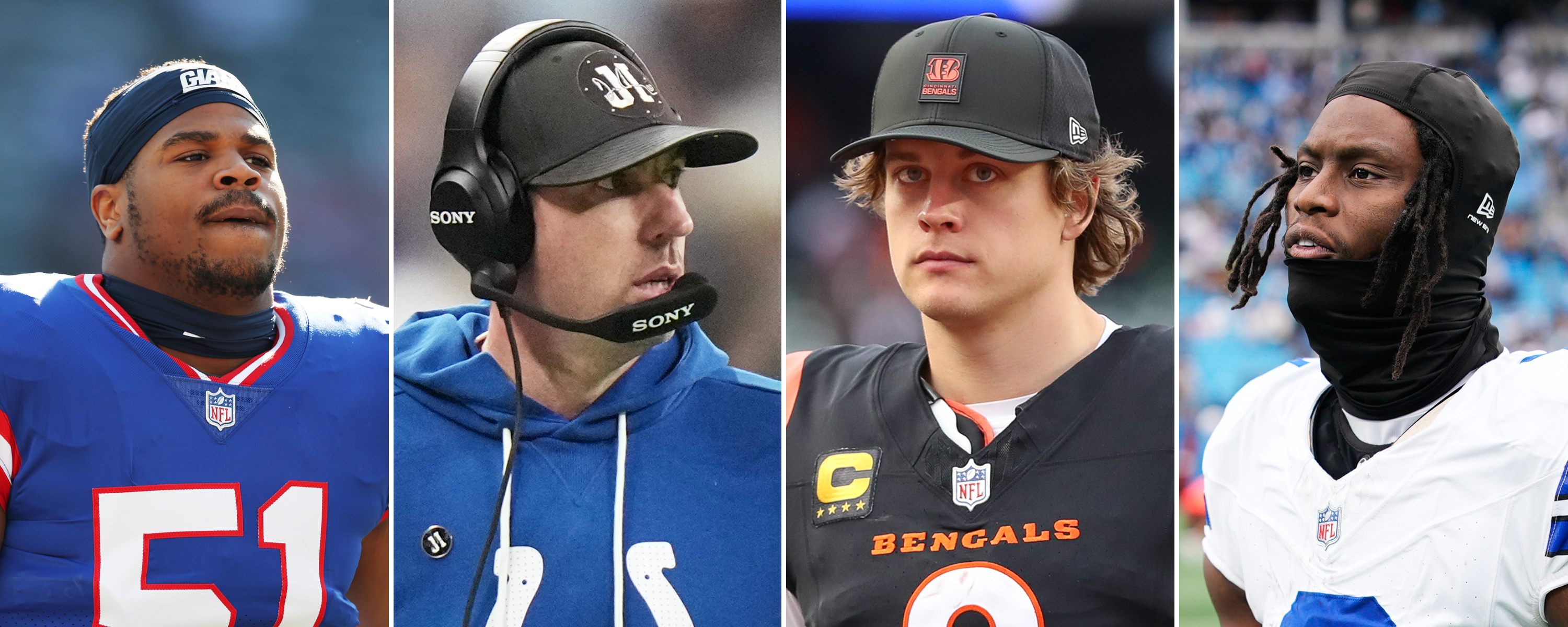
The 2025 NFL offseason was defined by a historic salary cap increase to $272.5 million, a strategic pivot toward defensive line value in free agency, and a quarterback-heavy draft class headlined by Shedeur Sanders and Carson Beck. This pivotal period restructured the competitive hierarchy of the league, setting the stage for the current 2026 season dynamics.
The Financial Explosion: Understanding the $272.5 Million Salary Cap
As we look back from the vantage point of 2026, the most significant administrative factor of the 2025 offseason was the substantial leap in the NFL salary cap. Following the massive revenue growth from the 2024 season's media rights and sponsorship deals, the league office set the 2025 cap at approximately $272.5 million. This was a nearly $17 million increase over the 2024 limit, providing franchises with unprecedented flexibility to restructure veteran contracts and pursue high-priced free agents.
This financial windfall did not merely result in higher salaries; it fundamentally changed how front offices approached the "win-now" window. Teams like the Houston Texans and the Chicago Bears, who were operating with quarterbacks on rookie contracts, utilized this extra room to surround their young passers with elite, high-priced veteran talent. Conversely, teams with established, high-paid quarterbacks like the Cincinnati Bengals and the Kansas City Bengals had to navigate the "extension crunch," where the increased cap was immediately absorbed by the escalating costs of top-tier wide receivers and offensive tackles.
The 2025 offseason also saw a shift in how "dead money" was managed. With the cap rising so rapidly, several teams chose to "rip the Band-Aid off" by releasing underperforming veterans and absorbing massive one-year hits, knowing that the projected 2026 and 2027 caps would easily facilitate a recovery. This led to a record number of veteran releases in early March 2025, creating a buyer's market for teams looking for experienced "bridge" players.
The 2025 NFL Draft: Green Bay’s Quarterback Revolution
The 2025 NFL Draft, held in the historic setting of Green Bay, Wisconsin, from April 24 to April 26, 2025, was one of the most anticipated scouting events in recent memory. After the 2024 draft saw a record-breaking run on offensive players, the 2025 class was lauded for its top-heavy quarterback talent and elite defensive depth.
The narrative of the draft was dominated by the "Big Three" quarterbacks: Shedeur Sanders (Colorado), Carson Beck (Georgia), and Quinn Ewers (Texas). Unlike the 2024 class, which featured mobile threats, the 2025 class was characterized by high-level processing and traditional pocket presence. The selection process in Green Bay saw three quarterbacks taken in the first five picks, as teams like the Las Vegas Raiders and the New York Giants sought to stabilize their long-term futures.
Beyond the quarterbacks, the 2025 draft was the "Year of the Edge." Prospects such as James Pearce Jr. (Tennessee) and Mykel Williams (Georgia) redefined the expectations for rookie impact. These defenders were drafted high not just for their athletic profiles, but for their readiness to counter the increasingly pass-heavy schemes that dominated the 2024 season. The Green Bay draft was also notable for its logistical success, drawing over 400,000 fans to the Title Town district, proving that "smaller" market cities could host the league’s premier offseason event with massive success.
High-Stakes Free Agency: The Wide Receiver Market Reset
By the time the legal tampering period opened in March 2025, the league was bracing for a total reset of the wide receiver market. Following the massive extensions of 2024, stars like Tee Higgins, Brandon Aiyuk, and Chris Godwin entered the 2025 offseason either as unrestricted free agents or as prime candidates for "tag-and-trade" scenarios.
The 2025 free agency period saw a specific trend: the "Tier 2" veteran boom. While the elite stars signed record-breaking deals, the most significant impact on the current 2026 season came from mid-level veterans signing three-year deals worth between $12 million and $18 million annually. Teams realized that while a superstar receiver is valuable, a deep rotation of reliable veterans is more sustainable over a 17-game season. This led to a flurry of activity in the second week of free agency, where teams like the Pittsburgh Steelers and the New England Patriots completely overhauled their receiving corps.
Furthermore, the 2025 offseason saw a resurgence in the value of the veteran safety. After the market for safeties cratered in 2024, the 2025 offseason saw a correction. Defensive coordinators, desperate to stop the "explosive play" era, pressured general managers to invest in versatile defensive backs who could play both in the box and in deep halves. This shift in investment has directly contributed to the lower-scoring, more defensive-minded games we have witnessed in the first half of the 2026 season.
Coaching Carousel: New Philosophies for a New Era
The 2025 offseason was not just about player movement; it was a period of significant turnover in the coaching ranks. Several storied franchises moved on from long-tenured leaders, ushering in a wave of young, "scheme-first" offensive coordinators and experienced defensive "fixers." The 2025 hiring cycle was unique because it prioritized established play-calling experience over "leadership traits," a direct response to the technical complexity of the modern game.
Key hires in 2025 included the return of veteran minds to the sidelines and the promotion of several assistants from the Kyle Shanahan and Sean McVay coaching trees. These new regimes spent the 2025 offseason implementing diverse offensive structures—specifically, a massive increase in the use of "12 personnel" (two tight ends). This philosophical shift was designed to neutralize the lighter, faster defenses that had become the league standard.
Additionally, the 2025 offseason was the first full cycle where the "Coordinator Compensation" bubble truly burst. With head coaching salaries reaching $15 million-plus, top-tier coordinators were being paid upwards of $4 million annually to stay in their roles rather than take "lesser" head coaching jobs. This stability has led to the incredible schematic consistency we see in the top-ranked teams of 2026.
Comparing the 2024 and 2025 Offseason Metrics
To understand why the 2025 offseason was so transformative, it is helpful to compare the key economic and participation data points against the previous year.
| Metric | 2024 Offseason | 2025 Offseason | Impact Analysis |
|---|---|---|---|
| Salary Cap (USD) | $255.4 Million | $272.5 Million | 6.7% increase fueled veteran retention. |
| Draft Host City | Detroit, MI | Green Bay, WI | Shift to legacy-market engagement. |
| QBs Drafted (Rd 1) | 6 | 4 | Higher quality-to-quantity ratio. |
| Avg. Top WR Salary | $30-32 Million | $35-38 Million | Market reset for elite perimeter talent. |
| Franchise Tags Used | 8 | 5 | Teams preferred long-term deals over tags. |
| Total Trade Volume | Moderate | High | Aggressive veteran acquisition strategies. |
Evaluating the Long-Term Impact on the 2026 Season
As we navigate the 2026 season, the ripples of the 2025 offseason are evident in every Sunday matchup. The most prominent legacy is the "Middle-Class Contract." By moving away from the "Stars and Scrubs" roster construction, teams have become more resilient to injuries. The 2025 offseason’s focus on depth—specifically on the offensive line and in the secondary—has resulted in more competitive games and fewer "blowouts" caused by a single injury to a star player.
Furthermore, the 2025 rookie class has integrated faster than any before it. Because the 2025 draft prospects were often "super-seniors" with five or six years of college experience due to previous eligibility rules, they entered the league with professional-level maturity. We are currently seeing sophomores from that 2025 class playing like five-year veterans, which has lowered the "rookie wall" impact across the league.
Finally, the 2025 offseason solidified the "Aggressive Window" theory. Teams are no longer waiting for a three-year rebuild. The 2025 offseason taught us that with a high cap and a savvy draft, a team can move from the bottom of the division to a playoff contender in a single five-month span. This "instant turnaround" capability has kept fan bases engaged and increased the stakes of every transaction.
FAQ about the 2025 Offseason
Where was the 2025 NFL Draft held?
The 2025 NFL Draft took place in Green Bay, Wisconsin. The event was centered around Lambeau Field and the surrounding Title Town district. It was noted for its unique "Northwoods" atmosphere and set several records for local economic impact in a mid-sized market.
Who was the highest-paid player in the 2025 offseason?
The 2025 offseason saw several massive contract extensions, but the record for the highest annual average value (AAV) was set by the top-tier quarterback extensions. These deals pushed the ceiling for the position past $60 million per year, reflecting the rising salary cap and the scarcity of elite signal-callers.
How did the 2025 salary cap affect free agency?
The cap rose to $272.5 million, which allowed teams to avoid the "cap hell" that many expected. Instead of a mass exodus of talent, many teams were able to keep their core players while still having $20-30 million in space to pursue one or two "blue-chip" free agents in the March 2025 market.
Were there any major rule changes during the 2025 offseason?
The 2025 offseason included several tweaks to the kickoff rules following the "Hybrid Kickoff" experiment of 2024. The league also implemented stricter guidelines on "hip-drop" tackles and introduced more advanced optical tracking for first-down measurements, which significantly reduced the time spent on chain-gang measurements in the 2025 season.
Which team was considered the "winner" of the 2025 offseason?
While subjective, most analysts in 2026 agree that the Chicago Bears and the Washington Commanders were the primary beneficiaries. Both teams leveraged high draft capital and significant cap space to build "complete" rosters around their young quarterbacks, a strategy that led both franchises to deep playoff runs in the following season.
Next Steps for the 2026 Season
To apply the lessons of the 2025 offseason to the current 2026 campaign, fans and analysts should focus on rookie contract windows and roster depth charts. The teams that are currently leading their divisions are almost exclusively those that successfully navigated the 2025 salary cap spike without overcommitting to aging veterans.
For those looking to understand upcoming trends, monitor the 2026 "contract year" players who were signed to one-year "prove-it" deals in 2025. These players will likely be the primary targets of the 2027 offseason, as the league continues to cycle through talent at an increasingly rapid pace. For official updates on current standings and cap space, refer to the NFL's Official Management Portal or verified transaction trackers like Spotrac.