The 2025 context refers to the specific technological, economic, and regulatory landscape that defined the previous calendar year. It was characterized by the stabilization of generative AI into agentic workflows, a significant shift in global trade policies following the 2024 elections, and a critical pivot toward energy-intensive infrastructure to support the burgeoning "intelligence economy."
Understanding the events of 2025 is essential for navigating the current 2026 fiscal and operational year. Last year served as a bridge between the era of AI experimentation and the current era of AI integration. Organizations that failed to adapt to the "long-context" paradigm or the restructured supply chains of 2025 are now finding themselves at a competitive disadvantage. This guide explores the core components of the 2025 context and how they influence decision-making today.
The Technological Pivot: The Era of Infinite Context
In the realm of information technology, the 2025 context was dominated by a fundamental shift in how machines process information. For years, Large Language Models (LLMs) were limited by "context windows"—the amount of data they could consider at one time. By 2025, this limitation largely evaporated for enterprise-grade systems.
The Rise of the Million-Token Standard
The year 2025 saw the normalization of million-token context windows across major providers like Google, OpenAI, and Anthropic. This technical evolution changed the fundamental nature of data processing. Instead of relying on complex vector databases and "chunking" strategies, developers began feeding entire codebases, multi-year financial records, and full legal libraries directly into the model's active memory. This "infinite context" allowed for a level of nuance and cross-referencing that was previously impossible.
From Chatbots to Agentic Frameworks
While 2024 was the year of the "chatbot," 2025 was the year of the "agent." The 2025 context saw the deployment of autonomous agents that could maintain state over long periods. These agents utilized the expanded context windows to remember user preferences, project histories, and multi-step objectives without human intervention. This transition forced businesses to rethink their workforce structures, shifting from task-oriented management to objective-oriented oversight.
Economic and Regulatory Shifts: The Post-Election Landscape
Economically, the 2025 context was defined by the implementation of major policy shifts following the 2024 global election cycle. In the United States and Europe, a renewed focus on domestic industrial policy and "de-risking" from concentrated supply chains created a volatile but high-growth environment for manufacturing and energy.
Trade Policy and Re-Shoring
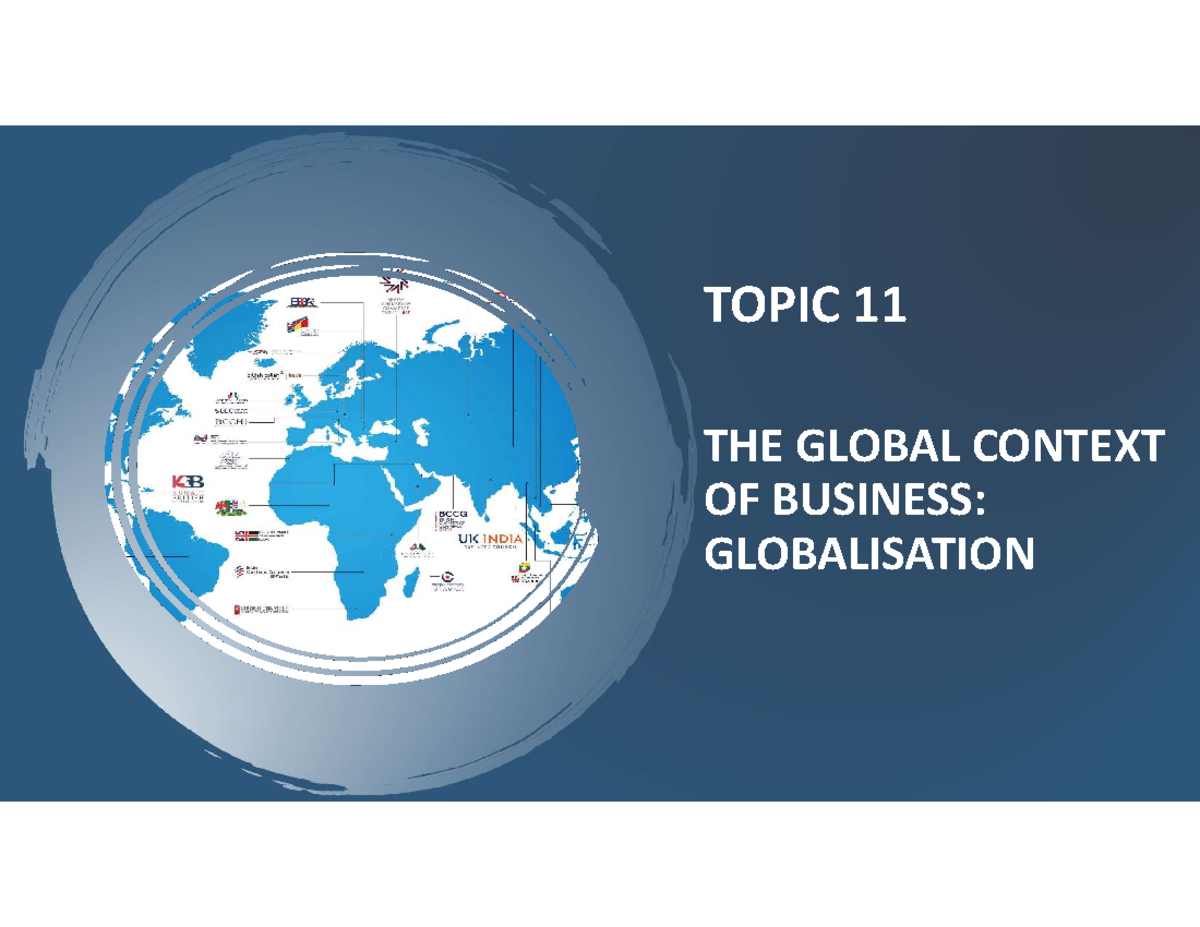
Throughout 2025, we witnessed the aggressive application of tariffs and subsidies aimed at securing "frontier technologies." The context of 2025 was one of economic nationalism, where the cost of goods was often secondary to the security of the supply chain. This led to a significant increase in domestic capital expenditures (CapEx) as firms moved production closer to their primary markets. According to the World Trade Organization (WTO), global trade patterns in 2025 showed the first sustained move away from traditional globalization since the early 2000s.
Inflation and Interest Rate Stabilization
Following the volatility of the early 2020s, 2025 provided a period of relative "higher-for-longer" interest rate stability. Central banks transitioned from active hiking to a maintenance phase, which allowed corporate treasurers to plan with more certainty. The 2025 context was marked by a shift in investment strategy: capital was no longer "cheap," forcing a focus on profitability and real-world utility over speculative growth.
Energy Infrastructure and the Data Center Boom
One cannot discuss the 2025 context without addressing the massive demand for power. The intersection of AI scaling and the transition to renewable energy created a unique set of challenges last year that still dictate energy policy in 2026.
The Nuclear Revival and SMRs
In 2025, Small Modular Reactors (SMRs) moved from the theoretical stage to active permitting and early-stage construction for many tech giants. Companies realized that the traditional power grid could not sustain the exponential growth of data centers. The 2025 context saw a historical alignment between "Big Tech" and the nuclear energy industry, with several long-term Power Purchase Agreements (PPAs) signed to ensure 24/7 carbon-free energy for AI training clusters.
Grid Constraints and Regional Growth
Geographically, the 2025 context redirected data center investment toward regions with surplus power rather than traditional hubs like Northern Virginia or Silicon Valley. Areas with robust hydroelectric or wind infrastructure saw a massive influx of investment. The International Energy Agency (IEA) reported that data center power consumption in 2025 accounted for nearly 4% of global electricity demand, a figure that continues to rise.
| Feature | 2024 Baseline | 2025 Context (Shift) | 2026 Current Status |
|---|---|---|---|
| AI Context Window | 128k - 200k tokens | 1M - 2M+ tokens standard | Integrated multi-modal memory |
| Primary AI Interaction | Prompt/Response | Agentic/Autonomous Workflows | Collaborative Ecosystems |
| Economic Focus | Inflation Control | Supply Chain Resilience | Efficiency and Automation |
| Energy Source | Grid-Heavy | SMRs & Direct PPA Nuclear | Off-grid Industrial Clusters |
| Trade Environment | Globalized / Interdependent | Regional / Tariff-Adjusted | Strategic Autonomy |
Workforce Evolution: The Impact of Agentic Intelligence
The 2025 context fundamentally altered the "social contract" of the workplace. As AI agents took over more administrative and analytical functions, the skills required for the modern workforce shifted toward "contextual management"—the ability to oversee multiple AI processes and ensure they align with high-level corporate strategy.
The "Middle Management" Crisis
Throughout 2025, many organizations underwent "flattening." Because AI could now summarize meetings, track project milestones, and generate reports with high accuracy, the traditional role of the middle manager was called into question. The 2025 context required managers to become either deep technical experts or high-level strategic thinkers, leaving little room for those who merely facilitated the flow of information.
Upskilling and Human-AI Collaboration
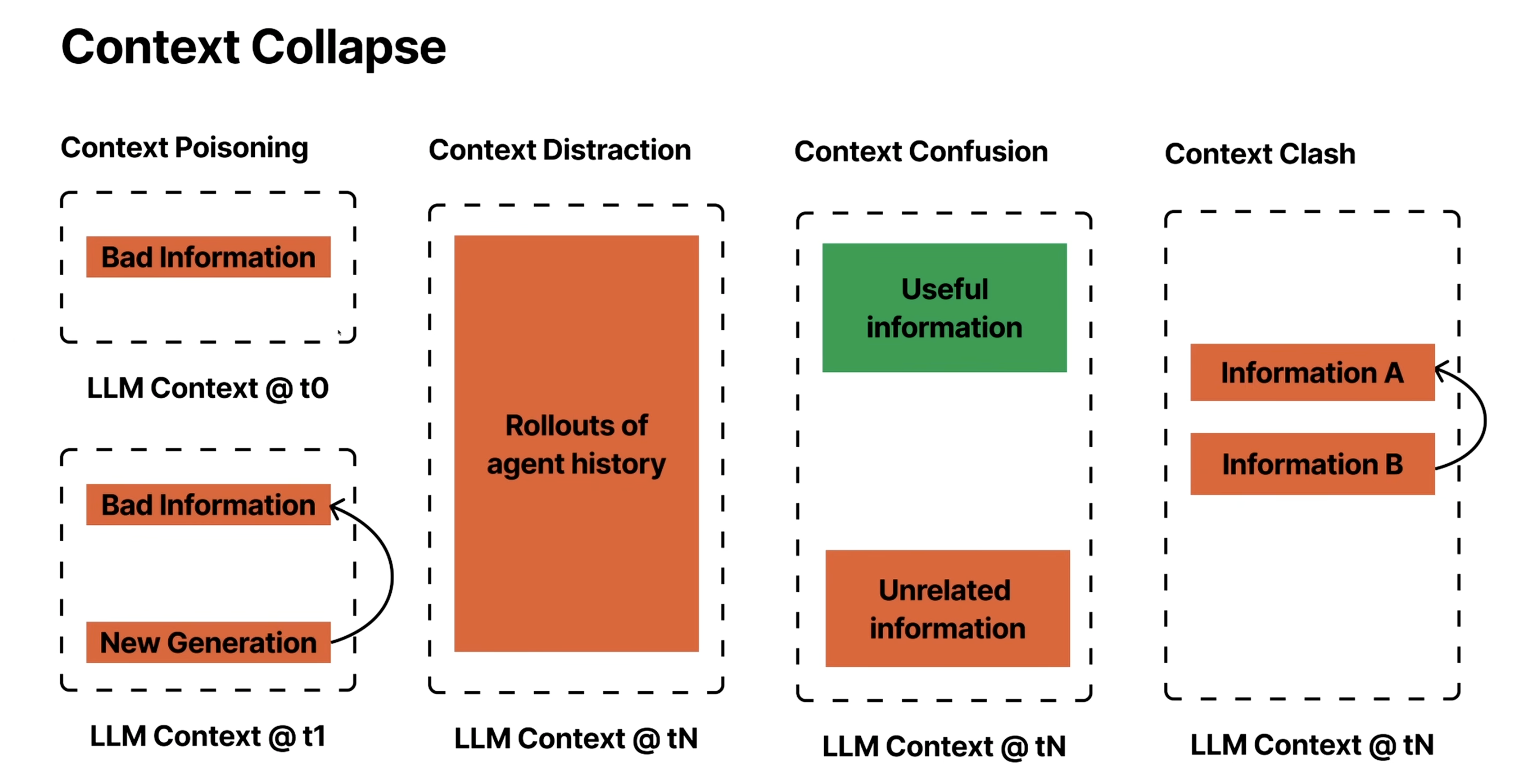
Training budgets in 2025 were largely redirected toward AI literacy. This wasn't just about learning how to use tools, but about understanding the "limitations of context." Employees had to learn how to audit AI outputs for "hallucinations" that occurred within long-context windows, a specific phenomenon where models might miss details buried in the middle of massive datasets (the "lost-in-the-middle" problem).
Critical Challenges Inherited from 2025
While 2025 was a year of progress, it also introduced systemic risks that we are still managing in 2026. These challenges define the boundaries of what is possible in the current market.
- Data Sovereignty and Localization: As AI models became more integrated into national infrastructures, the 2025 context saw a "balkanization" of data. Countries began enforcing strict rules that data generated within their borders must be processed by models hosted on local servers.
- Hardware Scarcity: Despite increased production, the demand for high-end inference chips remained high throughout 2025. This created a "haves and have-nots" dynamic between large enterprises with pre-existing contracts and smaller startups struggling to find compute.
- Cybersecurity in the Agentic Era: 2025 was the first year we saw significant "agent-jacking," where malicious actors exploited autonomous AI agents to gain access to corporate networks. This has made "Agent Security" a primary focus for CISOs in 2026.
FAQ
How did the 2025 context change the way we view "Big Data"?
In the 2025 context, "Big Data" shifted from something you store in a lake to something you feed into a model's active context. The focus moved from long-term storage to "live" accessibility, as the value of data became tied to its ability to inform an AI agent's immediate decision-making process.
Was 2025 the year that remote work finally stabilized?
Yes, the 2025 context solidified the "hybrid-first" model. With the integration of high-fidelity spatial computing and AI-driven asynchronous communication tools, the debate over "return to office" largely ended, as productivity metrics proved that location was less important than access to high-quality digital tools.
What was the most significant regulatory change in 2025?
The most impactful change was the implementation of mandatory "AI Transparency Labels" and liability frameworks. For the first time, companies in 2025 became legally responsible for the actions of their autonomous agents, leading to the rise of specialized "AI liability insurance."
How did 2025 affect the housing market?
The economic context of 2025 saw a stagnation in urban residential prices but a boom in "tech-hub" satellite cities. As data centers and localized manufacturing moved into secondary markets, those regions saw a rapid increase in property values, while traditional coastal hubs faced a correction.
Did the "Context Window" wars end in 2025?
The "wars" didn't end, but they changed focus. By late 2025, the competition was no longer just about the size of the context window, but the retrieval accuracy within it. The industry moved from asking "how much can it remember?" to "how perfectly can it recall a specific needle in a haystack?"
Moving Forward: Applying the 2025 Lessons to 2026
To succeed in 2026, organizations must treat the 2025 context as a permanent structural change rather than a temporary trend. The era of low-context AI and globalized, just-in-time supply chains is over.
The immediate next action for leaders is to perform a "Context Audit." Evaluate your current AI workflows to see if they are still using the outdated "chunking" methods of 2024, or if they have been upgraded to leverage the million-token windows that became the standard in 2025. Furthermore, review your energy and supply chain dependencies to ensure they align with the regionalized, high-security requirements that the 2025 landscape established. By grounding your 2026 strategy in the hard-won lessons of last year, you can build a more resilient and technologically advanced operation.