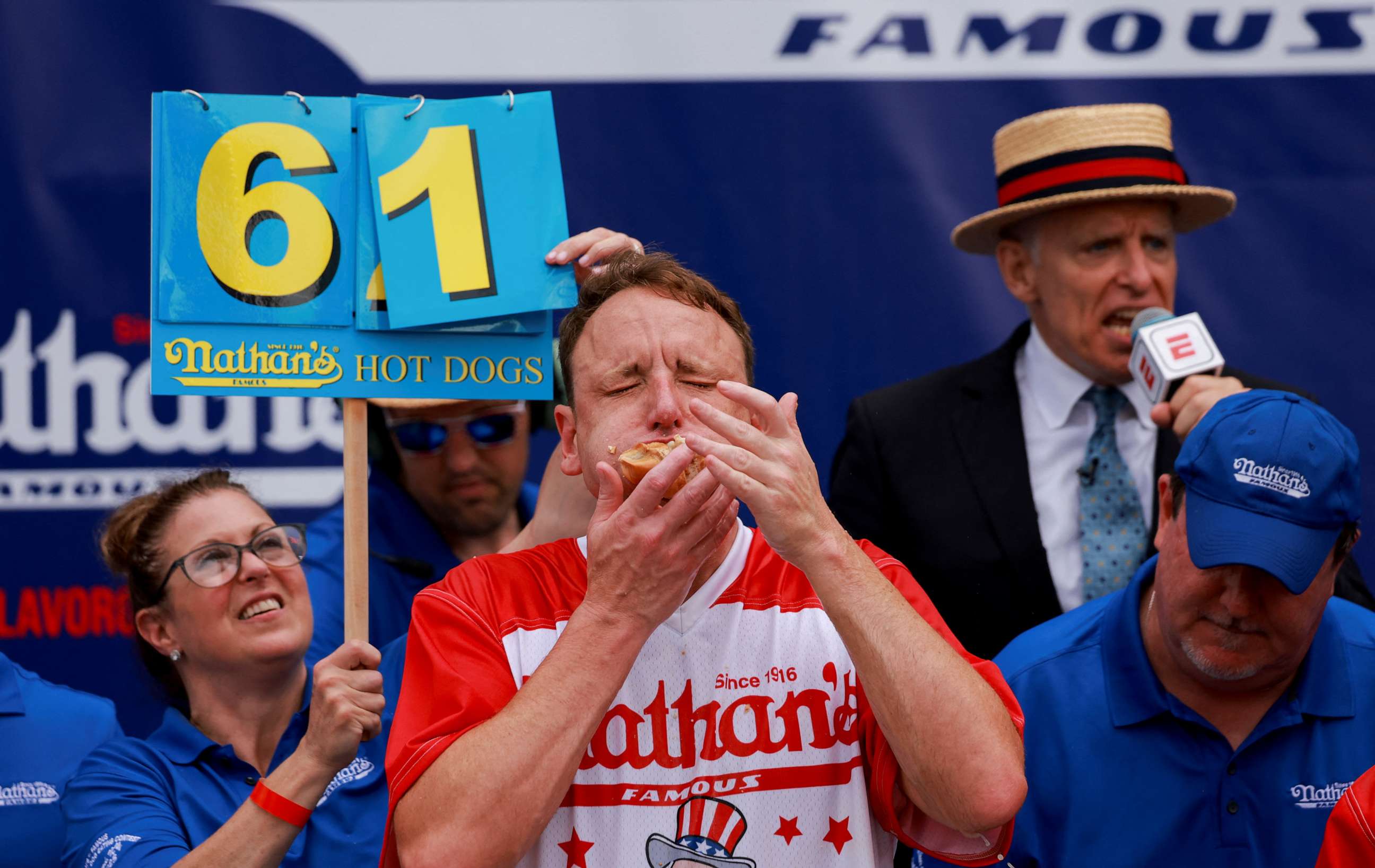
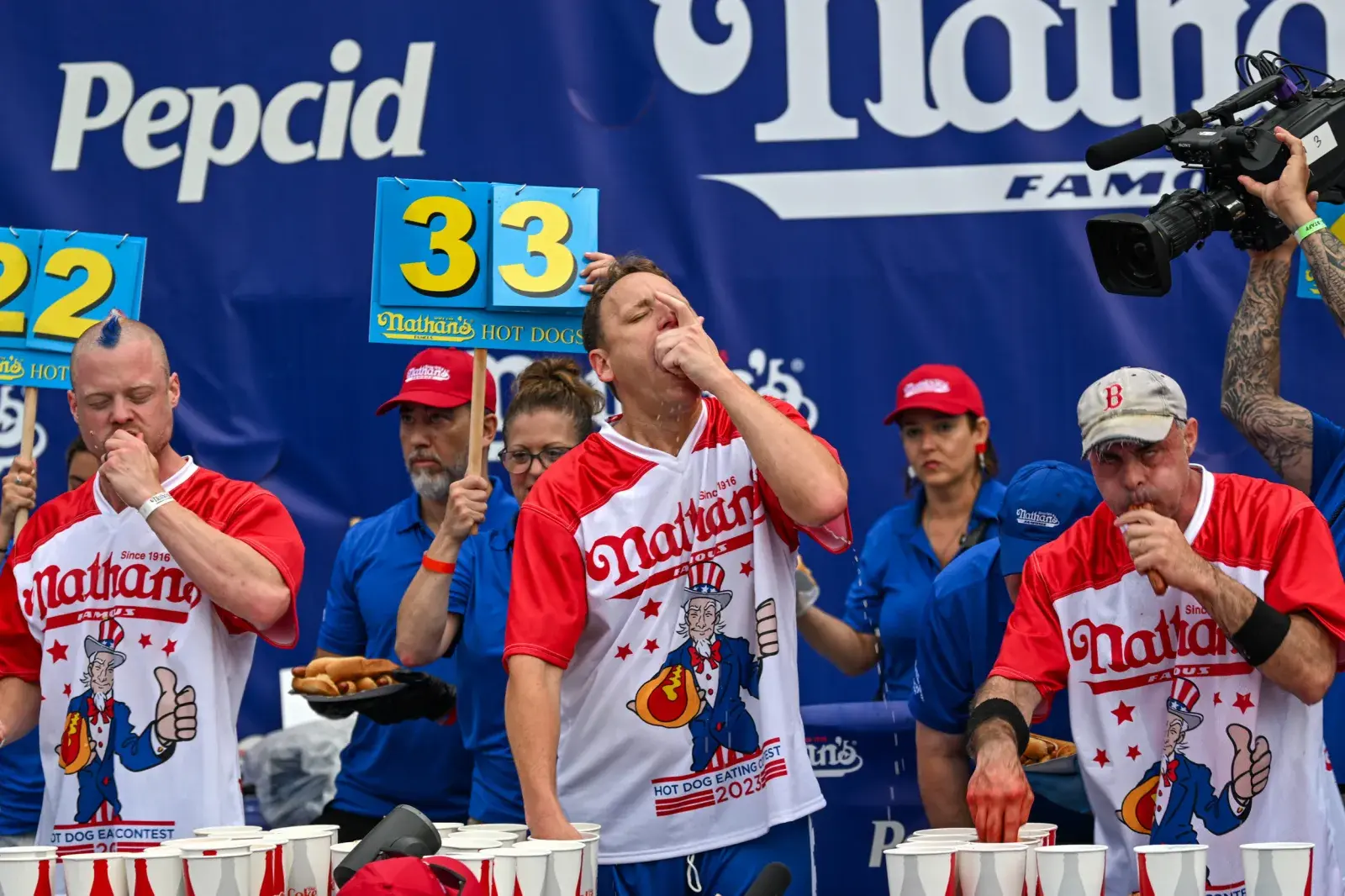
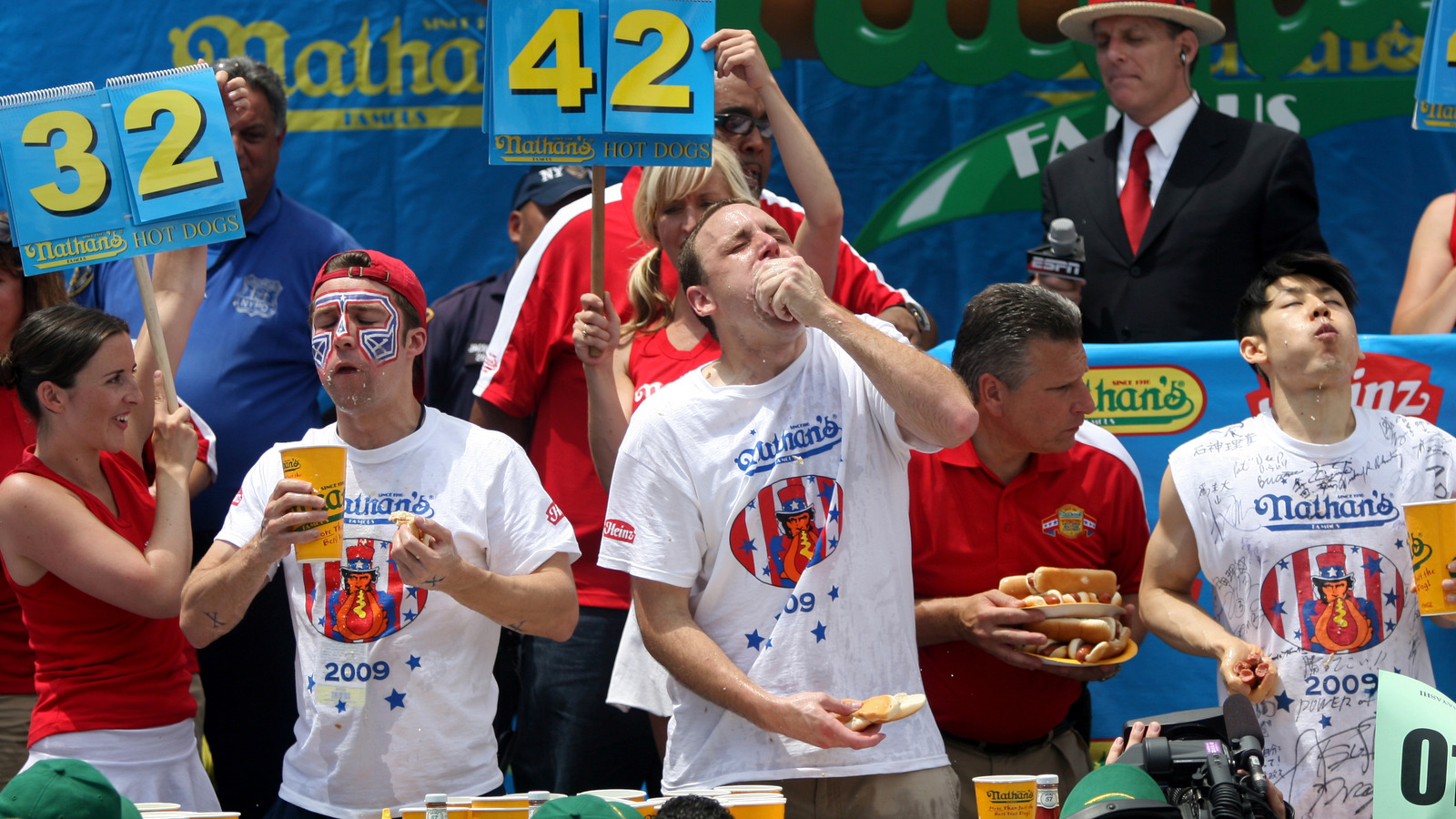
The 2024 Nathan’s Famous International Hot Dog Eating Contest marked a historic shift in competitive eating, crowned new champions Patrick Bertoletti (58 hot dogs) and Miki Sudo (51 hot dogs). Held annually on July 4th at Coney Island, the event follows strict Major League Eating (MLE) regulations regarding time limits, liquid use, and "reversals of fortune."
The Historic Context of the 2024 Nathan’s Famous Contest
As we evaluate the landscape of competitive eating from our 2026 perspective, the 2024 contest remains one of the most significant turning points in the sport's history. For nearly two decades, the event was synonymous with Joey Chestnut, whose dominance defined the "Mustard Yellow Belt" era. However, 2024 was the year the narrative changed due to a high-profile contractual dispute between Chestnut and Nathan’s Famous regarding a partnership with a plant-based competitor.
The absence of the 16-time champion created a vacuum that fundamentally altered the competitive atmosphere. It transformed the 2024 men’s division from a race for second place into a wide-open battle for the throne. This shift brought renewed attention to the technical mastery and grueling qualification standards required to compete at the corner of Surf and Stillwell Avenues in Brooklyn. The event, sanctioned by Major League Eating, continues to serve as the "Super Bowl" of the circuit, requiring participants to navigate a complex set of rules that govern everything from the consistency of the buns to the timing of the final swallow.
Official Rules and Scoring Regulations
The 2024 contest followed the standardized rules established by Major League Eating. While the premise—eating as many hot dogs and buns (HDBs) as possible in 10 minutes—is simple, the technical execution is governed by rigorous oversight to ensure fairness and safety.
The 10-Minute Time Limit
The core of the competition is the 10-minute clock. Unlike early iterations of the contest which varied in length, the modern 10-minute standard is designed to test both high-speed "sprint" eating and long-term stomach capacity. When the clock hits zero, any hot dog already in the mouth must be swallowed within 30 seconds to count toward the final score. This "completion rule" often leads to frantic finishes where eaters attempt to "chipmunk" (stuffing their cheeks) in the final seconds.
Dunking and Liquid Consumption
Athletes are permitted to use water or other non-alcoholic beverages to assist in the consumption process. The most common technique, known as the "Solomon Method," involves separating the hot dog from the bun, dunking the bun into water to compress it and make it easier to swallow, and eating the meat separately.
- Bun Management: The bun must be eaten. If an eater consumes the meat but leaves significant portions of the bun, they face disqualification or a reduction in their final tally.
- Liquid Regulation: While dunking is allowed, excessive "souping" (turning the food into a liquid slurry in a cup) is generally discouraged and can be penalized if it circumvents the spirit of the eating mechanics.
Debris and The "Chipmunking" Rule
Cleanliness at the station is a measured metric. Judges, assigned one-per-eater, monitor the "debris" left on the plate and the table.
- Debris Penalties: Significant amounts of dropped food can result in a deduction of partial or whole hot dogs from the final count.
- Chipmunking: At the end of the 10 minutes, the food must be swallowed to be officially recorded. If an eater cannot swallow the remaining food in their mouth within the allotted post-clock grace period, those units are not counted.
Reversals of Fortune
In the technical terminology of Major League Eating, vomiting is referred to as a "reversal of fortune."
- During the Contest: If a reversal occurs while the clock is running, the competitor is immediately disqualified.
- Post-Contest: The competitor must maintain their "intake" for a specific period after the whistle blows (usually until the results are certified) to avoid disqualification. This rule ensures that the sport remains a test of capacity and retention.
2024 Winners and Performance Metrics
The 2024 results were a mix of a predicted coronation in the women's league and a surprising emergence in the men's league. Without the shadow of Joey Chestnut, the men’s field saw a 5-way battle for the lead that wasn’t settled until the final two minutes.
Men’s Division: Patrick Bertoletti’s Ascent
Patrick "Deep Dish" Bertoletti, a seasoned veteran who had previously retired from the sport, returned to claim the 2024 title. Bertoletti consumed 58 hot dogs and buns. While this was lower than the world record of 76, it represented a significant achievement in a high-pressure environment. Bertoletti utilized a consistent two-handed "hot dog first, bun second" technique that allowed him to maintain a steady pace while his competitors began to fade around the six-minute mark.
Women’s Division: Miki Sudo’s Record-Breaking Performance
Miki Sudo continued her absolute dominance of the women’s division, winning her 10th title. More impressively, she set a new women’s world record by consuming 51 hot dogs and buns in 10 minutes. Sudo’s performance was a masterclass in efficiency; she maintained a cadence of approximately five HDBs per minute, barely showing signs of the "wall" that many eaters hit. Her victory was decisive, beating her closest competitor by 14 units.
Technical Comparison of 2024 Top Finishers
The following table outlines the performance of the top three finishers in both the Men's and Women's divisions during the 2024 contest.
| Division | Rank | Competitor | Total HDBs Eaten | Margin from 1st |
|---|---|---|---|---|
| Men's | 1 | Patrick Bertoletti | 58 | — |
| Men's | 2 | Geoffrey Esper | 53 | 5 |
| Men's | 3 | James Webb | 52 | 6 |
| Women's | 1 | Miki Sudo | 51 | — |
| Women's | 2 | Mayoi Ebihara | 37 | 14 |
| Women's | 3 | Larell Marie Mele | 28.5 | 22.5 |
How the Event Works: Qualification and Staging
The journey to the Fourth of July stage begins months in advance through a series of regional qualifying events held across the United States and occasionally internationally.
- Regional Qualifiers: MLE hosts satellite contests at various festivals and sporting events. The top male and female finishers at each qualifier receive an automatic invitation to Coney Island.
- The Wildcard System: If a high-ranking eater fails to win a qualifier but posts a significant total, they may be invited as a wildcard. This ensures that the most capable athletes are present for the main event, even if they had an "off day" during regionals.
- The "Mustard Yellow Belt": The champions are awarded the iconic belt, which is considered the highest honor in competitive eating.
- Staging and Safety: The event is held outdoors, often in extreme heat and humidity, which adds a layer of difficulty. Medical personnel are on-site to monitor athletes for signs of distress, and every eater has a dedicated judge to track every HDB consumed.
Strategic Elements of Competitive Eating
Competitive eating at this level is not merely about "hunger"; it is a physiological and psychological discipline. Athletes in 2024 utilized several specific strategies to optimize their performance.
- Capacity Training: Eaters often train by consuming large volumes of low-calorie foods (like cabbage or watermelon) to stretch the stomach lining without adding excessive weight.
- The "Solomon Method" Mastery: By 2024, almost every top-tier eater used the separation technique. Breaking the dog in half and eating both halves simultaneously, followed by the water-soaked bun, is the most mechanically efficient way to bypass the body's natural chewing reflex.
- Rhythm and Breathing: Elite eaters like Miki Sudo use a rhythmic swaying motion to help move food down the esophagus using gravity. Controlled breathing through the nose is essential, as the mouth is occupied by food for the duration of the 10-minute window.
Frequently Asked Questions
Why wasn't Joey Chestnut in the 2024 contest?
Joey Chestnut was prohibited from competing in the 2024 Nathan’s Famous contest after he signed an endorsement deal with Impossible Foods, a direct competitor to Nathan’s. Major League Eating stated that their contract with Nathan’s required participants to represent the brand exclusively for hot dog contests on the Fourth of July.
What is the world record for hot dogs eaten in 10 minutes?
As of the 2024 event, the official Nathan's Famous world record for men was 76 HDBs (set by Joey Chestnut in 2021), and the women's world record was 51 HDBs (set by Miki Sudo in 2024). While other events may claim different records, these are the marks recognized by MLE for the Coney Island contest.
Are the hot dogs hot or cold during the competition?
The hot dogs are served warm, as cold fat is more difficult to swallow and can congeal, making the "dunking" method less effective. However, they are not served "piping hot" to prevent thermal injury to the competitors' throats.
What happens if there is a tie?
In the event of a tie after 10 minutes, a 5-hot-dog "eat-off" occurs. The first person to finish 5 hot dogs and buns—and swallow them—is declared the winner. This has happened only a few times in the contest's long history, most notably in 2008 between Joey Chestnut and Takeru Kobayashi.
Can anyone enter the contest?
No, the contest is restricted to athletes who are 18 years of age or older and are under contract with or recognized by Major League Eating. Most participants must win a regional qualifier to earn their spot on the stage at Coney Island.
Next Actions for Aspiring Competitive Eaters
For those looking to transition from a casual fan to a participant, the path involves more than just eating. First, familiarize yourself with the official Major League Eating safety guidelines; professional eating can be dangerous without proper medical supervision and training.
The next logical step is to locate a local sanctioned qualifier. These events usually begin in the spring. Aspiring eaters should focus on technique—specifically the separation of meat and bun—rather than just volume. Attending a live event as a spectator is also recommended to understand the logistical flow, from the weigh-ins to the post-contest media requirements.