In the 2024 NFL season, the Cleveland Browns led the league with the highest total cash spending, followed by the Philadelphia Eagles and the Detroit Lions. This historic spending year was driven by an unprecedented $30.6 million increase in the league-wide salary cap, which reached a record $255.4 million per team.
The 2024 financial landscape in the NFL was defined by a massive influx of media revenue and a post-pandemic economic correction. Looking back from 2026, the 2024 season remains a pivotal moment when teams shifted from conservative cap management to aggressive "cash over cap" strategies. While the salary cap dictates the accounting limit, the actual cash outlays—including signing bonuses and front-loaded extensions—often far exceeded the $255.4 million threshold for the league's most aggressive spenders.
The 2024 Salary Cap Explosion and Its Catalyst
To understand why 2024 payrolls reached such heights, one must first examine the leap in the league-mandated salary cap. In early 2024, the NFL announced that the cap would rise to $255.4 million, a nearly 14% increase from the $224.8 million cap in 2023. This was the largest year-over-year increase in the history of the league, excluding the recovery period after the 2020 COVID-19 season.
This spike was largely attributed to the full repayment of pandemic-era advances by the players and an extraordinary jump in media revenue from new broadcast deals. For front offices, this extra $30 million per team acted as "found money," allowing organizations to pursue expensive free agents or, more commonly, to extend their own homegrown stars with massive signing bonuses that required immediate cash liquidity.
The Cleveland Browns: Leading the League in Cash Outlay
For the 2024 season, the Cleveland Browns operated with a financial philosophy that prioritized immediate talent retention through aggressive cash spending. The Browns topped the list with a total cash expenditure exceeding $340 million. This figure is distinct from their salary cap hit, as it represents the actual dollars paid out to players within the 2024 calendar year.
The primary driver for this enormous payroll was the continued restructuring of Deshaun Watson’s contract. By converting base salaries into signing bonuses, the Browns were able to manage Watson's massive cap hits in the short term, but it necessitated paying out tens of millions of dollars in lump sums. Additionally, the team maintained high-market contracts for stars like Myles Garrett, Denzel Ward, and Amari Cooper.
The Browns' strategy in 2024 highlighted a growing trend: teams with wealthy ownership groups often use their cash reserves to "buy" cap space. By paying large signing bonuses upfront, they can spread the accounting "hit" over the length of the contract (up to five years), effectively allowing them to field a roster that costs more in real-time cash than the league’s official cap limit would seemingly allow.
The Philadelphia Eagles: The Masters of Modern Cap Management
The Philadelphia Eagles, led by General Manager Howie Roseman, consistently ranked near the top of the 2024 payroll list. Their total cash spend hovered around $310 million. The Eagles' 2024 financial strategy was focused on "securing the core."
During the 2024 offseason, the Eagles moved aggressively to extend several key players before their market values could escalate further. Significant cash outlays were directed toward:
- A.J. Brown: A massive extension that solidified him as one of the highest-paid receivers.
- DeVonta Smith: An early extension to ensure the receiving duo remained intact.
- Landon Dickerson: Setting a then-record for offensive guard compensation.
The Eagles are famous for their use of "void years"—contractual placeholders that allow the team to spread bonus proration beyond the actual years a player is under contract. This allows them to maintain a high-cash payroll while keeping their annual cap hits manageable, a strategy that was in full effect throughout 2024.
The Detroit Lions and Jacksonville Jaguars: Investing in the Future
2024 marked the year that the Detroit Lions and Jacksonville Jaguars joined the ranks of the NFL's highest spenders. Both teams had previously benefited from rookie-scale contracts for their franchise quarterbacks, but 2024 was the year the "bill came due."
The Detroit Lions committed over $275 million in cash in 2024, largely due to the massive extensions handed out to quarterback Jared Goff and wide receiver Amon-Ra St. Brown. These deals were structured with significant signing bonuses paid in 2024, vaulting the Lions from a "budget" team to one of the league's highest payrolls.
Similarly, the Jacksonville Jaguars made headlines by signing Trevor Lawrence to a five-year, $275 million extension. While the cap hits for such deals are often backloaded, the 2024 cash requirement for the signing bonus alone placed the Jaguars among the top five spending teams for the year. This shift signaled a transition for both franchises from "rebuilding" status to "contender" status, where premium talent must be compensated at the top of the market.
2024 Top NFL Team Payrolls by Cash Spending
The following table outlines the estimated total cash spending for the top five NFL teams in 2024. These figures include base salaries, signing bonuses, roster bonuses, and incentives paid out during the 2024 league year.
| NFL Team | Estimated 2024 Cash Spend | Primary Financial Driver |
|---|---|---|
| Cleveland Browns | $343 Million | Deshaun Watson restructure & veteran extensions |
| Philadelphia Eagles | $312 Million | A.J. Brown & DeVonta Smith extensions |
| Detroit Lions | $278 Million | Jared Goff & Amon-Ra St. Brown contracts |
| Jacksonville Jaguars | $274 Million | Trevor Lawrence franchise extension |
| San Francisco 49ers | $265 Million | Nick Bosa & Christian McCaffrey market adjustments |
Data based on 2024 year-end financial tracking from sources like Over The Cap and Spotrac.
Understanding "Cash over Cap": How Payrolls Exceed the Limit
A common point of confusion for fans is how a team like the Cleveland Browns can spend $343 million when the salary cap is only $255.4 million. This is made possible through the NFL's accounting rules regarding signing bonuses.
When a team pays a player a $50 million signing bonus, the player receives that cash immediately. However, for salary cap purposes, that $50 million is divided equally over the life of the contract (up to a maximum of five years). Therefore, a $50 million cash payment in 2024 only counts as a $10 million "hit" against the 2024 salary cap.
This discrepancy allows teams with deep-pocketed owners to outspend their rivals in "real dollars," even if every team must technically adhere to the same $255.4 million cap. The teams at the top of the 2024 payroll list were those most willing to convert future cap space into current-year cash payments.
The Role of Quarterback Contracts in Payroll Dominance
Quarterback salaries remain the single largest factor in determining which teams top the payroll list. In 2024, the "top of the market" for quarterbacks surpassed the $55 million per year mark.
Teams with quarterbacks on rookie contracts (such as the Houston Texans or the Indianapolis Colts in 2024) enjoyed a significant competitive advantage, as they could allocate that "missing" $50 million to other positions. Conversely, teams like the Baltimore Ravens (Lamar Jackson) and the Cincinnati Bengals (Joe Burrow) saw their payrolls dominated by a single player's cap and cash requirements.
In 2024, the highest-paid quarterbacks didn't just impact the cap; they dictated the team's entire cash flow. When a quarterback signs a new deal, the "guaranteed money" is often required to be placed in an escrow account by the owner, representing a massive immediate financial commitment that reflects in the team's annual payroll totals.
Practical Guidance for Tracking NFL Payrolls
For fans and analysts looking to monitor these figures in real-time, it is essential to distinguish between several different financial metrics:
- Total Cash Spend: The actual money paid to players in a given year. This is the best measure of an owner's investment.
- Cap Space: The amount of room a team has under the $255.4 million (for 2024) limit.
- Dead Money: Money paid to players no longer on the roster. In 2024, the Denver Broncos carried a record amount of dead money due to the release of Russell Wilson, which significantly hampered their ability to spend on active players.
To stay updated on these figures, reputable databases like Spotrac and Over The Cap provide the most granular detail on contract structures and team-wide spending.
How did the 2024 salary cap increase affect team spending?
The $30.6 million increase allowed teams to absorb rising player salaries without having to cut veteran contributors. It specifically facilitated the "boom" in wide receiver and offensive tackle markets, where several teams set new records for positional spending in the 2024 offseason.
Which team had the most "Dead Money" in 2024?
The Denver Broncos held the record for dead money in 2024, primarily due to the $85 million cap hit resulting from the release of Russell Wilson. This limited their "active" payroll, forcing them to rely more on younger, cheaper talent despite the rising league cap.
Why do the Cleveland Browns consistently have such high cash payrolls?
The Browns' ownership has committed to a "win-now" window by using cash-rich restructures. By repeatedly converting Deshaun Watson's base salary into signing bonuses, they push the cap burden into the future while paying out massive amounts of cash today to keep the roster competitive.
Did any team stay significantly under the salary cap in 2024?
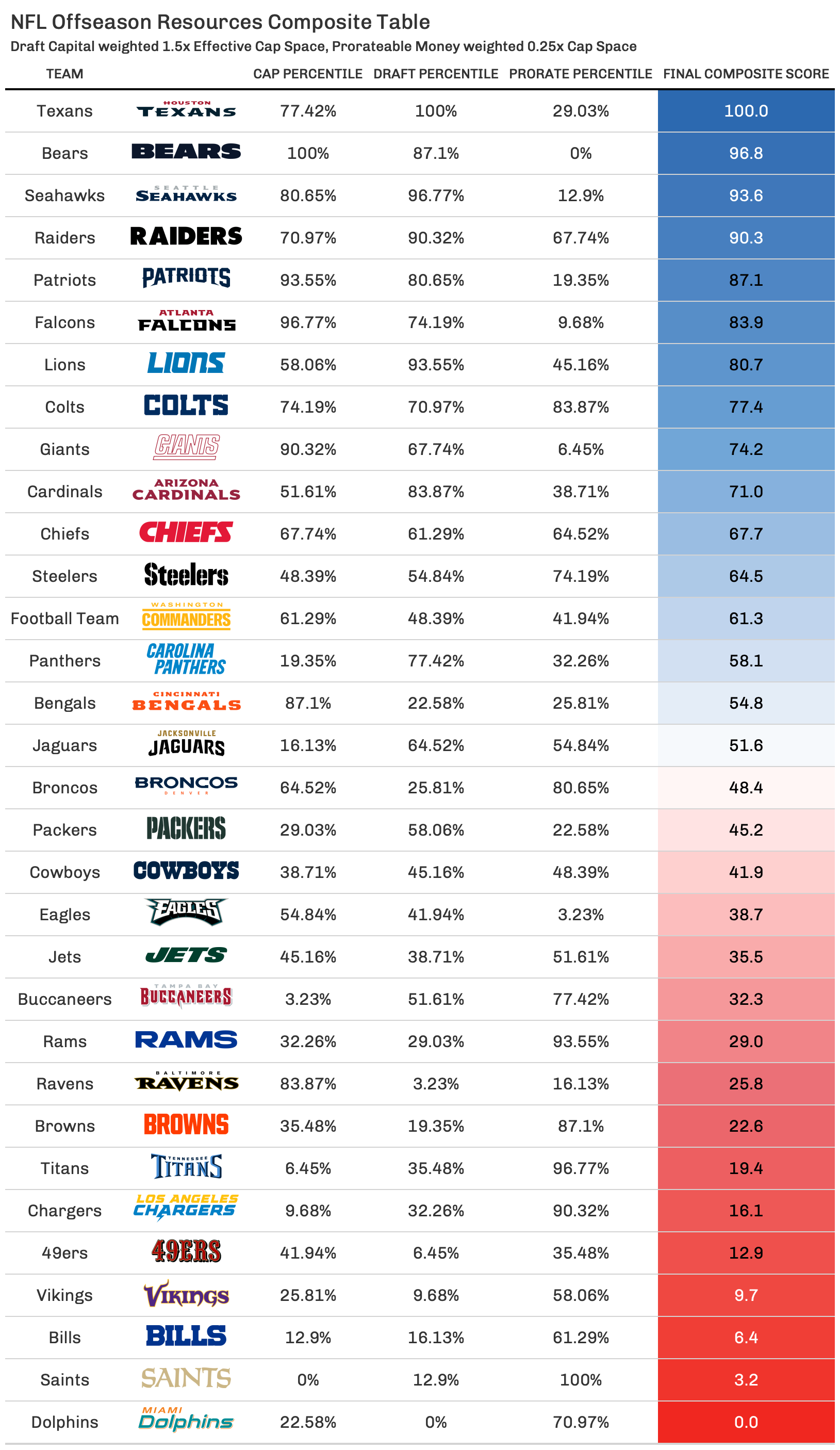
While most teams spend close to the cap, teams like the New England Patriots and Washington Commanders entered 2024 with significant "functional" cap space. These teams were in rebuilding phases and chose to roll over their excess cap space to future years rather than overspending on the 2024 free-agent market.
Is there a minimum amount an NFL team must spend?
Yes, the Collective Bargaining Agreement (CBA) requires teams to spend a minimum of 95% of the total salary cap in cash over specific multi-year "buckets." This prevents owners from simply pocketing the revenue without investing in the roster.
Monitoring Future Financial Trends
As we look back from 2026, the 2024 season serves as a benchmark for how quickly the NFL's economy can expand. For those interested in the business of football, the primary action item is to watch the "Cash Over Cap" ratio. Teams that consistently spend more in cash than the cap allows are usually in a championship window, while teams that spend below the cap are typically accumulating resources for a future push. Tracking these cycles provides a clearer picture of a team's true competitive timeline than wins and losses alone.