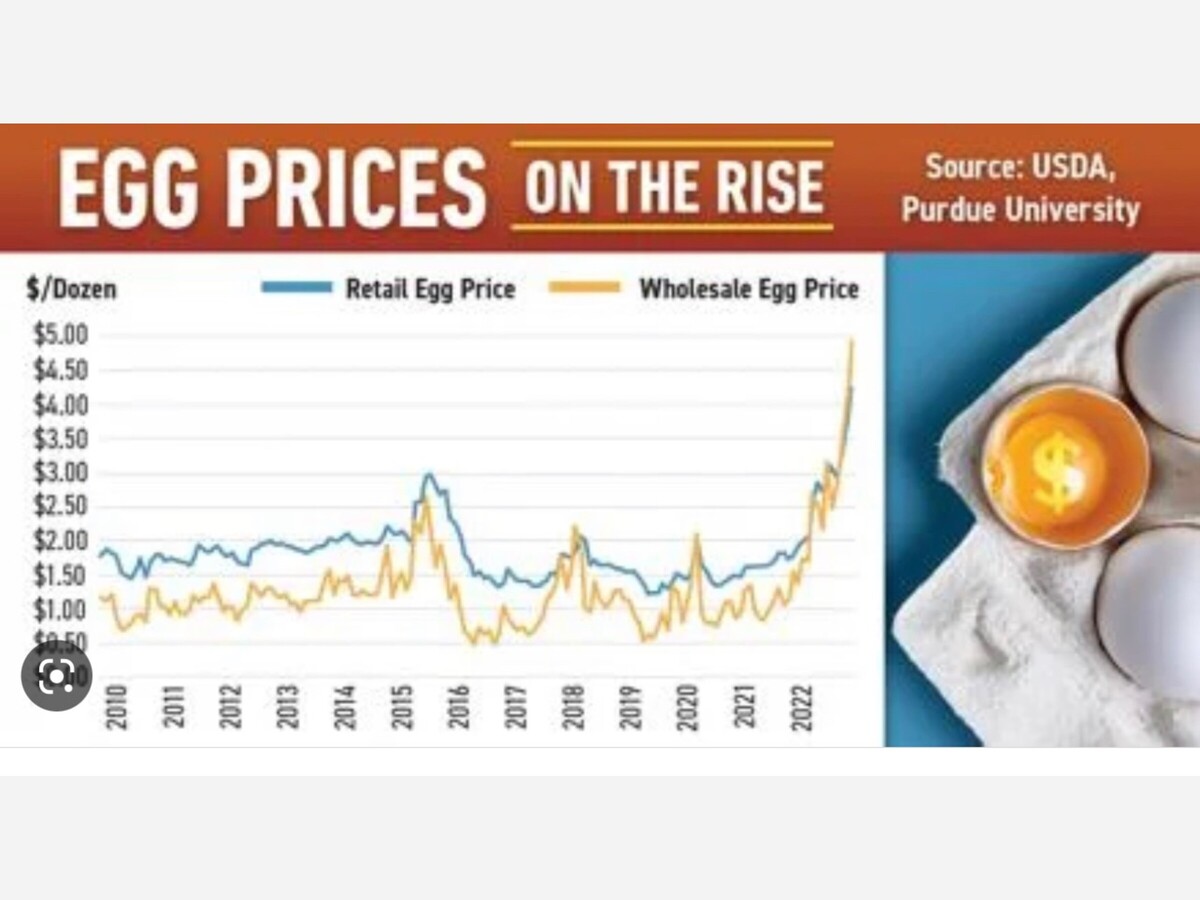
In 2024, the average cost for a dozen large Grade A eggs in the United States typically ranged between $2.50 and $3.20, reflecting a volatile market influenced by recurring avian influenza outbreaks and shifting agricultural regulations. While prices retreated from the record-breaking peaks seen in early 2023, sustained supply chain pressures kept the 2024 national average significantly higher than pre-pandemic historical norms.
The 2024 Egg Market in Retrospect: A Period of Volatility
Looking back from 2026, the year 2024 stands out as a critical period of stabilization and subsequent shock within the poultry industry. Following the extreme price spikes of 2023—where consumers in some regions saw prices exceed $5.00 per dozen—2024 was initially expected to be a year of recovery. However, the market proved to be more fragile than analysts predicted. The primary narrative for 2024 egg prices was one of "sticky" inflation, where costs plateaued at a higher baseline rather than returning to the $1.50 levels seen in the late 2010s.
Economically, the 2024 calendar year was characterized by a tug-of-war between improved production efficiencies and external biological threats. During the first quarter of 2024, prices showed signs of normalization. Retailers began to lower prices as flock sizes recovered from previous culls. However, by the second and third quarters, new detections of Highly Pathogenic Avian Influenza (HPAI) in major producing states like Texas and Michigan disrupted the downward trajectory. This created a "sawtooth" price pattern on the Consumer Price Index (CPI), where brief periods of affordability were quickly followed by double-digit percentage increases in wholesale costs.
The average consumer in 2024 faced a landscape where "egg math" became a staple of household budgeting. Unlike other grocery items that saw steady, linear inflation, eggs remained a high-beta commodity. This meant that while the 2024 average remained around $2.80–$3.00, the standard deviation was wide, with weekly price swings of $0.50 or more in response to localized supply news.
Monthly Data Analysis: Tracking the 2024 Price Fluctuations
To understand the 2024 trends, one must examine the month-by-month shifts recorded by the Bureau of Labor Statistics (BLS). The year began with a carryover of the supply issues from late 2023. In January 2024, the national average for a dozen Grade A large eggs was approximately $2.52. This was a welcome relief compared to the $4.82 peak seen a year prior, but the reprieve was short-lived.
By April 2024, prices climbed back toward the $3.00 mark. This specific spike was attributed to the culling of millions of birds at facilities owned by major producers, such as Cal-Maine Foods, after H5N1 was detected on-site. The mid-year period (June through August) saw prices hover in the $2.70 range as the industry scrambled to repopulate flocks. Repopulation is not an instantaneous process; it takes approximately five to six months for a chick to reach peak laying maturity, meaning supply shocks in the spring typically manifest as retail price hikes in the summer and autumn.
In the final quarter of 2024, seasonal demand—driven by holiday baking and increased breakfast consumption in colder months—pushed averages toward the upper end of the $3.20 bracket. The following table illustrates the comparative national averages for egg prices during the 2022–2024 period, providing context for the 2024 fluctuations.
| Month (2024) | Average Price (Per Dozen, Grade A Large) | Year-Over-Year Change (vs. 2023) | Trend Summary |
|---|---|---|---|
| January | $2.52 | -47.7% | Significant deflation from 2023 peaks. |
| March | $2.99 | -13.2% | Prices rise due to early spring bird flu detections. |
| June | $2.72 | +22.5% | Rebound in pricing as supply remains tight. |
| September | $3.10 | +38.1% | Significant upward pressure from late-summer culls. |
| December | $3.20 | +27.3% | Holiday demand peaks amidst restricted supply. |
The Primary Catalyst: Highly Pathogenic Avian Influenza (H5N1)
The single most influential factor in 2024 egg pricing was the persistence of Highly Pathogenic Avian Influenza (HPAI). Unlike previous outbreaks that followed a predictable seasonal pattern, the H5N1 strain in 2024 proved to be exceptionally resilient, persisting through both cold and warm months. This forced the U.S. Department of Agriculture (USDA) to implement strict biosecurity protocols and mandatory culls of infected flocks.
When a single bird in a commercial facility tests positive for HPAI, the entire flock—often numbering in the millions—must be "depopulated" to prevent the spread to neighboring farms. In 2024, these culls directly removed tens of millions of egg-laying hens from the domestic supply. The loss of a single major facility can represent 1-3% of the total U.S. egg-laying capacity, leading to immediate spikes in the wholesale "spot market."
Furthermore, the 2024 outbreaks were complicated by the virus jumping to other livestock, including dairy cows. While this did not directly impact egg production, it increased the overall cost of biosecurity and monitoring across the agricultural sector. Producers had to invest heavily in air filtration, restricted access zones, and enhanced sanitation for transport vehicles. These operational costs were inevitably passed down to the consumer, contributing to the "stickiness" of the $3.00 average price point.
Feed, Fuel, and Operational Overhead
While bird flu dominated the headlines, the underlying "input costs" of farming played a significant role in maintaining high 2024 prices. Egg production is a highly energy- and resource-intensive endeavor. In 2024, three specific overhead categories remained elevated:
- Feed Costs (Corn and Soy): Although global grain prices began to stabilize in 2024, they remained higher than the averages seen in 2019-2020. Since feed accounts for roughly 60% to 70% of the cost of producing an egg, even minor fluctuations in corn futures directly impacted the retail price at the grocery store.
- Labor Shortages: The poultry industry faced ongoing challenges in securing labor for processing plants and transport. Higher wages required to attract and retain workers in a competitive job market were factored into the wholesale price of eggs.
- Packaging and Logistics: The cost of cardboard pulp and plastic for egg cartons, along with the diesel fuel required for refrigerated transport, remained sensitive to broader inflationary pressures. In 2024, "last-mile" delivery costs—the expense of moving eggs from regional distribution centers to local grocery shelves—hit record highs in some urban corridors.
Regional Disparities: Why Geography Mattered in 2024
The "national average" of $2.80–$3.00 often masked extreme regional variations in 2024. Consumers in the Midwest, closer to the primary production hubs of Iowa and Ohio, frequently saw prices $0.30 to $0.50 lower than the national average. Conversely, coastal regions and states with specific legislative requirements experienced much higher costs.
California remained the most expensive state for eggs in 2024. This was largely due to the full implementation of Proposition 12 and subsequent regulations, which mandated that all eggs sold in the state come from cage-free hens. Because the infrastructure for cage-free production is more expensive to build and maintain, and because the supply of cage-free eggs was more limited than conventional eggs, Californians often paid $4.00 to $6.00 per dozen while the rest of the country averaged under $3.00.
Other states in the Northeast, including New York and Massachusetts, faced higher prices due to "import" costs. These states do not produce enough eggs to satisfy internal demand and must rely on long-distance trucking from the Midwest. In 2024, the combination of high toll costs, regional fuel taxes, and strict emissions standards for trucks added a "geographic premium" to every carton sold in these markets.
The Rise of the Cage-Free Mandate and Specialty Tiers
2024 marked a "tipping point" for the market share of specialty eggs. As more states passed animal welfare legislation and major retailers like Walmart and Kroger moved toward their pledged 100% cage-free goals, the price gap between "conventional" and "specialty" eggs began to narrow.
In previous years, organic or pasture-raised eggs might cost 200% more than conventional eggs. In 2024, because conventional egg prices were so volatile due to avian flu, the price of organic eggs (which are often raised in smaller, more isolated flocks that are less susceptible to mass outbreaks) remained relatively stable. For many consumers, the jump from a $3.20 conventional carton to a $4.50 organic carton became more palatable.
Furthermore, the "Value-Added" segment saw growth. This includes eggs enriched with Omega-3, pasture-raised eggs, and carbon-neutral certified eggs. In 2024, these products captured approximately 30% of the total market revenue, as higher-income households sought "recession-proof" nutritional density. Producers leaned into this trend, shifting some of their capacity away from the low-margin conventional market toward these higher-margin specialty tiers to hedge against the financial losses of bird flu culls.
Frequently Asked Questions about 2024 Egg Trends
Why were eggs so expensive in the middle of 2024?
The price increase in mid-2024 was primarily driven by a resurgence of Highly Pathogenic Avian Influenza (HPAI). In April and May of 2024, several large-scale commercial poultry farms in the United States were forced to cull millions of egg-laying hens to contain the virus. This sudden contraction in supply, coupled with the time required to raise new hens to laying age, created a supply-demand imbalance that spiked retail prices.
How did 2024 egg prices compare to the 2023 peaks?
On average, 2024 was more affordable than 2023. In early 2023, prices hit an all-time high of nearly $5.00 per dozen due to the initial shock of the worst bird flu outbreak in U.S. history. By 2024, the industry had developed better response mechanisms, meaning that while prices were still high (averaging $2.80–$3.00), they did not reach the extreme "panic-pricing" levels seen the year prior.
Did the "Cage-Free" transition affect 2024 prices?
Yes, significantly. As more states like California, Colorado, and Washington implemented mandates requiring all eggs sold to be cage-free, the overall cost of production rose. Cage-free facilities require more labor and space per bird. In 2024, as the industry transitioned more of its national flock to cage-free housing to meet these laws and retailer pledges, the baseline "floor price" for eggs moved higher.
Are brown eggs more expensive than white eggs because they are healthier?
No. The price difference between brown and white eggs in 2024 remained a reflection of production costs, not nutritional value. Brown eggs are typically laid by larger breeds of hens that require more feed to produce a single egg. While they are often marketed in the "organic" or "premium" sections, the nutritional profile is virtually identical to white eggs. The higher price in 2024 was a result of the higher "feed conversion ratio" of those specific hens.
Will egg prices return to $1.00 per dozen?
From the perspective of 2026, it is highly unlikely that egg prices will ever return to the $1.00–$1.50 range seen in the mid-2010s. The combination of permanent increases in labor costs, higher standards for animal welfare (cage-free), and the ongoing threat of H5N1 has created a new economic "floor" for the industry. Consumers should expect $2.00 to be the new "bargain" price for the foreseeable future.
Strategy for Managing Staple Costs
For consumers and commercial buyers looking to navigate the volatile egg market, several strategies emerged as highly effective during the 2024 cycle. First, monitoring the USDA Egg Market News reports can provide a one-to-two-week lead time on retail price changes, as wholesale "spot prices" usually precede grocery store adjustments.
Secondly, 2024 showed that purchasing eggs in "bulk packs" (two-dozen or five-dozen flats) at warehouse clubs provided a significant per-unit discount, often reducing the cost per dozen by 15-20% compared to standard supermarket cartons. Finally, for those in high-cost regions like the West Coast, 2024 was the year that egg substitutes—both plant-based and liquid egg products—reached price parity with shell eggs during peak flu outbreaks, offering a viable alternative for baking and general cooking.