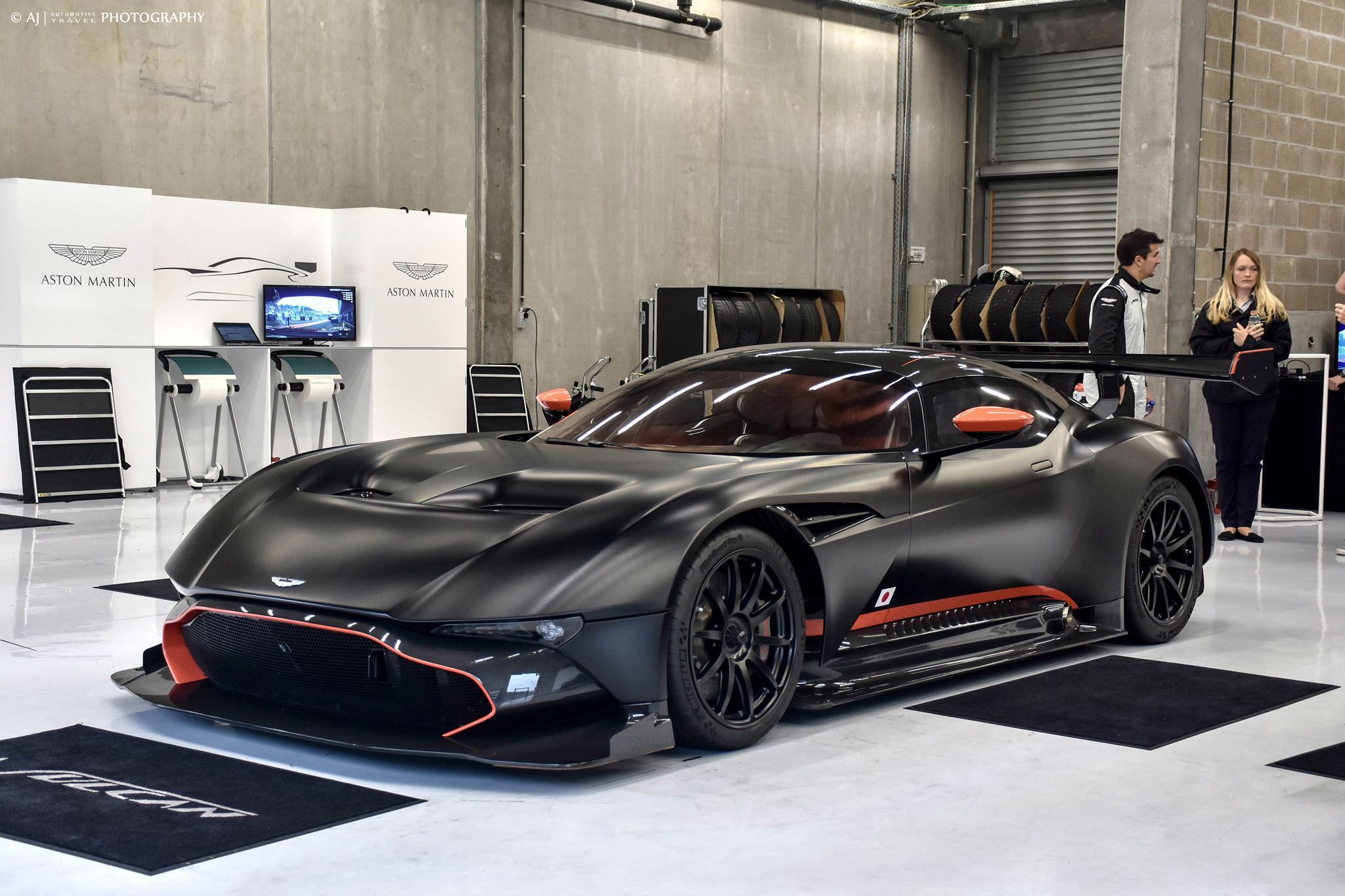
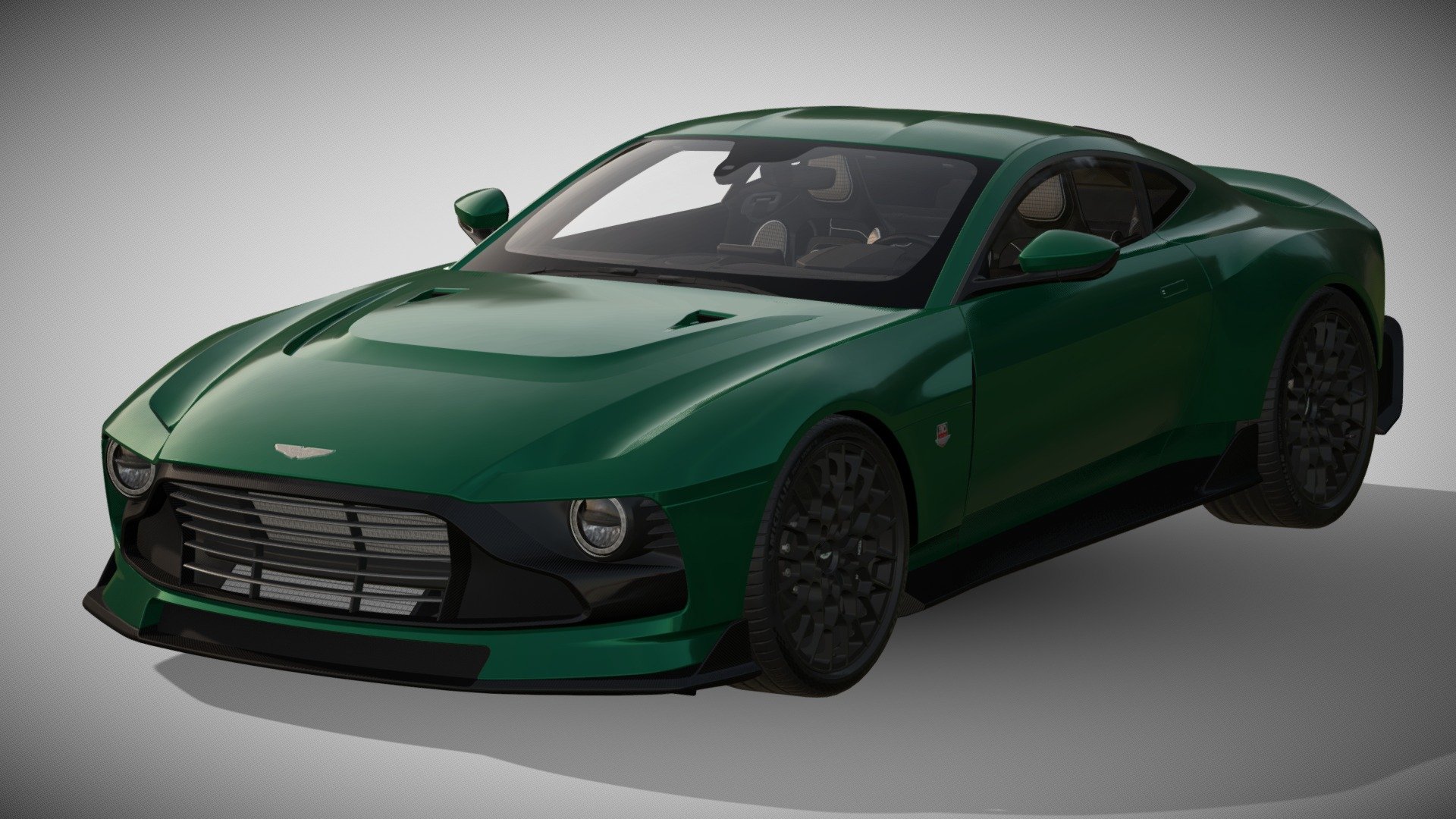
As of 2026, the secondary market valuation for an Aston Martin Vulcan ranges between $2.5 million and $3.5 million USD, depending on chassis history, track usage hours, and whether it includes the factory AMR Pro aerodynamic upgrade. Annual ownership costs range from $50,000 for static storage and insurance to over $150,000 for active track campaigning.
Disambiguating the Aston Martin Vulcan Model Scope
When prospective buyers and collectors search for the "2024 Aston Martin Vulcan," it is essential to establish the vehicle's actual production timeline. Aston Martin did not manufacture any new Vulcan chassis in 2024. The Aston Martin Vulcan was produced in an extremely limited production run of exactly 24 units worldwide between 2015 and 2016, designed purely as a track-only hypercar by Aston Martin’s Advanced Operations department lead by David King.
Search queries linking the model to recent years generally refer to modern secondary market price benchmarks, current valuation reports, or active maintenance and ownership costs evaluated in today's luxury collector market. Understanding the Vulcan requires analyzing its current position as a finite, ultra-rare alternative investment asset.
Built around a bespoke carbon-fiber monocoque chassis crafted by Multimatic, the Vulcan is powered by a front-mid-mounted, naturally aspirated 7.0-liter V12 engine developed in partnership with Aston Martin Racing (Prodrive). Delivering 820 horsepower without turbochargers or hybrid assistance, the Vulcan represents one of the final iterations of unassisted, high-displacement V12 motorsport engineering.
Aston Martin Vulcan Snapshot: • Production Run: 24 units globally (2015–2016) • Powertrain: 7.0L Naturally Aspirated V12 (820 bhp / 590 lb-ft) • Transmission: Xtrac 6-Speed Rear-Mid Sequential • Chassis: Multimatic Carbon-Fiber Monocoque with Pushrod DSSV Suspension • Baseline Market Value: $2,500,000 – $3,500,000+ USD
Current Market Valuation and Secondary Price Analysis
At its debut, the Aston Martin Vulcan carried an original factory base price of approximately $2.3 million USD (£1.5 million to £1.8 million before taxes and personalization). Unlike mass-produced exotic supercars that suffer steep depreciation upon delivery, track-only hypercars occupy a distinct segment governed by extreme rarity and low mileage accrual.
In current secondary sales across major auction houses such as RM Sotheby's, Bonhams, and Gooding & Company, as well as private treaty transactions facilitated by specialist brokers, Aston Martin Vulcan values have appreciated moderately. Current valuation metrics categorize the market into three distinct price tiers:
- Static Collection / Delivery-Mileage Examples ($3.2M – $3.6M+): Chassis that have been maintained primarily in climate-controlled facilities with zero or minimal track hours command top-tier pricing. Collectors value pristine factory paint, original delivery accouterments (including custom Omologato chronographs and matching racing suits), and documented factory checkups.
- Standard Track-Maintained Examples ($2.5M – $2.9M): Vehicles that have participated in track days or factory track programs maintain strong liquidity but trade at a slight discount compared to delivery-mileage garage queens. Engine telemetry logs and structural carbon inspection records dictate the exact figure within this range.
- AMR Pro Spec Conversions ($3.0M – $3.5M): Models outfitted with the factory-developed AMR Pro aerodynamic package—introduced by Aston Martin Advanced Operations in 2017—enjoy heightened demand. The upgrade adds significant downforce and shortened gear ratios, making it exceptionally desirable for active track drivers.
Technical Specifications and Financial Profile
To understand the cost structure and secondary market positioning of the Vulcan, buyers must evaluate how its mechanical specification influences operational expenses. The table below outlines key technical characteristics alongside current market and maintenance metrics.
| Parameter / Expense Category | Specification / Standard Metric | Current Financial Range (USD) |
|---|---|---|
| Original Factory MSRP (2015–2016) | Base model excluding bespoke options | $2,300,000 – $2,500,000 |
| Current Market Value (2026) | Secondary market / private broker sales | $2,500,000 – $3,600,000 |
| AMR Pro Upgrade Package | Factory aerodynamic and gearing retrofit | $250,000 – $350,000 (installed) |
| Agreed-Value Static Insurance | Specialty collector coverage (Annual) | $25,000 – $40,000 |
| Active Track Insurance (per event) | Specialized track-day underwriting | $10,000 – $25,000 per weekend |
| Full Track Day Support Crew | Support technicians, transport, race fuel | $20,000 – $45,000 per outing |
| Routine Annual Inspection | Factory-certified technician sign-off | $12,000 – $20,000 |
| Replacement Slick Tires (Set) | Michelin custom race slicks | $4,500 – $6,000 |
Total Cost to Own: Fixed and Variable Expenses
Owning an Aston Martin Vulcan involves a multi-tiered cost structure that differs sharply from road-legal supercars. Because the car is not street legal in its factory configuration, owners cannot simply drive it to a local service center. Expenses are split into fixed annual holding costs and variable operational expenses incurred during track usage.
Fixed Annual Holding Costs
Even if a Vulcan covers zero miles in a given year, preserving its structural integrity, fuel system, and powertrain requires consistent capital expenditure:
- Specialist Insurance ($25,000 – $40,000/year): Traditional auto insurance policies cannot cover a track-only hypercar. Owners must secure specialized agreed-value marine/in-transit and static display policies from underwriters like Hagerty Marine, Grundy, or Lloyd’s of London. These policies cover fire, theft, facility damage, and transport perils.
- Climate-Controlled Storage ($6,000 – $18,000/year): The carbon-fiber monocoque, race-spec wiring harnesses, and custom fuel cell demand strict humidity control (45–50% RH) and ambient temperature management (65–70°F) to prevent degradation of seals and electronics.
- Annual Servicing and Fluid Cycles ($12,000 – $20,000/year): The 7.0-liter naturally aspirated engine uses specialized synthetic racing lubricants, and the cooling systems require regular flushing. Rubber bladders inside the FIA-certified fuel cell have a fixed lifespan (typically 5 years) and require costly replacement regardless of mileage.
Variable Track Operation Expenses
For owners who actively run the Vulcan at private track events or circuit days, operating costs escalate rapidly:
- Logistics and Enclosed Transport ($5,000 – $25,000 per event): Moving a non-registered, low-clearance track vehicle requires professional enclosed transport teams equipped with custom ramps or tail-lifts. Transporting a car internationally via air freight for European or Asian circuit events can easily exceed $50,000 round trip.
- Consumables and Fuel ($10,000 – $15,000 per track day): A single track day consumes multiple sets of Michelin slick tires ($4,500+ per set), high-octane racing fuel (100+ RON running at extreme consumption rates under full throttle), and specialized Brembo carbon-ceramic brake pads and rotors.
- Factory Support Technicians ($15,000 – $30,000 per event): The Vulcan’s ECU, telemetry systems, and Xtrac 6-speed sequential gearbox require specialized laptop diagnostics and dedicated race engineers to manage cold-starting procedures, pre-heating of engine fluids, and clutch calibration.
Estimated Annual Ownership Budgets: • Static Collector Profile: $45,000 – $75,000 / year • Active Track Driver Profile (3–4 events/yr): $150,000 – $250,000+ / year
Road-Legal Conversions: The RML Group Factor
One of the most notable options affecting both valuation and usability is the aftermarket street-legal conversion developed by engineering firm RML Group in the UK.
RML offers a comprehensive modification program that adapts the track-only Vulcan for road registration while preserving its core identity. Key modifications include:
- Adding headlights, tail light indicators, and side mirrors.
- Re-gearing the Xtrac sequential transmission for street drivability and adding turn-lock steering angles.
- Modifying suspension ride height and spring rates for speed bumps and uneven road surfaces.
- Adjusting emissions calibration and installing catalytic converters to meet local compliance standards.
Converting a Vulcan to road-legal specification costs between $350,000 and $500,000, depending on local compliance regulations (such as UK IVA testing). However, road-legal Vulcans often command a premium on the secondary market due to their unique status, offering owners the choice to drive on public roads or convert the vehicle back to original track spec if desired.
Factors Influencing Resale Value and Market Stability
When assessing an Aston Martin Vulcan as an investment-grade asset, several crucial factors dictate market desirability:
- Presence of the AMR Pro Package: The factory AMR Pro package increases total downforce from 3,150 Nm to 4,000 Nm, featuring dual-plane rear wing adjustments, front dive planes, and revised front arch louvers. Cars equipped with this factory upgrade consistently attract higher demand and command a $200,000 to $350,000 market premium.
- Engine Telemetry and Hours Logged: Unlike road cars measured primarily by total chassis mileage, track hypercars are evaluated by engine operating hours and peak RPM logs stored in the ECU. Lower track hours with detailed factory service records preserve engine longevity and resale value.
- Chassis Provenance and Original Documentation: Original factory handbooks, flight cases containing track equipment, spare wheels, custom racing gear, and official Aston Martin build documentation must remain intact to achieve top-tier valuation.
- Exclusivity vs. Competitors: Compared to contemporary track hypercars—such as the Ferrari FXX K (40 units) and McLaren P1 GTR (58 units)—the Vulcan’s production cap of 24 units makes it significantly rarer, insulating its market value against oversupply.
Frequently Asked Questions
What is the current market price of an Aston Martin Vulcan?
As of 2026, an Aston Martin Vulcan trades on the secondary market between $2.5 million and $3.5 million USD. Exact pricing depends on total engine operating hours, chassis condition, factory provenance, and whether the car includes the AMR Pro aerodynamic package or an RML road-legal conversion.
Can you drive an Aston Martin Vulcan on public roads?
In its factory configuration, no. The Aston Martin Vulcan was designed strictly as a track-only vehicle without road-legal lighting, bumpers, emissions equipment, or pedestrian safety compliance. However, a small number of chassis have been modified by UK-based RML Group to satisfy individual vehicle approval (IVA) standards for street use.
How many Aston Martin Vulcans were produced?
Aston Martin produced exactly 24 units of the Vulcan globally between 2015 and 2016. No additional factory chassis were produced in subsequent years, making it one of the rarest modern Aston Martin models ever created.
How much does annual routine maintenance cost for a Vulcan?
Static routine maintenance and basic inspections cost between $12,000 and $20,000 annually. However, if the car is actively driven on track, operational costs—including dedicated technical crews, track transport, tires, race fuel, and brake maintenance—typically run between $150,000 and $250,000 annually.
Does the AMR Pro package increase the Vulcan's resale value?
Yes. The factory-developed AMR Pro package enhances aerodynamic downforce by 27% and shortens gearing for improved track acceleration. Vehicles featuring the AMR Pro retrofit generally command a market premium of $200,000 to $350,000 over standard spec models.
Essential Checklist for Prospective Vulcan Buyers
Before placing a deposit or committing to a private treaty purchase on an Aston Martin Vulcan, prospective buyers should conduct a structured due diligence process:
- Audit ECU Telemetry: Engage a factory-trained Aston Martin Advanced Operations technician to pull raw diagnostic logs, verifying total engine hours, thermal history, over-rev events, and transmission wear indicators.
- Inspect the Carbon Fiber Monocoque: Perform an ultrasonic or specialized visual inspection of the Multimatic carbon-fiber tub to ensure no undetected delamination or impact damage occurred during historic track sessions.
- Verify Service Equipment Inclusions: Ensure the sale includes original track side ancillaries, such as air-jack lances, torque wrenches, center-lock wheel sockets, factory flight cases, and diagnostic cables.
- Review Fuel Cell and Safety Recertification Dates: Check the expiration dates on the FIA fuel bladder, fire suppression system, and safety harnesses. Replacing expired components can cost upwards of $25,000 before the car can re-enter track usage.
- Confirm Storage and Transport Infrastructure: Establish transport contracts with specialized enclosed logistics providers and secure climate-controlled storage capable of maintaining 45–50% relative humidity prior to taking delivery.