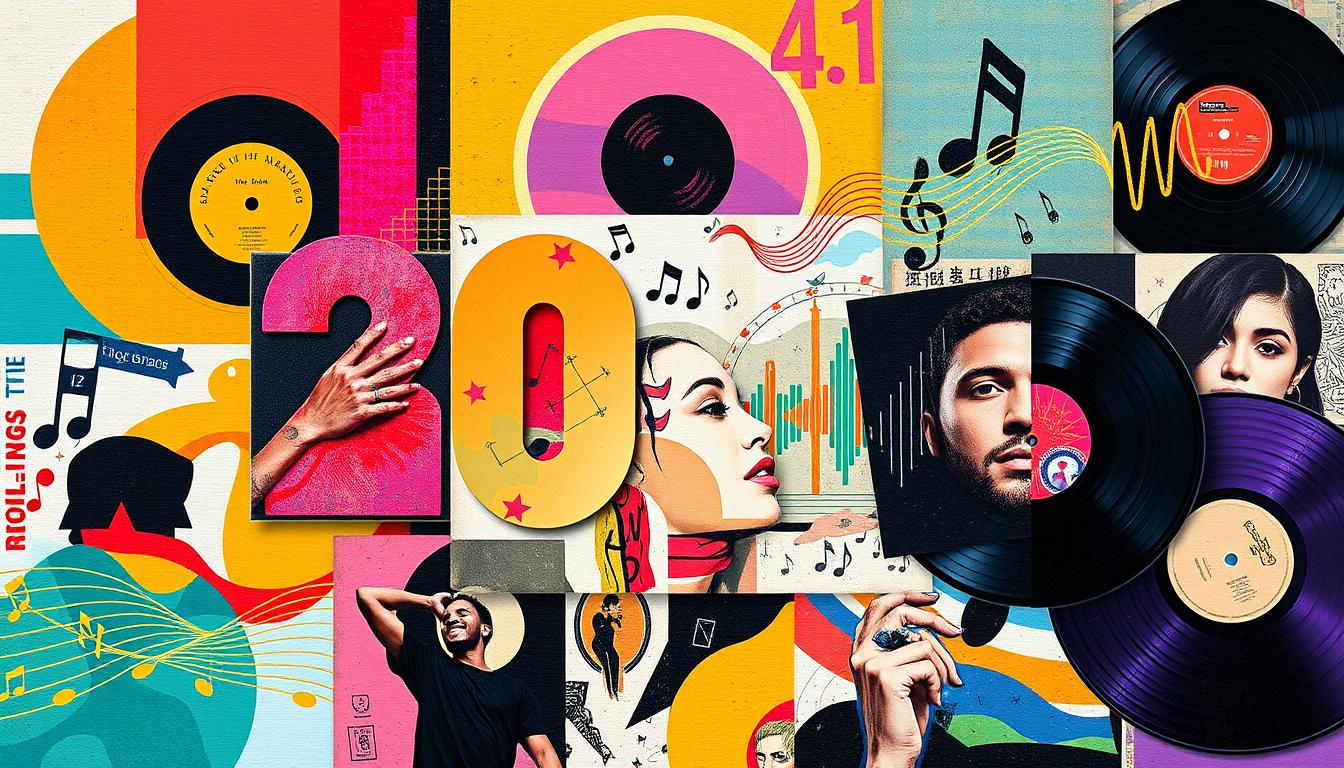
The 2020s music landscape is defined by the disintegration of traditional genre boundaries, the dominance of short-form video platforms like TikTok in song discovery, and the integration of artificial intelligence into production. This decade marks a pivot toward globalized sounds—specifically K-pop and Afrobeats—and a heavy reliance on viral "moments" over traditional radio-led cycles.
The Rise of the Genre-Fluid Artist
In the 2020s, the concept of a strict musical genre has become increasingly obsolete. Unlike the 20th century, where artists were often pigeonholed into rock, country, or R&B, the current era celebrates "genre-fluidity." This shift is largely driven by streaming algorithms that prioritize mood and activity (e.g., "Chill Vibes" or "Workout Energy") over traditional classifications.
Artists such as Lil Nas X, Billie Eilish, and Steve Lacy have exemplified this trend by blending elements of trap, indie rock, synth-pop, and folk within a single project or even a single track. This fluidity allows for a broader creative palette but also reflects the listening habits of Gen Z and Millennials, who have grown up with the entirety of music history available at their fingertips via platforms like Spotify and Apple Music.
Furthermore, the "post-genre" movement has led to unexpected collaborations that would have seemed impossible in previous decades. The fusion of regional Mexican music with urban trap (Corridos Tumbados) and the blending of heavy metal with hyperpop are just two examples of how artists are deconstructing old silos to create entirely new sonic textures. This evolution suggests that the future of music lies not in sticking to a formula, but in the seamless integration of disparate influences.
Social Media as the Primary Discovery Engine
By 2026, the traditional path to stardom—radio play followed by a major label deal—has been completely inverted. Short-form video platforms, primarily TikTok and Instagram Reels, have become the most influential gatekeepers in the industry. A 15-second "sound" can propel an unknown bedroom producer to the top of the Billboard charts overnight.
This "TikTokification" of music has fundamentally altered songwriting and structure. Many contemporary hits feature an immediate "hook" or a specific "meme-able" moment designed to accompany viral challenges. Consequently, song lengths have shortened significantly. In the 2010s, the average pop song lasted roughly three minutes and thirty seconds; in the 2020s, many chart-topping tracks struggle to reach the two-minute and thirty-second mark. The focus has shifted from narrative development to immediate emotional or rhythmic impact.
However, this phenomenon is not limited to new releases. The 2020s have seen a massive "catalog boom," where older songs are rediscovered by younger generations. Whether it is Fleetwood Mac's "Dreams" or Kate Bush's "Running Up That Hill," social media has the power to breathe new life into decades-old recordings, making the past as relevant as the present in the current cultural conversation.
Technological Shifts: AI and Spatial Audio
The mid-2020s will be remembered as the era when Artificial Intelligence (AI) moved from a niche experimental tool to a core component of the music industry. As of 2026, AI is used for everything from mastering tracks to generating vocal clones and assisting in lyric writing. This has sparked intense legal and ethical debates regarding copyright and the definition of human creativity.
Generative AI platforms allow users to create high-quality music based on simple text prompts, which has democratized production but also flooded streaming services with an unprecedented volume of content. Major labels have spent much of the early 2020s navigating the fallout of "ghostwriter" tracks—songs that use AI to mimic the voices of superstars like Drake or The Weeknd without their permission.
Parallel to the AI revolution is the widespread adoption of Spatial Audio and Dolby Atmos. Listening has moved beyond traditional stereo to a three-dimensional immersive experience. Hardware manufacturers have integrated these capabilities into standard consumer headphones, forcing producers to rethink how they mix audio. Music is no longer just something played "at" a listener; it is an environment they "enter," with instruments and vocals positioned strategically in a 360-degree soundstage.
The Global Soundscape: Beyond Western Pop
The 2020s have solidified the "globalization" of the music charts. While English-language pop dominated the global consciousness for decades, the current era is characterized by the massive success of non-Western genres.
- Latin Music: Bad Bunny became one of the most-streamed artists globally, proving that a Spanish-language artist could dominate the U.S. and European markets without "crossing over" into English.
- K-Pop: The genre has moved past its initial novelty phase to become a permanent fixture of global music. Groups like BTS and Blackpink paved the way for "Fifth Generation" idols who are trained for a global audience from day one.
- Afrobeats: Led by artists like Burna Boy, Wizkid, and Tems, Afrobeats has transitioned from a regional Nigerian sound to a dominant influence on global R&B and Pop. Its polyrhythmic structures and melodic sensibilities are now heard in tracks produced from Los Angeles to London.
This decentralization of the music industry means that a "hit" can originate anywhere. Regional scenes in Brazil (Funk Carioca), South Africa (Amapiano), and India (Independent Pop) are now influencing the sounds produced by major Western artists, creating a truly interconnected global musical ecosystem.
The Economics of Music: Streaming vs. Vinyl
Despite the convenience of digital streaming, the 2020s have seen a remarkable resurgence in physical media, particularly vinyl records. By 2026, vinyl has transitioned from a retro hobby to a primary revenue stream for artists. For many fans, purchasing a record is an act of "fandom signaling" and a desire for a tangible connection to the music in an increasingly ephemeral digital world.
However, the economics of the 2020s music industry remain a point of contention. While streaming accounts for the vast majority of consumption, the "pro-rata" payout model often leaves independent artists with minimal earnings. This has led to a push for "user-centric" payment models and a greater emphasis on direct-to-consumer sales, such as Bandcamp Fridays or exclusive merchandise drops.
The touring industry also underwent a massive shift following the global lockdowns of the early 2020s. We have entered the era of the "Mega-Tour," exemplified by Taylor Swift's Eras Tour and Beyoncé’s Renaissance World Tour. These events are no longer just concerts; they are massive cultural and economic drivers that impact the GDP of host cities. Conversely, smaller artists face rising costs for venues, transport, and insurance, leading to a "barbell" economy where the top 1% thrive while the middle class of musicians struggles to remain sustainable.
Comparative Evolution of the Music Landscape
To understand how drastically the landscape has shifted, we can compare the defining characteristics of the 2010s against the trends established in the 2020s.
| Feature | 2010s Landscape | 2020s Landscape (to 2026) |
|---|---|---|
| Primary Discovery | FM Radio & Curated Playlists | TikTok, Reels & Algorithmic Feeds |
| Dominant Formats | Digital Downloads & Early Streaming | Streaming, Vinyl & Short-form Video |
| Avg. Song Duration | 3:30 – 4:00 Minutes | 2:00 – 2:45 Minutes |
| Production Tools | Professional Studios & DAWs | Home Studios, AI-Assisted, & Mobile Apps |
| Visual Content | High-Budget Music Videos (YouTube) | Low-Fi Vertical Video & Live Streams |
| Genre Definition | Clearly defined (Pop, Rock, Hip-Hop) | Fluid, Mood-based, and Hybridized |
| Live Experience | Standard Concert Tours | Immersive "Event" Tours & Virtual Concerts |
Major Genre Revivals and Nostalgia Cycles
Nostalgia in the 2020s has moved at an accelerated pace. The "20-year rule," where trends return every two decades, has been compressed by the internet. We are currently seeing the simultaneous revival of several distinct eras:
- Pop-Punk and Emo: Influenced by artists like Olivia Rodrigo and MGK, the early 2000s "Warpt Tour" sound returned with a modern, high-production sheen.
- 80s Synth-Pop: The neon-drenched sounds of the 1980s have been repurposed by artists like The Weeknd and Dua Lipa, blending retro synthesizers with modern trap percussion.
- Y2K Aesthetics: The late 90s and early 2000s "Eurodance" and "Trance" sounds are being reimagined by a new generation of electronic producers and pop stars, emphasizing high energy and "glossy" textures.
- Shoegaze and Grunge: A moody, guitar-heavy revival has taken hold among Gen Z indie artists, who favor the distorted, "wall of sound" approach of the early 90s.
These revivals are not mere carbon copies; they are "remixes" of the past that incorporate modern sensibilities, such as more inclusive lyrical themes and digital production techniques.
How has TikTok changed the way songs are written today?
TikTok has incentivized "hook-first" songwriting. Producers often create a specific 15-to-30-second section of a song that is catchy, relatable, or danceable to maximize its chances of going viral. This has led to shorter songs, faster tempos, and lyrics that are often designed to be used as "captions" for videos.
Is physical media still relevant in a streaming-dominated world?
Yes, but its role has changed. Vinyl and cassettes are now viewed as collectibles and "premium" fan merchandise rather than the primary way to listen. For many fans, owning a physical copy is a way to support artists directly, as the profit margins on a vinyl record are significantly higher than those from thousands of streams.
What is "Hyperpop" and why is it important to this decade?
Hyperpop is a micro-genre that emerged in the early 2020s, characterized by an exaggerated, high-energy take on pop music. It uses heavily processed vocals, abrasive synths, and "ear candy" production. It is important because it represents the "genre-less" DIY spirit of the internet age, where artists like 100 Gecs and Charli XCX push the boundaries of what is considered "pop."
How is AI impacting music copyright in 2026?
AI has created a legal gray area. As of 2026, many jurisdictions are still debating whether an AI-generated work can be copyrighted and how to compensate artists whose voices are used in AI training data. "Voice modeling" has become a major point of negotiation in recording contracts, with artists seeking to protect their "sonic likeness" as a distinct intellectual property.
Why are older songs suddenly topping the charts again?
The "Long Tail" of streaming means that every song ever recorded is competing with new releases. When an old song is used in a popular TV show (like Stranger Things) or becomes a background sound for a viral TikTok trend, it can be introduced to millions of new listeners instantly, bypassing the need for a traditional marketing campaign.
Navigating the Modern Music Landscape
For listeners and aspiring creators in 2026, the best approach is to embrace the diversity of the current era. To stay ahead of trends, avoid relying solely on "Top 50" charts, which are often lagging indicators of what is actually happening in the cultural underground. Instead, explore niche algorithmic "radio" based on specific moods or global regions.
For creators, the key is "multi-platform presence." Music is no longer just an auditory medium; it is a visual and social one. Building a direct connection with an audience via platforms like Discord or niche social networks is now more sustainable than chasing a single viral hit. As the decade progresses, the most successful artists will be those who can balance the technological tools of AI and social media with the raw, human authenticity that fans increasingly crave in an automated world.