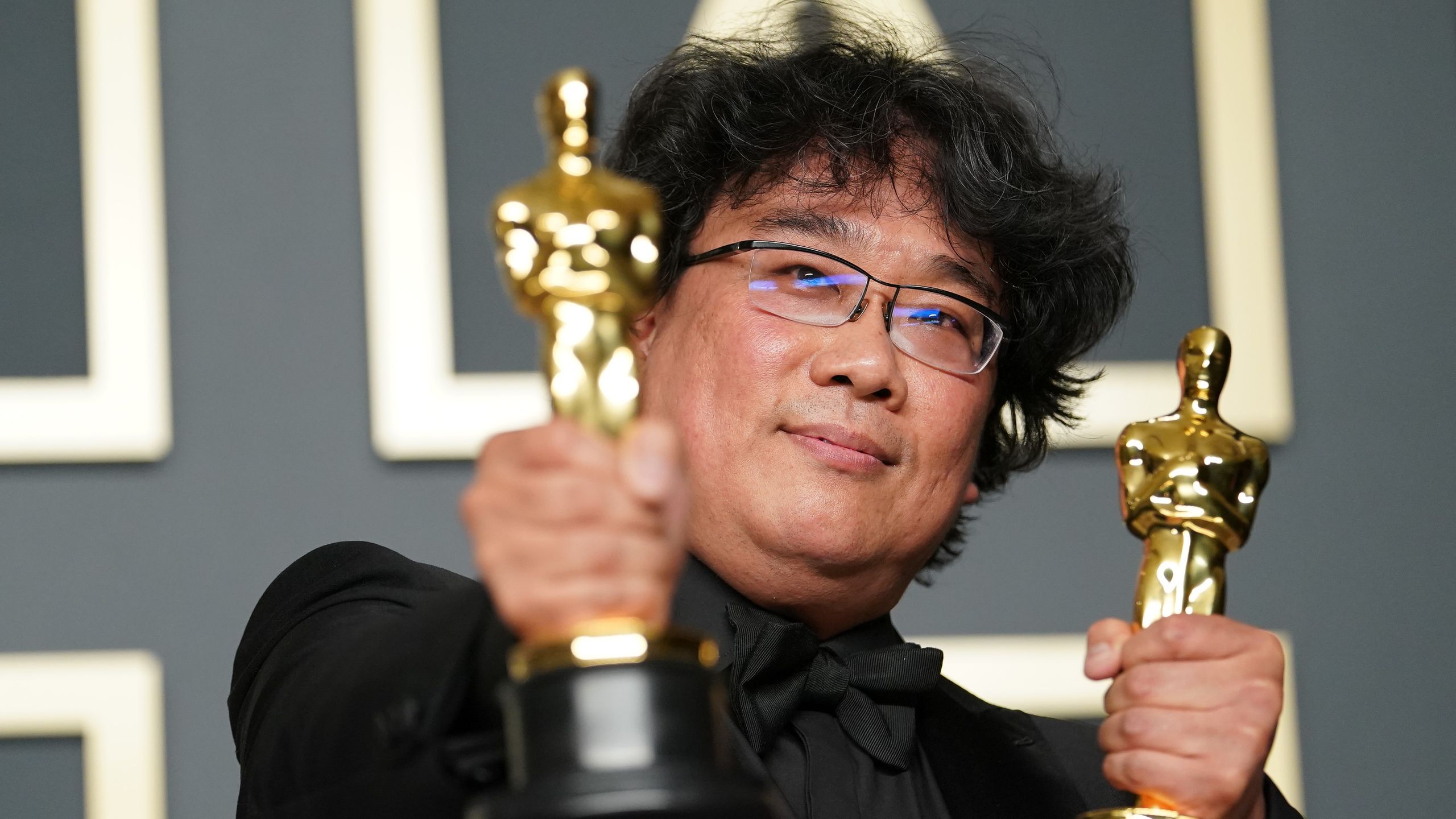
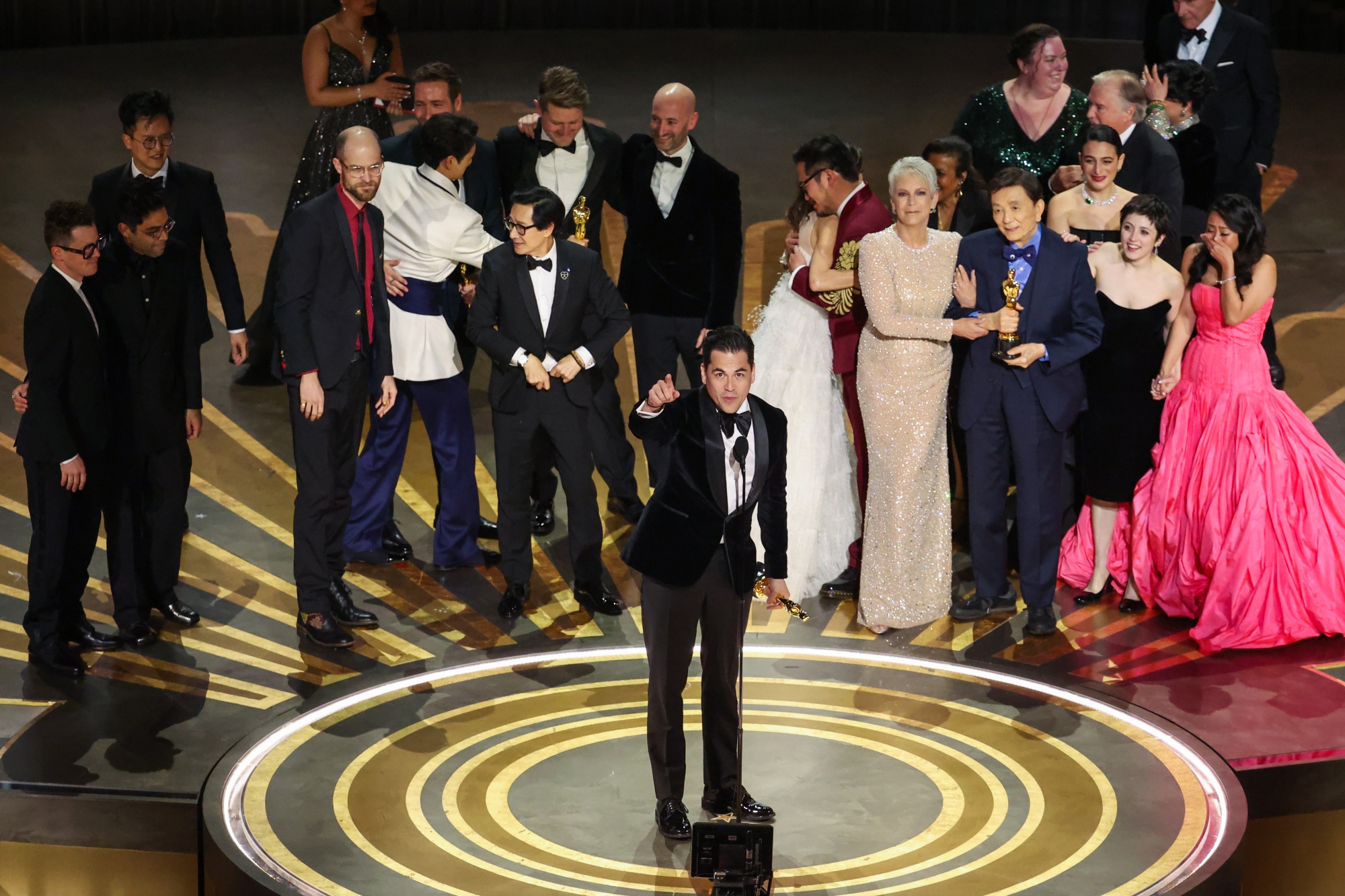
The 92nd Academy Awards, held on February 9, 2020, marked a transformative moment in cinematic history as Parasite became the first non-English language film to win Best Picture. Directed by Bong Joon-ho, the South Korean masterpiece secured four major awards, signaling a new era of global recognition for international filmmakers.
The 2020 Oscars remains one of the most significant ceremonies in the history of the Academy of Motion Picture Arts and Sciences (AMPAS). Conducted at the Dolby Theatre in Hollywood, the event was the second consecutive ceremony to proceed without a formal host, relying instead on high-energy musical performances and a rotating cast of A-list presenters. While the technical achievements of films like 1917 were undeniable, the evening was defined by a shift toward diverse storytelling and the breaking of long-standing industry "glass ceilings."
A Historic Night for Global Cinema
The primary narrative of the 2020 Oscars was the unprecedented sweep by Parasite. Before this evening, no foreign-language film had ever captured the Academy’s top prize, despite several high-profile nominations in previous decades (such as Roma in 2019 or Crouching Tiger, Hidden Dragon in 2001). Bong Joon-ho’s dark social satire didn't just win Best Picture; it also took home Best Director, Best Original Screenplay, and Best International Feature Film.
This victory was seen as a validation of the Academy’s efforts to diversify its membership. By inviting thousands of international film professionals to join its voting ranks in the years leading up to 2020, the Academy fundamentally shifted the "center of gravity" for what constitutes an "Oscar movie." Bong Joon-ho famously referred to the Oscars as a "local" awards show in interviews leading up to the event, a comment that challenged the industry to look beyond the borders of North America.
Beyond the Parasite phenomenon, the 2020 winners represented a blend of traditional Hollywood legacy and modern gritty realism. From the high-octane technical precision of Ford v Ferrari to the intimate character studies found in Marriage Story and Judy, the winners' circle reflected a year of high-quality, mid-budget filmmaking that has become increasingly rare in the era of blockbuster franchises.
The Complete List of 2020 Academy Award Winners
Below is the definitive list of winners for the 92nd Academy Awards across all 24 competitive categories. This list reflects the official records of the Academy as of their publication in early 2020.
| Category | Winner | Film |
|---|---|---|
| Best Picture | Kwak Sin-ae and Bong Joon-ho | Parasite |
| Best Director | Bong Joon-ho | Parasite |
| Best Actor | Joaquin Phoenix | Joker |
| Best Actress | Renée Zellweger | Judy |
| Best Supporting Actor | Brad Pitt | Once Upon a Time in Hollywood |
| Best Supporting Actress | Laura Dern | Marriage Story |
| Best Original Screenplay | Bong Joon-ho and Han Jin-won | Parasite |
| Best Adapted Screenplay | Taika Waititi | Jojo Rabbit |
| Best International Feature | South Korea | Parasite |
| Best Animated Feature | Josh Cooley, Mark Nielsen, Jonas Rivera | Toy Story 4 |
| Best Documentary Feature | Steven Bognar, Julia Reichert, Jeff Reichert | American Factory |
| Best Cinematography | Roger Deakins | 1917 |
| Best Film Editing | Michael McCusker and Andrew Buckland | Ford v Ferrari |
| Best Original Score | Hildur Guðnadóttir | Joker |
| Best Original Song | "(I'm Gonna) Love Me Again" | Rocketman |
| Best Production Design | Barbara Ling and Nancy Haigh | Once Upon a Time in Hollywood |
| Best Costume Design | Jacqueline Durran | Little Women |
| Best Makeup and Hairstyling | Kazu Hiro, Anne Morgan, Vivian Baker | Bombshell |
| Best Visual Effects | Guillaume Rocheron, Greg Butler, Dominic Tuohy | 1917 |
| Best Sound Editing | Donald Sylvester | Ford v Ferrari |
| Best Sound Mixing | Mark Taylor and Stuart Wilson | 1917 |
| Best Documentary Short | Carol Dysinger and Elena Andreicheva | Learning to Skateboard in a Warzone |
| Best Animated Short | Matthew A. Cherry and Karen Rupert Toliver | Hair Love |
| Best Live Action Short | Marshall Curry | The Neighbors' Window |
Analysis of the Major Acting Categories
The 2020 acting winners followed a pattern of "sweep" seasons, where the four eventual Oscar winners had largely dominated the preceding awards circuit, including the Golden Globes, SAG Awards, and BAFTAs.
Joaquin Phoenix (Best Actor - Joker)
Joaquin Phoenix’s portrayal of Arthur Fleck in Joker was a polarizing yet undeniably transformative performance. He became the second actor to win an Oscar for playing the Joker character, following Heath Ledger’s posthumous win for The Dark Knight. Phoenix’s win was notable for his acceptance speech, which focused heavily on environmentalism and social justice, reflecting his long-standing reputation as an activist.
Renée Zellweger (Best Actress - Judy)
Renée Zellweger completed a significant career comeback with her portrayal of Judy Garland in the twilight of the icon's life. Zellweger performed her own singing in the film, capturing the fragility and enduring talent of Garland. This was her second Oscar win, having previously won Best Supporting Actress for Cold Mountain in 2004.
Brad Pitt (Best Supporting Actor - Once Upon a Time in Hollywood)
After decades as one of Hollywood’s most prominent leading men, Brad Pitt finally won his first acting Oscar for his role as stuntman Cliff Booth. Pitt had previously won an Oscar as a producer for 12 Years a Slave, but his win in 2020 was a "career achievement" moment that recognized his understated charisma in Quentin Tarantino’s love letter to 1969 Los Angeles.
Laura Dern (Best Supporting Actress - Marriage Story)
Laura Dern won for her role as a high-powered, ruthless divorce attorney in Noah Baumbach’s Marriage Story. Her win occurred on her birthday and was particularly poignant as she thanked her parents, acting legends Bruce Dern and Diane Ladd. Her performance was praised for balancing comedic sharpness with a terrifyingly accurate depiction of the legal industry.
Technical Mastery: Visual Effects, Sound, and Cinematography
While Parasite dominated the prestige categories, Sam Mendes’ 1917 was the technical powerhouse of the evening. The film was famously shot and edited to appear as one continuous, unbroken take. This required immense planning from legendary cinematographer Roger Deakins, who won his second Oscar for his work on the film.
The technical categories in 2020 were also the last time the Academy split "Sound Editing" and "Sound Mixing" into two separate awards. Starting with the 93rd ceremony, these were merged into a single "Best Sound" category. In this final year of separation, Ford v Ferrari took the prize for Sound Editing—recognizing the creation of the film's sonic landscape—while 1917 took Sound Mixing, recognizing the seamless integration of dialogue, music, and sound effects into the final track.
Ford v Ferrari also triumphed in Film Editing, a testament to the high-stakes pacing of its racing sequences. Meanwhile, Jojo Rabbit and Little Women were recognized for their scripts and costumes, respectively, showing that the Academy still valued traditional period pieces and innovative adaptations of classic literature.
The Cultural Impact of the 2020 Ceremony
The timing of the 92nd Academy Awards is often noted by historians today in 2026. Held in February 2020, it was the last major global cultural gathering before the COVID-19 pandemic led to the widespread closure of movie theaters and the postponement of film productions. Because of this, the 2020 winners represent the final "standard" theatrical cycle before the industry underwent a massive shift toward streaming services.
The win for American Factory in the Best Documentary category also highlighted the growing influence of streaming platforms. Backed by Higher Ground Productions (Barack and Michelle Obama's production company) and distributed by Netflix, its win signaled that "prestige" filmmaking was no longer the exclusive domain of traditional Hollywood studios. This trend has only accelerated in the years since, but 2020 served as a critical tipping point.
Furthermore, the 2020 Oscars addressed the "Oscars So White" and "Oscars So Male" criticisms with mixed results. While Parasite was a massive leap forward for international representation, many critics pointed out that the acting categories remained largely homogenous and that no female directors were nominated for Best Director that year, despite acclaimed work from Greta Gerwig (Little Women) and Lulu Wang (The Farewell).
Essential Viewing: How to Watch the 2020 Winners Today
For viewers looking to revisit these films in 2026, most are readily available on major streaming platforms. As digital rights have consolidated, the 2020 winners remain foundational titles for any serious film enthusiast.
- Parasite: Best enjoyed without spoilers, this film remains a masterclass in genre-bending. It is currently available on most premium streaming tiers and for digital purchase.
- 1917: Recommended for the largest screen possible to appreciate Roger Deakins' cinematography.
- Joker: A gritty character study that remains influential in the "prestige superhero" subgenre.
- Marriage Story: A Netflix original that remains a staple of the platform’s library.
- Jojo Rabbit: A unique satirical take on history that showcases Taika Waititi’s distinct voice.
By reviewing these films, audiences can see the exact moment when the Academy began to look outward toward the rest of the world, a movement that has fundamentally redefined what we consider "The Oscars" in the mid-2020s.
Frequently Asked Questions
Did Parasite win Best Picture and Best International Feature?
Yes, Parasite made history by winning both categories in the same year. While many films have been nominated for both, Parasite was the first to successfully capture the top prize after winning the International (formerly "Foreign Language") category. This led to a rule clarification in subsequent years regarding eligibility for both categories.
Who hosted the 2020 Oscars?
The 92nd Academy Awards had no official host. This was a deliberate choice following the 2019 ceremony’s success with a hostless format. The show relied on presenters like Steve Martin, Chris Rock, and Maya Rudolph to provide comedic interludes and maintain the evening's momentum.
Why did Joker win Best Original Score?
Hildur Guðnadóttir’s win for Joker was historic, as she was the first woman to win the category since it was consolidated into a single Original Score award. Her haunting, cello-heavy score was written before filming even began, allowing Joaquin Phoenix to listen to the music on set to help him find the character’s dark, brooding movements.
How many Oscars did 1917 win?
1917 won a total of three Academy Awards: Best Cinematography, Best Visual Effects, and Best Sound Mixing. Despite being the frontrunner for Best Picture throughout much of the awards season, it ultimately lost the top prize to Parasite.
Is 2020 the year the Sound categories changed?
Yes, 2020 was the final year that the Academy awarded separate prizes for Best Sound Editing and Best Sound Mixing. The industry argued that the distinction between the two was becoming increasingly blurred in the digital age, leading to the creation of a single "Best Sound" category starting in 2021.
Building Your 2020 Oscars Watchlist
If you are looking to understand the current landscape of cinema, watching the 2020 winners is an essential starting point. Start with Parasite to understand the shift toward global storytelling, then move to 1917 for technical excellence. For those interested in acting craft, a double feature of Joker and Judy provides a fascinating look at how performers tackle the legacies of iconic real and fictional figures. These films represent the pinnacle of pre-2020s cinema and continue to influence the directors and actors who dominate the screen today in 2026.