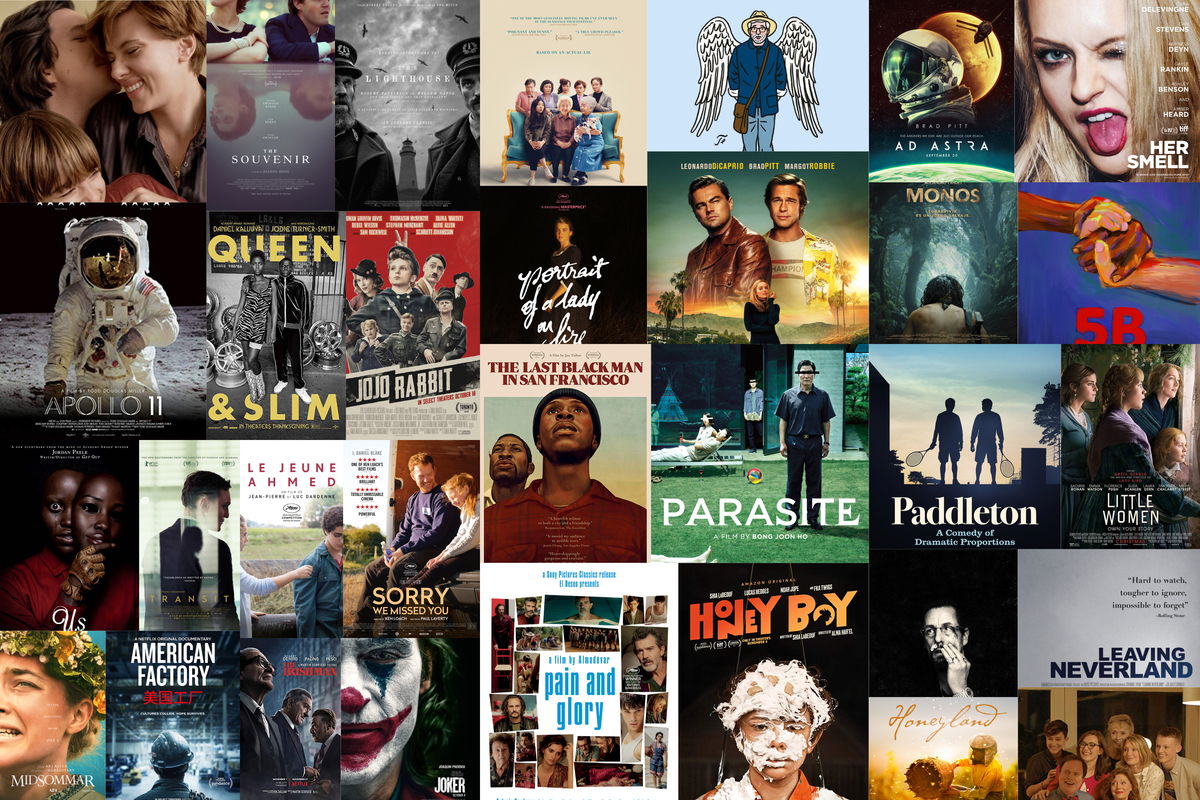
The year 2019 represents a historic high-water mark for global cinema, defined by unprecedented theatrical box office records, streaming platform disruption, and groundbreaking awards achievements. From the cinematic climax of Marvel’s Infinity Saga to Bong Joon-ho’s historic Best Picture win for Parasite, 2019 reshaped how movies are produced, distributed, and celebrated worldwide.
Box Office Megahits and Disney's Unprecedented Dominance
The commercial landscape of 2019 films was dominated by theatrical blockbusters on a scale never before seen in film history. The global theatrical box office reached an all-time record high of $42.5 billion, propelled largely by an unprecedented sequence of franchise releases from The Walt Disney Company. Disney became the first studio in history to gross over $10 billion globally in a single calendar year, producing seven individual releases that crossed the $1 billion milestone.
At the epicenter of this commercial wave was Marvel Studios’ Avengers: Endgame. Reaching theaters in April 2019, the film served as the narrative culmination of a 22-movie story arc within the Marvel Cinematic Universe (MCU). It shattered opening weekend records globally and briefly surpassed Avatar (2009) as the highest-grossing film of all time, accumulating over $2.79 billion worldwide during its initial theatrical run. The film demonstrated the commercial potency of long-term serial storytelling in feature-length cinema.
Beyond superhero narratives, 2019 saw major success across animated features and photorealistic digital remakes:
- Photorealistic and Animated Hits: The Lion King (2019), directed by Jon Favreau, utilized cutting-edge virtual production and photorealistic computer animation to earn over $1.66 billion globally. Concurrently, Pixar’s Toy Story 4 ($1.07 billion) and Walt Disney Animation Studios’ Frozen II ($1.45 billion) demonstrated the lingering commercial strength of established family intellectual property.
- Marvel Expansion: Captain Marvel ($1.13 billion) and the Sony Pictures/Marvel Studios co-production Spider-Man: Far From Home ($1.13 billion) confirmed that audience demand for interconnected superhero narratives remained at an all-time high.
- Star Wars Conclusion: Star Wars: Episode IX – The Rise of Skywalker closed out the nine-film Skywalker Saga, generating over $1.07 billion worldwide despite polarized critical reactions.
- The R-Rated Phenomenon: Warner Bros.’ Joker, directed by Todd Phillips and starring Joaquin Phoenix, rewrote theatrical expectations for adult-oriented media. Produced on a modest $55–$70 million budget, the dark character study earned over $1.07 billion worldwide, becoming the first R-rated feature in history to break the billion-dollar barrier.
The Historic Breakthrough of Parasite and Global Cinema Shifts
While blockbusters commanded financial headlines, 2019 stood as a watershed year for international film recognition within Western awards institutions. The defining critical narrative of the year was the global rise of Parasite (Gisaengchung), directed by South Korean filmmaker Bong Joon-ho.
After winning the prestigious Palme d'Or at the 2019 Cannes Film Festival by a unanimous jury vote, Parasite embarked on a global theatrical campaign that bridged commercial accessibility with sharp social satire. The film explores theme-driven economic stratification through the dynamic between the impoverished Kim family and the wealthy Park family.
At the 92nd Academy Awards, held in February 2020 to honor 2019 releases, Parasite made history by becoming the first non-English language film to win Best Picture in the 92-year history of the Oscars. It also secured awards for Best Director, Best Original Screenplay, and Best International Feature Film.
The success of Parasite accelerated several structural shifts within the film industry:
- Subtitled Content Acceptance: It proved that non-English language cinema possessed non-specialized, mainstream commercial appeal in Western markets, grossing over $260 million worldwide.
- Academy Diversity Realignment: It highlighted the changing voting demographics of the Academy of Motion Picture Arts and Sciences (AMPAS), which had expanded its international membership to better reflect global filmmaking talent.
- Global Co-Production Momentum: It catalyzed increased investment by North American distribution platforms into Asian, European, and Latin American auteur cinema.
Prestige Auteur Cinema: Originals, Adaptations, and Streaming Contenders
Beyond studio blockbusters, 2019 delivered an unusually rich slate of original, director-driven feature films that garnered widespread critical acclaim and enduring cultural impact. Filmmakers operating within both traditional studio pipelines and rising streaming platforms delivered career-defining work.
Quentin Tarantino’s Once Upon a Time in Hollywood
Quentin Tarantino’s ninth feature film served as a nostalgic yet melancholic tribute to 1969 Los Angeles and the fading golden era of studio filmmaking. Starring Leonardo DiCaprio as aging television actor Rick Dalton and Brad Pitt as stuntman Cliff Booth (a performance that earned Pitt the Academy Award for Best Supporting Actor), the film combined historical revisionism with immersive atmospheric storytelling, earning $377 million worldwide alongside ten Academy Award nominations.
Sam Mendes’ 1917
Technical innovation reached new heights with Sam Mendes’ World War I epic 1917. Filmed by cinematographer Roger Deakins to appear as two continuous, unbroken long takes, the narrative follows two British soldiers tasked with delivering a vital warning across hostile territory. The film captured major industry awards, winning Golden Globes for Best Motion Picture – Drama and Best Director, alongside Academy Awards for Best Cinematography, Best Visual Effects, and Best Sound Mixing.
Mid-Budget Adult Dramas and Comedies
The year proved that original mid-budget features could still thrive commercially when supported by strong word-of-mouth:
- Knives Out: Directed by Rian Johnson, this modern whodunit murder mystery grossed over $312 million against a $40 million budget, reviving popular interest in ensemble detective cinema and establishing a multi-film franchise.
- Little Women: Greta Gerwig’s non-linear adaptation of Louisa May Alcott’s classic novel earned over $218 million globally and scored six Academy Award nominations, establishing Gerwig as one of modern cinema's premier auteur directors.
- Ford v Ferrari: Directed by James Mangold, this racing drama starring Matt Damon and Christian Bale highlighted technical precision and character dynamics, earning major technical Oscar victories.
- Uncut Gems: Directed by Josh and Benny Safdie, this high-stress thriller featured a career-defining dramatic performance by Adam Sandler as a Manhattan diamond district jeweler.
Major 2019 Films Comparison Matrix
The table below summarizes key data points across major 2019 films, contrasting commercial performance, primary genre classifications, and major awards recognition.
| Film Title | Director | Primary Genre | Global Box Office (USD) | Primary Oscar / Industry Accolades |
|---|---|---|---|---|
| Avengers: Endgame | Anthony & Joe Russo | Superhero / Sci-Fi | $2.798 Billion | Oscar Nomination: Best Visual Effects |
| The Lion King | Jon Favreau | Photorealistic Animation | $1.663 Billion | Oscar Nomination: Best Visual Effects |
| Frozen II | Chris Buck & Jennifer Lee | Musical / Animation | $1.453 Billion | Oscar Nomination: Best Original Song |
| Joker | Todd Phillips | Psychological Drama | $1.074 Billion | Academy Awards: Best Actor, Best Original Score |
| Parasite | Bong Joon-ho | Dark Comedy / Thriller | $263 Million | Academy Awards: Best Picture, Director, Screenplay, Int'l Feature |
| Once Upon a Time in Hollywood | Quentin Tarantino | Comedy-Drama | $377 Million | Academy Awards: Best Supporting Actor, Production Design |
| 1917 | Sam Mendes | War / Drama | $384 Million | Academy Awards: Best Cinematography, Visual Effects, Sound Mixing |
| The Irishman | Martin Scorsese | Crime Epic | Streaming (Limited Theatrical) | 10 Academy Award Nominations |
| Knives Out | Rian Johnson | Mystery / Whodunit | $312 Million | Oscar Nomination: Best Original Screenplay |
| Little Women | Greta Gerwig | Period Drama | $218 Million | Academy Award: Best Costume Design |
The Streaming Transition: How 2019 Redefined Distribution
The year 2019 served as the pivotal transition period for subscription video-on-demand (SVOD) platforms, forever altering the balance of power between traditional theatrical exhibition and home streaming services.
Netflix’s Prestige Strategy
Netflix invested unprecedented capital into top-tier auteur cinema during 2019, securing theatrical qualification runs for films directed by cinema icons:
- The Irishman: Martin Scorsese’s 209-minute mob epic utilized expensive digital de-aging technology to tell the decades-spanning story of Frank Sheeran (Robert De Niro). The film received 10 Academy Award nominations and achieved massive viewership numbers upon streaming release.
- Marriage Story: Noah Baumbach’s intimate examination of divorce, starring Scarlett Johansson and Adam Driver, earned six Oscar nominations, with Laura Dern winning Best Supporting Actress.
- The Two Popes: Directed by Fernando Meirelles, the film earned three Oscar nominations for its lead and supporting performances by Jonathan Pryce and Anthony Hopkins.
Launch of the "Streaming Wars"
Late 2019 marked the formal commencement of the modern streaming ecosystem:
- Apple TV+ (November 1, 2019): Launched with original feature films such as Hala and The Elephant Queen, establishing Apple's commitment to high-budget original content.
- Disney+ (November 12, 2019): Launched in North America, immediately consolidating Disney, Pixar, Marvel, Star Wars, and National Geographic content under a single consumer platform. This shift dramatically altered studio strategy, prioritizing direct-to-consumer digital infrastructure alongside traditional theatrical releases.
This inflection point created ongoing industry tension regarding windowing—the duration of exclusivity that traditional movie theaters hold before a film becomes available on digital platforms.
Long-Term Legacy: Why 2019 Was the Peak Pre-Pandemic Cinematic Era
Retrospectively, 2019 stands out as the operational peak of the conventional 2010s film industry model. It was the final full year before the global COVID-19 pandemic disrupted theatrical exhibition in early 2020, forcing temporary theater closures, delayed production schedules, and accelerated theatrical window compression.
Several factors define the historical legacy of 2019 films:
- The Height of Theatrical Attendance: 2019 remains a benchmark year for global attendance metrics. The convergence of multi-year franchise finales (Avengers: Endgame, Star Wars: Episode IX) generated a concentrated level of synchronized global viewing that has proven difficult to replicate in subsequent years.
- Structural Validation of Subtitled Media: Parasite permanently altered North American audience engagement with non-English cinema and television, paving the way for international projects to compete directly in mainstream award categories and top-tier box office charts.
- Hybrid Exhibition Norms: The competition between Netflix and theater chains in late 2019 established the precedent for shorter theatrical windows, shifting the standard from 90 days down to 30–45 days across major legacy studios in the years that followed.
Frequently Asked Questions
Which film was the highest-grossing movie released in 2019?
Avengers: Endgame was the highest-grossing film released in 2019, earning over $2.798 billion at the global box office. It briefly became the highest-grossing film of all time before subsequent theatrical re-releases of Avatar reclaimed the top position.
What movie won Best Picture at the Academy Awards for 2019?
Parasite, directed by Bong Joon-ho, won the Academy Award for Best Picture at the 92nd Academy Awards in February 2020. It made history as the first non-English language film to win the Oscar's top honor.
How many Disney movies passed $1 billion in box office revenue in 2019?
Disney achieved a record seven $1 billion films released in 2019: Avengers: Endgame, The Lion King, Frozen II, Captain Marvel, Toy Story 4, Aladdin, and Star Wars: Episode IX - The Rise of Skywalker. Additionally, Spider-Man: Far From Home, co-produced by Marvel Studios and released by Sony Pictures, also crossed $1 billion.
Why was Joker considered a significant box office milestone in 2019?
Joker became the first R-rated film in cinematic history to gross over $1 billion globally. Produced by Warner Bros. on a relatively modest budget of approximately $55–$70 million, it demonstrated that dark, character-driven adult dramas could achieve blockbuster commercial success without relying on traditional superhero action conventions.
Which streaming services launched in late 2019?
Apple TV+ launched on November 1, 2019, followed by Disney+ on November 12, 2019. These launches marked the official beginning of the modern subscription streaming platform era, reallocating major studio resources toward direct-to-consumer digital distribution.
How to Explore and Stream the 2019 Film Catalog Today
To fully appreciate the scope of 2019 films, viewers can easily curate a comprehensive viewing plan across modern streaming platforms. Most major releases from that benchmark year are permanently anchored on specific subscription services based on studio ownership:
- Disney+: Serves as the home for Marvel Studios' Avengers: Endgame and Captain Marvel, animated features Frozen II and Toy Story 4, live-action remakes The Lion King and Aladdin, and Star Wars: The Rise of Skywalker.
- Hulu / Max: Frequently host major Warner Bros. titles like Joker, searchlight features such as Jojo Rabbit, and acclaimed independent releases.
- Netflix: Retains exclusive global rights to its 2019 prestige originals, including Martin Scorsese’s The Irishman, Noah Baumbach’s Marriage Story, and Fernando Meirelles’ The Two Popes.
- Digital Video-on-Demand (VOD): Independent masterworks such as Parasite, Knives Out, 1917, Once Upon a Time in Hollywood, and Little Women remain widely available for digital purchase and rental across platforms such as Apple TV, Amazon Prime Video, and Fandango at Home.
Checking real-time regional streaming availability via databases like JustWatch or Reelgood will ensure quick access to specific titles within your area.