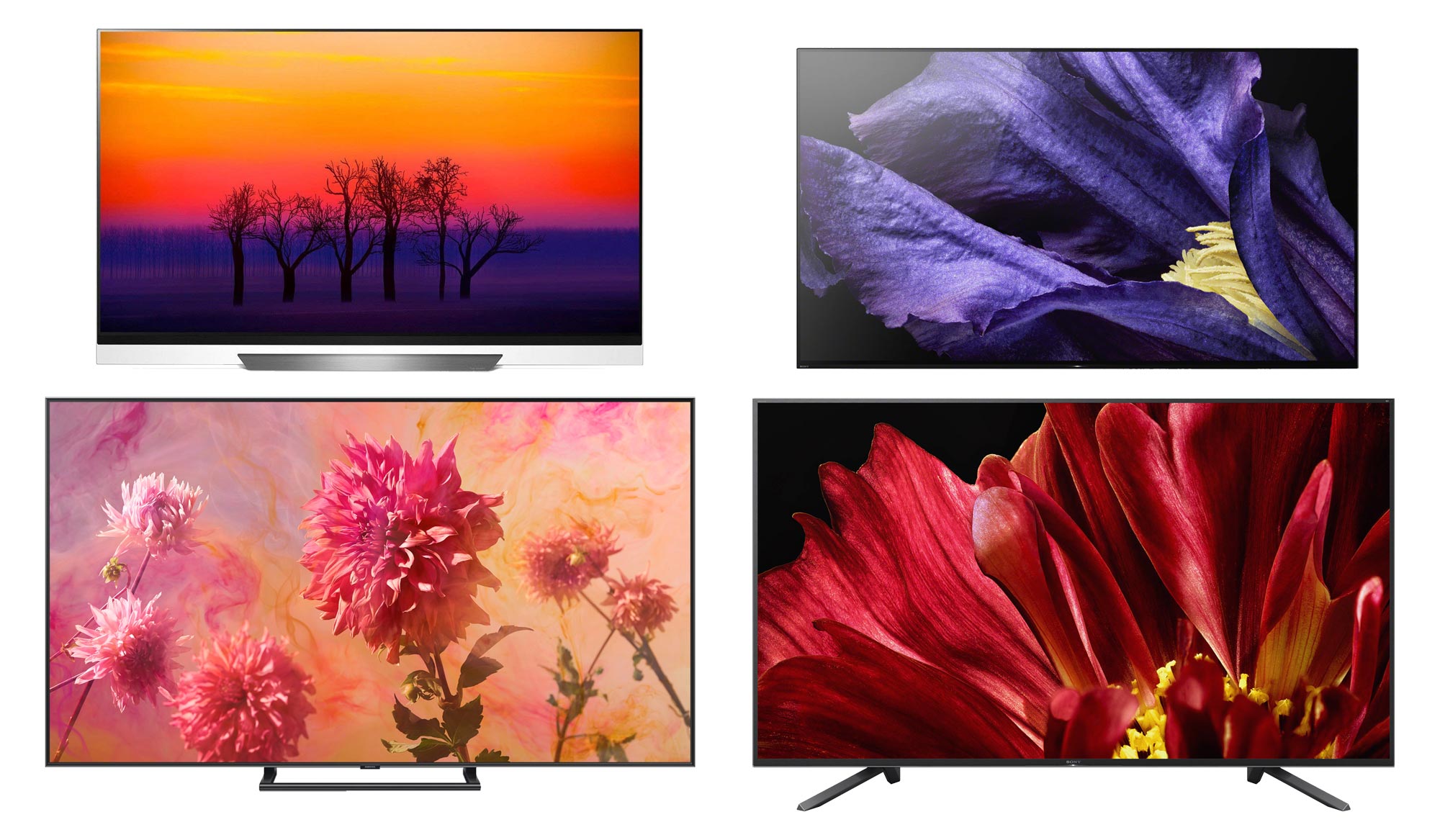
The 2018 television market marked a pivotal era where 4K Ultra HD and High Dynamic Range (HDR) transitioned from luxury novelties to mature, essential standards. This year saw the intense culmination of the OLED versus QLED rivalry, the refinement of smart TV operating systems, and the introduction of full-array local dimming (FALD) in mid-range sets. For users in 2026, 2018-era televisions represent a significant secondary market, offering high-quality panels that remain capable for streaming and casual gaming, despite lacking modern HDMI 2.1 features.
The Technological Landscape of 2018
In 2018, the television industry focused on maximizing the "HDR experience." While 4K resolution (3840 x 2160) was already the baseline for most mid-to-high-end sets, the real competition shifted toward peak brightness, color volume, and black-level precision. This was the year that the industry settled into two distinct camps: self-emissive displays (OLED) and enhanced liquid crystal displays (LCDs with Quantum Dots).
The Rise of Mature OLED Panels
By 2018, LG Display had refined its White-OLED (WOLED) manufacturing process significantly. The 2018 models, such as the LG C8, benefitted from the new Alpha 9 processor, which improved noise reduction and motion handling. OLED's primary advantage remained its "infinite" contrast ratio—the ability to turn off individual pixels completely—resulting in perfect black levels. This made 2018 OLEDs the gold standard for home theater enthusiasts, particularly for watching movies in dark rooms.
Samsung’s QLED and the FALD Revolution
Samsung countered the OLED threat by rebranding its high-end LED-LCDs as QLED. In 2018, the flagship Q9FN introduced a sophisticated Full-Array Local Dimming (FALD) system with nearly 500 zones. This allowed the TV to achieve peak brightness levels exceeding 1,500 nits, far outperforming OLED in bright living rooms. This "brightness war" pushed HDR content to new heights, forcing creators to master films for high-luminance displays.
HDR Formats: The Great Split
2018 was also characterized by a format war between dynamic metadata standards. While every 4K TV supported the base HDR10 and HLG (Hybrid Log-Gamma) formats, manufacturers chose sides on the premium end. Sony and LG championed Dolby Vision, while Samsung and Panasonic pushed HDR10+. This fragmentation meant consumers had to choose a television based on the streaming services or physical media they frequented most.
Defining Models of the 2018 Generation
Several models from 2018 are still discussed today due to their longevity and performance benchmarks. Understanding these specific units is crucial for anyone evaluating the legacy of 2018 television technology.
LG C8 and B8 OLED
The LG C8 was widely considered the best all-around TV of the year. It balanced price and performance, offering the Alpha 9 processor and a sleek "Alpine" stand designed to funnel sound toward the viewer. The B8 served as the entry-level OLED, utilizing the older Alpha 7 processor but maintaining the same stellar panel quality. Even in 2026, these sets are prized for their 120Hz refresh rates and low input lag, though they are susceptible to cumulative burn-in.
Samsung Q9FN and Q8FN
The Q9FN was Samsung's most serious attempt to dethrone OLED. It featured the "One Invisible Connection," a single fiber-optic cable that carried both power and data to the screen from a separate "One Connect" box. The Q8FN offered a similar QLED experience but with fewer dimming zones and a more traditional design. These models remain popular in 2026 for their durability and immunity to permanent image retention.
Sony X900F (XF90)
Sony’s X900F was the "darling" of the mid-high range. While it didn't have as many dimming zones as the Samsung flagships, Sony's X-Motion Clarity technology provided arguably the best motion handling in the industry. It became the go-to recommendation for sports fans and those who preferred Sony’s "X1 Extreme" naturalistic image processing over the more aggressive saturation of competitors.
TCL 6-Series (R617/R615)
2018 was a breakout year for TCL. The 6-Series brought FALD and high brightness to a sub-$1,000 price point, fundamentally changing the value segment of the market. It proved that consumers didn't need to spend thousands to get a legitimate HDR experience, though it suffered from "panel lottery" issues regarding gray uniformity.
| Model | Panel Type | Peak Brightness (Approx) | Dimming Type | Primary Smart OS |
|---|---|---|---|---|
| LG C8 | OLED | 750-800 nits | Per-pixel | webOS 4.0 |
| Samsung Q9FN | QLED (VA) | 1,500+ nits | FALD (480 zones) | Tizen |
| Sony X900F | LED-LCD (VA) | 1,000 nits | FALD (approx. 48) | Android TV 7.0 |
| TCL 6-Series | QLED-LCD (VA) | 900-1,000 nits | FALD (72-120 zones) | Roku TV |
| Vizio P-Series Quantum | QLED-LCD (VA) | 2,000 nits | FALD (192 zones) | SmartCast |
Smart TV Platforms and Connectivity
The 2018 era saw smart platforms maturing into the cohesive ecosystems we recognize today. This was the year voice assistants—specifically Amazon Alexa and Google Assistant—became deeply integrated into the TV experience.
Operating System Performance
- webOS (LG): Known for its "magic remote" with a floating cursor, webOS 4.0 was fast and intuitive. In 2026, however, many 2018 LG TVs have stopped receiving major OS updates, requiring external streaming sticks to access the newest apps.
- Tizen (Samsung): Samsung’s minimalist "Smart Hub" bar at the bottom of the screen was praised for not interrupting content.
- Android TV (Sony/Hisense): In 2018, Android TV was often criticized for being sluggish. While Sony improved stability with the X900F, it still lagged behind the fluidity of Roku or webOS.
- Roku TV (TCL/Hisense): Roku was the king of simplicity, offering the widest app support and a very stable user interface that has aged remarkably well.
The HDMI 2.0 Ceiling
Technically, 2018 was the final year before the widespread adoption of HDMI 2.1. Almost all 2018 TVs are limited to HDMI 2.0b. This means they support 4K at 60Hz, but they cannot natively handle 4K at 120Hz with HDR, a standard feature for the PlayStation 5 and Xbox Series X. Furthermore, features like Variable Refresh Rate (VRR) and Auto Low Latency Mode (ALLM) were extremely rare, with Samsung being the only major brand to offer a primitive version of VRR on its high-end 2018 sets.
Longevity and Maintenance in 2026
As of 2026, 2018 televisions are entering their eighth year of service. At this stage of their lifecycle, specific hardware concerns become prominent for owners and second-hand buyers.
OLED Degradation (Burn-in)
The 2018 OLED panels were more resilient than the 2016-2017 generations, but they are not immune to burn-in. After 8 years of use, sets used for news channels with static banners or intensive gaming may show permanent ghost images. Furthermore, "sub-pixel wear" can cause a slight shift in color accuracy over time, particularly in the red spectrum.
LED Backlight Failures
For LCD-based sets (QLED and traditional LED), the primary failure point is the LED backlight strips. In FALD sets, specific zones may become stuck "on" or "off," leading to bright spots or dark patches on the screen. The diffusion layers can also degrade, causing a blueish tint to appear across the display—a common issue in older budget panels.
Power Supply and Capacitors
Like all aging electronics, the power supply units (PSUs) in these televisions can suffer from capacitor aging. If a 2018 TV takes several attempts to turn on or makes a clicking sound, it is often a sign that the PSU requires repair. Fortunately, many of these parts are still available in the secondary repair market in 2026.
Comparison: 2018 vs. Modern 2026 Standards
While a flagship 2018 TV still looks excellent, the industry has moved forward in several key areas. Understanding these gaps helps determine if a 2018 set is still viable for a specific use case.
- Gaming: Modern TVs offer 4K/144Hz support and G-Sync/FreeSync compatibility. A 2018 TV will cap a modern console's performance, though it remains perfect for Nintendo Switch or 60fps cinematic gaming.
- Processing: 2026 processors use advanced AI upscaling to make 1080p content look nearly native 4K. 2018 processors, while good, can struggle with "banding" in low-bitrate streaming content.
- Brightness: While the Q9FN was a beast in 2018, modern Mini-LED TVs in 2026 can regularly hit 3,000+ nits, offering a much more impactful HDR experience in daylight.
- E-ARC Support: Most 2018 TVs only support standard ARC (Audio Return Channel). This limits the ability to pass uncompressed Dolby Atmos audio from the TV to a soundbar or receiver, a major hurdle for modern home theater setups.
FAQ
Can I still use Netflix and Disney+ on a 2018 TV?
Most 2018 sets from LG, Samsung, and Sony still support major streaming apps, but the interfaces may feel slow. As of 2026, many manufacturers have ceased firmware updates for these models. To ensure the best security and app compatibility, it is recommended to pair the TV with a modern external streaming device like an Apple TV 4K or a Chromecast.
Is a 2018 OLED better than a 2026 budget LED TV?
Generally, yes. A 2018 flagship OLED like the LG C8 will still provide superior contrast and black levels compared to a modern entry-level LED TV. The OLED's ability to control light at the pixel level creates a "depth" that budget LCDs cannot replicate, provided the OLED panel hasn't suffered significant burn-in.
Does 2018 television hardware support HDMI 2.1?
No. HDMI 2.1 did not become standard until 2019/2020. 2018 televisions use HDMI 2.0, which limits their bandwidth to 18Gbps. This prevents features like 4K/120Hz gaming and full uncompressed 10-bit HDR at high refresh rates.
How do I check for burn-in on a second-hand 2018 TV?
The best way is to display full-screen solid colors (red, green, and gray) using a YouTube test pattern. Look for any "shadows" or unevenness, especially in the bottom third of the screen where news tickers or HUDs usually appear. If the red screen looks mottled or has a distinct box in the center, the panel is degraded.
Strategic Considerations for 2018 Hardware in 2026
If you are maintaining a 2018 television or considering purchasing one used in 2026, the priority should be extending the component life. For OLED owners, keeping the "OLED Light" setting below 70 for SDR content can significantly slow down panel aging. For LCD owners, ensuring the TV has proper ventilation can prevent the backlight LEDs from overheating and failing prematurely.
From a performance standpoint, the most effective upgrade for a 2018 TV is a modern HDMI-based streaming player. This bypasses the aging internal processor and outdated software, giving the high-quality 2018 panel a new lease on life with a fast, modern interface. While these TVs are no longer the pinnacle of technology, their foundational display quality remains high enough that they can still serve as excellent displays for guest rooms, offices, or dedicated movie dens.