The 2018 MLB postseason remains one of the most statistically dominant displays in professional baseball history, culminating in the Boston Red Sox capturing their ninth World Series title. By defeating the Los Angeles Dodgers four games to one, Boston validated a 108-win regular season, utilizing aggressive bullpen management and a deep roster to navigate a high-velocity, strikeout-heavy playoff landscape.
Historical Context: A Collision of Titans
As we evaluate the 2018 postseason from the perspective of 2026, it stands as a pivotal moment where the "analytics revolution" met traditional roster depth. The field was crowded with elite talent; for the first time in history, three teams in the same league (the American League) won at least 100 games: the Boston Red Sox (108), the Houston Astros (103), and the New York Yankees (100). This created an unprecedented gauntlet in the American League bracket, where every series felt like a potential World Series matchup.
In the National League, the narrative was driven by the rise of the "bullpenning" era. The Milwaukee Brewers, led by manager Craig Counsell, pushed the boundaries of pitcher usage, often removing starters after just one or two innings to exploit favorable matchups with high-leverage relievers like Josh Hader and Corey Knebel. Meanwhile, the Los Angeles Dodgers were making their second consecutive World Series appearance, seeking redemption after their 2017 loss and leaning on the mid-season acquisition of Manny Machado to bolster their offensive production.
The 2018 postseason was also the year that "Effective Velocity" and "High Spin Rate" became household terms for analysts. Pitchers were no longer just throwing hard; they were tunneling pitches with extreme precision, leading to a postseason that saw record-breaking strikeout totals and a heavy reliance on the home run for scoring.
The Early Rounds: Wild Card and Division Series Dynamics
The 2018 postseason began with high-stakes Wild Card games that set the tone for the ensuing weeks. In the National League, the Colorado Rockies defeated the Chicago Cubs in a 13-inning marathon at Wrigley Field. This game highlighted the offensive struggles that would plague several teams throughout the tournament, as elite pitching dominated the narrative. In the American League, the New York Yankees utilized their "super-bullpen" to shut down the Oakland Athletics, setting up a highly anticipated ALDS matchup against their rivals, the Boston Red Sox.
The ALDS: Red Sox vs. Yankees and Astros vs. Indians
The Red Sox vs. Yankees series was the first time these two storied franchises met in the postseason since 2004. Boston took the series 3-1, punctuated by Brock Holt hitting for the first-ever postseason cycle in Game 3—a 16-1 blowout at Yankee Stadium. This series proved that the Red Sox’s aggressive baserunning and situational hitting could dismantle even the most expensive pitching staffs.
Simultaneously, the defending champion Houston Astros swept the Cleveland Indians. The Astros displayed the efficiency that had become their trademark, outscoring Cleveland 21-6 over three games. This set the stage for an ALCS showdown between the two best teams in baseball: Boston and Houston.
The NLDS: Dodgers and Brewers Advance
In the National League, the Dodgers made quick work of the Atlanta Braves, winning 3-1. The Braves, then a young team on the rise (featuring a rookie Ronald Acuña Jr.), were simply outmatched by the Dodgers' veteran rotation. The Milwaukee Brewers swept the Colorado Rockies, showcasing a dominant relief core that allowed only two runs over the entire three-game series.
The League Championship Series: Tactical Masterclasses
The 2018 League Championship Series (LCS) provided two starkly different styles of baseball. The ALCS was a battle of offensive heavyweights, while the NLCS turned into a seven-game strategic chess match.
ALCS: Boston Red Sox vs. Houston Astros
Despite losing Game 1 at home, the Red Sox rattled off four straight wins against the defending champions. This series was defined by Jackie Bradley Jr., who won the ALCS MVP not for his batting average, but for his timely power. He recorded nine RBIs in the series, including a grand slam in Game 3 and a three-run double in Game 2.
A critical turning point occurred in Game 4, involving a controversial fan interference call on an Jose Altuve fly ball that was ruled an out. However, the definitive image of the series was Andrew Benintendi’s diving catch in left field with the bases loaded in the bottom of the ninth to save Game 4. According to MLB Statcast data, the catch had only a 21% catch probability, making it one of the most difficult and consequential defensive plays in postseason history.
NLCS: Milwaukee Brewers vs. Los Angeles Dodgers
This series went the full seven games and featured the peak of "The Opener" strategy. Craig Counsell famously started Wade Miley in Game 5, only to pull him after facing just one batter to force the Dodgers into making lineup substitutions. The Dodgers eventually prevailed in Game 7 behind a spectacular home run by Cody Bellinger and the steady relief pitching of Clayton Kershaw, who closed out the final inning to secure the pennant.
The World Series: An 18-Inning Marathon and Boston’s Triumph
The 2018 World Series pitted the 108-win Red Sox against the battle-tested Dodgers. While the series ended 4-1 in favor of Boston, the games were closer and more physically taxing than the final tally suggests.
The Marathon: Game 3
Game 3 of the 2018 World Series is etched in the record books as the longest game in World Series history by both time (7 hours, 20 minutes) and innings (18). The hero for the Dodgers was Max Muncy, who hit a walk-off home run to end the game. However, the most respected performance came from Boston’s Nathan Eovaldi. Entering the game in the 12th inning as a reliever, Eovaldi threw six innings of spectacular ball, allowing only the final home run on his 97th pitch of the night. His effort saved the rest of the Red Sox bullpen and became a rallying cry for the team in Games 4 and 5.
The Turning Point: Game 4
Trailing 4-0 in the 7th inning of Game 4, the Red Sox appeared to be headed toward a 2-2 series tie. However, a pinch-hit three-run home run by Mitch Moreland and a late-inning surge led by Steve Pearce shifted the momentum entirely. Boston scored nine runs in the final three innings to win 9-6. This game broke the spirit of the Dodgers' bullpen and set the stage for the clincher.
The Clincher: Game 5
David Price, long dogged by a reputation for struggling in the postseason, delivered a masterpiece in Game 5. He pitched seven innings of one-run ball, outdueling Clayton Kershaw. Steve Pearce, who had been acquired mid-season from Toronto, hit two home runs in the finale, securing the World Series MVP trophy. Pearce finished the series with three home runs and eight RBIs in just twelve at-bats.
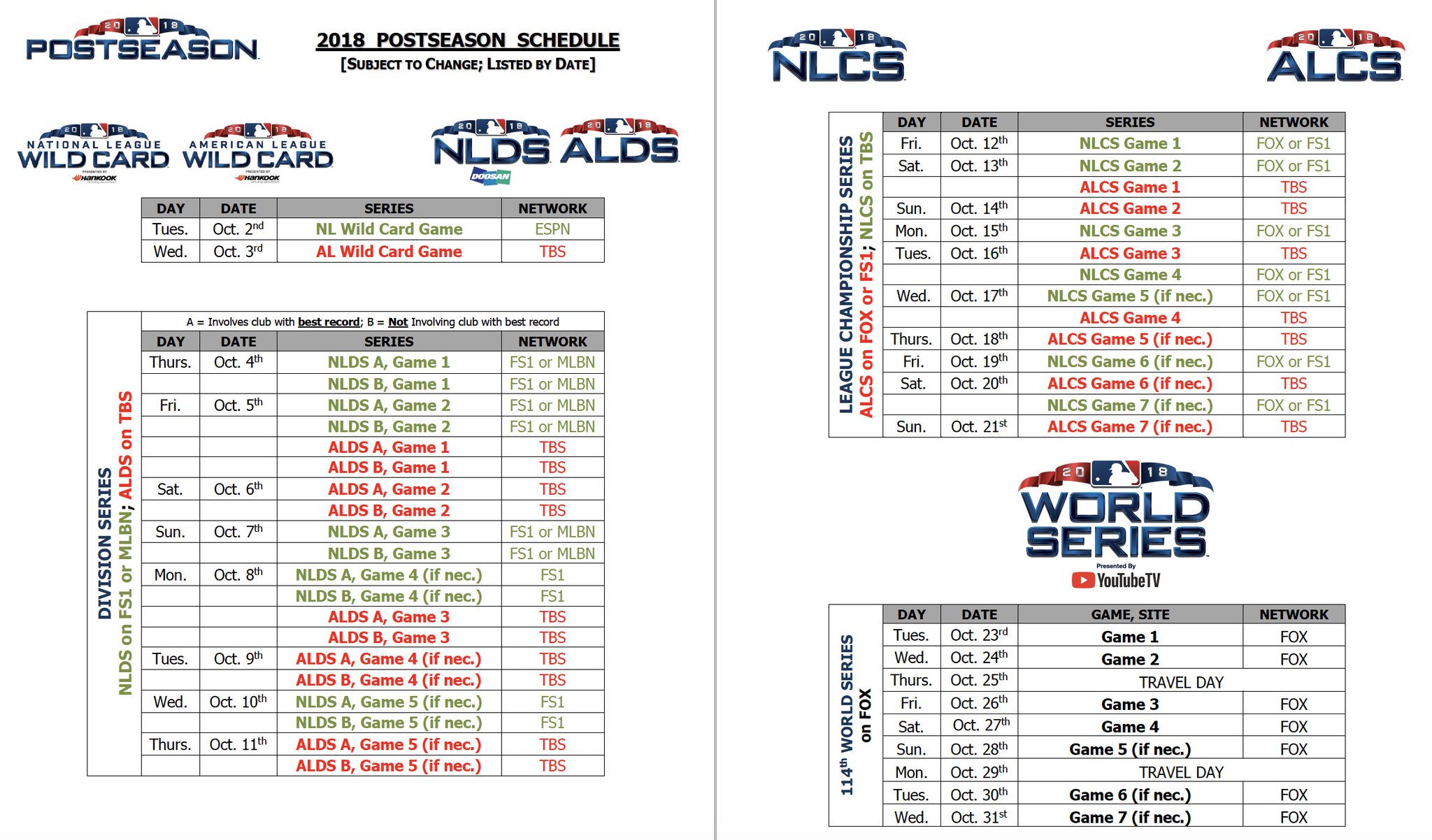
| 2018 Postseason Series | Winner | Result | Notable MVP/Performer |
|---|---|---|---|
| AL Wild Card | NY Yankees | 1-0 | Luis Severino (4.0 IP, 0 ER) |
| NL Wild Card | CO Rockies | 1-0 | Kyle Freeland (6.2 IP, 0 ER) |
| ALDS | BOS Red Sox | 3-1 | Brock Holt (Postseason Cycle) |
| ALDS | HOU Astros | 3-0 | George Springer (3 HR) |
| NLDS | LA Dodgers | 3-1 | Max Muncy (2 HR, 5 BB) |
| NLDS | MIL Brewers | 3-0 | Mike Moustakas (Walk-off Hit G1) |
| ALCS | BOS Red Sox | 4-1 | Jackie Bradley Jr. (ALCS MVP) |
| NLCS | LA Dodgers | 4-3 | Cody Bellinger (NLCS MVP) |
| World Series | BOS Red Sox | 4-1 | Steve Pearce (WS MVP) |
Tactical Evolution: The Rise of the Multi-Inning Reliever
The 2018 postseason marked a definitive shift in how managers viewed their pitching staffs. Traditionally, starters were expected to provide six or seven innings of work. In 2018, the Red Sox and Brewers, in particular, pioneered the use of "high-leverage" starters coming out of the bullpen on their off-days.
The Red Sox used Chris Sale and Nathan Eovaldi in relief roles frequently, a tactic that would become more common in subsequent years. Manager Alex Cora prioritized "outs that matter" over traditional roles. This era saw the decline of the "closer" as a fixed ninth-inning entity, moving toward a "fireman" model where the best reliever was used whenever the highest-leverage situation occurred, regardless of the inning.
According to Baseball-Reference, the average length of a starting pitcher's outing in the 2018 World Series was significantly shorter than the historical average, as managers were quicker to move to the bullpen to avoid the "third time through the order" penalty. This trend, while effective for winning, contributed to longer game times—a factor that eventually led to the 2023 rule changes regarding pitch clocks.
Frequently Asked Questions
Who won the World Series MVP in 2018?
Steve Pearce was named the 2018 World Series MVP. He became only the second player in MLB history to be acquired mid-season and go on to win the award. Pearce hit .333 during the series with three home runs, including two in the clinching Game 5, and eight runs batted in.
How long was the longest game in the 2018 postseason?
Game 3 of the 2018 World Series between the Red Sox and Dodgers lasted 18 innings and took 7 hours and 20 minutes to complete. It remains the longest game in World Series history. It ended with a walk-off home run by Max Muncy off Nathan Eovaldi.
Did the 2018 Red Sox face any investigations?
Yes, following the 2017 Houston Astros sign-stealing scandal, MLB investigated the 2018 Red Sox. In 2020, the league concluded that the team’s video replay room operator had used game feeds to decode sign sequences during the regular season, though the league found the conduct was more limited in scope than the Astros' system and did not find evidence it continued into the 2018 postseason.
Which pitcher threw the most innings in the 2018 postseason?
David Price led all pitchers in innings pitched during the 2018 postseason with 26.0 innings across six appearances (five starts). His performance was instrumental in the Red Sox’s championship run, particularly his wins in the clinching games of the ALCS and the World Series.
What was the significance of the "Opener" in 2018?
The 2018 postseason saw the first major use of the "Opener" strategy by the Milwaukee Brewers in the NLCS. Manager Craig Counsell started relievers or used starters for very short stints (like Wade Miley’s one-batter start) to manipulate the opposing team's lineup and ensure his best pitchers faced the heart of the order in the most critical moments.
Recommended Historical Review for Analysts
For those studying the evolution of modern baseball, the 2018 postseason serves as the ultimate case study in roster construction and the "all-in" mentality. The Red Sox’s aggressive trade deadline acquisitions (Steve Pearce and Nathan Eovaldi) were the direct difference-makers in October.
To gain a deeper understanding of the mechanics of this postseason, analysts should focus on the Win Probability Added (WPA) of the Boston bullpen during the ALCS. Reviewing the film of Game 4 of the ALCS and Game 3 of the World Series provides the best illustration of how high-velocity pitching began to dominate modern offensive strategies. As of 2026, the 2018 Red Sox are frequently cited in debates regarding the greatest single-season teams in history, alongside the 1927 Yankees and the 1998 Yankees.