The 2018 Grammy performances, held during the 60th Annual Grammy Awards on January 28, 2018, showcased a pivotal blend of high-concept artistry and urgent social activism. From Kendrick Lamar’s politically charged opening to Kesha’s emotional "Praying," the evening at Madison Square Garden remains one of the most culturally significant broadcasts in the Recording Academy's history.
The Historical Context of the 60th Annual Grammy Awards
The 2018 ceremony marked a significant departure from tradition, as the event returned to New York City for the first time in 15 years. Held at the iconic Madison Square Garden, the change in venue from Los Angeles provided a gritty, theatrical backdrop that influenced the staging and energy of the performances. In 2026, music historians often look back at 2018 as a "turning point" year where the Grammys attempted to reconcile its prestige with the burgeoning social movements of the time.
The cultural landscape of early 2018 was dominated by the #MeToo and Time’s Up movements. This environment heavily influenced the tone of the performances, with many artists wearing white roses to signify solidarity against sexual harassment and inequality. The 2018 Grammy performances were not merely about showcasing hits; they were platforms for advocacy, mourning, and a celebration of diversity in a year where hip-hop and R&B dominated the nominations for the first time in history.
Kendrick Lamar: An Explosive Opening Statement
The night began with what is widely considered one of the greatest opening performances in award show history. Kendrick Lamar delivered a medley of "XXX.", "DNA.", and "King's Dead," featuring interjections from comedian Dave Chappelle and a guest appearance by U2’s Bono and The Edge.
Lamar’s performance was a masterclass in theatrical production and political commentary. The stage was filled with dancers in red hoodies performing military-style choreography, creating a stark visual of systemic tension. Chappelle’s interruptions—notably his comment that "the only thing more frightening than watching a Black man be honest in America is being an honest Black man in America"—framed the performance as a piece of performance art rather than just a musical set. The use of a flickering American flag and the symbolic "shooting" of the dancers during "King's Dead" provided a visceral critique of American social dynamics that remains a point of study in 2026 musicology.
Kesha and the "Praying" Ensemble: A Moment of Solidarity
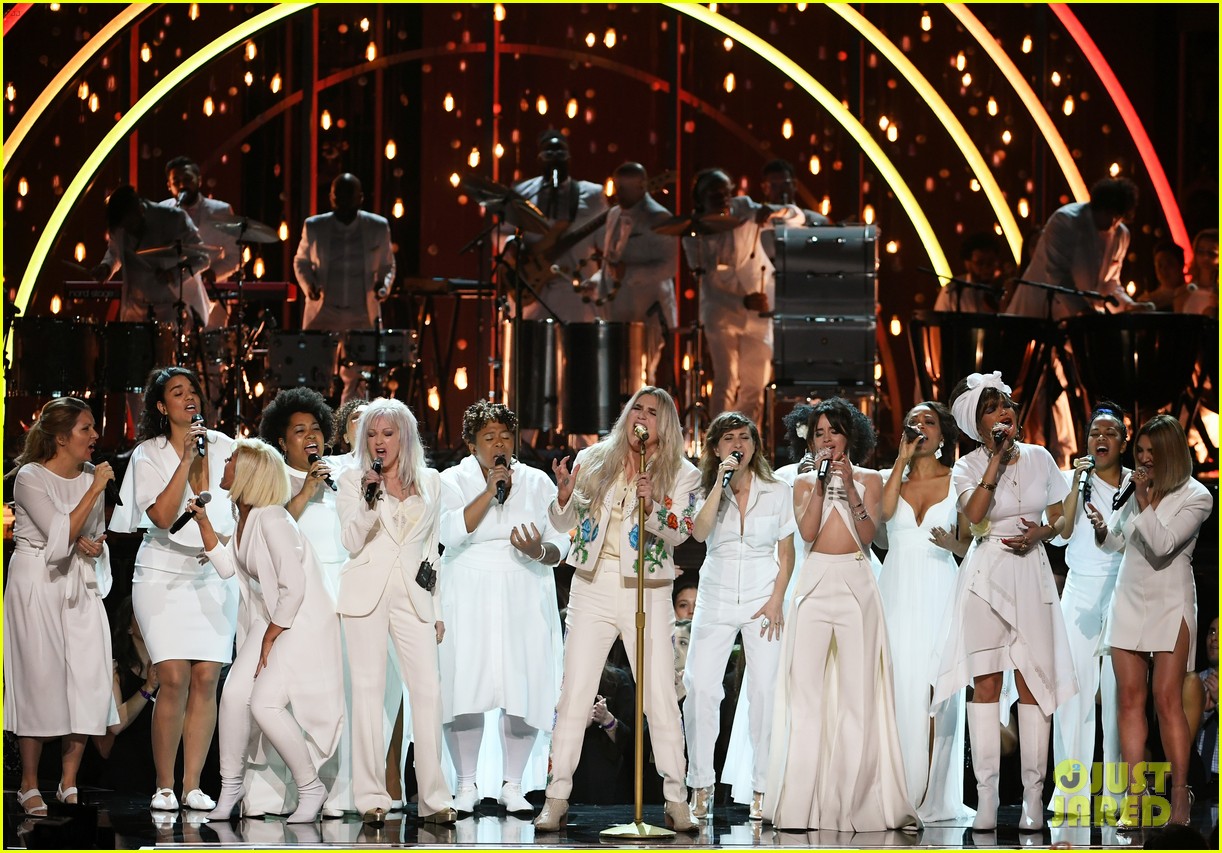
If Kendrick Lamar provided the night’s fire, Kesha provided its soul. Performing her hit "Praying," Kesha was joined by an powerhouse ensemble of female artists, including Cyndi Lauper, Camila Cabello, Andra Day, Julia Michaels, and Bebe Rexha, along with the Resistance Revival Chorus.
This performance was the emotional centerpiece of the 2018 Grammys. Dressed in all white, the collective of women stood behind Kesha as she delivered a raw, vocally demanding performance that addressed her personal and legal battles with former producer Dr. Luke. The performance transcended the song’s chart success, becoming a de facto anthem for the #MeToo movement within the music industry. The final embrace between the performers served as a rare, unscripted moment of genuine human connection on a stage usually defined by high-gloss artifice.
Bruno Mars and Cardi B: Retro Vibrancy and Technical Precision
In stark contrast to the heavy political themes of other segments, Bruno Mars and Cardi B delivered a high-energy, "New Jack Swing" inspired performance of "Finesse (Remix)." Drawing heavily from the aesthetic of the 1990s sketch comedy show In Living Color, the performance featured neon colors, intricate choreography, and a charismatic verse from Cardi B.
This performance was crucial for the 2018 broadcast as it balanced the night’s heavier themes with pure entertainment. Mars’ technical precision as a live performer was on full display, utilizing the Madison Square Garden floor for complex footwork that mimicked the music video’s 90s nostalgia. This set helped propel Mars toward his clean sweep of the night’s major categories, including Album, Record, and Song of the Year.
Social Advocacy Through Song: Logic, Alessia Cara, and Khalid
One of the most impactful 2018 Grammy performances focused on mental health awareness. Logic, Alessia Cara, and Khalid performed "1-800-273-8255," the song titled after the National Suicide Prevention Lifeline.
The staging included dozens of suicide loss survivors and attempt survivors standing on stage in white shirts that read "You Are Not Alone." Logic’s closing monologue, which addressed "immigrant countries" and the importance of equality, expanded the song’s message from individual mental health to broader societal well-being. According to the National Suicide Prevention Lifeline, calls to the service spiked significantly following the broadcast, demonstrating the measurable real-world impact of the 2018 Grammy performances.
Summary of Key 2018 Grammy Performances
The following table highlights the most discussed performances of the 60th Annual Grammy Awards, categorized by their primary artistic or social contribution.
| Artist(s) | Song(s) Performed | Key Theme | Notable Production Detail |
|---|---|---|---|
| Kendrick Lamar | "XXX.", "DNA.", "King's Dead" | Political Struggle | Dave Chappelle interjections |
| Kesha & Ensemble | "Praying" | Resilience / #MeToo | All-female choir and guest stars |
| Bruno Mars & Cardi B | "Finesse (Remix)" | 90s Nostalgia | In Living Color inspired set |
| Lady Gaga | "Joanne", "Million Reasons" | Personal Loss | Wings draped over a grand piano |
| Logic, Alessia Cara, Khalid | "1-800-273-8255" | Mental Health | Inclusion of real-life survivors |
| Patti LuPone | "Don't Cry for Me Argentina" | Broadway Tribute | Return to her original 1981 key |
| Childish Gambino | "Terrified" | Soul/R&B Artistry | Minimalist lighting and JD McCrary |
Genre Tributes and Notable Collaborative Sets
The 2018 Grammys also utilized the Madison Square Garden location to host specific tributes that spanned genres.
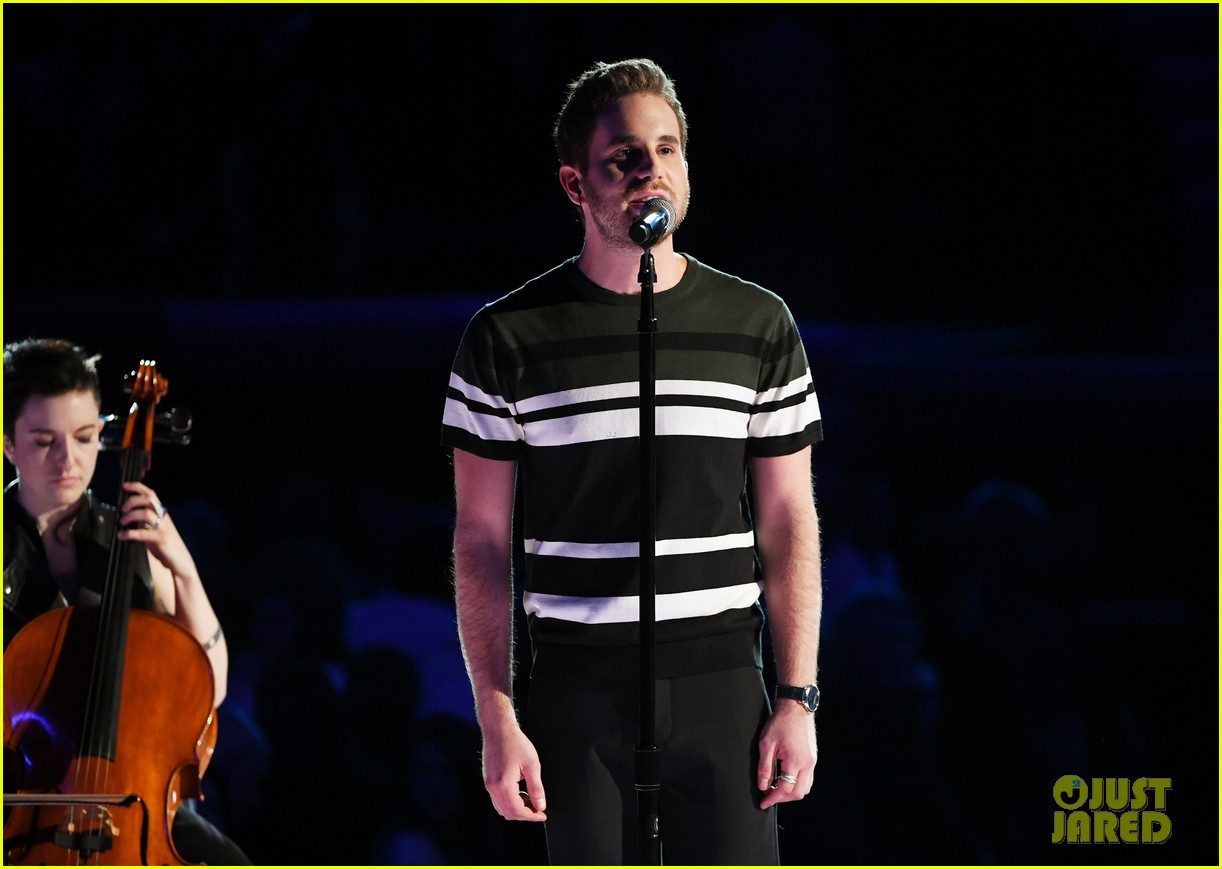
- Broadway Tribute: In a nod to the NYC setting, Patti LuPone performed "Don't Cry for Me Argentina" from Evita, while Ben Platt performed "Somewhere" from West Side Story. LuPone’s performance was particularly noted for her insistence on singing in the original key from her 1979 Broadway debut, a feat of vocal stamina that received a standing ovation.
- Country Tribute: Eric Church, Maren Morris, and Brothers Osborne delivered a somber, acoustic cover of Eric Clapton’s "Tears in Heaven." The performance was a tribute to the victims of the Route 91 Harvest Festival shooting in Las Vegas, which had occurred just months prior. The names of the victims were displayed on the screen behind the performers, marking one of the night’s most quiet and respectful segments.
- Rock and Reggae: An unexpected duo, Sting and Shaggy, performed a medley including "Don't Make Me Wait." While initially polarizing to critics, the performance highlighted the Recording Academy’s tendency to create "Grammy Moments" through unusual pairings, a trend that has continued through 2026.
Production Logistics: Transforming Madison Square Garden
The technical execution of the 2018 Grammy performances required months of planning to adapt the venue's acoustics for a global broadcast. Madison Square Garden is a circular arena, which presents challenges for sound reflections compared to the more traditional theater layouts of the Staples Center (now Crypto.com Arena).
The production team utilized a "thrust" stage design that allowed performers to move deep into the audience, creating an intimate feel despite the massive venue size. Lighting designers utilized thousands of individual LED modules to ensure that each performance—from Kendrick’s dark, strobe-heavy set to Lady Gaga’s ethereal piano solo—had a distinct visual identity. The 2018 broadcast was also a milestone for live audio mixing, as engineers had to manage the balance of high-energy hip-hop bass alongside delicate Broadway vocals within the same three-hour window.
Critical Legacy and Retrospective View
Looking back from 2026, the 2018 Grammy performances are often viewed as a snapshot of a society in flux. While the Recording Academy faced criticism regarding the actual distribution of awards (notably the lack of female winners in major categories), the performances themselves were arguably more diverse and outspoken than the trophies would suggest.
The legacy of the 2018 performances lies in their refusal to be "just" entertainment. Whether it was Janelle Monáe's powerful introduction for Kesha or SZA’s vibrant performance of "Broken Clocks," the night proved that the Grammy stage remains the most powerful platform in the music industry for making a statement. For fans and researchers today, these performances serve as a primary source for understanding the intersection of pop culture and politics in the late 2010s.
Frequently Asked Questions
Who gave the opening performance at the 2018 Grammys?
Kendrick Lamar opened the 60th Annual Grammy Awards. His performance was a high-concept medley of tracks from his DAMN. album, featuring appearances by Dave Chappelle and members of U2. The set was widely praised for its political depth and intricate choreography.
What was the meaning behind the white roses at the 2018 Grammys?
The white roses were worn by performers and attendees as a symbol of support for the Time’s Up movement and the #MeToo movement. It was a visual protest against sexual harassment and gender inequality within the entertainment industry, mirroring the black dress protest at the Golden Globes earlier that month.
Which 2018 Grammy performance was a tribute to the Las Vegas shooting victims?
Country artists Maren Morris, Eric Church, and Brothers Osborne performed "Tears in Heaven" as a tribute to the victims of the Las Vegas Route 91 Harvest Festival shooting. The performance was designed to be intimate and respectful, honoring the 58 lives lost at the music festival in October 2017.
Did Cardi B perform at the 2018 Grammys?
Yes, Cardi B performed "Finesse (Remix)" alongside Bruno Mars. The performance was a colorful, 90s-inspired set that was one of the night's most energetic highlights. It marked Cardi B's first ever Grammy performance during her breakout year.
Why did Patti LuPone perform at the 2018 Grammys?
Patti LuPone performed as part of a tribute to the legendary composers Andrew Lloyd Webber and Leonard Bernstein. Since the Grammys returned to New York City in 2018, the Recording Academy wanted to honor Broadway's contribution to the city’s musical heritage.
Accessing the 2018 Grammy Performances
To view the full 2018 Grammy performances, viewers can typically find official clips on the Recording Academy’s YouTube channel or through the Paramount+ streaming service, which archives past Grammy broadcasts. Licensed versions of the songs performed live are also available on most major music streaming platforms like Spotify and Apple Music under the "Grammys 2018" or "60th Annual Grammy Awards" playlists.