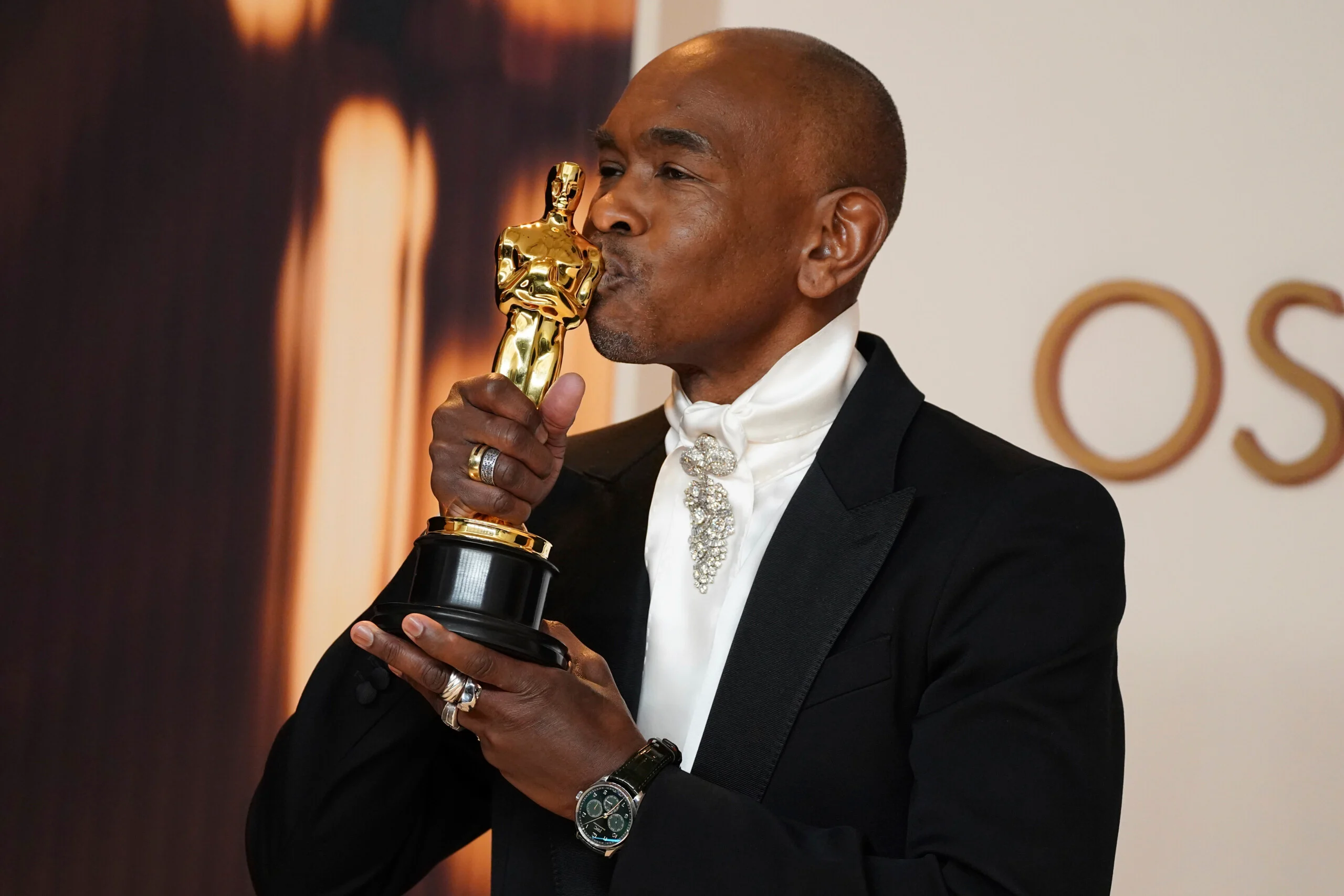
The 2018 Best Picture winner is The Shape of Water, directed by Guillermo del Toro. It secured the top honor at the 90th Academy Awards on March 4, 2018. This romantic fantasy drama tells the story of a mute custodian who falls in love with a mysterious amphibious creature.
Historical Context: The 90th Academy Awards
The 90th Academy Awards ceremony, held in 2018, was a landmark event in Hollywood history. Coming off the heels of the previous year’s "Best Picture snafu" (where La La Land was accidentally announced instead of Moonlight), the 2018 ceremony was marked by a desire for stability, celebration of craft, and a significant cultural shift. This was the year the #MeToo and Time’s Up movements took center stage, influencing the tone of the evening and the discourse surrounding the films.
The selection of The Shape of Water as the 2018 Best Picture winner was seen as a victory for "the others." Guillermo del Toro, a master of the "monster movie" genre, managed to blend high-concept fantasy with a deeply human story about isolation and connection. By 2018, the Academy of Motion Picture Arts and Sciences (AMPAS) was actively working to diversify its membership, and the nominations reflected a broader range of storytelling than in decades past.
The Shape of Water led the night with 13 nominations, eventually taking home four Oscars, including Best Picture and Best Director. Its win was historic, as it became the first fantasy film to win Best Picture since The Lord of the Rings: The Return of the King in 2004. This signaled a growing acceptance within the Academy for genre films that possess significant artistic and emotional depth.
The Narrative and Themes of the Oscar Champion
At its core, The Shape of Water is a Cold War-era fairy tale. Set in 1962 Baltimore, the story follows Elisa Esposito (Sally Hawkins), a mute woman who works as a janitor in a high-security government laboratory. Her life is one of routine and quiet companionship with her neighbor Giles (Richard Jenkins) and her coworker Zelda (Octavia Spencer). Her world changes when she discovers a "classified asset"—an amphibious humanoid creature captured from the Amazon.
The Theme of Isolation and Communication
The film explores the concept of "the other" through multiple lenses. Elisa, being mute, is marginalized by a society that values verbal dominance. The creature, viewed as a god in its homeland but a monster in America, is the ultimate outsider. Their connection transcends language, relying on music, eggs, and sign language. This thematic resonance was a primary factor in the film's success; it argued that those who are "broken" or "different" are the ones truly capable of profound empathy.
Political and Social Allegory
While the film is a romance, it is steeped in the politics of the early 1960s. The antagonist, Colonel Richard Strickland (Michael Shannon), represents the rigid, patriarchal, and xenophobic American establishment of the era. The film juxtaposes the "perfect" American dream—represented by Strickland’s suburban life—with the messy, vibrant, and empathetic lives of the marginalized characters. By setting the film in 1962, del Toro mirrored contemporary 2018 anxieties regarding outsiders, government overreach, and the struggle for civil rights.
Production Excellence: Why It Won
The Shape of Water did not win Best Picture solely on its narrative; it was a technical marvel. Guillermo del Toro is known for his meticulous world-building, and this film is perhaps the finest example of his "aesthetic of the grotesque and the beautiful."
- Visual Design and Color Palette: The film utilizes a distinct color theory. The world is bathed in shades of "aquatic" green and teal, representing the creature’s influence and the stagnant nature of the laboratory. Red is used sparingly but significantly to represent blood, life, and passion. The production design by Paul Denham Austerberry, which won an Oscar, created a tactile, "lived-in" version of the 1960s.
- The Creature Design: Unlike many modern films that rely entirely on CGI, the "Asset" was a practical suit worn by actor Doug Jones. This allowed for a physical presence on set that the other actors could interact with. The suit took months to design and hours to apply each day, resulting in a creature that felt biological and soulful rather than digital.
- The Score: Alexandre Desplat’s Oscar-winning score is central to the film’s identity. Since the protagonist cannot speak, the music often acts as her voice. Using whistles, accordions, and lush orchestrations, Desplat created a whimsical yet melancholic soundscape that heightened the film's "fairy tale for adults" atmosphere.
The Competition: Assessing the 2018 Nominees
The 2018 Best Picture race was one of the most competitive in recent memory. The nominees represented a diverse array of genres, from war epics to coming-of-age indies.
| Film Title | Director | Primary Genre | Notable Nominations/Wins |
|---|---|---|---|
| The Shape of Water | Guillermo del Toro | Fantasy/Romance | 13 Nominations, 4 Wins (Best Picture) |
| Dunkirk | Christopher Nolan | War/History | 8 Nominations, 3 Wins (Technical) |
| Three Billboards Outside Ebbing, Missouri | Martin McDonagh | Dark Comedy/Drama | 7 Nominations, 2 Wins (Acting) |
| Get Out | Jordan Peele | Horror/Social Satire | 4 Nominations, 1 Win (Original Screenplay) |
| Lady Bird | Greta Gerwig | Coming-of-Age | 5 Nominations |
| Call Me by Your Name | Luca Guadagnino | Romance/Drama | 4 Nominations, 1 Win (Adapted Screenplay) |
| Darkest Hour | Joe Wright | Historical Drama | 6 Nominations, 2 Wins (Best Actor) |
| Phantom Thread | Paul Thomas Anderson | Period Drama | 6 Nominations, 1 Win (Costume Design) |
| The Post | Steven Spielberg | Political Thriller | 2 Nominations |
The Shape of Water ultimately triumphed because it acted as a "bridge" film. It had the technical scale of Dunkirk, the emotional resonance of Lady Bird, and the social relevance of Get Out, all wrapped in a unique visual style that felt fresh to the Academy.
Critical Reception and Industry Impact
Upon its release, The Shape of Water received widespread acclaim, holding a high approval rating on Rotten Tomatoes and Metacritic. Critics praised Sally Hawkins’ wordless performance, noting that she conveyed a lifetime of longing and courage through her eyes and gestures.
However, the win was not without its share of discourse. Some critics argued that Three Billboards Outside Ebbing, Missouri or Get Out were more culturally significant at the time. There was also a legal challenge regarding the film's similarity to Paul Zindel's play Let Me Hear You Whisper. However, the lawsuit was dismissed in 2021, with the court noting that the similarities were largely based on unprotectable basic plot tropes of the genre.
In the years following 2018, the film’s reputation has remained solid. It is often cited as the film that finally allowed the "Monster Kid" (a nickname for del Toro) to be recognized as a premier auteur of world cinema. It also validated the Searchlight Pictures (formerly Fox Searchlight) model of backing mid-budget, director-driven projects that major studios often overlook.
The Legacy of the 2018 Oscar Champion in 2026
As we look back from 2026, The Shape of Water stands as a pivotal moment in the "New Academy" era. It was the first Best Picture winner to truly embrace the "weird." Its success paved the way for other non-traditional winners, such as Parasite (2020) and Everything Everywhere All At Once (2023), by proving that the Academy’s voting body was moving away from traditional "Oscar bait" (stuffy biopics and historical epics) and toward imaginative, high-concept storytelling.
The film's influence on production design and cinematography is still felt in 2026. The "Del Toro Green" remains a common reference point for cinematographers looking to create atmosphere. Furthermore, the film’s message—that the "monsters" are often more human than the men who hunt them—continues to resonate in a global landscape that is increasingly preoccupied with identity and empathy.
Detailed Cast and Technical Specifications
- Director: Guillermo del Toro
- Screenwriters: Guillermo del Toro and Vanessa Taylor
- Lead Cast: Sally Hawkins (Elisa), Doug Jones (The Amphibian Man), Michael Shannon (Strickland), Octavia Spencer (Zelda), Richard Jenkins (Giles), Michael Stuhlbarg (Dr. Hoffstetler)
- Cinematography: Dan Laustsen
- Editing: Sidney Wolinsky
- Running Time: 123 minutes
- Budget: $19.5 million
- Box Office: $195.3 million (approx.)
FAQs
Who was the 2018 Best Picture winner?
The 2018 Best Picture winner was The Shape of Water. It won at the 90th Academy Awards, beating out eight other nominees, including Get Out and Dunkirk. The film was praised for its unique blend of fantasy, romance, and Cold War drama.
How many Oscars did The Shape of Water win?
The film won four Oscars out of its 13 nominations. The categories won were Best Picture, Best Director (Guillermo del Toro), Best Original Score (Alexandre Desplat), and Best Production Design (Paul Denham Austerberry, Shane Vieau, and Jeff Melvin).
Is The Shape of Water a remake?
No, The Shape of Water is an original story conceived by Guillermo del Toro. While it draws inspiration from classic monster movies like Creature from the Black Lagoon, it is not a remake. A legal dispute regarding a 1969 play was dismissed by the courts, confirming the film's status as an original work.
Why is it called "The Shape of Water"?
The title refers to the formless nature of love and the water that the creature inhabits. As the protagonist Giles narrates at the end of the film: "Unable to perceive the shape of You, I find You all around me." It suggests that love, like water, takes the shape of whatever it fills.
Where was The Shape of Water filmed?
The film was primarily shot in Ontario, Canada. Key locations included Hamilton and Toronto. The famous "Elgin Theatre" in Toronto served as the interior of the cinema where Elisa lives, adding to the film's authentic, old-world theatrical feel.
Recommended Viewing and Next Steps
To fully appreciate the 2018 Best Picture winner, viewers should explore the supplementary materials available on most 4K and Blu-ray editions. These include "A Fairy Tale for Troubled Times," a multi-part documentary on the film's creation.
For those interested in the evolution of Guillermo del Toro’s style, a "double feature" pairing The Shape of Water with his earlier masterpiece, Pan’s Labyrinth (2006), provides an excellent study of how the director uses fantasy to explore real-world trauma and political upheaval. Scholars and film students should also consult the Academy’s official records for a complete list of that year’s winners and nominees to understand the broader cinematic context of the late 2010s.