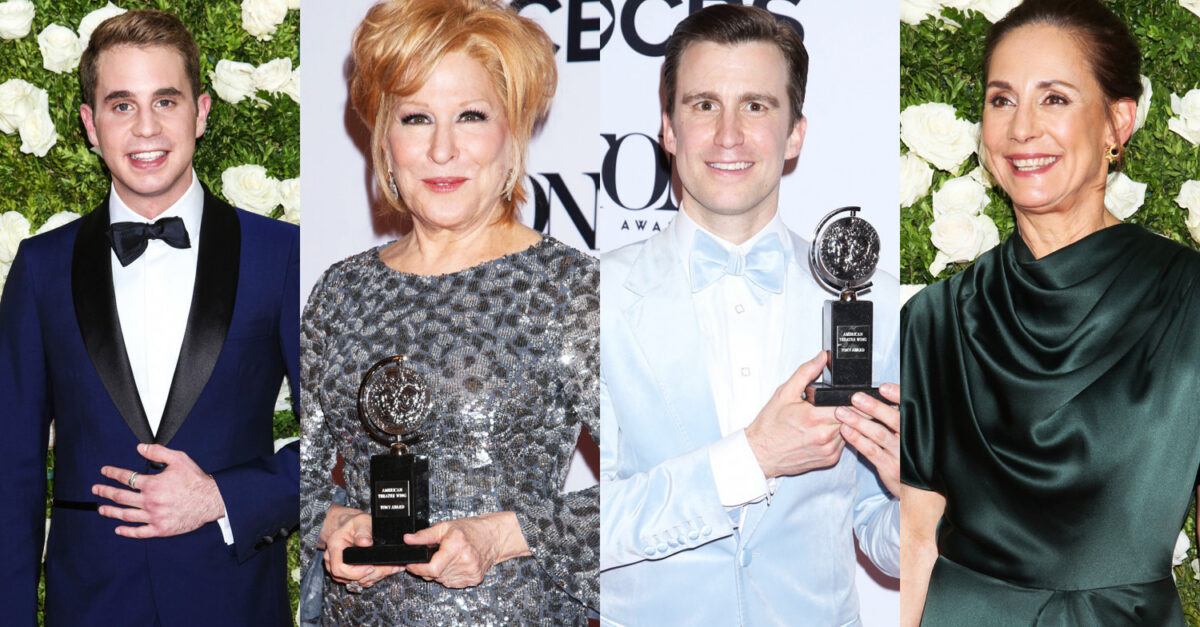
The 2017 Tony Award winners originated from a diverse array of sources, including original contemporary scripts, historical diplomatic events, classic American literature, and even 19th-century Russian novels. While the night’s big winner, Dear Evan Hansen, was a rare entirely original musical, other major victors like Oslo and Hello, Dolly! drew their inspiration from real-world history and established theatrical canon, respectively.
The 71st Annual Tony Awards, held on June 11, 2017, at Radio City Music Hall, represented a pivotal moment in Broadway history. Following the massive cultural phenomenon of Hamilton in 2016, the 2017 season had to prove that Broadway’s momentum could be sustained. It succeeded by offering a balanced portfolio of productions: high-concept original stories, meticulously researched historical dramas, and star-studded revivals that reminded audiences of the medium's foundational strengths. From the vantage point of 2026, this season is remembered as the year that solidified the "modern sensitive musical" and proved that historical dramas could still command the box office.
The Foundation of Originality: Dear Evan Hansen
The most significant winner of the 2017 season, Dear Evan Hansen, took home six Tony Awards, including Best Musical. Unlike many of its predecessors and successors, the show was not based on a movie, a book, or a previous play. Instead, it was an original concept developed by the songwriting duo Benj Pasek and Justin Paul (Pasek & Paul) alongside book writer Steven Levenson.
The origins of the story were loosely inspired by a real-life event from Pasek’s high school years involving the death of a student and the subsequent social phenomenon that followed. This kernel of an idea was transformed into a poignant exploration of social anxiety, the complexities of the digital age, and the human desire for connection. The creative team’s ability to craft a narrative that felt both deeply personal and universally relatable allowed it to bypass the need for a recognizable intellectual property (IP).
In 2026, Dear Evan Hansen is studied as a masterclass in "organic" musical development. Its path—from the Arena Stage in Washington, D.C., to Second Stage Off-Broadway, and finally to the Music Box Theatre—illustrates the rigorous workshop process required for original works to succeed. The show's win for Best Book and Best Original Score underscored the industry’s appreciation for new voices at a time when adaptations were becoming the default standard for commercial theater.
Historical Dramatization: The Roots of Oslo
While the musical categories celebrated modern fiction, the Best Play category honored a work rooted in the intricate world of international diplomacy. Oslo, written by J.T. Rogers, won the 2017 Tony for Best Play. The production "comes from" the true story of the 1993 Oslo Accords—the secret negotiations between Israel and the Palestine Liberation Organization (PLO).
Rogers’ play was inspired by his friendship with Terje Rød-Larsen, a Norwegian diplomat who, along with his wife Mona Juul, facilitated the back-channel meetings. The challenge of the production was to take a dry, political process and turn it into a high-stakes thriller. The script emphasized the "personal as political," focusing on the human relationships that formed in the quiet corners of a Norwegian estate.
Oslo represents a specific niche of Tony winners: the intellectual heavyweight that gains momentum through critical acclaim and the prestige of the Lincoln Center Theater. Its success in 2017 reaffirmed that Broadway audiences were hungry for substantive, long-form storytelling that addressed complex global issues, a trend that continues to influence the dramatic offerings of the mid-2020s.
The Evolution of Revivals: Hello, Dolly! and Jitney
The 2017 winners in the revival categories were rooted in the deep history of American theater, but their success came from how they reinterpreted those origins for a new generation.
Hello, Dolly! (Best Revival of a Musical)
The origin of Hello, Dolly! is a multi-layered journey through theatrical history. The 2017 production, starring Bette Midler, was a revival of the 1964 Jerry Herman and Michael Stewart musical. However, that musical was itself an adaptation of Thornton Wilder’s 1955 play The Matchmaker, which was a rewrite of Wilder's own 1938 play The Merchant of Yonkers. Going even further back, the story's DNA can be traced to the 1835 English play A Day Well Spent by John Oxenford.
The 2017 revival succeeded because it respected the "vaudeville" roots of the material while utilizing modern production technology to enhance the spectacle. It won four Tony Awards, proving that a well-executed adaptation of an adaptation can still feel fresh if the casting and direction are impeccable.
Jitney (Best Revival of a Play)
August Wilson’s Jitney won Best Revival of a Play, marking a significant moment for Wilson's "Century Cycle." Jitney was actually the first play Wilson wrote in the 10-play series, which chronicles the Black experience in America throughout the 20th century. Though written in 1979, it didn't reach Broadway until this 2017 production. Its origin is the Hill District of Pittsburgh in the 1970s, and its victory was seen as a long-overdue recognition of the play’s foundational role in Wilson’s legendary body of work.
2017 Tony Winner Origins and Source Comparison
The following table categorizes the primary winners and the origins from which their productions were derived.
| Production | 2017 Tony Award(s) Won | Primary Source / Origin | Adaptation Type |
|---|---|---|---|
| Dear Evan Hansen | Best Musical (6 total) | Original Concept | N/A (Original) |
| Oslo | Best Play (2 total) | 1993 Oslo Accords | Historical Non-Fiction |
| Hello, Dolly! | Best Musical Revival | The Matchmaker (Thornton Wilder) | Literary/Play Adaptation |
| Jitney | Best Play Revival | August Wilson’s "Century Cycle" | Theatrical Canon |
| Come From Away | Best Direction (Musical) | 9/11 events in Gander, NL | Documentarian/Verbatim |
| Natasha, Pierre... | Scenic & Lighting Design | War and Peace (Leo Tolstoy) | Literary Adaptation |
| Indecent | Best Direction (Play) | God of Vengeance (Sholem Asch) | Historical/Meta-Theatrical |
Literary Adaptations: The Great Comet and War and Peace
One of the most visually and sonically distinct winners of 2017 was Natasha, Pierre & The Great Comet of 1812. While it did not win the "Big Three" (Musical, Book, Score), it dominated the technical categories, including Scenic Design and Lighting Design. This production comes from a very specific and daunting source: a 70-page segment of Leo Tolstoy’s War and Peace.
Composer and writer Dave Malloy focused exclusively on Volume 2, Part 5 of the novel. By narrowing the scope of the massive Russian tome, the production was able to create an immersive "electro-pop opera" that felt contemporary while remaining lyrically faithful to Tolstoy’s prose. The technical wins were a direct result of the source material's needs; the set had to transform the Imperial Theatre into a Russian supper club to bridge the gap between the 19th-century setting and the modern audience. This production serves as a prime example of how specific literary excerpts can be mined for high-concept theatrical experiences.
The "Come From Away" Phenomenon: Verbatim Origins
Come From Away, which won the Tony for Best Direction of a Musical (Christopher Ashley), provides a unique case study in production origins. The musical is based on the true stories of the 7,000 airline passengers stranded in the small town of Gander, Newfoundland, following the September 11 attacks.
The creators, Irene Sankoff and David Hein, traveled to Gander on the tenth anniversary of 9/11 to interview both the residents and the returning "come from aways" (the Newfoundland term for outsiders). Much of the dialogue and many of the characters are derived directly from those interviews. This "verbatim theatre" approach is common in plays but rarer in successful commercial musicals. The show's success at the 2017 Tonys highlighted a growing trend toward "prosocial" theater—works designed to foster community and document real-human resilience.
Technical and Creative Staffing Requirements
The success of the 2017 winners was not solely due to their scripts but also the technical expertise required to bring these diverse origins to life. For a production like The Great Comet, the requirement for actor-musicians (performers who play instruments while acting) was a direct necessity of the source material's bohemian, salon-style atmosphere.
For Dear Evan Hansen, the production required a sophisticated integration of digital media. The scenic design by David Korins used moving screens to simulate the constant feed of social media, a technical requirement dictated by the original script's focus on the internet's role in the protagonist's life. These requirements show that a 2017 Tony winner’s origin often dictates the specific technical skills and staffing needs of the production, from orchestrators like Alex Lacamoire to directors like Michael Greif.
Common Production Prerequisites for 2017-era Winners:
- Narrative Clearances: For shows like Oslo, legal vetting of historical depictions was essential.
- Workshop Cycles: Original musicals like Dear Evan Hansen required a minimum of 3-5 years of development.
- Star Power: Revivals like Hello, Dolly! often required "above-the-title" talent to secure financing, a model that remains prevalent in 2026.
- Immersive Design: The move toward "breaking the fourth wall," as seen in The Great Comet, required specialized theater renovations.
Frequently Asked Questions
Which 2017 Tony winner was based on a book?
Natasha, Pierre & The Great Comet of 1812 was based on a section of Leo Tolstoy’s War and Peace. Additionally, Hello, Dolly! was indirectly based on the book and play The Matchmaker by Thornton Wilder. While Dear Evan Hansen was later adapted into a novel, the musical itself was an original work and not based on a pre-existing book.
Was Dear Evan Hansen based on a true story?
It was inspired by a real-life event, but it is not a "true story" in the biographical sense. Benj Pasek was inspired by an incident at his high school where a student died, and people who didn't know him well claimed a connection to him for social reasons. The characters and specific plot points of the musical are entirely fictional creations by Steven Levenson, Pasek, and Paul.
What historical event inspired the Best Play winner in 2017?
The play Oslo was inspired by the secret 1993 Oslo Accords. These were a set of agreements between the Government of Israel and the Palestine Liberation Organization (PLO) that were negotiated in secret in Norway. The play focuses on the Norwegian husband-and-wife team who acted as the "middlemen" for the negotiations.
Who won Best Actress in a Musical in 2017 and what was the role's origin?
Bette Midler won Best Actress in a Musical for her role as Dolly Gallagher Levi in Hello, Dolly!. The role originated in the 1964 musical of the same name, which was first played by Carol Channing. The character herself originated in Thornton Wilder’s play The Matchmaker, where she was a professional meddler and widow looking to marry "the well-known unmarried half-millionaire," Horace Vandergelder.
Did Come From Away win Best Musical in 2017?
No, Come From Away did not win Best Musical; that award went to Dear Evan Hansen. However, Come From Away was a major critical and commercial success, winning the Tony for Best Direction of a Musical for Christopher Ashley. It became one of the most enduring shows of the season, touring globally and receiving a filmed stage version.
Practical Recommendations for Theater Researchers
When researching the origins of the 2017 Tony winners, it is essential to distinguish between "source material" and "inspiration." For those looking to produce or study these works in 2026, the first step is to consult the official Tony Awards database for a complete list of nominations and technical credits.
For students of theater, analyzing the 2017 season provides a clear roadmap for how different types of source material require different creative approaches. For instance, the verbatim style of Come From Away requires a focus on dialect and ensemble precision, whereas the historical drama of Oslo demands a deep understanding of political subtext and pacing. Researchers should also look at the "Out of Town" reviews for these shows (found in publications like The Washington Post or The Seattle Times) to see how the source material was refined during the development process before hitting the Broadway stage.