The year 2017 stands as a pivotal milestone in contemporary cinema, defined by critical genre revivals, massive global box office triumphs, and transformative narrative storytelling. From Jordan Peele’s cultural phenomenon Get Out and Denis Villeneuve’s visual masterpiece Blade Runner 2049 to Guillermo del Toro’s Oscar-winning fairy tale The Shape of Water, 2017 delivered an extraordinary range of artistic and commercial achievements.
2017 CINEMATIC LANDSCAPE AT A GLANCE
- BOX OFFICE TITANS
- Star Wars: Last Jedi
- Beauty & the Beast
- Fate of the Furious
- CRITICAL DARLINGS
- The Shape of Water
- Get Out
- Lady Bird
- INDUSTRY SHIFTS
- Chinese Market Boom
- Streaming Friction
- Horror Renaissance
The Box Office Landscape of 2017: Global Revenue Giants
The global theatrical market in 2017 generated over $40 billion in worldwide revenue, driven by major studio franchises, animated sequels, and unexpected original sleeper hits. Streaming services were expanding rapidly, yet physical cinemas maintained enormous pull, with four titles surpassing the $1 billion threshold globally.
Disney dominated the top tier of commercial cinema. Rian Johnson's Star Wars: Episode VIII – The Last Jedi led the worldwide box office, collecting over $1.33 billion despite stirring significant audience debate regarding narrative directions. Bill Condon’s live-action reimagining of Beauty and the Beast followed closely behind, capitalizing on nostalgia and lavish musical production to secure over $1.26 billion. Meanwhile, Universal’s The Fate of the Furious demonstrated the enduring international appeal of high-octane action, earning more than $1.23 billion, heavily bolstered by Chinese theatrical markets.
GLOBAL BOX OFFICE TOP PERFORMERS (2017)
- Star Wars: The Last Jedi: $1.33B
- Beauty and the Beast: $1.26B
- The Fate of the Furious: $1.23B
- Despicable Me 3: $1.03B
- Jumanji: Welcome/Jungle: $962M
A notable surprise of the year was Sony’s Jumanji: Welcome to the Jungle. Arriving in late December 2017 as a legacy sequel starring Dwayne Johnson and Kevin Hart, the film leveraged strong word-of-mouth and leggy box office endurance to earn over $962 million worldwide, proving that established properties could be successfully updated for modern audiences through comedic action.
| Film Title | Lead Director | Primary Genre | Global Box Office (USD) | Notable Awards & Recognition |
|---|---|---|---|---|
| Star Wars: The Last Jedi | Rian Johnson | Sci-Fi / Action | $1.332 Billion | 4 Academy Award Nominations |
| Beauty and the Beast | Bill Condon | Musical / Fantasy | $1.266 Billion | 2 Academy Award Nominations |
| The Fate of the Furious | F. Gary Gray | Action / Thriller | $1.236 Billion | Highest Overseas Opening Weekend |
| Despicable Me 3 | Pierre Coffin, Kyle Balda | Animated Comedy | $1.034 Billion | Annie Award Nominee for Best Feature |
| Jumanji: Welcome to the Jungle | Jake Kasdan | Action / Comedy | $962 Million | Critics' Choice Nominee (Best Comedy) |
| Spider-Man: Homecoming | Jon Watts | Superhero | $880 Million | Saturn Award Winner (Best Comic Film) |
| Wolf Warrior 2 | Wu Jing | Action | $870 Million | Highest-Grossing Non-Hollywood Film (2017) |
| Guardians of the Galaxy Vol. 2 | James Gunn | Sci-Fi / Comedy | $863 Million | Academy Award Nominee (Best Visual Effects) |
| Thor: Ragnarok | Taika Waititi | Action / Fantasy | $854 Million | BAFTA Nominee / Critics' Choice Nominee |
| Wonder Woman | Patty Jenkins | Superhero | $822 Million | AFI Movie of the Year Selection |
Critical Darlings and the 90th Academy Awards Circuit
While blockbusters commanded ticket sales, 2017 stood out for its artistic depth across auteur-driven project slates. The subsequent awards season, culminating in the 90th Academy Awards in March 2018, celebrated works that addressed complex human emotions, social commentary, and historical drama.
Guillermo del Toro’s dark romantic fantasy The Shape of Water led the accolades, earning 13 Academy Award nominations and securing four wins, including Best Picture and Best Director. Set against a Cold War backdrop, the film showcased del Toro’s ability to blend creature-feature aesthetics with deep empathetic storytelling, supported by non-verbal performances from Sally Hawkins and Doug Jones.
90TH ACADEMY AWARDS: MAJOR WINNERS (2017 FILMS)
| CATEGORY | RECIPIENT |
|---|---|
| Best Picture | The Shape of Water |
| Best Director | Guillermo del Toro |
| Best Actor | Gary Oldman (Darkest Hour) |
| Best Actress | Frances McDormand (Three Billboards Outside Ebbing) |
| Best Original Screenplay | Jordan Peele (Get Out) |
| Best Adapted Screenplay | James Ivory (Call Me by Your Name) |
The Oscar race was defined by formidable competitors:
- Three Billboards Outside Ebbing, Missouri: Written and directed by Martin McDonagh, this raw drama earned Best Actress for Frances McDormand and Best Supporting Actor for Sam Rockwell, detailing a grieving mother's relentless struggle against local law enforcement inaction.
- Lady Bird: Greta Gerwig’s solo directorial debut captured the nuances of adolescence, mother-daughter dynamics, and regional identity, earning critical praise for Saoirse Ronan and Laurie Metcalf.
- Dunkirk: Christopher Nolan’s non-linear WWII epic minimized dialogue to build cinematic tension through sound design, visual scale, and Hans Zimmer’s ticking-clock score, sweeping technical categories for Editing, Sound Editing, and Sound Mixing.
- Call Me by Your Name: Directed by Luca Guadagnino, this adaptation of André Aciman’s novel featured breakout performances from Timothée Chalamet and earned 89-year-old James Ivory the Academy Award for Best Adapted Screenplay.
- Phantom Thread: Paul Thomas Anderson’s meticulous study of creative obsession and control in 1950s London fashion marked Daniel Day-Lewis's final acting role prior to his initial retirement announcement, winning the Oscar for Best Costume Design.
A Renaissance in Horror and Social Commentary
The year 2017 catalyzed a dramatic shift in how horror films were produced, perceived, and valued by mainstream audiences and critical bodies. Rather than relying on simple jump scares or gore, directors used horror structures to explore social anxieties, historical trauma, and psychological isolation.
Jordan Peele’s directorial debut Get Out served as the vanguard for this movement. Produced by Blumhouse on a modest $4.5 million budget, the film generated $255 million globally while receiving unanimous praise for its sharp satire of modern racial dynamics and microaggressions. Peele became the first African American filmmaker to win the Academy Award for Best Original Screenplay, establishing "social thriller" as a major subgenre in modern cinema.
THE HORROR RENAISSANCE OF 2017
- GET OUT
- Budget: $4.5M | Gross: $255M
- Innovation: Blended social commentary with horror
- Legacy: Oscar for Best Original Screenplay
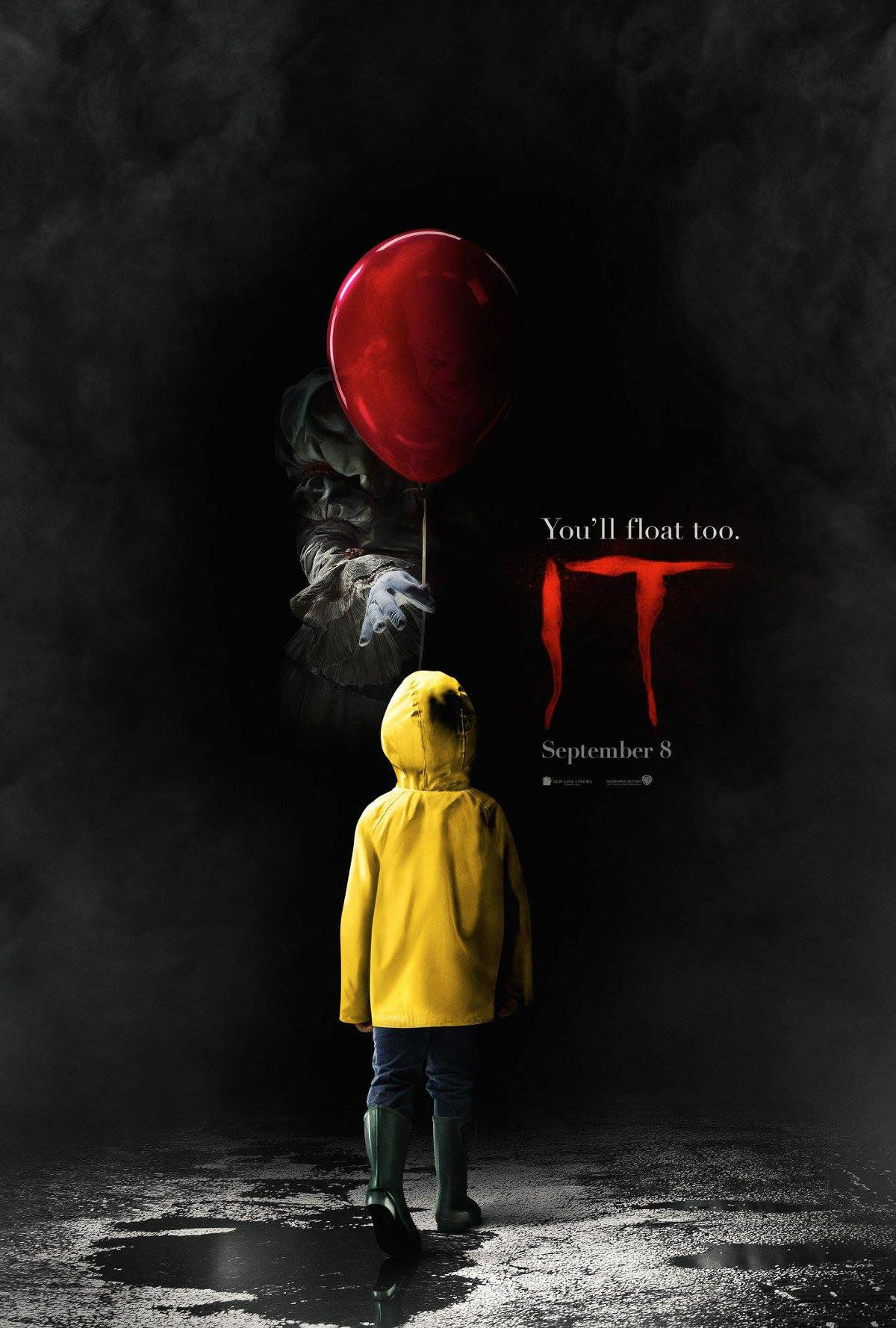
- IT (CHAPTER ONE)
- Budget: $35M | Gross: $704M
- Innovation: Restored R-rated horror to blockbuster status
- Legacy: Highest-grossing horror film in history
Simultaneously, Warner Bros. and New Line Cinema released Andy Muschietti’s adaptation of Stephen King’s IT (Chapter One). Focus on atmospheric 1980s nostalgia, strong ensemble performances from its child cast, and Bill Skarsgård’s terrifying iteration of Pennywise the Dancing Clown propelled IT to gross over $704 million worldwide. It became the highest-grossing horror film of all time, proving that R-rated genre cinema could compete directly with traditional summer tentpoles.
Independent studio A24 bolstered this genre shift through distinct releases such as Trey Edward Shults’ It Comes at Night and David Lowery’s atmospheric drama A Ghost Story, cementing low-budget, auteur-driven horror and existential cinema as critical highlights of the release year.
Franchise Evolution and Auteur-Led Blockbusters
Mainstream franchise filmmaking in 2017 underwent important structural shifts, stepping away from formulaic superhero origins toward distinct directorial visions and genre-blending approaches.
R-Rated Comic Book Adaptations
James Mangold’s Logan redefined what comic book movies could achieve by embracing a gritty, neo-Western structure. Serving as Hugh Jackman’s character farewell as Wolverine alongside Patrick Stewart’s Professor Charles Xavier, Logan prioritized character drama and mature themes over franchise setup. It grossed over $619 million and became the first live-action superhero film nominated for Best Adapted Screenplay at the Academy Awards.
Female-Led Superhero Breakthroughs
Patty Jenkins’ Wonder Woman shattered long-standing studio hesitations surrounding female-fronted superhero properties. Starring Gal Gadot, the origin film received critical praise for its tone, battle choreography, and thematic resonance, grossing over $822 million and establishing an important precedent for female representation behind and in front of the camera in blockbuster filmmaking.
2017 SUPERHERO REINVENTIONS
| FILM | DIRECTOR | SUBGENRE / APPROACH |
|---|---|---|
| Logan | James Mangold | Neo-Western Drama |
| Wonder Woman | Patty Jenkins | Historical Epic |
| Thor: Ragnarok | Taika Waititi | Cosmic Action-Comedy |
Aesthetic and Tonal Shifts
Taika Waititi revitalized Marvel's Thor franchise with Thor: Ragnarok, infusing it with vibrant retro-futuristic aesthetics, improvised comedy, and an 80s synth-pop soundtrack. In parallel, Denis Villeneuve achieved a visual triumph with Blade Runner 2049, an ambitious sequel to Ridley Scott’s 1982 cult classic. Photographed by Roger Deakins—who won his long-overdue first Academy Award for Best Cinematography for the film—Blade Runner 2049 stood as a landmark achievement in production design, world-building, and philosophical sci-fi.
International Cinema and the Global Shift
Beyond the North American theatrical market, 2017 marked a turning point in global distribution dynamics, highlighted by China’s rapid ascension into an independent box office powerhouse.
The most prominent example was Wu Jing’s military action feature Wolf Warrior 2. Earning over $870 million, with roughly 98% of its revenue coming directly from Chinese theaters, the film set a single-territory box office record at the time. It demonstrated that international markets no longer depended entirely on Hollywood exports to drive record-breaking theatrical revenues.
2017 INTERNATIONAL FESTIVAL WINNERS
- CANNES FILM FESTIVAL
- Palme d'Or: The Square (Dir. Ruben Östlund)
- Grand Prix: 120 BPM (Beats Per Minute) (Dir. Robin Campillo)
- BERLIN INTERNATIONAL FILM FESTIVAL
- Golden Bear: On Body and Soul (Dir. Ildikó Enyedi)
- VENICE FILM FESTIVAL
- Golden Lion: The Shape of Water (Dir. Guillermo del Toro)
In the international film festival circuit:
- Ruben Östlund’s satire The Square won the Palme d'Or at the Cannes Film Festival, critiquing art-world hypocrisy and social apathy.
- Ildikó Enyedi’s Hungarian romantic drama On Body and Soul captured the Golden Bear at the Berlin International Film Festival.
- Guillermo del Toro’s The Shape of Water secured the Golden Lion at the Venice International Film Festival, launching its successful awards trajectory.
Streaming Disruption and Market Evolution
The year 2017 was pivotal in the friction between legacy theatrical exhibition and the fast-rising footprint of direct-to-consumer streaming services. Subscription video-on-demand platforms, led by Netflix, accelerated their investments in feature films, competing directly for talent and prestigious award honors.
STREAMING VS. THEATRICAL TENSIONS (2017)
- CANNES STREAMING CONTROVERSY
- Films Involved: Okja (Bong Joon-ho), The Meyerowitz Stories (Noah Baumbach)
- Debate: Inclusion of Netflix films without theatrical windowing in France
- Outcome: Festival changed rules requiring French theatrical releases for future competition entries
This friction boiled over at the 2017 Cannes Film Festival, where two Netflix original films—Bong Joon-ho’s Okja and Noah Baumbach’s The Meyerowitz Stories—were selected for the main competition. French theater operators protested their inclusion because Netflix refused to adhere to strict local theatrical windowing rules. The controversy prompted Cannes to modify its regulations for subsequent years, requiring competing films to commit to French theatrical distribution.
Despite theatrical pushback, streaming platforms expanded their slates rapidly. Netflix released David Ayer's Bright in late 2017, proving that high-budget, feature-length fantasy-action films could attract massive streaming viewership on premiere weekend without relying on worldwide box office tracking.
Frequently Asked Questions
Which film won Best Picture at the Academy Awards for 2017 releases?
The Shape of Water, directed by Guillermo del Toro, won Best Picture at the 90th Academy Awards held on March 4, 2018. The film also earned Oscars for Best Director, Best Original Score, and Best Production Design.
What was the highest-grossing film released in 2017?
Star Wars: Episode VIII – The Last Jedi, directed by Rian Johnson, was the highest-grossing film released in 2017, earning over $1.332 billion worldwide at the global box office.
Why is 2017 considered a historic year for horror movies?
The year 2017 redefined horror through both critical acclaim and box office records. Jordan Peele’s Get Out achieved historical success as a low-budget social thriller that won an Oscar for Best Original Screenplay, while Andy Muschietti’s IT became the highest-grossing horror film in history with over $704 million worldwide.
What film set global box office records in China in 2017?
Wu Jing's action film Wolf Warrior 2 earned over $870 million, primarily within the Chinese domestic market. It demonstrated the sheer scale of foreign theatrical markets operating independently of North American box office reliance.
Which 2017 movie won Roger Deakins his first Academy Award?
Cinematographer Roger Deakins won his long-awaited first Academy Award for Best Cinematography for his visual work on Denis Villeneuve’s sci-fi epic Blade Runner 2049, after receiving 13 prior un-won nominations over his career.
Retrospective Viewing Guide for 2017 Cinema
To explore the cinematic achievements of 2017 today across modern home theater setups and streaming services, consider organizing your viewing around these primary pillars:
- Auteur-Led Sci-Fi & Fantasy: Start with The Shape of Water and Blade Runner 2049 for rich visual world-building, sound design, and practical production craft.
- Social Thrillers & Horror: Pair Jordan Peele's Get Out alongside IT (Chapter One) to observe how 2017 balanced indie thematic depth with large-scale horror spectacle.
- Modern Coming-of-Age Dramas: Watch Greta Gerwig’s Lady Bird and Luca Guadagnino’s Call Me by Your Name to analyze how personal, character-focused storytelling connected with international audiences.
- Reinvented Blockbusters: Screen James Mangold's Logan and Taika Waititi's Thor: Ragnarok to compare how different directors broke standard superhero conventions within established studio frameworks.