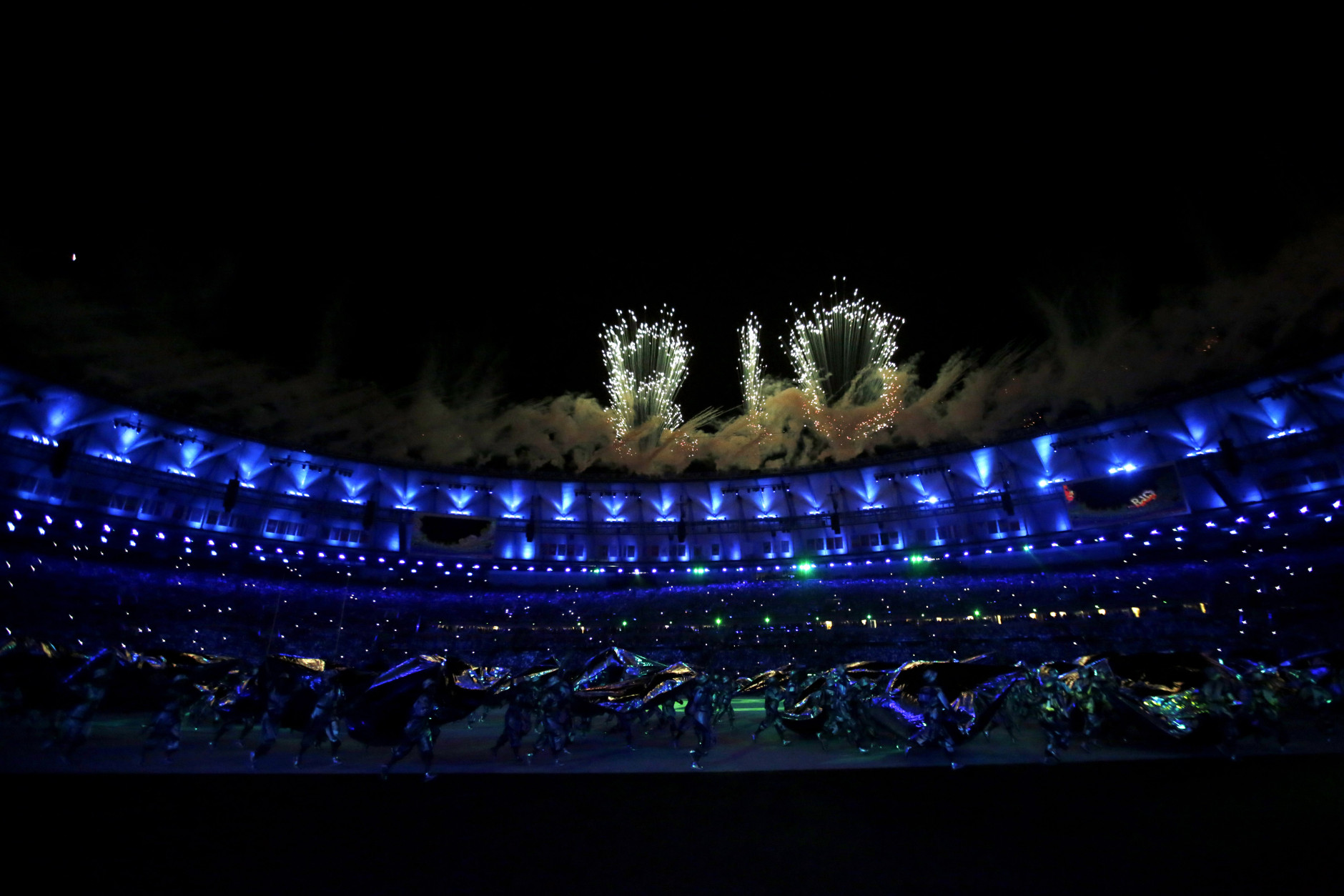
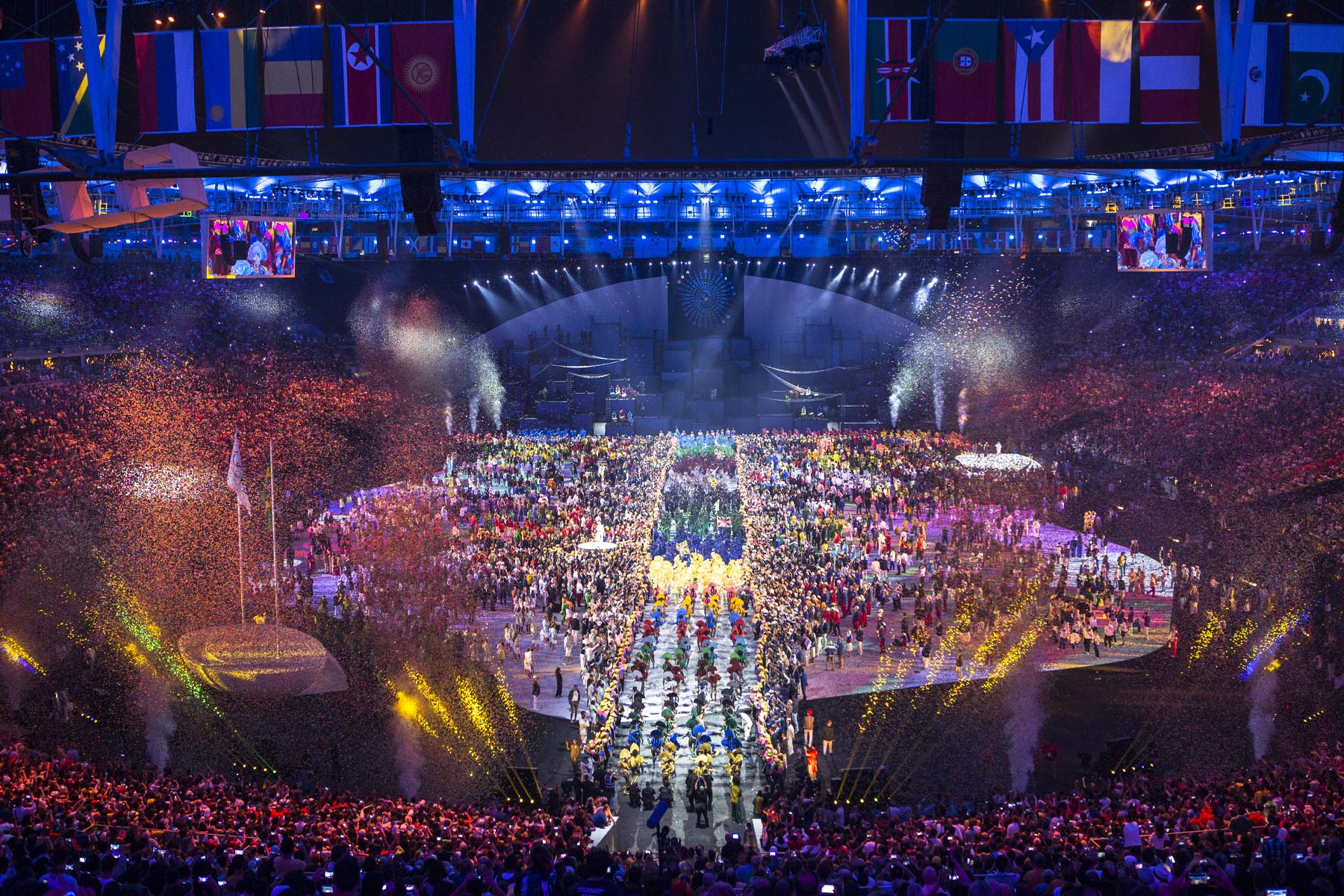
The 2016 Rio Olympics opening ceremony was a vibrant celebration of Brazilian history, environmental consciousness, and creative resourcefulness. Held at the Maracanã Stadium on August 5, 2016, it utilized stunning projection mapping, a low-carbon kinetic cauldron, and a powerful message on climate change to captivate a global audience of billions.
Reliving the magic of the Rio 2016 opening ceremony requires an understanding of why it stood out in the lineage of Olympic spectacles. Unlike the massive budgets of Beijing 2008 or the technological complexity of London 2012, Rio embraced a philosophy of "gambiarra"—the Brazilian knack for making something great out of limited resources. A decade later, in 2026, the ceremony remains a benchmark for how cultural authenticity and environmental urgency can create a timeless masterpiece.
The Philosophy of "Gambiarra" and Creative Constraints
One of the most remarkable aspects of the Rio 2016 opening ceremony was its budget. The creative team, led by acclaimed filmmaker Fernando Meirelles (director of City of God), Daniela Thomas, and Andrucha Waddington, operated with a fraction of the funds used by previous host cities. This constraint birthed the concept of "gambiarra," which refers to the art of finding an informal, makeshift solution to a problem.
Instead of relying on heavy mechanical stagecraft or expensive drone swarms (technologies that were in their infancy then but are standard in 2026), the Rio team utilized 3,000 square meters of projection mapping. This turned the floor of the Maracanã into a living canvas. By using light instead of physical props, they could transform the stadium from an indigenous rainforest into a colonial plantation or a bustling modern city in seconds. This approach was not just a cost-saving measure; it was a stylistic choice that emphasized human movement and artistic ingenuity over sheer industrial power.
A Historical Journey Through Pindorama
The ceremony’s narrative arc began with "Pindorama"—the indigenous name for Brazil. The performance depicted the birth of the Amazon rainforest and the indigenous people who first inhabited the land. Using elastic bands and intricate choreography, performers represented the microscopic beginnings of life and the eventual growth of the dense jungle.
This segment was followed by the "Arrival" sequence, which tackled the complex and often painful history of Brazil’s formation. It showed the arrival of Portuguese caravels, the forced migration of enslaved Africans, and the later waves of European and Asian immigrants (particularly from Japan). By acknowledging the role of slavery and the diverse roots of the Brazilian people, the ceremony avoided a sanitized version of history, choosing instead to celebrate the resilience and "mestiçagem" (mixing) that defines the nation’s identity.
The urban expansion segment transitioned from history to the modern day, featuring the construction of Brazil's iconic skyscrapers and the vibrant life of the favelas. Here, the "gambiarra" spirit was most visible, with performers using simple boxes to build and dismantle urban landscapes, reflecting the constant evolution and precariousness of city life.
Iconic Moments and Cultural Highlights
Several specific moments from the ceremony have entered the pantheon of Olympic history. These highlights are frequently revisited by fans looking to capture the "magic" of the Rio Games:
- The Girl from Ipanema: In one of the most celebrated moments, supermodel Gisele Bündchen made her final runway walk across the Maracanã to the sounds of "The Girl from Ipanema," performed by Daniel Jobim (grandson of the song’s co-composer Tom Jobim). The simplicity of the walk, paired with the iconic Bossa Nova melody, created a moment of pure elegance.
- The Flight of the 14-bis: Brazil reclaimed its place in aviation history by featuring a replica of the 14-bis, the aircraft built by Alberto Santos-Dumont. The ceremony depicted the plane taking off from the stadium and flying over a nighttime Rio de Janeiro, a nod to the Brazilian belief that Santos-Dumont, rather than the Wright brothers, was the true pioneer of flight.
- The Favela and Funk Carioca: The ceremony brought the sounds of the favela—Samba, Passinho, and Funk Carioca—to the global stage. Performances by Ludmilla, Elza Soares, and Anitta showcased the musical diversity of Rio, proving that the grassroots culture of the city was its most potent export.
The First Environmental Olympic Ceremony
Perhaps the most prescient element of the 2016 opening ceremony was its focus on climate change. Long before environmental sustainability became a mandatory pillar of Olympic hosting, Rio dedicated a significant portion of its ceremony to the threat of rising sea levels and global warming.
A sobering video segment used NASA data to visualize how coastal cities, including Rio, Amsterdam, and Dubai, would be affected by melting ice caps. This was followed by a call to action: every athlete in the Parade of Nations was given a seedling to plant. These seeds were intended to form the "Athletes' Forest" in the Radical Park of Deodoro. While the long-term success of the forest project faced challenges in the years following the Games, the symbolic gesture remains a powerful highlight of the evening.
The Refugee Olympic Team and the Parade of Nations
The 2016 Parade of Nations was historic for the introduction of the first-ever Refugee Olympic Team (ROT). When the team entered the stadium under the Olympic flag, they received a standing ovation that rivaled the reception of the host nation. This moment underscored the Olympic spirit of inclusion and provided a human face to the global refugee crisis.
The parade itself was uniquely staged. Instead of carrying traditional placards, each nation was preceded by a child carrying a small plant. This reinforced the theme of "Green is the New Gold" and reminded the audience that the future of sport is inextricably linked to the health of the planet.
Comparing Rio 2016 to Other Era-Defining Ceremonies
To understand the scale and impact of Rio 2016, it is helpful to compare its technical and thematic elements with other Summer Games ceremonies of the 21st century.
| Feature | Beijing 2008 | London 2012 | Rio 2016 | Paris 2024 |
|---|---|---|---|---|
| Primary Theme | National Power/History | British Culture/Humor | Environment/Diversity | Liberty/Urban Integration |
| Visual Centerpiece | 2,008 Drummers | Industrial Revolution | Projection Mapping | River Seine Parade |
| Cauldron Style | Rooftop Torch | Petals joining together | Kinetic Sculpture | Floating Balloon |
| Budget Strategy | Unlimited/Spectacular | High-Tech/Theatrical | Creative/Resourceful | Decentralized/Public |
| Social Focus | Precision & Harmony | NHS & Literature | Climate & Inclusion | Equality & Inclusion |
The Lighting of the Kinetic Cauldron
The climax of the ceremony was the lighting of the Olympic cauldron. The honor fell to Vanderlei Cordeiro de Lima, the marathon runner who famously lost a gold medal chance at the 2004 Athens Games after being attacked by a spectator. His selection was a tribute to the "Olympic spirit" of perseverance.
The cauldron itself was a departure from tradition. Designed by American sculptor Anthony Howe, it featured a small flame positioned in front of a massive, sun-like kinetic sculpture. As the sculpture rotated, it mimicked the movement of solar pulses, using mirrors to amplify the light of a relatively small (and therefore low-emission) flame. This "Solar Cauldron" symbolized the need for renewable energy and became one of the most photographed objects of the Games.
Frequently Asked Questions
Where can I watch the full highlights of the 2016 Rio opening ceremony?
The official Olympic YouTube channel and the Olympics.com website maintain comprehensive archives of the Rio 2016 highlights. These include the full ceremony, the Gisele Bündchen walk, and the lighting of the cauldron. Most regional broadcasters (like NBC in the US or BBC in the UK) also hold digital rights to shorter highlight reels.
Why was Pelé not at the 2016 opening ceremony?
Pelé, the legendary Brazilian footballer, was the original choice to light the Olympic cauldron. However, he was unable to attend the ceremony due to poor health and recovering from hip surgery at the time. This led to the selection of Vanderlei Cordeiro de Lima, whose story of resilience resonated deeply with the audience.
What was the meaning behind the silver "mirrors" during the athlete parade?
As the athletes marched into the stadium, they placed their seedlings into silver mirrored towers. At the end of the parade, these towers opened up to reveal lush green trees, which eventually formed the shape of the five Olympic rings. This was a visual representation of the "Athletes' Forest" and the Games' commitment to reforestation.
Who were the main creative directors of the ceremony?
The ceremony was led by a trio of Brazilian filmmakers: Fernando Meirelles, known for City of God; Daniela Thomas, an acclaimed director and scenographer; and Andrucha Waddington. Their cinematic background influenced the heavy use of light and narrative storytelling throughout the event.
Did the trees planted by the athletes actually survive?
The "Athletes' Forest" project in Deodoro faced significant maintenance issues and administrative delays in the years following 2016. While many of the seedlings were eventually planted, the forest did not flourish as quickly or as extensively as originally promised during the ceremony. However, as of 2026, many of the surviving trees stand as a reminder of the environmental message of the Games.
How to Experience the Rio Magic Today
If you are looking to relive the magic of the 2016 Rio opening ceremony, the best approach is to focus on the high-definition replays of the artistic segments. Start with the "History of Brazil" sequence to appreciate the choreography, then move to the "Climate Change" segment to see how the Games addressed global issues.
For those interested in the technical side, search for "behind the scenes" documentaries regarding the Rio 2016 projection mapping. These videos explain how the team managed to create such a massive visual impact with a limited budget. Finally, visiting the Maracanã Stadium in Rio de Janeiro remains a popular "Olympic pilgrimage" for fans, where the history of that night is still celebrated in the stadium's museum.