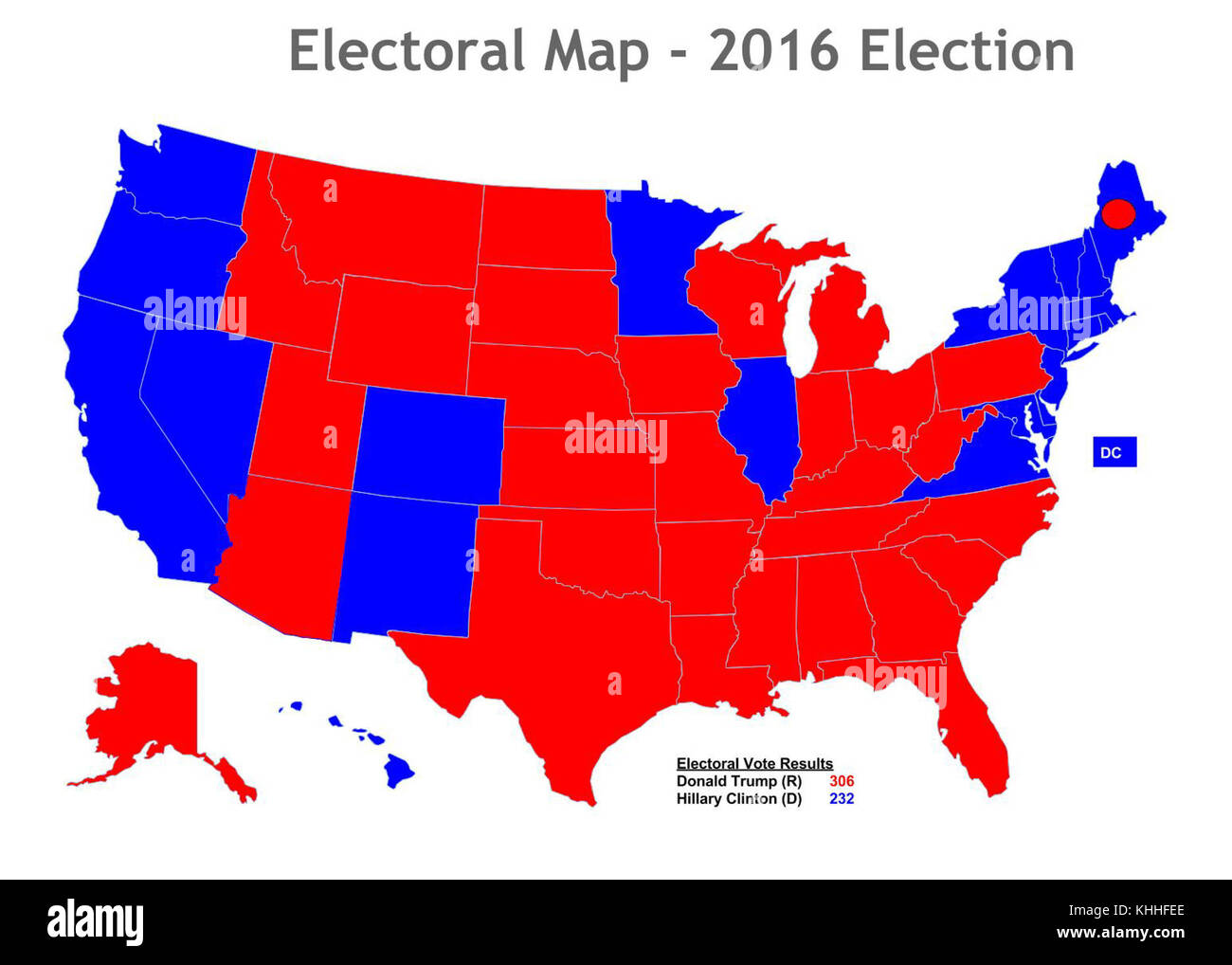
The 2016 United States presidential election saw Republican nominee Donald Trump defeat Democratic nominee Hillary Clinton. Despite losing the popular vote by nearly 2.9 million, Trump secured 304 electoral votes to Clinton's 227. This landmark election shifted the American political landscape, highlighting deep geographic and cultural divisions that continue to resonate.
The Road to the Nomination: Primary Battles and Party Shifts
The 2016 election cycle began with a crowded and unpredictable primary season that challenged the established hierarchies of both major parties. On the Republican side, Donald Trump, a real estate mogul and television personality, entered a field of 17 candidates, including seasoned governors and senators. His campaign utilized a brand of right-wing populism, focusing on trade protectionism, strict immigration enforcement, and a "drain the swamp" rhetoric that targeted the Washington establishment. By winning early contests in New Hampshire and South Carolina, Trump gained a momentum that his opponents—divided and unable to coalesce around a single "never-Trump" alternative—could not halt.
Conversely, the Democratic primary was a battle between the party’s established wing and a rising progressive movement. Hillary Clinton, a former First Lady, Senator, and Secretary of State, was widely viewed as the inevitable nominee. However, she faced an unexpectedly strong challenge from Senator Bernie Sanders of Vermont. Sanders, a self-described democratic socialist, campaigned on a platform of universal healthcare, tuition-free public college, and a critique of income inequality. Although Clinton ultimately secured the nomination, the primary revealed a significant ideological rift within the Democratic base, particularly among younger voters who felt the party had become too centrist and beholden to corporate interests.
The primary season was not merely a contest of personalities but a reflection of a changing electorate. Voters in both parties expressed a deep-seated frustration with the status quo, albeit through different lenses. For Republicans, this frustration manifested as a desire for a disruptive outsider; for Democrats, it appeared as a demand for systemic economic reform. These internal dynamics set the stage for one of the most polarized general elections in American history.
Key Campaign Issues and Strategic Alignments
The general election was fought over sharply different visions for the future of the United States. Donald Trump’s "Make America Great Again" (MAGA) slogan focused on a perceived decline in American prestige and economic power. He targeted the "Rust Belt"—states like Pennsylvania, Michigan, and Ohio—where manufacturing jobs had been lost to automation and outsourcing. By criticizing the North American Free Trade Agreement (NAFTA) and proposing a wall on the U.S.-Mexico border, Trump appealed to white working-class voters who felt abandoned by the globalized economy.
Hillary Clinton campaigned on a platform of "Stronger Together," emphasizing her extensive experience and proposing incremental improvements to the Affordable Care Act and economic policies. Her strategy relied heavily on the "Blue Wall"—a group of states in the Midwest and Northeast that had voted Democratic in every presidential election since 1992. However, her campaign was criticized for underestimating the shift in voter sentiment in these regions and for failing to visit key states like Wisconsin during the general election cycle.
Social and cultural issues also played a pivotal role. The vacancy on the Supreme Court following the death of Justice Antonin Scalia in early 2016 made the judiciary a central theme. Conservative voters, including many who were initially skeptical of Trump’s personal background, viewed the election as a critical opportunity to secure a conservative majority on the Court. Meanwhile, Clinton’s campaign leaned into identity politics and the historic nature of potentially electing the first female president, a move that energized her base but also served as a focal point for opposition rhetoric.
Understanding the 2016 Electoral College Results
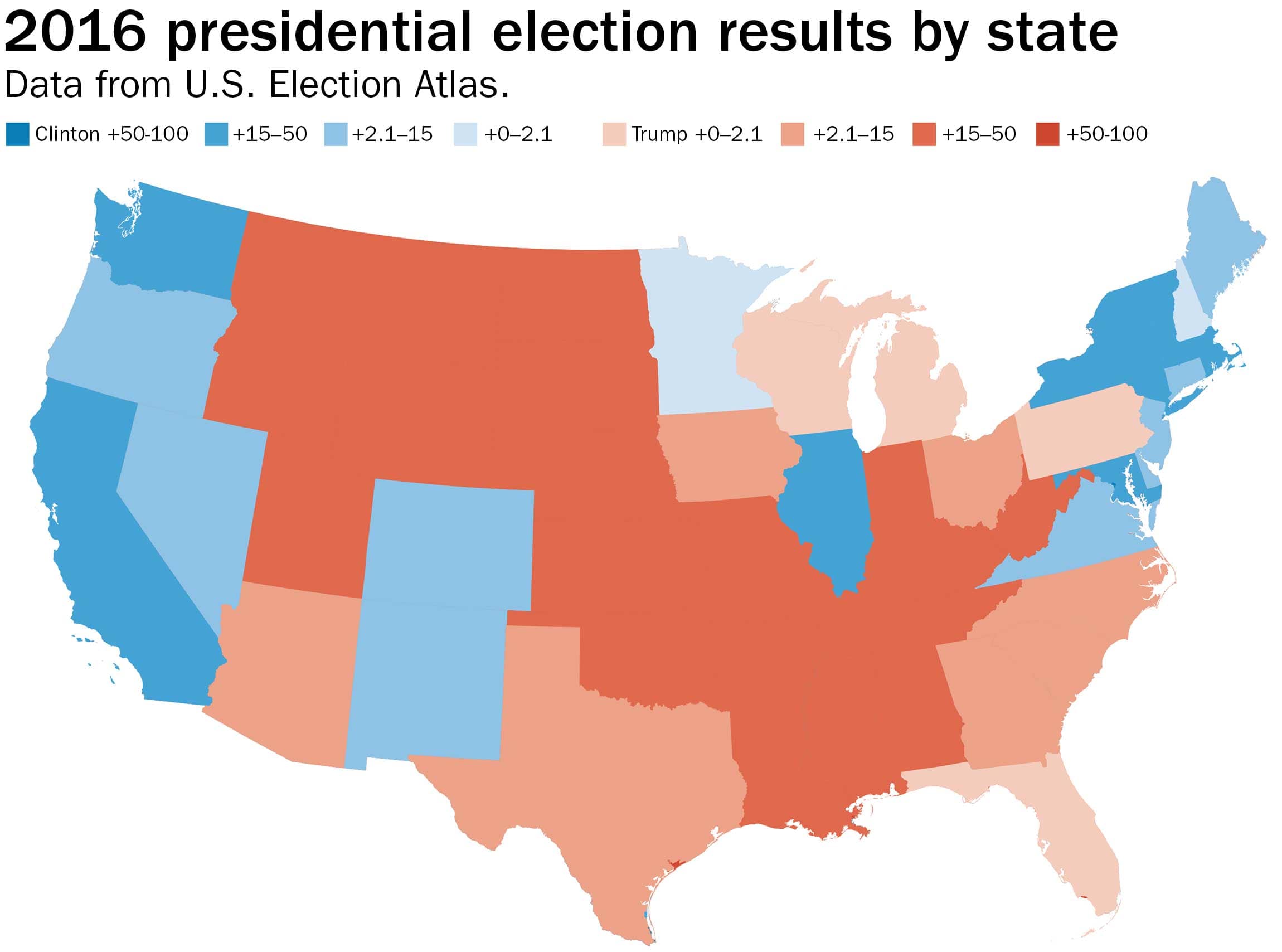
The 2016 election remains one of the most prominent examples of a "split" result in American history, where the winner of the popular vote did not win the presidency. This outcome was determined by the Electoral College, a system that allocates votes to states based on their congressional representation. Trump’s victory was secured by narrow margins in several key swing states that had previously been considered safe for Democrats.
| Candidate | Party | Popular Vote | Popular % | Electoral Votes |
|---|---|---|---|---|
| Donald Trump | Republican | 62,984,828 | 46.1% | 304 |
| Hillary Clinton | Democratic | 65,853,514 | 48.2% | 227 |
| Gary Johnson | Libertarian | 4,489,235 | 3.3% | 0 |
| Jill Stein | Green | 1,457,226 | 1.1% | 0 |
| Evan McMullin | Independent | 732,273 | 0.5% | 0 |
Note: The electoral vote total reflects the final count following seven "faithless electors" who cast ballots for individuals other than the winners of their state’s popular vote.
The decisive factor was Trump's ability to flip the "Blue Wall." He won Pennsylvania by roughly 44,000 votes, Wisconsin by 22,000, and Michigan by a mere 10,700 votes. These narrow margins—amounting to less than 80,000 votes combined across three states—were enough to shift 46 electoral votes from the Democratic column to the Republican one. This geographic concentration of support allowed Trump to overcome Clinton’s massive popular vote lead, which was driven largely by high turnout in California and New York.
Controversies and External Influences
The 2016 election was marked by several unprecedented controversies that many analysts believe shifted the final outcome. One of the most significant was the investigation into Hillary Clinton’s use of a private email server during her tenure as Secretary of State. On October 28, 2016—just eleven days before the election—FBI Director James Comey sent a letter to Congress announcing that the FBI was reviewing additional emails related to the case. While the FBI ultimately stood by its decision not to recommend charges, the "Comey Letter" dominated news cycles in the final week, stalling Clinton's momentum and potentially swaying late-deciding voters.
In addition to internal investigations, the election faced significant external interference. According to the U.S. Intelligence Community and subsequent reports from the Senate Intelligence Committee, the Russian government conducted a multi-pronged campaign to influence the election. This included the hacking of Democratic National Committee (DNC) servers and the subsequent release of internal emails via WikiLeaks, as well as an extensive social media disinformation campaign designed to sow discord and favor the Trump candidacy.
Furthermore, the role of polling and media coverage became a subject of intense scrutiny. Most major pollsters and data analysts, including those at FiveThirtyEight and the New York Times, predicted a Clinton victory based on state-level data. The failure of these models to account for "shy" Trump voters or the higher-than-expected turnout in rural areas led to a widespread distrust in political polling that persisted for years afterward. The media was also criticized for providing Trump with billions of dollars in "earned media" coverage due to his controversial statements, which some argued drowned out substantive policy debates.
The Lasting Legacy on American Governance and Jurisprudence
A decade after the event, the 2016 election stands as a transformative moment in American history. The most immediate impact was on the federal judiciary. President Trump appointed three Supreme Court justices—Neil Gorsuch, Brett Kavanaugh, and Amy Coney Barrett—shifting the Court toward a 6-3 conservative majority. This realignment led to landmark rulings in the following years, most notably the 2022 decision in Dobbs v. Jackson, which overturned Roe v. Wade and returned abortion regulation to the states.
The election also triggered a fundamental realignment of the two major political parties. The Republican Party transitioned from a pro-trade, interventionist "Reaganite" party to a more populist, nationalist organization focused on "America First" policies. Conversely, the Democratic Party moved toward a more progressive stance on economic and environmental issues, partly in response to the energy generated by the Sanders campaign. The urban-rural divide widened, with Democrats consolidating power in metropolitan areas and Republicans dominating rural and exurban regions.
Finally, the 2016 election changed the nature of political communication. The use of social media as a primary tool for direct voter engagement—bypassing traditional media filters—became the new standard. This shift increased the speed of the news cycle but also exacerbated the problem of "echo chambers" and the spread of misinformation. The norms of political discourse were permanently altered, leading to a more confrontational and polarized environment that continues to define American politics in 2026.
Frequently Asked Questions
Who won the popular vote in the 2016 election?
Hillary Clinton won the popular vote by a margin of 2,868,686 votes. She received approximately 65.8 million votes (48.2%) compared to Donald Trump's 62.9 million votes (46.1%). Under the United States Constitution, however, the presidency is decided by the Electoral College, where Trump won a clear majority.
What were the "Blue Wall" states?
The "Blue Wall" refers to 18 states and the District of Columbia that Democratic presidential candidates won in every election between 1992 and 2012. In 2016, Donald Trump successfully breached this wall by winning Pennsylvania, Michigan, and Wisconsin, which provided him with the necessary electoral votes to win the presidency.
How many faithless electors were there in 2016?
There were seven faithless electors in the 2016 election, the highest number in a single presidential election in over a century. Two electors defected from Donald Trump (casting votes for John Kasich and Ron Paul), and five defected from Hillary Clinton (casting votes for Colin Powell, Faith Spotted Eagle, and Bernie Sanders).
What was the impact of the James Comey letter?
The letter sent by FBI Director James Comey on October 28, 2016, reopened the investigation into Hillary Clinton's private email server just days before the election. Political analysts and statisticians, including Nate Silver, have argued that this late-breaking news likely shifted the vote by enough percentage points in swing states to change the outcome of the election.
Which third-party candidates had the most impact?
Gary Johnson (Libertarian Party) and Jill Stein (Green Party) were the most prominent third-party candidates. Johnson received over 4.4 million votes (3.3%), while Stein received approximately 1.4 million (1.1%). In the states of Michigan, Pennsylvania, and Wisconsin, Stein’s vote total exceeded the margin by which Clinton lost to Trump, leading to ongoing debates about "spoiler" effects in the election.
Navigating Political History Resources
To gain a deeper understanding of the 2016 election and its data, researchers should prioritize primary sources and archived data. The Federal Election Commission (FEC) provides the official, certified results for every state and territory, including campaign finance disclosures that reveal how much each candidate spent and where those funds originated. For those interested in the legal and procedural aspects of the Electoral College, the National Archives maintains a detailed record of the electoral certificates and the meeting of electors.
When analyzing the cultural and social impact, peer-reviewed academic studies and reputable exit polling from organizations like the Pew Research Center offer the most reliable insights into voter demographics and motivations. Avoid relying solely on contemporary news articles, which may lack the historical perspective and comprehensive data sets that have become available in the years since the election concluded.