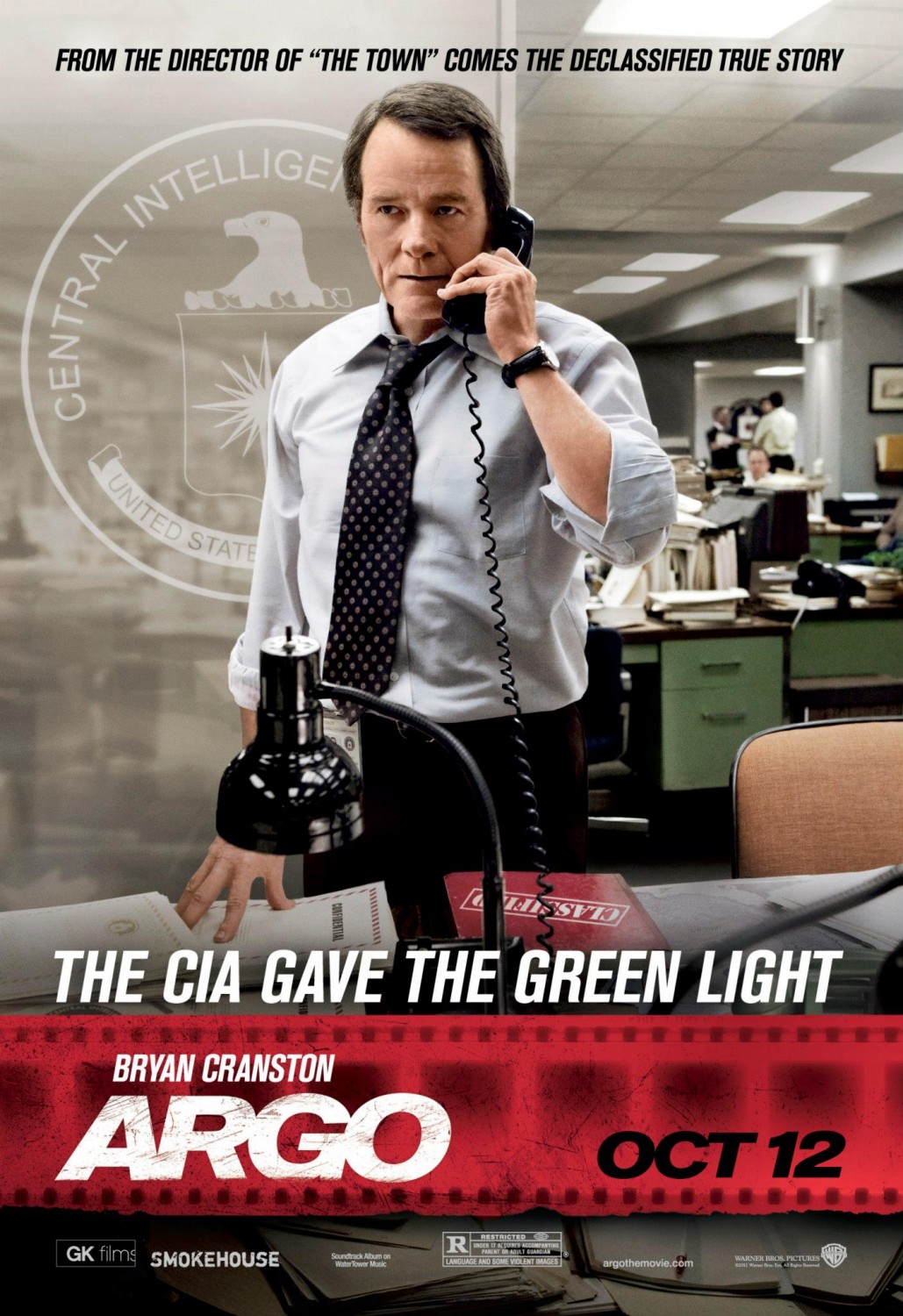
Ben Affleck’s professional landscape in 2016 was defined by a transition from his Academy Award-winning directorial success with Argo (2012) to becoming a cornerstone of the DC Extended Universe and a bankable action star. In 2016, Affleck starred in three major projects: Batman v Superman: Dawn of Justice, The Accountant, and the directorial effort Live by Night.
While the 2012 film Argo is often grouped with his mid-2010s output due to its long-tail critical impact, it served as the foundational prestige that allowed Affleck to navigate the high-stakes blockbuster environment of 2016. Understanding this period requires looking at how his directorial precision in Argo informed his roles in The Accountant and his interpretation of Bruce Wayne, as well as the challenges he faced with the period-drama Live by Night.
The Contextual Link Between Argo and the 2016 Resurgence
To understand Ben Affleck's 2016, one must first acknowledge the "Argo Effect." Released in late 2012, Argo did more than just win Best Picture; it rehabilitated Affleck’s image from a tabloid fixture to a respected auteur. By the time 2016 arrived, Affleck was no longer just an actor for hire; he was a filmmaker-star with significant creative leverage.
This leverage was the primary reason he was courted for the role of Batman. Warner Bros. didn’t just want an actor; they wanted a filmmaker who could help steer the creative direction of their burgeoning superhero universe. The technical discipline demonstrated in Argo—specifically the ability to balance tense geopolitical drama with character-driven narrative—was seen as a prerequisite for the "older, world-weary" Batman that debuted in 2016.
The 2016 calendar year represented the busiest stretch of Affleck’s career since the late 1990s. It was a year designed to solidify him as both a commercial titan and a serious artist. However, as 2026 retrospectives now show, this era was a complex mix of massive financial hits and personal creative pivots.
Batman v Superman: Dawn of Justice – The 2016 Cultural Pivot
In March 2016, Affleck made his debut as Bruce Wayne/Batman in Batman v Superman: Dawn of Justice. Following the announcement of his casting in 2013, which was met with significant online skepticism, Affleck’s performance ended up being one of the most widely praised elements of the film.
The "Batfleck" Interpretation
Affleck’s 2016 portrayal was a departure from the "Year One" style of previous iterations. Drawing heavily from Frank Miller’s The Dark Knight Returns, his version of the character was cynical, physically imposing, and morally compromised. This role required a significant physical transformation, with Affleck gaining substantial muscle mass to portray a hero who had been fighting crime for twenty years.
Production and Reception
The film, directed by Zack Snyder, was a polarizing cinematic event. While it grossed over $873 million worldwide, it faced a difficult critical reception. For Affleck, the film served as his entry point into the "Snyderverse," a role he would reprise in a cameo for Suicide Squad (August 2016) and later in Justice League. From a career standpoint, Batman v Superman proved that Affleck could carry a multi-billion dollar franchise, even if the critical consensus was divided.
The Accountant: A Surprise 2016 Commercial Hit
While the superhero genre dominated the headlines, October 2016 saw the release of The Accountant, a film that has since become a cult favorite and spawned a franchise. In this film, Affleck played Christian Wolff, a certified public accountant with high-functioning autism who uncooks the books for criminal organizations and moonlights as a highly trained assassin.
Character Depth and Technical Execution
Directed by Gavin O'Connor, The Accountant allowed Affleck to utilize a restrained, methodical acting style. Unlike the explosive nature of his Batman role, Christian Wolff required a performance rooted in ticks, routines, and suppressed emotion. The film was praised for its unique take on neurodivergence in the action genre, though it was noted for its heightened, almost comic-book-like portrayal of Wolff’s combat skills (utilizing the Indonesian martial art Pencak Silat).
Financial Performance and Legacy
Against a modest budget of $44 million, The Accountant grossed $155 million. Its success was a testament to Affleck’s individual drawing power outside of a cape and cowl. In the decade since its release, the film’s popularity on streaming platforms remained so consistent that it led to the development of The Accountant 2, confirming the character as one of Affleck’s most enduring 2016 contributions.
Live by Night: The Directorial Challenge of 2016
Closing out his prolific year, Affleck released Live by Night in December 2016 (wide release in early 2017). This was his fourth directorial effort and his first since the Oscar-winning Argo. Based on the novel by Dennis Lehane, the film was a Prohibition-era gangster epic set in Boston and Ybor City, Florida.
The Weight of Expectations
Following Argo, expectations for Affleck’s directing were at an all-time high. Live by Night was a passion project that he had been developing for years. He served as the writer, director, producer, and star. The film was noted for its stunning cinematography by Robert Richardson and its lush production design, which sought to emulate the "Golden Age" of Hollywood crime dramas.
Critical and Commercial Outcome
Unfortunately, Live by Night did not replicate the success of Argo. Critics felt the narrative was overstuffed, attempting to cover too much ground from the novel in a two-hour runtime. It became a rare box-office failure for Affleck during this period, grossing roughly $22 million against a $65 million budget. This outcome shifted the trajectory of his directorial career, leading to a longer hiatus from the director’s chair before he returned with projects like Air in later years.
Comparing the Pillars of Affleck's Career (2012–2016)
The following table compares the key metrics and roles of Affleck's landmark 2012 film with his primary 2016 releases to illustrate the diversity of his work during this era.
| Film Title | Release Year | Primary Role | Genre | Global Box Office (Approx.) | Key Recognition |
|---|---|---|---|---|---|
| Argo | 2012 | Director/Actor | Historical Thriller | $232 Million | Academy Award for Best Picture |
| Batman v Superman | 2016 | Actor (Batman) | Superhero/Action | $873 Million | Saturn Award Nomination |
| The Accountant | 2016 | Actor | Action/Thriller | $155 Million | Strong VOD/Streaming Longevity |
| Live by Night | 2016 | Director/Actor | Crime Drama | $22 Million | Critics' Choice Design Nominee |
The Technical Evolution: From Argo to 2016
The technical progression of Ben Affleck’s work between Argo and 2016 is marked by an increasing comfort with large-scale production. In Argo, the technical challenge was historical authenticity and the maintenance of "shorthand" visual storytelling—using grainy film stock to mimic the 1970s.
By 2016, his technical focus had shifted in two directions:
- VFX Integration: In Batman v Superman, Affleck had to work within a heavy CGI environment, a significant departure from the practical, location-based shooting of his earlier films like The Town or Argo.
- Choreographic Precision: Both The Accountant and Batman v Superman required Affleck to perform complex, highly choreographed physical sequences. His work in The Accountant, specifically, was lauded for the "clinical" nature of the action, which reflected the character’s internal logic.
The Impact on Modern Cinema (A 2026 Perspective)
Looking back from 2026, the 2016 "Affleck Year" is seen as the peak of the "Movie Star as Auteur" era. It was a time when a single individual could headline the world’s biggest franchise while simultaneously trying to keep the mid-budget adult thriller (The Accountant) and the prestige period piece (Live by Night) alive in a changing theatrical market.
Frequently Asked Questions
Was Argo released in 2016?
No, Argo was released on October 12, 2012. It is often associated with Ben Affleck's 2016 films because the success of Argo was the primary catalyst that allowed him to take on the role of Batman and secure funding for his 2016 directorial project, Live by Night.
How many movies did Ben Affleck have in 2016?
Ben Affleck appeared in three films released in 2016. He had starring roles in Batman v Superman: Dawn of Justice (March) and The Accountant (October), and a lead role in Live by Night (December). Additionally, he made a brief cameo appearance as Batman in Suicide Squad in August 2016.
Is The Accountant considered a sequel to Argo?
No, The Accountant is an original action-thriller and is not narratively related to Argo. While both involve characters dealing with high-stakes international situations and complex paper trails, Argo is a historical dramatization of the 1979 "Canadian Caper," whereas The Accountant is a fictional contemporary thriller.
Why was Live by Night less successful than Argo?
While Argo benefited from a tight, suspenseful script and a "stranger than fiction" true story, Live by Night was criticized for its pacing and a sprawling plot that felt disconnected. Argo arrived during a peak interest in historical thrillers, whereas by late 2016, the market for R-rated, mid-budget period gangster dramas had significantly cooled in favor of franchise blockbusters.
Did Ben Affleck direct Batman v Superman?
No, Batman v Superman: Dawn of Justice was directed by Zack Snyder. Ben Affleck was the lead actor playing Bruce Wayne/Batman. However, Affleck was an executive producer on Justice League and was originally slated to direct a standalone Batman film, a project he eventually stepped away from.
Exploring the "Affleck Era" Filmography
For viewers looking to understand the full scope of Ben Affleck’s career, the transition from 2012 to 2016 provides a masterclass in career management and creative ambition. To experience this progression, a recommended viewing order begins with Argo to understand his directorial peak, followed by The Accountant to see his most successful character-acting work of that decade.
Following these, a comparison between Batman v Superman and Live by Night reveals the two extremes of the 2016 film industry: the massive, indestructible superhero franchise and the fragile, ambitious personal project. As we observe these films from 2026, they remain essential studies in how a modern filmmaker balances personal artistry with the demands of global commercial cinema.