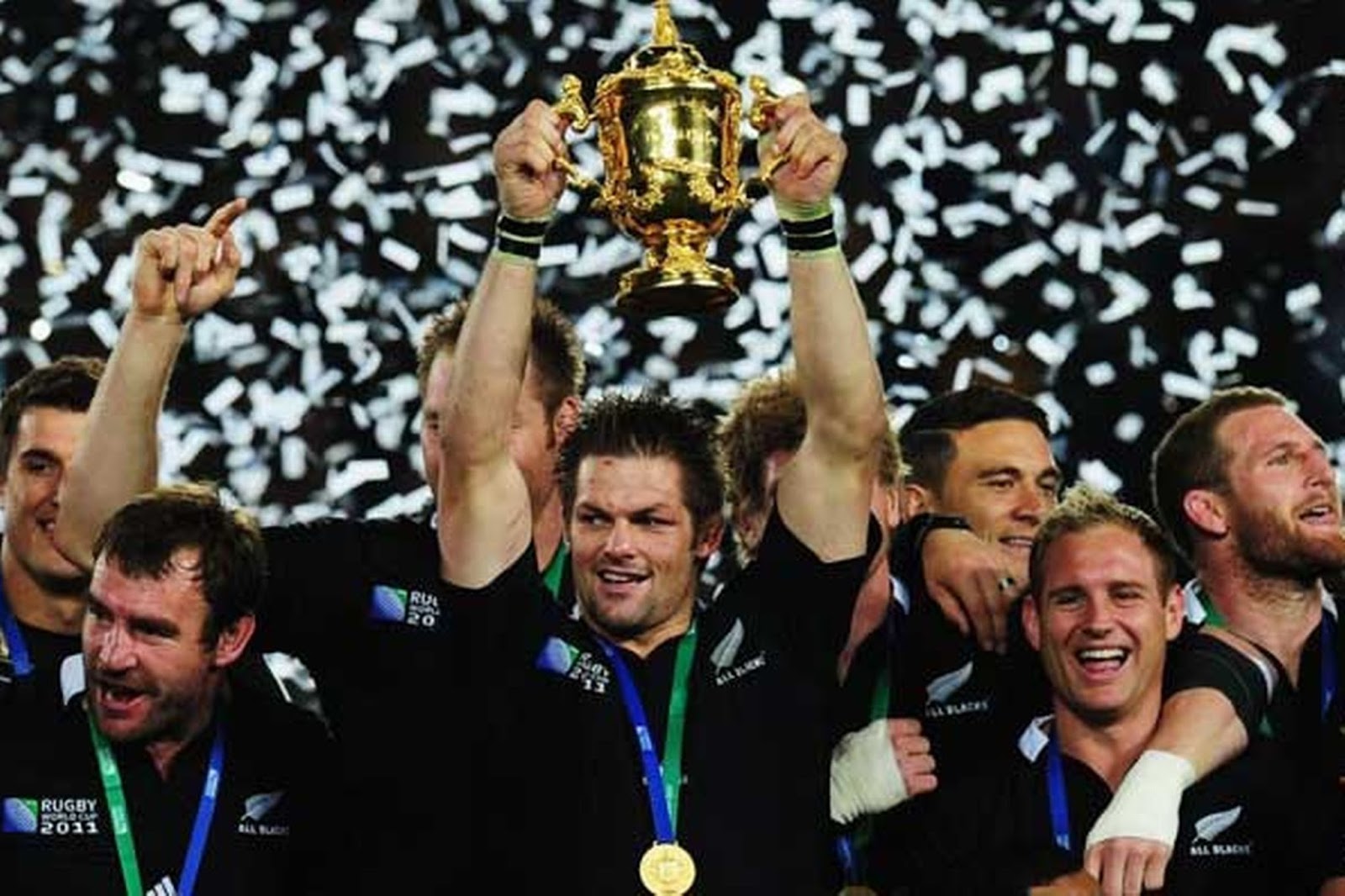
The 2015 Rugby World Cup, hosted primarily in England with additional matches in Wales, stands as a landmark event that redefined the commercial and competitive landscape of rugby union. New Zealand’s All Blacks secured a historic back-to-back title by defeating Australia 34–17 in the final, while the tournament was highlighted by Japan’s "Brighton Miracle" upset over South Africa.
Historical Context and Hosting Significance
The selection of England as the host nation for the eighth Rugby World Cup was a strategic move by World Rugby (then the International Rugby Board) to maximize the sport's commercial potential. By 2015, rugby had transitioned into a professional era that demanded high-capacity stadiums and sophisticated infrastructure. England provided this through a mix of traditional rugby cathedrals like Twickenham and iconic football venues such as Wembley and the Stadium of Light.
The tournament’s significance was amplified by the inclusion of the Millennium Stadium in Cardiff, Wales, which hosted eight matches including two quarter-finals. This cross-border cooperation ensured that the "Home of Rugby" atmosphere was felt across the United Kingdom. From a 2026 perspective, we look back at 2015 as the year rugby truly broke into the global mainstream, recording an attendance of over 2.47 million fans and generating an economic impact of approximately £2.3 billion for the host economy.
The organizational success set a high bar for subsequent tournaments in Japan (2019) and France (2023). It proved that rugby could fill 90,000-seat stadiums consistently, even for matches between Tier 2 nations, signaling a shift in the sport's global demographic and marketability.
The Group Stages and the "Brighton Miracle"
The 2015 edition is perhaps best remembered for the most significant upset in rugby history. On September 19, 2015, at the Brighton Community Stadium, Japan faced the two-time champion South Africa. Under the guidance of Eddie Jones, Japan opted for a high-risk, high-speed tactical approach that neutralized the Springboks' physical advantages.
Instead of taking a late penalty for a draw, Japan pushed for a try in the final seconds. Karne Hesketh’s corner try secured a 34–32 victory, a moment now referred to as the "Brighton Miracle." This event changed the perception of Tier 2 nations and proved that tactical ingenuity could bridge the gap between established powerhouses and emerging rugby nations.
While Japan captured the world's heart, the host nation faced a sporting catastrophe. England was drawn into the "Pool of Death" (Pool A) alongside Australia and Wales. Losses to both meant that England became the first solo host nation in Rugby World Cup history to fail to reach the knockout stages. This failure led to a total overhaul of the English coaching system, eventually leading to the appointment of Eddie Jones as their head coach shortly after the tournament.
Key Statistics and Tournament Performance
The technical data from the 2015 tournament illustrates a high level of ball-in-play time and a shift toward more expansive, attacking rugby. Southern Hemisphere teams dominated the statistics, particularly in terms of offloads and line breaks.
| Category | Record Holder | Statistic / Detail |
|---|---|---|
| Tournament Winner | New Zealand | Third Title (Back-to-Back) |
| Top Point Scorer | Nicolás Sánchez (Argentina) | 97 Points |
| Top Try Scorer | Julian Savea (New Zealand) | 8 Tries |
| Total Attendance | Global Fans | 2,477,232 (98% of capacity) |
| Final Score | NZ vs Australia | 34–17 |
| Most Tackles | Lodewyk de Jager (South Africa) | 77 Tackles |
The performance of Argentina also deserves mention. Their fourth-place finish cemented their status as a genuine world power, moving away from a traditional set-piece-dominant game to a flamboyant style that troubled both Ireland and Australia in the later stages.
Southern Hemisphere Dominance in the Knockout Rounds
The quarter-finals of the 2015 Rugby World Cup marked a historic low for Northern Hemisphere rugby. For the first time in the tournament's history, not a single team from the Six Nations reached the semi-finals. New Zealand, Australia, South Africa, and Argentina swept the board, highlighting a massive technical and physical gulf between the hemispheres at that time.
The most controversial match of this phase was Australia vs. Scotland. A late penalty awarded by referee Craig Joubert allowed the Wallabies to escape with a 35–34 win. World Rugby later took the unusual step of issuing a public statement confirming that the penalty should not have been awarded, a decision that sparked intense debate about the role of the Television Match Official (TMO) and officiating pressure.
In the semi-finals, New Zealand displayed their "clutch" ability, squeezing past a physical South African side 20–18 in a rain-soaked encounter. Australia’s path was more open, defeating Argentina 29–15, setting up the first-ever final between the two Trans-Tasman rivals.
The Final: New Zealand’s Historic Achievement
The final held at Twickenham on October 31, 2015, was a masterclass in modern rugby. New Zealand entered as favorites, aiming to become the first team to retain the Webb Ellis Cup. The match was defined by the legendary performance of Dan Carter, who was playing his final international game.
New Zealand dominated the first half, but Australia mounted a spirited comeback in the second, narrowing the gap to just four points at 21–17. However, Carter’s 40-meter drop goal—executed with pinpoint precision under immense pressure—snapped the Australian momentum. A final try by Beauden Barrett sealed the 34–17 victory.
This match served as a fitting farewell for a "golden generation" of All Blacks, including captain Richie McCaw, Dan Carter, Ma'a Nonu, Conrad Smith, and Keven Mealamu. Their ability to maintain a high winning percentage over a four-year cycle remains a benchmark for excellence in professional sports.
Technological Advances and Officiating Shifts
The 2015 tournament was a turning point for the integration of technology in rugby. The use of the TMO was expanded significantly to ensure accuracy in try-scoring and foul play. While this led to more correct decisions, it also introduced concerns regarding the "flow" of the game—a debate that continues into the 2026 season.
Broadcasting also saw a massive leap. Hawk-Eye technology, commonly used in tennis and cricket, was implemented to provide referees with better angles for video reviews and to assist medical staff in identifying potential concussions through real-time video playback. This focus on player welfare, specifically regarding head injuries, became a central pillar of World Rugby's mandate following the 2015 event.
Impact on Player Welfare and Modern Regulations
Following the physical intensity of the 2015 matches, World Rugby accelerated its research into injury prevention. The tournament showed that the size and speed of players had reached a point where collision forces were becoming a critical safety concern.
- High Tackle Sanctions: The 2015 tournament provided the data that eventually led to the strict high-tackle frameworks we see today.
- HIA Protocols: The Head Injury Assessment (HIA) was refined based on the 2015 experience to ensure players were not returning to the field with undiagnosed concussions.
- Substitution Limits: Discussions began around whether the number of substitutes was contributing to "impact fatigue," though significant changes to the "Bomb Squad" style of bench usage wouldn't be fully addressed until years later.
Frequently Asked Questions
Who won the 2015 Rugby World Cup?
New Zealand won the tournament, defeating Australia 34–17 in the final. This victory made them the first team to win three World Cup titles and the first to win back-to-back tournaments (2011 and 2015).
What was the biggest upset of the 2015 Rugby World Cup?
The biggest upset was Japan defeating South Africa 34–32 in the group stages. Often called the "Brighton Miracle," it is widely considered the greatest shock in the history of international rugby union because of the massive gap in world rankings between the two teams at the time.
Why did England get knocked out so early in 2015?
England failed to progress past the pool stages after losing crucial matches to Wales (25–28) and Australia (13–33). They were placed in Pool A, which was exceptionally competitive, and their inability to close out the game against Wales despite a significant lead proved fatal to their campaign.
Which stadium hosted the 2015 Rugby World Cup final?
The final was held at Twickenham Stadium in London. Twickenham is the traditional home of English rugby and, with a capacity of 82,000, provided one of the largest stages in the sport's history for the New Zealand vs. Australia showdown.
Who was the top try scorer in the 2015 tournament?
Julian Savea of New Zealand was the top try scorer with 8 tries. This performance equaled the record for most tries in a single World Cup tournament, a record he shares with fellow All Black Jonah Lomu (1995) and South Africa’s Bryan Habana (2007).
Preserving the Legacy of 2015
For fans and historians looking to revisit the 2015 Rugby World Cup, the tournament's official archives and match replays remain available through the World Rugby website. The 2015 event did more than just crown a champion; it expanded the game's footprint into non-traditional markets and set the stage for the global expansion seen in the 2020s.
If you are a coach or player, studying the 2015 All Blacks provides a masterclass in tactical flexibility and leadership under pressure. For casual fans, the "Brighton Miracle" remains a testament to the unpredictable nature of sport. As we move forward into the 2027 World Cup cycle, the lessons of 2015—ranging from host nation pressure to the rise of Tier 2 competitiveness—continue to inform how the global game is managed and played.