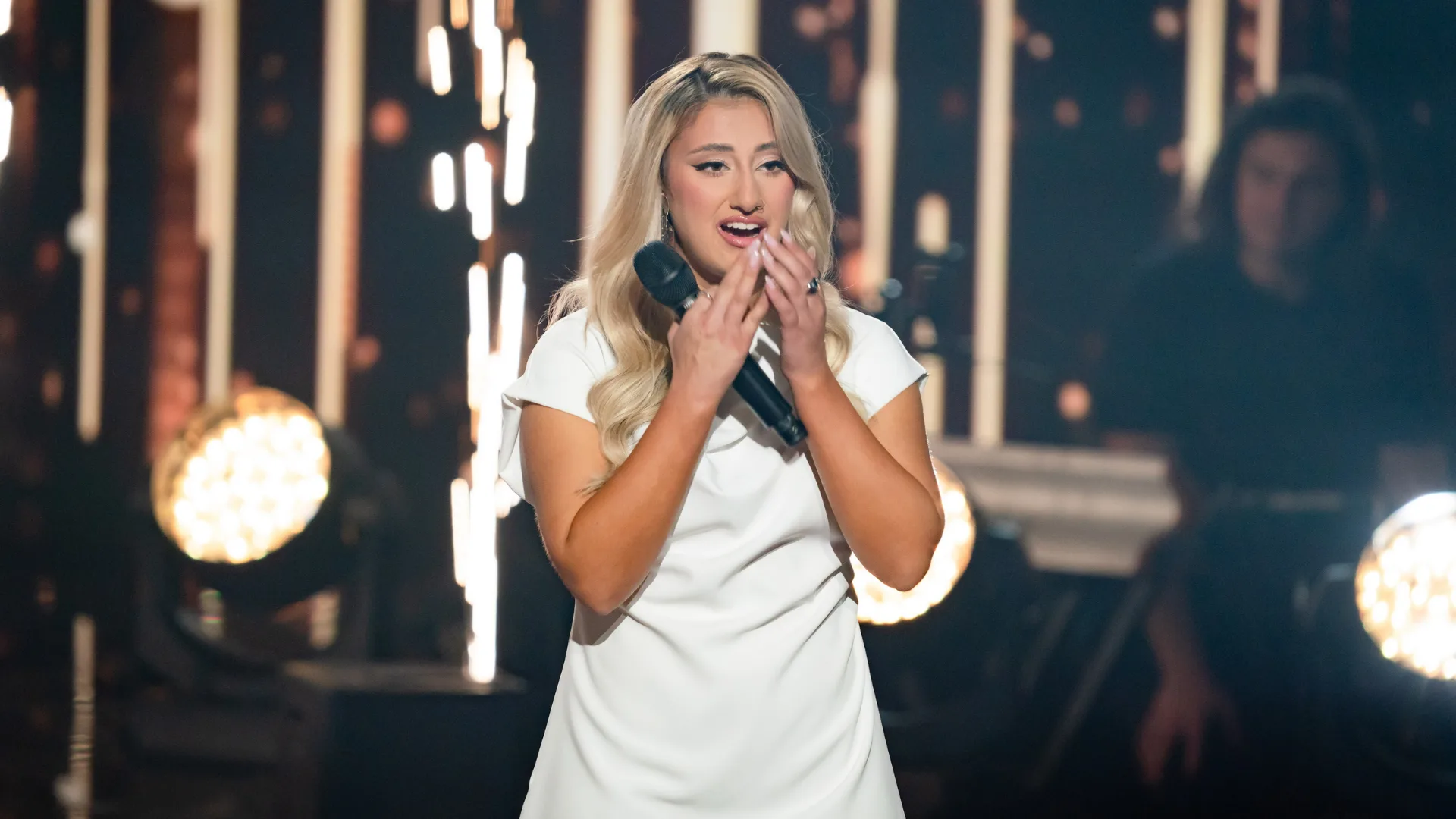
In 2014, the global franchise of "The Voice" crowned several champions across its various international iterations. In the United States, the year saw two winners due to its bi-annual schedule: Josh Kaufman won Season 6 in the spring, and Craig Wayne Boyd secured the title for Season 7 in the fall. Meanwhile, Jermain Jackman won the UK’s third season, and Anja Nissen took the title in Australia’s third season.
The year 2014 was a pivotal period for "The Voice" brand. As the show matured, it moved beyond the initial novelty of the "spinning chairs" and established itself as a legitimate star-making machine—or at least a platform for incredible vocalists to find a global stage. This guide provides a comprehensive look at the winners of 2014, the coaches who guided them, and the competitive context that defined their victories.
The United States: A Year of Two Champions
The U.S. version of The Voice on NBC is unique for producing two seasons per calendar year. In 2014, this resulted in two distinct narratives: the victory of a soulful "steal" and the triumph of a classic country powerhouse.
Josh Kaufman: The Season 6 Champion (Spring 2014)
Josh Kaufman, a soulful singer from Indianapolis, became the winner of Season 6 on May 20, 2014. His victory was historic for several reasons, most notably because he was the first winner to have been "stolen" by another coach during the competition.
Kaufman originally began his journey on Team Adam Levine. However, during the Battle Rounds, Levine chose to let him go in favor of another contestant. Usher, seeing the untapped potential in Kaufman’s smooth, R&B-influenced vocals, used his "steal" to bring him onto Team Usher. This proved to be a masterstroke. Kaufman’s performances of songs like "Stay with Me" and "Set Fire to the Rain" resonated deeply with the voting public.
His win was also significant for Usher, marking the first time a coach other than Adam Levine or Blake Shelton had won a season since Season 4. Kaufman’s win was characterized by his technical precision and ability to bridge the gap between contemporary pop and classic soul.
Craig Wayne Boyd: The Season 7 Champion (Fall 2014)
As the year moved into the autumn, Season 7 introduced a different kind of talent. Craig Wayne Boyd, a traditional country singer with a long-haired, rocker aesthetic, claimed the title on December 16, 2014.
Boyd’s path to the finale was a testament to the "never give up" spirit of the show. Like Kaufman, Boyd was also a "stolen" artist—twice. He started on Team Blake, was stolen by Gwen Stefani, and was later stolen back by Blake Shelton. This "prodigal son" narrative endeared him to the country music fan base that historically dominates the voting block for The Voice.
His winner’s single, "My Baby’s Got a Smile on Her Face," debuted at number one on the Billboard Hot Country Songs chart, a rare feat for a reality TV contestant. Boyd’s victory reinforced Blake Shelton’s reputation as the most successful coach on the panel and highlighted the show’s enduring connection to the country music industry.
The UK and Australia: International Breakthroughs
While the U.S. version often dominates headlines, the UK and Australian versions of "The Voice" were at their peak popularity in 2014, producing winners who brought unique cultural and vocal textures to the franchise.
Jermain Jackman: The Voice UK Season 3
In April 2014, Jermain Jackman was crowned the winner of the third series of The Voice UK. A deep-voiced baritone with a penchant for gospel and soul, Jackman was mentored by will.i.am.
Jackman was notable not just for his voice, but for his poise and his aspirations outside of music. At the time of his win, he was heavily involved in local politics in Hackney, London, and often spoke about using his platform to inspire young people. His victory was seen as a win for "the underdog," as he beat out several more conventional pop stylists to take the trophy.
Anja Nissen: The Voice Australia Season 3
In July 2014, Anja Nissen won the third season of The Voice Australia. Mentored by will.i.am (who achieved a "double" that year by winning in both the UK and Australia), Nissen was a powerhouse vocalist of Danish descent.
Nissen’s win was a display of sheer technical ability. Her performances of "When Love Takes Over" and "I Have Nothing" showed a vocal range that few could match. Following her win, she continued to find success, eventually representing Denmark in the Eurovision Song Contest in 2017, proving that The Voice can serve as a legitimate international springboard.
2014 Winner Comparison and Context
To better understand the diversity of talent in 2014, the following table summarizes the primary winners across the major English-speaking iterations of the show.
| Region | Season | Winner | Primary Coach | Winning Genre | Key Performance |
|---|---|---|---|---|---|
| USA (Spring) | Season 6 | Josh Kaufman | Usher | Soul / R&B | "Stay with Me" |
| USA (Fall) | Season 7 | Craig Wayne Boyd | Blake Shelton | Country | "The Old Rugged Cross" |
| United Kingdom | Series 3 | Jermain Jackman | will.i.am | Gospel / Soul | "And I Am Telling You" |
| Australia | Season 3 | Anja Nissen | will.i.am | Pop / Power Ballad | "I Have Nothing" |
Technical Evolution of the Show in 2014
The year 2014 saw several technical and format changes that influenced who won and how the audience engaged with the performers.
- The Expansion of "The Steal": By 2014, the "Steal" had become a fundamental part of the strategy. Both U.S. winners that year were beneficiaries of this mechanic. This shifted the power dynamics from the coaches to the artists, allowing those who may have been mismatched initially to find a better fit.
- iTunes Voting Dominance: In 2014, iTunes sales were a primary voting method. If an artist’s studio recording reached the Top 10 of the iTunes chart, their votes were multiplied. This gave a massive advantage to artists who could record "radio-ready" versions of their covers, a factor that heavily favored Josh Kaufman and Craig Wayne Boyd.
- The "Instant Save": Social media integration became more aggressive in 2014. The "Twitter Instant Save" allowed viewers to save their favorite artists in real-time during the live results shows. This transformed the finale race into a digital marketing battle as much as a vocal competition.
The Competitive Field: Who Did They Beat?
To understand the magnitude of a 2014 win, one must look at the quality of the competition. Season 6 of the U.S. version is often cited as one of the most talented in the show’s history.
Josh Kaufman had to overcome Christina Grimmie, a YouTube sensation who had a massive pre-existing fan base. Grimmie’s third-place finish was a shock to many, but it underscored Kaufman’s broad appeal across older demographics who favored his soulful style. Tragically, Grimmie’s legacy remains a significant part of The Voice history following her passing in 2016.
In Season 7, Craig Wayne Boyd faced off against three members of Adam Levine’s team in the finale: Matt McAndrew, Chris Jamison, and Damien. Despite being the lone representative for Team Blake and facing a "triple threat" from Team Adam, Boyd’s country fan base and his dramatic transformation throughout the season propelled him to a win. This remains one of the most statistically unlikely victories in the show's history.
Legacy and Career Paths Post-2014
Winning The Voice provides a platform, but the subsequent career path is rarely a straight line to superstardom. As of 2026, we can look back at these 2014 winners with the benefit of hindsight.
- Josh Kaufman: Instead of a traditional pop career, Kaufman found his niche on Broadway. Shortly after his win, he took the lead role in the musical Pippin. He has continued to work in music education and independent soul music, maintaining a respected status as a "singer's singer."
- Craig Wayne Boyd: Boyd faced challenges with his label shortly after his win, a common hurdle for reality stars. However, he transitioned into the independent country scene and formed the band Texas Hill. He remains a staple of the Nashville touring circuit.
- Jermain Jackman: Jackman took a unique route by balancing music with his passion for social justice. He released a self-titled album in 2015 but eventually focused more on his studies and political activism, becoming a prominent voice for youth representation in the UK.
- Anja Nissen: Nissen’s career took an international turn. After her Australian win, she relocated to her ancestral home of Denmark. Her participation in Eurovision 2017 with the song "Where I Am" brought her to a massive European audience, and she continues to release music in the Scandinavian market.
Frequently Asked Questions
Who won The Voice US in 2014?
There were two winners for the US version in 2014. Josh Kaufman won Season 6 in the spring (May), and Craig Wayne Boyd won Season 7 in the fall (December).
Which coach had the most wins in 2014?
Globally, will.i.am was the most successful coach of 2014, winning both The Voice UK with Jermain Jackman and The Voice Australia with Anja Nissen. In the U.S., Usher and Blake Shelton each took one win.
Did any 2014 winners become famous?
While none of the 2014 winners became "A-list" global pop stars on the level of Kelly Clarkson, they all achieved professional longevity. Josh Kaufman starred on Broadway, Anja Nissen became a Eurovision finalist, and Craig Wayne Boyd topped the country charts.
Was 2014 the year Christina Grimmie was on The Voice?
Yes, Christina Grimmie competed in Season 6 (Spring 2014). She was a member of Team Adam and finished in third place behind winner Josh Kaufman and runner-up Jake Worthington.
What was the "Instant Save" controversy in 2014?
In Season 6, there was a technical glitch during the finale where iTunes votes for Josh Kaufman and Christina Grimmie were not counted correctly due to a system error. The producers decided to remove the iTunes multiplier for all finalists that week to ensure fairness, which sparked significant debate among fans online.
Verifying the 2014 Winners
For those looking to explore the music of the 2014 champions, their performances are still widely available on streaming platforms. To verify the facts or dive deeper into the statistics of these seasons, fans should consult the official NBC The Voice archives or the official YouTube channels for The Voice UK and Australia. If you are researching for academic or journalistic purposes, the Nielsen ratings from 2014 provide excellent context on the cultural impact of these specific seasons, which marked the peak of the show's linear television viewership.