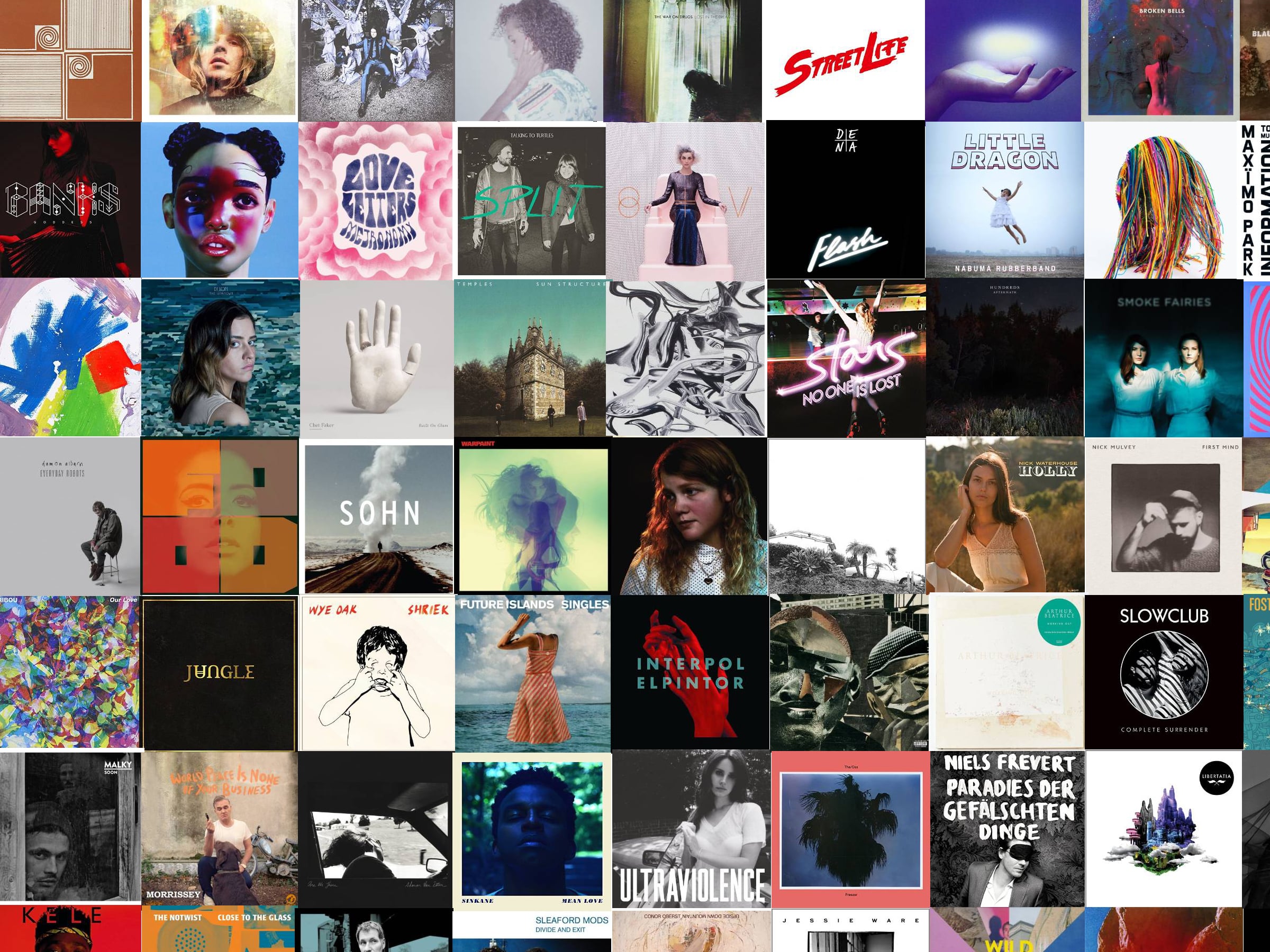
In 2014, the music industry underwent a seismic shift characterized by the transition from digital downloads to streaming dominance and the release of career-defining records by J. Cole, Taylor Swift, and Lana Del Rey. Whether you are searching for J. Cole's landmark 2014 Forest Hills Drive or a broader analysis of the year's chart-topping releases, 2014 remains one of the most culturally significant periods in modern music history.
The Cultural Landscape of Music in 2014
To understand any 2014 album, one must first recognize the industry's volatile state during that era. In 2014, the "streaming wars" were in their infancy. Spotify was growing, but Taylor Swift notably pulled her entire catalog from the service in November 2014, arguing that music should not be free. This year represented the final stand of the traditional "pure sale" model before the RIAA and Billboard modified their charting rules to weigh streams heavily.
Technically, 2014 was a year of "prestige pop" and the "return to basics" in hip-hop. While the early 2010s were dominated by EDM-infused pop, 2014 saw a pivot toward minimalist production, 1980s synth-pop revivalism, and deeply personal, narrative-driven lyricism. From a technical standpoint, engineers began mastering for mobile devices more aggressively, yet the year still produced high-fidelity masterpieces that audiophiles celebrate in 2026.
J. Cole’s "2014 Forest Hills Drive": The Definitive Rap Statement
For many listeners, the phrase "2014 album" is synonymous with J. Cole’s third studio album, 2014 Forest Hills Drive. Released on December 9, 2014, the album was a departure from the radio-chasing singles of his previous work. It focused on his childhood home in Fayetteville, North Carolina, and dealt with themes of fame versus family, the loss of innocence, and the "Hollywood Cole" persona.
Technical Production and "No Features"
The album famously became a cultural meme for going "Double Platinum with no features." In 2026, we look back at this as a pivotal moment for artist autonomy. J. Cole handled much of the production himself, alongside collaborators like Ron Gilmore and Vinylz. The sound is characterized by warm, soulful samples and crisp, boom-bap influenced percussion.
- "No Role Modelz": This track became the album's most enduring hit, featuring a prominent sample of "Don't Save Her" by Project Pat. Technically, the song is a masterclass in dynamic range, balancing a heavy bassline with a melodic synth lead that cuts through modern car speakers.
- "G.O.M.D.": Notable for its complex rhythmic structure and tempo shifts, this track showcased Cole's ability to blend conscious lyricism with high-energy production.
- Narrative Arc: Unlike many albums of the era, 2014 Forest Hills Drive was designed as a linear listening experience, a "concept album" that required listeners to engage with it from start to finish.
Taylor Swift’s "1989": The Pop Blueprint
If J. Cole defined the hip-hop landscape in 2014, Taylor Swift’s 1989 redefined the pop genre. Released in October 2014, this was Swift’s official departure from country music. Working with producers Max Martin and Shellback, Swift created a technical marvel of 1980s-inspired synth-pop that sounds as fresh in 2026 as it did over a decade ago.
The technical depth of 1989 lies in its use of gated reverb, analog synthesizers (like the Juno-6), and meticulously layered vocal stacks. The lead single "Shake It Off" utilized a prominent saxophone loop and a minimalist drum pattern, while "Blank Space" relied on a sparse, percussive arrangement that allowed the lyrical irony to take center stage.
The "1989 Era" also set the standard for modern album rollouts, utilizing "secret sessions" and heavy social media engagement—a strategy that has since been adopted by every major pop star. In 2026, we recognize 1989 as the moment Swift transitioned from a genre-specific star to a global cultural phenomenon.
Landmark Releases Across Alternative and R&B Genres
Beyond the blockbusters, 2014 was a vintage year for alternative and experimental music. These albums pushed the boundaries of what was technically possible with home recording and digital audio workstations (DAWs).
Lana Del Rey – "Ultraviolence"
Released in June 2014, Ultraviolence moved away from the "hip-hop for the indie crowd" sound of Born to Die toward a gritty, psychedelic rock aesthetic. Produced largely by Dan Auerbach of The Black Keys, the album utilized live instrumentation, tape saturation, and "wall of sound" mixing techniques. It remains a masterclass in atmospheric production, defining the "sad girl" aesthetic that would dominate the late 2010s.
FKA Twigs – "LP1"
As a technical achievement, FKA Twigs’ LP1 was ahead of its time. It blended industrial electronics, glitch-hop, and ethereal R&B. The production, handled by Twigs alongside Arca and Sampha, utilized extreme panning, vocal manipulation, and silence as an instrument. In 2026, LP1 is frequently cited by electronic producers as a primary influence on the "hyper-pop" movement.
U2 – "Songs of Innocence"
One cannot discuss a 2014 album without mentioning the technical and PR debacle of U2’s Songs of Innocence. In September 2014, Apple pushed the album to the library of every iTunes user for free. While technically an innovative distribution method, it was widely criticized as "digital spam." This event forced a conversation about user consent and the value of digital ownership that continues today.
Comparison of Top 2014 Albums and Their Impact
The following table compares the most impactful albums released in 2014 based on their genre, technical focus, and long-term legacy.
| Artist | Album Title | Primary Genre | Technical/Production Focus | 2026 Status |
|---|---|---|---|---|
| J. Cole | 2014 Forest Hills Drive | Hip-Hop | Soulful sampling; Narrative-driven | Modern Classic (3x Platinum) |
| Taylor Swift | 1989 | Synth-Pop | 80s analog synths; Gated reverb | Multi-Platinum; Cultural Blueprint |
| Lana Del Rey | Ultraviolence | Psychedelic Rock | Live instrumentation; Lo-fi vocals | Cult Classic; Influential Aesthetic |
| Sam Smith | In the Lonely Hour | Soul/Pop | Orchestral arrangements; Vocal-forward | Multi-Grammy Winner |
| Ed Sheeran | x (Multiply) | Pop/Folk | Loop-pedal layering; Acoustic/Rap blend | Diamond-certified era |
| St. Vincent | St. Vincent | Art Rock | Distorted guitar synths; Digital fuzz | Grammy Winner (Best Alt Album) |
The "Sound" of 2014: Technical Trends and Tools
From a production standpoint, 2014 was the year that the "loudness war" began to slightly subside in favor of dynamic range in high-end productions. Software like Ableton Live 9 and Logic Pro X (released in late 2013) became the standard tools for the bedroom producer revolution.
- Vocal Chops: Influenced by the rise of tropical house and future bass (e.g., Kygo), 2014 albums began utilizing manipulated vocal fragments as melodic hooks.
- Analog Revival: Even within pop, there was a move toward "real" sounds. Producers began integrating vintage hardware like the Roland TR-808 (often emulated but frequently original) to provide the low-end weight found in 2014 hip-hop.
- Minimalism: Lorde’s Pure Heroine (late 2013) influenced 2014's minimalism. Pop songs became less cluttered, allowing for more sub-bass and clear vocal delivery.
Why 2014 Albums Remain Relevant in 2026
In the current landscape of 2026, 2014 is viewed as the "Golden Year" for the Millennial and Gen Z transition. These albums are not just nostalgic; they represent a level of craftsmanship that preceded the "TikTok-ification" of music, where songs are now often written to be 15-second soundbites.
The longevity of 2014 Forest Hills Drive and 1989 is due to their cohesive storytelling. In an age of singles, these were complete bodies of work. Furthermore, the 10th-anniversary celebrations in 2024 brought a new wave of vinyl reissues and "Taylor's Version" style re-evaluations, solidifying their place in the "canon" of 21st-century music.
FAQ
What was the best-selling 2014 album?
Taylor Swift’s 1989 was the best-selling album released in 2014, moving over 3.6 million copies in its first nine weeks alone. It surpassed the soundtrack for Disney's Frozen to take the top spot for the calendar year.
Why is "2014 Forest Hills Drive" so famous for having no features?
At a time when hip-hop was heavily reliant on high-profile collaborations to drive radio play, J. Cole’s decision to have zero guest artists was seen as a bold artistic statement. It proved that a solo artist could carry a 13-track narrative and achieve massive commercial success (3x Platinum) based solely on their own merit.
Which 2014 album won the Grammy for Album of the Year?
While many of the most famous albums were released in 2014, the Grammy for Album of the Year (awarded in early 2015) went to Morning Phase by Beck. This was a controversial win, as it beat out Beyoncé’s self-titled album and Sam Smith’s In the Lonely Hour.
How did the U2 2014 album controversy change the industry?
The "forced download" of Songs of Innocence led to significant changes in how Apple and other digital platforms handle automated content. It sparked a broader debate about the "devaluation" of music, eventually leading to the more curated, opt-in streaming models we use today in 2026.
What are the "hidden gems" of 2014 albums?
For those looking beyond the charts, 2014 produced several critically acclaimed "hidden gems," including Pinata by Freddie Gibbs & Madlib (a masterclass in underground rap), Burn Your Fire for No Witness by Angel Olsen (indie-folk), and The Waters by Mick Jenkins.
Exploring the 2014 Catalog Today
If you are looking to revisit the music of 2014, the best starting point is a high-fidelity streaming service or a physical vinyl copy of the major releases. To truly appreciate the technical depth of this year, listen for the transition in production styles—from the country-pop crossover of early 2014 to the synth-heavy pop and introspective rap of the fourth quarter.
For students of music production or history, analyzing the 2014 catalog provides a roadmap of how the industry moved from a product-based economy to the service-based streaming economy we occupy now. Start with the "Big Three": 2014 Forest Hills Drive, 1989, and Ultraviolence, as they represent the three pillars of the year's sonic identity.