The year 2012 remains one of the most consequential periods in the history of American public safety due to a series of high-profile mass shootings, most notably the tragedies at Sandy Hook Elementary School and a movie theater in Aurora, Colorado. These events fundamentally reshaped national discourse on gun violence, mental health, and school security protocols, leading to significant legislative debates and shifts in law enforcement tactics that continue to influence policy in 2026.
Contextualizing the Violence of 2012
While mass shootings have occurred throughout modern history, 2012 was characterized by the frequency and the specific nature of the targets. The year saw an escalation in "active shooter" incidents, a term defined by the FBI as individuals actively engaged in killing or attempting to kill people in a confined and populated area. The psychological impact of 2012 was intensified because the violence penetrated spaces previously considered "safe" or "sacred," such as elementary schools, houses of worship, and community entertainment venues.
From a statistical perspective, the surge in 2012 prompted the federal government to refine how it tracked and responded to these events. Before this period, data collection was often fragmented across local jurisdictions. Following the tragedies of 2012, the Investigative Assistance for Violent Crimes Act of 2012 was signed into law in early 2013, granting the U.S. Attorney General the authority to assist in the investigation of "mass killings" and "attempted mass killings."
The Aurora Theater Shooting (July 20, 2012)
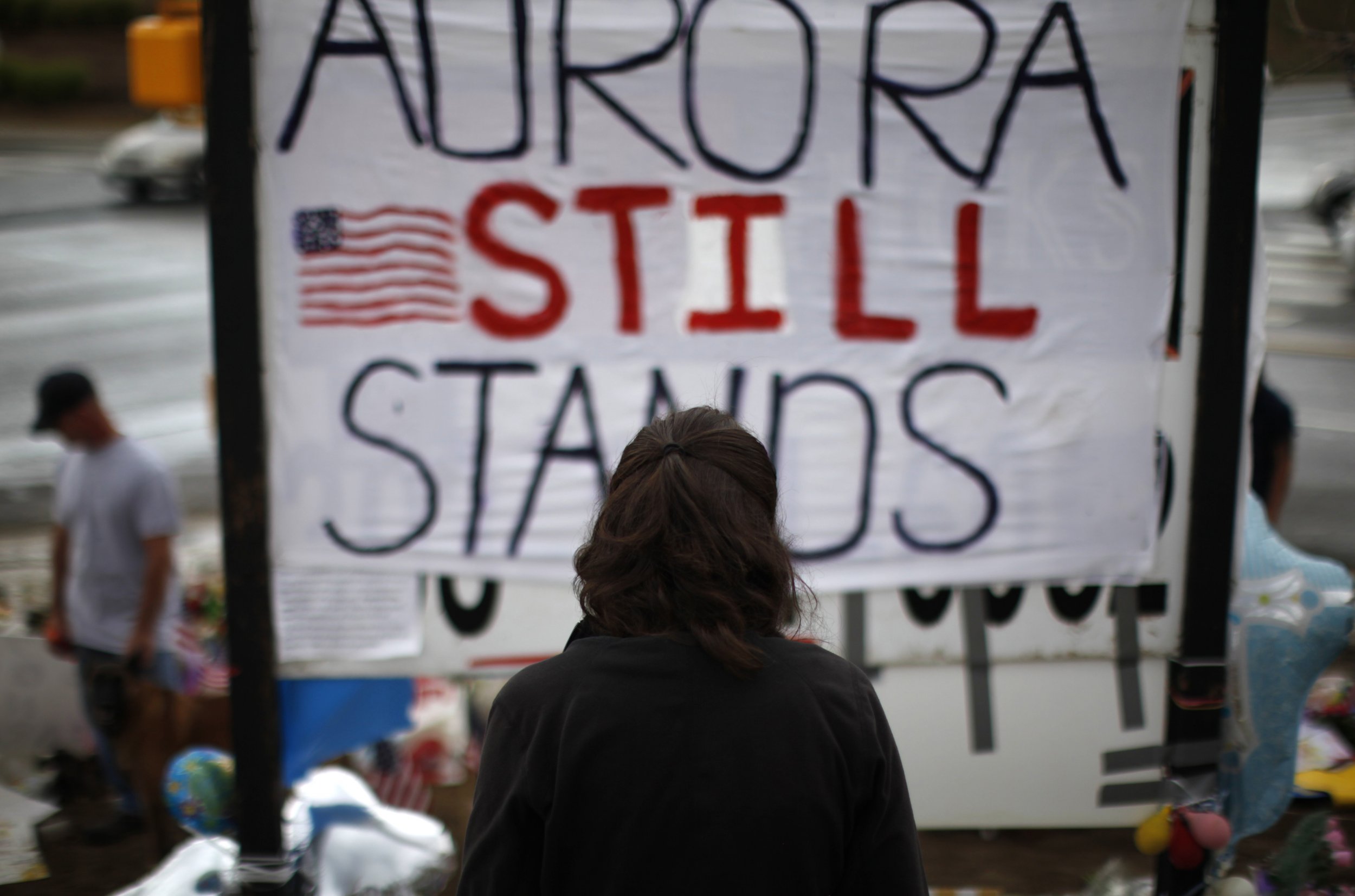
The first major incident of 2012 that captured global attention occurred in Aurora, Colorado, during a midnight screening of The Dark Knight Rises. This event was marked by its meticulous planning and the use of tactical equipment, which raised immediate questions about the accessibility of high-capacity magazines and body armor.
The Event and Immediate Response
On July 20, 2012, a lone gunman entered Theater 9 of the Century 16 multiplex. Clad in ballistic gear and using tear gas canisters to disorient the crowd, the perpetrator opened fire with multiple weapons, including a Smith & Wesson M&P15 semi-automatic rifle. The attack resulted in 12 fatalities and 70 injuries, making it one of the largest mass shootings in terms of total casualties at the time.
The response by Aurora police was notably swift, with the suspect apprehended behind the theater within minutes. However, the complexity of the case increased when investigators discovered the suspect’s apartment was rigged with sophisticated improvised explosive devices (IEDs), requiring days of careful dismantling by bomb squads.
Legal and Judicial Outcome
The subsequent trial of James Holmes became a landmark case for the insanity defense in the United States. While the defense argued that the perpetrator suffered from severe schizophrenia, the prosecution emphasized the methodical planning of the attack. In 2015, the perpetrator was found guilty on 165 counts, including first-degree murder, and was sentenced to life in prison without the possibility of parole. This case highlighted the immense difficulty of balancing mental health considerations with criminal culpability in mass casualty events.
The Sikh Temple Shooting in Oak Creek (August 5, 2012)
Less than a month after the Aurora shooting, the nation was struck by an act of domestic terrorism and a hate crime at a Sikh temple (Gurdwara) in Oak Creek, Wisconsin. This incident highlighted the intersection of mass violence and extremist ideologies.
On August 5, 2012, Wade Michael Page, a man with known ties to white supremacist groups, opened fire at the Gurdwara as members were preparing for Sunday services. Six people were killed, and four others were wounded. The shooter eventually died of a self-inflicted gunshot wound after being shot by a responding police officer.
The Oak Creek shooting was a pivotal moment for the Sikh American community and led to a broader movement to track hate crimes against Sikhs more accurately. In response to the tragedy, the FBI's Advisory Policy Board eventually recommended changes to the Uniform Crime Reporting (UCR) Program to include specific categories for hate crimes against Sikhs, Hindus, and Jains, a change that was fully implemented in subsequent years.
The Sandy Hook Elementary School Tragedy (December 14, 2012)
The most emotionally devastating event of the year occurred on December 14, 2012, in Newtown, Connecticut. The shooting at Sandy Hook Elementary School remains a definitive moment in American history, primarily due to the age of the victims and the scale of the loss within a primary education setting.
Overview of the Attack
The perpetrator, 20-year-old Adam Lanza, first killed his mother in their Newtown home before driving to the school. Armed with a Bushmaster XM15-E2S rifle and two handguns, he forced his way into the building. Within less than five minutes, the gunman killed 20 children (ages 6 and 7) and six adult staff members before taking his own life.
The brevity of the attack and the high lethality rate underscored the devastating effectiveness of semi-automatic firearms in confined spaces. The tragedy triggered a level of national mourning and outrage that had not been seen since the Columbine High School shooting in 1999.
Impact on School Security and Law Enforcement
Post-Sandy Hook, the philosophy of school safety underwent a radical transformation. The "Run, Hide, Fight" protocol and the ALICE (Alert, Lockdown, Inform, Counter, Evacuate) training program became standard in districts across the country. There was also a significant increase in the presence of School Resource Officers (SROs) and the implementation of "target hardening" measures, such as reinforced entryways and silent panic alarms.
Comparative Overview of Major 2012 Incidents
The following table summarizes the key metrics of the most significant mass shooting events of 2012 to provide a clear comparison of their scope and impact.
| Event Location | Date | Fatalities | Injuries | Primary Weapon Used |
|---|---|---|---|---|
| Aurora, CO (Movie Theater) | July 20, 2012 | 12 | 70 | AR-15 style rifle, shotgun, handgun |
| Oak Creek, WI (Sikh Temple) | Aug 5, 2012 | 6 | 4 | 9mm semi-automatic handgun |
| Minneapolis, MN (Accent Signage) | Sept 27, 2012 | 6 | 2 | 9mm semi-automatic handgun |
| Portland, OR (Clackamas Mall) | Dec 11, 2012 | 2 | 1 | Stolen AR-15 style rifle |
| Newtown, CT (Sandy Hook) | Dec 14, 2012 | 27* | 2 | AR-15 style rifle, handguns |
*Includes the shooter's mother and the shooter (suicide); 26 victims died at the school.
Legislative and Societal Impact Post-2012
The events of 2012 sparked a fierce legislative battle over gun control. In early 2013, the Obama administration proposed a series of measures, including a ban on "assault weapons" and universal background checks.
- The Manchin-Toomey Amendment: This was a bipartisan effort to expand background checks for gun purchases. Despite significant public support following Sandy Hook, the amendment failed to pass the Senate in April 2013, highlighting the deep political polarization surrounding the Second Amendment.
- State-Level Reforms: While federal legislation stalled, several states took decisive action. Connecticut passed some of the strictest gun laws in the country, including a ban on large-capacity magazines. Colorado also implemented new restrictions, including mandatory background checks for private sales.
- Red Flag Laws: The 2012 shootings catalyzed the development of "Extreme Risk Protection Orders" (ERPOs), or Red Flag laws. These laws allow family members or law enforcement to petition a court to temporarily remove firearms from individuals deemed a danger to themselves or others. As of 2026, these laws have been adopted by over 20 states.
Long-term Mental Health and Public Safety Protocols
Beyond legislation, 2012 forced a reckoning with the state of mental health resources in the U.S. The final report from the Sandy Hook Advisory Commission emphasized that while most individuals with mental illness are not violent, there is a critical need for "wrap-around" services for youth exhibiting behavioral risks.
Furthermore, the media's role in mass shootings was scrutinized. The "No Notoriety" movement gained traction after 2012, urging news organizations to focus on the victims rather than the perpetrators to prevent "copycat" incidents. Research into the "contagion effect" of mass shootings suggests that high-profile media coverage can increase the likelihood of another event occurring within a specific window of time.
Frequently Asked Questions
What was the primary weapon used in the 2012 mass shootings?
In the most high-casualty events, including Aurora and Sandy Hook, the primary weapon was an AR-15 style semi-automatic rifle. These weapons were favored by perpetrators for their high capacity and ease of use in close quarters. Handguns were also frequently used, either as primary weapons (Oak Creek) or as secondary backups.
How did Sandy Hook change school security in the long term?
Sandy Hook led to the widespread adoption of "Active Shooter" drills in schools and the physical "hardening" of school buildings. This included the installation of bullet-resistant glass, classroom door locks that can be engaged from the inside, and more sophisticated surveillance systems. It also sparked a debate about arming teachers, though most educational experts continue to favor professional security personnel over armed faculty.
Were there any federal gun laws passed in response to 2012?
While major legislative efforts like the Manchin-Toomey background check bill failed at the federal level, several executive actions were taken. These focused on improving the National Instant Criminal Background Check System (NICS) and clarifying definitions regarding who is prohibited from possessing firearms due to mental health reasons. It was not until the Bipartisan Safer Communities Act of 2022 that significant federal firearm legislation was again successfully passed.
Why is 2012 considered a turning point in US history?
2012 is considered a turning point because the sheer scale and nature of the violence—specifically the targeting of very young children and religious minorities—shattered the public's sense of safety in "soft targets." It moved the conversation from whether these events were anomalies to how society must structurally adapt to prevent them.
What is the "contagion effect" mentioned in studies of 2012?
The contagion effect refers to the phenomenon where the media coverage of one mass shooting serves as a template or inspiration for another. Researchers found that the intense, 24-hour news cycles following Aurora and Sandy Hook potentially contributed to a "cluster" of similar ideations among high-risk individuals, leading to a call for more responsible reporting.
Assessing Community Resilience and Next Actions
For communities and individuals looking to process the history of 2012 and contribute to future safety, the focus has shifted toward proactive intervention rather than just reactive security. Understanding the warning signs of "leakage"—where a potential shooter communicates their intent before an attack—is now a core component of threat assessment training in schools and workplaces.
The primary recommendation for public safety in 2026 remains the integration of mental health support with robust physical security. Communities are encouraged to support local "Threat Assessment Teams" which bring together law enforcement, mental health professionals, and educators to identify and support at-risk individuals before a crisis occurs. By studying the failures and lessons of 2012, modern safety protocols strive to create a "layered" defense that prioritizes prevention over response.