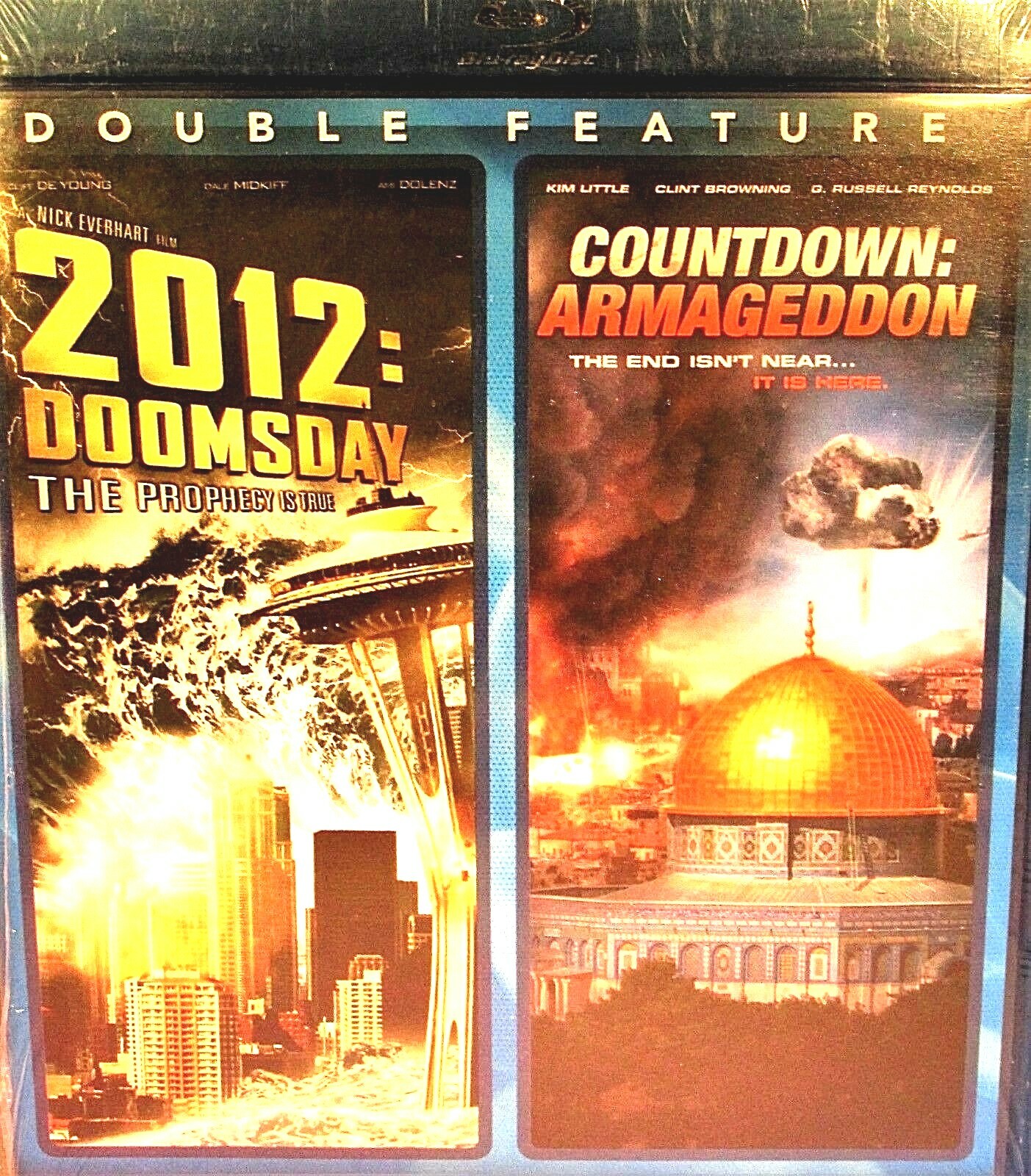
The 2012 doomsday phenomenon was a global suite of eschatological beliefs claiming that cataclysmic or transformative events would occur on or around December 21, 2012. This date coincided with the end of a 5,126-year cycle in the Mesoamerican Long Count calendar, leading to widespread speculation about the end of the world, ranging from solar flares and planetary collisions to a spiritual "Great Shift" in human consciousness.
As we look back from the perspective of 2026, the 2012 phenomenon stands as one of the most significant case studies in collective behavior and the intersection of ancient history, modern pseudoscience, and digital-age misinformation. While the predicted apocalypse failed to materialize, the event fundamentally changed how scientific institutions communicate with the public and highlighted the power of viral media in shaping global anxiety.
The Roots of the Myth: The Mayan Long Count Calendar
To understand the 2012 phenomenon, one must first distinguish between the historical reality of the Maya civilization and the modern "Mayanism" that fueled the doomsday narrative. The Maya used several interlocking calendars, but the primary source of the 2012 date was the Long Count calendar. Unlike the 260-day Tzolk'in or the 365-day Haab', the Long Count was designed to track vast stretches of time by counting days since a mythical creation date (August 11, 3114 BCE).
The Long Count is divided into units: a k'in (one day), a uinal (20 days), a tun (360 days), a katun (7,200 days), and a baktun (144,000 days). The "pivotal" date of December 21, 2012, marked the completion of the 13th Baktun. In the Maya worldview, the completion of a major cycle was a time of celebration and renewal, much like the celebration of a new millennium in the Gregorian calendar. There is no archaeological evidence—including the famous Tortuguero Monument 6—that suggests the Maya believed the world would end at the conclusion of the 13th Baktun.
Instead, modern doomsday proponents took this cyclical "reset" and reinterpreted it through a Western apocalyptic lens. By conflating Mesoamerican timekeeping with contemporary New Age spirituality and fringe astronomical theories, the narrative shifted from a cultural milestone to a literal expiration date for the planet.
Proposed Cataclysmic Scenarios and Scientific Refutations
The 2012 narrative was not monolithic; it was a mosaic of various "doomsday" mechanisms. Throughout the early 2010s, scientific organizations, most notably NASA, were forced to issue unprecedented public clarifications to debunk these claims. The most prominent theories included:
The Nibiru (Planet X) Collision
One of the most persistent claims was that a rogue planet called Nibiru, supposedly discovered by the ancient Sumerians, was on a collision course with Earth. Proponents argued that Nibiru's gravitational pull would cause tectonic shifts or a direct impact. Scientists pointed out that if a planet-sized object were heading toward the inner solar system, it would have been visible to the naked eye for years and would have significantly disrupted the orbits of Mars and Jupiter long before reaching Earth.
Geomagnetic Reversal (Pole Shift)
Another theory suggested a sudden reversal of the Earth's magnetic poles or a physical "crustal displacement." While magnetic reversals do occur over hundreds of thousands of years, they are gradual processes that do not happen overnight. There is no evidence in the geologic record that a rapid pole shift—which would require forces far beyond what the Earth can generate—ever occurred in 2012 or at any other point in human history.
The Solar Maximum and Fatal Flares
Speculation arose that the Sun would reach a "solar maximum" in 2012, producing massive solar flares that would strip away the atmosphere or destroy the global power grid. While the solar cycle is a real phenomenon, the 2012-2013 peak was actually one of the weakest on record. NASA's Heliophysics division confirmed that while solar flares can impact satellite communications, the Sun does not possess the capacity to destroy the planet.
Galactic Alignment
Some argued that on the winter solstice of 2012, the Sun would align with the center of the Milky Way galaxy, causing unknown gravitational effects. In reality, this "alignment" is an optical effect from our perspective on Earth that happens every December and has no physical impact on the Earth’s orbit or stability.
Comparative Analysis of 2012 Theories vs. Scientific Reality
The following table summarizes the primary claims associated with the 2012 doomsday and the verified scientific conclusions regarding each.
| Theory Type | Core Claim | Scientific Verdict | Primary Evidence/Refutation |
|---|---|---|---|
| Astronomical | Collision with "Planet X" or Nibiru. | False | No such object detected by infrared or optical telescopes. |
| Geological | Rapid, catastrophic shift of Earth's magnetic poles. | False | Pole reversals take millennia; no mechanism for rapid shift. |
| Solar | "Killer" solar flares destroying the atmosphere. | False | Solar cycle 24 was historically weak; flares are blocked by the magnetosphere. |
| Mayanist | The Maya predicted the end of the world. | False | 13th Baktun marks a cycle reset, not an apocalypse. |
| New Age | A global "shift in consciousness" or ascension. | Unverifiable | Lacks empirical measurement; purely spiritual/subjective. |
The Role of Media and Pop Culture in the Global Panic
The 2012 phenomenon was perhaps the first "Internet-native" apocalypse. Unlike the Y2K bug, which was rooted in a legitimate (though ultimately managed) technical concern regarding legacy computer code, the 2012 scare was fueled almost entirely by digital virality and entertainment media.
The 2009 film 2012, directed by Roland Emmerich, played a pivotal role. The movie's marketing campaign utilized "fictional" websites that looked like legitimate scientific or government portals, a tactic known as "alternate reality gaming" (ARG). While intended for entertainment, these sites confused many users who lacked the digital literacy to distinguish between promotional material and actual news.
Furthermore, cable television channels frequently aired "documentaries" that blurred the lines between archaeology and speculation. These programs often utilized experts out of context or gave equal weight to fringe theorists and legitimate scholars. This "false balance" created an environment where the public felt that the "end of the world" was a subject of genuine scientific debate, rather than a fringe belief.
Psychological and Sociological Impacts
The anxiety surrounding December 21, 2012, had real-world consequences. Psychologists noted an uptick in "doomsday anxiety," particularly among younger populations who were more exposed to social media rumors. In several countries, including Russia and China, government officials were forced to issue statements to calm public panic regarding shortages of candles, salt, and fuel.
The survivalist movement, or "prepping," saw a massive surge in membership and commercial viability during this period. Companies sold "2012 survival kits" and underground bunkers, capitalizing on the fear that the global infrastructure would collapse. While the doomsday did not occur, this era cemented the prepping subculture into the mainstream, where it remains a significant industry in 2026.
Conversely, for the New Age community, 2012 was not an end but a beginning. Many believed that the date signaled a "Great Awakening," where humanity would transcend its current state of conflict and enter a period of spiritual harmony. When the world did not end, these groups often moved the goalposts, suggesting that the "shift" was an energetic one that would take decades to manifest fully.
Why We Kept Looking for the End: From Y2K to 2012 and Beyond
The 2012 phenomenon fits into a long history of human preoccupation with "The End." Sociologists argue that apocalyptic narratives provide a sense of meaning in an increasingly chaotic world. If the world is ending, then current societal problems are temporary, and the individual’s actions within a "tribulation" take on epic importance.
The transition from Y2K (2000) to 2012, and later to various smaller-scale predictions (such as the 2017 "Great American Eclipse" omens), shows a pattern of "failed prophecy" adaptation. When a date passes without incident, the belief system rarely disappears; instead, the date is recalculated or the "nature" of the event is redefined as spiritual rather than physical.
In 2026, we see the remnants of the 2012 scare in the way modern conspiracy theories are structured. The "2012 blueprint"—mixing misinterpreted ancient texts, distrust of "official" science, and rapid dissemination via social media—is now a standard feature of digital misinformation.
Frequently Asked Questions
Did the Mayan calendar actually "end" in 2012?
No, the calendar did not end. The completion of the 13th Baktun (13.0.0.0.0) is comparable to a car's odometer rolling over or a modern calendar moving from December 31 to January 1. To the ancient Maya, time was cyclical. After the 13th Baktun, a new cycle simply began. Archaeological records indicate that the Maya calculated dates far into the future, well beyond the 13th Baktun.
Why did NASA get involved in debunking the 2012 theories?
NASA became involved because of the sheer volume of concerned inquiries they received from the public. At the peak of the phenomenon, NASA's "Ask an Astrobiologist" page received thousands of questions from people who were genuinely afraid for their lives. The agency felt a public safety obligation to provide clear, evidence-based refutations of the astronomical claims, such as the existence of Nibiru.
Were there any actual celestial events on December 21, 2012?
Aside from the winter solstice (the shortest day of the year in the Northern Hemisphere), which occurs every year, there were no significant or unusual celestial events. There were no rare planetary alignments, no unprecedented solar storms, and no rogue planets entering the solar system.
What happened to the people who believed the world would end?
Most people who held moderate fears simply moved on with their lives once the date passed. However, the event served as a radicalization point for some. Some "preppers" remained committed to survivalism, shifting their focus to other potential disasters like economic collapse or EMP attacks. In the New Age community, many redefined 2012 as a "spiritual birth" rather than a physical destruction.
Lessons in Critical Thinking and Media Literacy
The primary takeaway from the 2012 doomsday phenomenon is the necessity of critical thinking in the digital age. When faced with sensationalist claims about global catastrophes, it is essential to verify the credentials of the sources and look for consensus among established scientific bodies.
For future historical or astronomical events, readers should prioritize peer-reviewed research and official statements from organizations like the International Astronomical Union (IAU) or the Smithsonian Institution. Understanding the difference between a "cycle" in an ancient culture and a "prediction" of modern doom is a vital component of cultural literacy. As we move further into the 2020s, the 2012 phenomenon remains a powerful reminder of how easily fear can be manufactured and how resilient facts must be to overcome it.