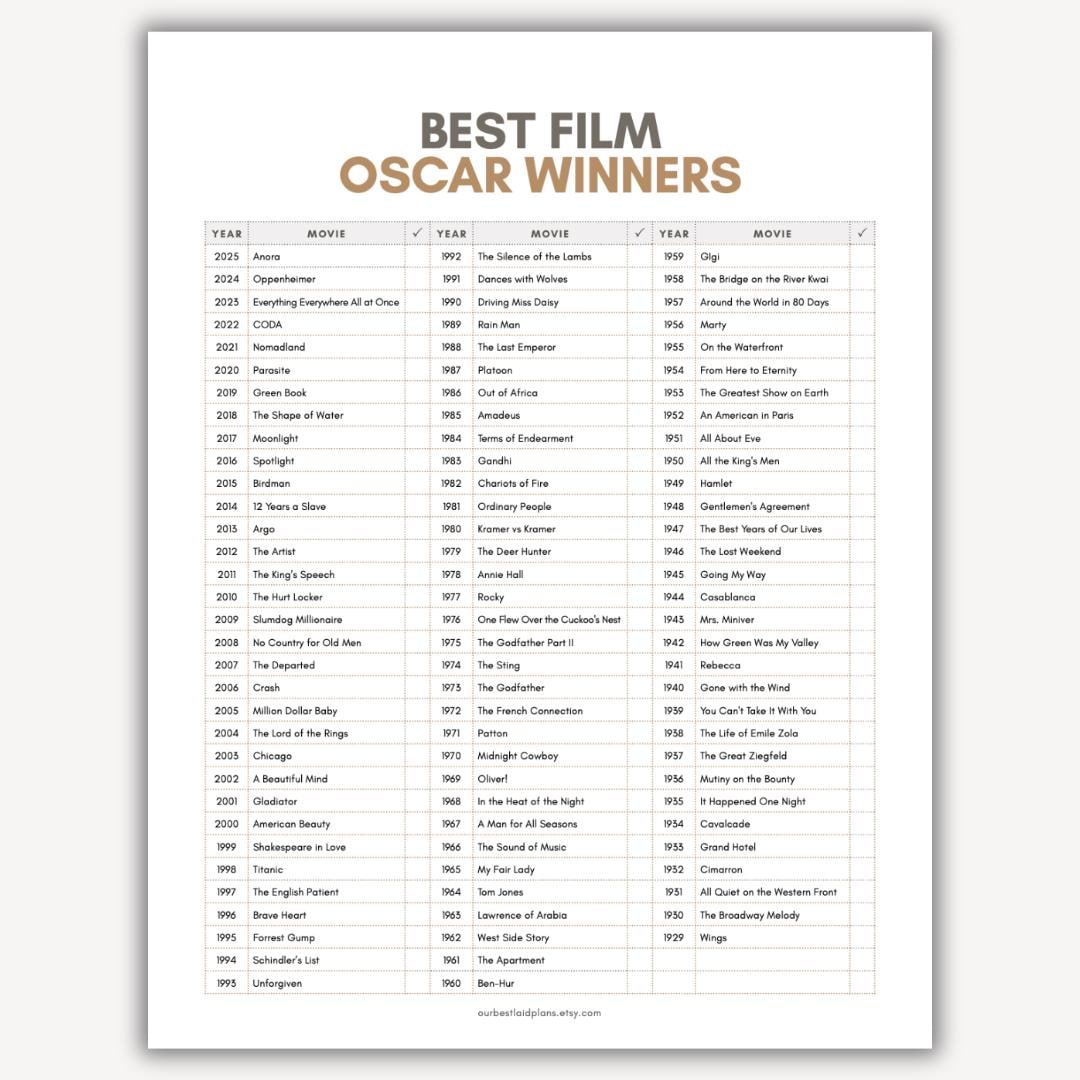
At the 83rd Academy Awards, held on February 27, 2011, The King's Speech won the Oscar for Best Picture. It led a diverse field of ten nominees, including The Social Network, Inception, Black Swan, and Toy Story 3. This ceremony marked the second year the Academy employed an expanded lineup of ten Best Picture finalists.
The Landscape of the 83rd Academy Awards
The 2011 Oscars (honoring films released in 2010) arrived at a pivotal moment in cinema history. Looking back from 2026, this year is often remembered as the definitive clash between "traditional" prestige filmmaking and the "modern" digital age narrative. The 83rd Academy Awards took place at the Kodak Theatre in Hollywood, hosted by the unconventional pairing of James Franco and Anne Hathaway. This hosting choice was an attempt by the Academy to skew toward a younger demographic, though it remains one of the most discussed and analyzed telecasts in the organization's history due to the contrast in the hosts' energy levels.
The expanded Best Picture field, which had been increased from five to ten nominees just one year prior, allowed for a broader range of genres to be recognized. In 2011, this resulted in a list that included a high-concept science fiction blockbuster, an animated masterpiece, a gritty independent drama, and a quintessential British historical biopic. The inclusion of ten films was intended to increase viewership by honoring more popular films, a strategy that arguably reached its peak during this specific ceremony.
Complete List of Best Picture Nominees and Winners
The 2011 Best Picture race featured ten distinct films, each representing a different corner of the industry. While The King's Speech ultimately took home the top prize, the competition was exceptionally fierce.
The King’s Speech (Winner)
Directed by Tom Hooper, The King's Speech tells the story of King George VI (played by Colin Firth) and his struggle to overcome a debilitating stammer with the help of unconventional speech therapist Lionel Logue (Geoffrey Rush). The film was a massive critical and commercial success, praised for its acting and historical accuracy. It resonated with the Academy's older voting block, embodying the "prestige" qualities usually associated with Best Picture winners: historical significance, personal triumph, and impeccable period production design.
The Social Network
Directed by David Fincher and written by Aaron Sorkin, The Social Network was the early front-runner of the season. Chronicling the founding of Facebook and the ensuing legal battles involving Mark Zuckerberg, the film was hailed as the definitive movie of its generation. Even in 2026, its sharp dialogue and Trent Reznor/Atticus Ross score are cited as high-water marks of 21st-century cinema. While it won for Best Adapted Screenplay and Best Editing, its loss in the Best Picture category remains a point of debate among film historians.
Inception
Christopher Nolan’s Inception was the rare "smart blockbuster" that earned both massive box office returns and Academy recognition. A complex heist thriller set within the architecture of the human mind, the film was a technical marvel. It secured nominations across several major categories and dominated the technical awards, winning for Cinematography, Sound Editing, Sound Mixing, and Visual Effects.
Black Swan
Darren Aronofsky’s psychological horror-drama Black Swan provided Natalie Portman with her first Academy Award for Best Actress. The film explores the descent into madness of a professional ballerina as she prepares for the lead role in "Swan Lake." Its visceral imagery and intense performance style made it one of the most talked-about films of the year.
The Fighter
Directed by David O. Russell, The Fighter was a powerhouse in the acting categories. A gritty biographical sports drama about boxer Micky Ward and his half-brother Dicky Eklund, it focused more on dysfunctional family dynamics than traditional boxing tropes. The film successfully campaigned for its supporting cast, winning both Best Supporting Actor (Christian Bale) and Best Supporting Actress (Melissa Leo).
127 Hours
Danny Boyle’s 127 Hours depicted the harrowing true story of Aron Ralston, an outdoorsman who became trapped by a boulder in a Utah canyon. The film was noted for its kinetic editing and James Franco’s central performance, which required him to carry nearly the entire movie alone on screen.
Toy Story 3
It is rare for an animated film to be nominated for Best Picture, but Toy Story 3 achieved this feat following the expansion of the nominee list. The film was a massive emotional conclusion to the original trilogy (at the time), dealing with themes of growing up and loss. It won the Oscar for Best Animated Feature.
True Grit
The Coen Brothers’ reimagining of the classic Western True Grit was a critical darling. It featured a breakout performance by Hailee Steinfeld and a weathered turn by Jeff Bridges. Despite receiving ten nominations, it unfortunately became one of the few films in history to go 0-for-10 on Oscar night.
The Kids Are All Right
Directed by Lisa Cholodenko, this film was a significant win for independent cinema. A domestic dramedy about a same-sex couple whose children seek out their sperm donor, it was praised for its realistic portrayal of modern family life and strong ensemble acting by Annette Bening, Julianne Moore, and Mark Ruffalo.
Winter’s Bone
Winter’s Bone is perhaps most notable for introducing the world to Jennifer Lawrence. This bleak, atmospheric neo-noir set in the Ozarks followed a teenage girl trying to protect her family from eviction while searching for her missing father. It remains a benchmark for independent filmmaking and casting.
Detailed Summary of Major Winners
To understand the 2011 Oscars, one must look beyond just the Best Picture category. The evening was a balance of "sweeps" and distributed honors among the top-tier nominees.
| Category | Winner | Film |
|---|---|---|
| Best Picture | Iain Canning, Emile Sherman, Gareth Unwin | The King's Speech |
| Best Director | Tom Hooper | The King's Speech |
| Best Actor | Colin Firth | The King's Speech |
| Best Actress | Natalie Portman | Black Swan |
| Best Supporting Actor | Christian Bale | The Fighter |
| Best Supporting Actress | Melissa Leo | The Fighter |
| Best Original Screenplay | David Seidler | The King's Speech |
| Best Adapted Screenplay | Aaron Sorkin | The Social Network |
| Best Animated Feature | Lee Unkrich | Toy Story 3 |
| Best Cinematography | Wally Pfister | Inception |
| Best Visual Effects | Paul Franklin, Chris Corbould, Andrew Lockley, Peter Bebb | Inception |
The "Social Network" vs. "King’s Speech" Debate
The 2011 awards season is often defined by the polarization between these two films. The Social Network won nearly every precursor award, including the Golden Globe for Best Motion Picture – Drama. It represented the "now"—the rise of big tech, the isolation of the digital age, and a fast-paced, cynical worldview.
Conversely, The King's Speech represented "tradition." It was an uplifting, classical narrative about the British monarchy and the power of the human voice. As the voting period progressed, the momentum shifted toward The King's Speech, largely due to its victory at the Producers Guild of America (PGA) Awards and the Directors Guild of America (DGA) Awards. For the Academy of 2011, the warmth and traditional craftsmanship of Tom Hooper’s film ultimately outweighed the cold, clinical brilliance of David Fincher’s work. From the perspective of 2026, many critics argue that The Social Network has had a more profound cultural lasting power, whereas The King's Speech is viewed as a high-quality example of the "Oscar bait" era.
Technical Prowess: The Dominance of Inception
While the top categories were a battle between biopics and dramas, the technical categories in 2011 were almost entirely dominated by Christopher Nolan’s Inception. The film was a masterclass in blending practical effects with digital enhancement.
The Academy recognized Inception for its groundbreaking work in Cinematography (Wally Pfister), Sound Mixing, Sound Editing, and Visual Effects. The "hallway fight" sequence, achieved through a massive rotating set rather than purely CGI, became a legendary piece of film production history. These wins highlighted a year where the Academy was willing to reward high-budget genre filmmaking with the same seriousness as period dramas, provided the technical execution was flawless.
Historical Significance of the 83rd Academy Awards
The 2011 Oscars were significant for several reasons that continue to influence the Academy today:
- The Acting "Locks": This year featured several winners who were considered "locks" early in the season. Colin Firth, Natalie Portman, and Christian Bale swept almost every major award leading up to the Oscars, creating a sense of inevitability in the acting categories.
- The Hosting Experiment: The pairing of James Franco and Anne Hathaway is still cited as a cautionary tale in live television production. It led the Academy to return to more traditional, "safe" hosts like Billy Crystal and Ellen DeGeneres in subsequent years.
- The 10-Nominee Rule: This was the second year of the expanded field. Shortly after this ceremony, the Academy tweaked the rules again to allow for a "sliding scale" of between five and ten nominees, a rule that remained until the permanent move back to a fixed ten nominees in 2022.
- Independent Breakthroughs: Films like Winter's Bone and The Kids Are All Right proved that the expanded field could provide a platform for small-budget films that might have been overlooked in the traditional five-slot era.
FAQ
Who hosted the 2011 Oscars?
The 83rd Academy Awards were hosted by actors James Franco and Anne Hathaway. The choice was made to attract a younger audience, though it received mixed-to-negative reviews from critics who felt the chemistry between the two was mismatched.
Which movie won the most Oscars in 2011?
The King's Speech and Inception both won four Academy Awards. The King's Speech won major categories including Best Picture, Best Director, Best Actor, and Best Original Screenplay. Inception swept the technical categories, including Best Cinematography and Best Visual Effects.
Why were there 10 Best Picture nominees in 2011?
The Academy expanded the Best Picture category from five to ten nominees starting in 2009 (for the 2010 ceremony). The goal was to include more popular and diverse films that might otherwise be snubbed, thereby increasing public interest and television ratings for the broadcast.
Did Natalie Portman win an Oscar for Black Swan?
Yes, Natalie Portman won the Academy Award for Best Actress for her portrayal of Nina Sayers in Black Swan. It was her first Oscar win and is widely considered one of the most physically demanding and transformative performances of that decade.
Was The Social Network nominated for Best Picture?
Yes, The Social Network was one of the ten nominees for Best Picture in 2011. While it did not win the top prize, it won three Oscars for Best Adapted Screenplay, Best Original Score, and Best Film Editing.
Verifying Historical Film Data and Results
For those researching the 2011 Academy Awards or seeking to verify specific credits and winners, the primary authority remains the official Academy of Motion Picture Arts and Sciences (AMPAS) database. This archive contains every nomination and win since the inaugural ceremony in 1929. When auditing historical film data, it is important to distinguish between "release year" (2010) and "ceremony year" (2011), as different publications may index them differently. To further explore the impact of these films, the American Film Institute (AFI) provides extensive documentation on the cultural significance of the 2011 nominees, particularly regarding their contribution to the American cinematic canon.