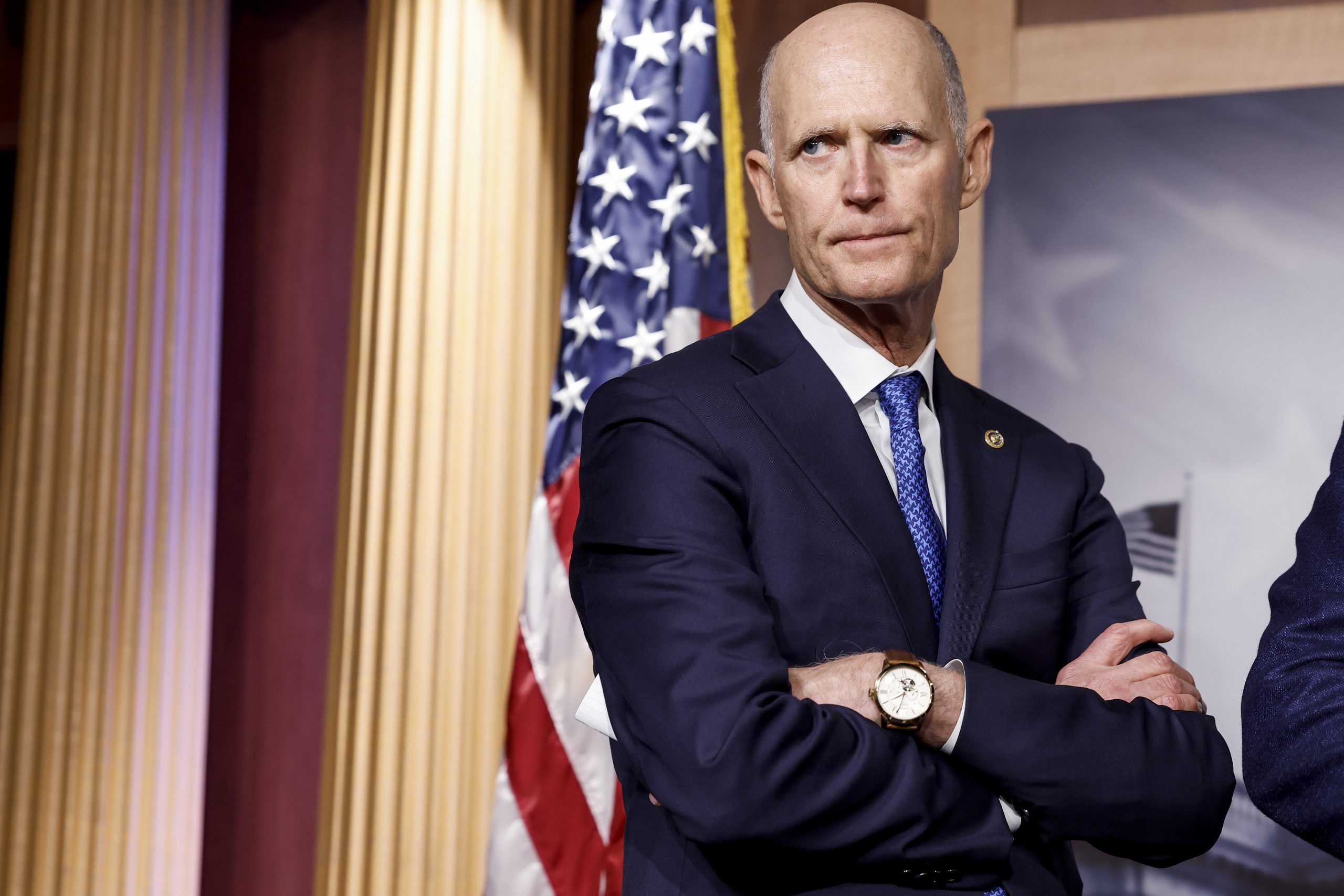
In June 2010, as he transitioned from a private equity investor to a candidate for Governor of Florida, Rick Scott reported a net worth of approximately $218.8 million. This valuation, detailed in his mandatory financial disclosure filings, was primarily driven by his holdings in Richard L. Scott Investments and a significant portfolio of diversified equities and real estate.
The Financial Context of Rick Scott’s 2010 Gubernatorial Run
When Rick Scott entered the Florida political arena in 2010, his financial standing was a central pillar of his identity. Unlike career politicians, Scott marketed himself as a "self-made" outsider whose business acumen, primarily honed at the helm of Columbia/HCA, would translate into effective state management. The 2010 disclosure was the first comprehensive look the public received at the scale of his personal fortune following his departure from the healthcare industry years earlier.
The timing of this disclosure was critical. Florida law requires candidates for statewide office to file a "Full and Public Disclosure of Financial Interests" (Form 6). In 2010, Scott’s filings revealed a man of immense liquid and illiquid wealth, allowing him to bypass traditional fundraising channels. This independence allowed him to spend roughly $73 million of his own money during the 2010 primary and general election cycles, fundamentally altering the campaign landscape.
Understanding his 2010 net worth requires looking beyond the raw number of $218,806,647. It reflects a decade of strategic reinvestment following his 1997 exit from Columbia/HCA. By 2010, his wealth was no longer tied to a single hospital entity but was spread across a sophisticated web of private equity, municipal bonds, and venture capital, managed largely through his personal investment firm.
Detailed Breakdown of Assets in 2010
Rick Scott’s asset portfolio in 2010 was characterized by a high degree of diversification, a hallmark of professional wealth management. The vast majority of his wealth was concentrated in a single entity, which acted as a holding company for various smaller investments. This structure is common among high-net-worth individuals to streamline tax liabilities and legal protections.
Richard L. Scott Investments
The cornerstone of his fortune in 2010 was Richard L. Scott Investments, valued at approximately $154.5 million. This firm operated as a private equity and venture capital vehicle. Through this entity, Scott held stakes in various companies ranging from healthcare technology to manufacturing. Because this was a private entity, the specific internal breakdown of every sub-asset was not always fully transparent in the public summary, though the total valuation was verified through the candidate's financial statements.
Real Estate Holdings
Another significant portion of Scott’s 2010 net worth was tied to high-value real estate. His primary residence in Naples, Florida, was the most prominent of these assets. In 2010, his beachfront mansion was valued at approximately $9.2 million. Beyond its monetary value, the property served as a symbol of his success and a frequent backdrop for political events. Scott also held interests in various other properties, including a home in Montana and smaller investment properties, though these were secondary to the Naples estate.
Equities, Bonds, and Cash
Scott’s 2010 disclosure listed a wide array of liquid assets. He maintained millions of dollars in municipal bonds, which are often favored by wealthy individuals for their tax-exempt interest status. Furthermore, his personal accounts held significant positions in standard market equities. This liquid cushion provided the necessary capital for his massive self-funding effort during the 2010 campaign, allowing him to maintain a constant media presence without waiting for donor contributions.
Earnings and Income Streams Prior to Public Office
In the year leading up to his 2010 run, Rick Scott’s earnings were primarily passive. As a private citizen and investor, his income was not derived from a traditional salary but from the performance of his capital. This distinction is vital for understanding the financial flexibility he possessed compared to his opponents.
Capital Gains and Dividends
The 2010 filings indicated that a substantial portion of Scott’s annual income came from capital gains—the profit realized from the sale of stocks or business interests—and dividends from his equity holdings. For a portfolio valued over $200 million, even a conservative 3% dividend yield would result in over $6 million in annual cash flow. This consistent stream of passive income meant that Scott did not need to liquidate his core assets to live or to fund his political ambitions.
Interest Income
Given his significant holdings in municipal and corporate bonds, interest income formed a reliable "floor" for his annual earnings. In 2010, the interest rates on many high-grade municipal bonds were attractive relative to the post-2008 financial crisis market. Scott’s strategy appeared to be one of capital preservation and steady growth, utilizing interest-bearing instruments to offset the volatility of his private equity ventures.
Consulting and Advisory Roles
While his primary focus was his own investment firm, Scott occasionally engaged in advisory capacities within the healthcare and tech sectors. However, by 2010, these roles were secondary. The vast majority of his reported "earnings" in the 2010 fiscal period were the result of his money working for him, rather than active employment in a traditional CEO role.
Comparison of 2010 Financial Status to Political Peers
To understand the impact of Rick Scott's $218 million net worth, it is helpful to compare his status to other figures in the 2010 Florida political landscape. His wealth dwarfed that of his primary rival, Bill McCollum, and his general election opponent, Alex Sink (who herself was a wealthy former banking executive).
| Category | Rick Scott (2010) | Average Statewide Candidate (Estimated) |
|---|---|---|
| Total Net Worth | ~$218.8 Million | $1 Million - $5 Million |
| Primary Asset | Richard L. Scott Investments ($154M) | Real Estate or Retirement Accounts |
| Real Estate Value | ~$9.2 Million (Naples Home) | $500,000 - $1.5 Million |
| Campaign Funding | Primarily Self-Funded ($73M+) | Donor-Dependent |
| Primary Income Type | Capital Gains/Dividends | Salary/Professional Fees |
The table illustrates the massive disparity between Scott and the traditional political class. This financial "war chest" was a double-edged sword; while it shielded him from the influence of special interests, it also led to accusations from opponents that he was attempting to "buy" the election.
The Role of the Blind Trust
Although the 2010 disclosure was a direct "snapshot" of his assets, Rick Scott’s financial management evolved immediately upon taking office in early 2011. To mitigate perceived conflicts of interest, Scott placed his assets into a blind trust.
A blind trust is a financial arrangement where a public official gives administration of their private business interests to an independent trustee to prevent conflicts of interest. Under this arrangement, the official has no knowledge of how the assets are being managed. While the 2010 filing was transparent and itemized, subsequent years under the blind trust became a point of contention in Florida politics, as critics argued that the trust was not "blind" enough, given that it was managed by long-time business associates. However, for the purposes of the 2010 analysis, the assets were still fully transparent and under his direct or firm-level control.
Legal and Regulatory Framework for 2010 Disclosures
The 2010 disclosure was governed by Article II, Section 8 of the Florida Constitution, often referred to as the "Sunshine Amendment." This law requires candidates to disclose:
- Net Worth: A statement of net worth as of a specific date (typically December 31 of the previous year or a more recent date before filing).
- Assets: Any asset valued over $1,000.
- Liabilities: Any debt over $1,000.
- Income: Sources of income exceeding $1,000.
Scott’s compliance with these rules in 2010 provided the $218.8 million figure. It is important to note that net worth is a calculation of Total Assets minus Total Liabilities. Scott’s liabilities in 2010 were relatively low compared to his assets, consisting mainly of standard business-related debt and lines of credit that were easily covered by his liquid holdings.
Note: This article is for informational purposes and does not constitute financial, legal, or tax advice. Historical financial data is based on public records from the 2010 Florida election cycle.
Frequently Asked Questions
How much did Rick Scott spend on his 2010 campaign?
Rick Scott spent approximately $73 million to $75 million of his own money on his 2010 campaign for Governor. This included a massive television advertising blitz during the primary against Bill McCollum and a sustained effort in the general election against Alex Sink. His ability to self-fund was directly enabled by the $218.8 million net worth he reported that year.
What was the source of Rick Scott's wealth in 2010?
The primary source of his wealth was the growth and eventual sale of his interests in Columbia/HCA, a healthcare company he co-founded. After leaving the company in 1997 with a settlement worth hundreds of millions in stock and cash, he founded Richard L. Scott Investments. By 2010, his wealth had diversified into a broad range of private equity and market investments.
Did Rick Scott have any debt in 2010?
In his 2010 filing, Rick Scott reported minimal personal debt relative to his assets. His liabilities were primarily composed of operational obligations related to his investment firm and standard credit accounts. Because his net worth was calculated at over $218 million, his debt-to-asset ratio was extremely low, indicating high financial stability.
What happened to his net worth after 2010?
After 2010, Rick Scott’s reported net worth fluctuated. In some years, it increased significantly due to the performance of his blind trust and the sale of specific companies under that trust’s umbrella. By the time he ran for the U.S. Senate in 2018, some estimates placed his and his wife's combined net worth significantly higher than the 2010 figure, often cited between $250 million and $500 million depending on the valuation of non-liquid assets.
Was Rick Scott's 2010 disclosure accurate?
The 2010 disclosure was filed under penalty of perjury as required by Florida law. While political opponents frequently questioned the ethics of his business past, the 2010 financial document itself was a formal legal filing. It was audited by the Florida Commission on Ethics as part of the standard candidate vetting process.
Did his wife's assets count toward the $218 million?
In Florida gubernatorial filings, the primary focus is on the candidate's personal assets. However, many of the assets in Richard L. Scott Investments and various family trusts involved his wife, Ann Scott. The $218.8 million figure represented his specific reportable interest, though the total household wealth was likely higher when accounting for his wife’s independent holdings.
Evaluating Historical Financial Disclosures
For researchers or voters looking to understand the impact of personal wealth on public policy, the 2010 Rick Scott filing serves as a primary case study. When reviewing such historical documents, it is essential to verify the specific filing date, as asset valuations can shift rapidly based on market conditions.
To find similar historical data for other candidates or to track the progression of a politician's wealth, the Florida Commission on Ethics maintains an online database of Form 6 filings. These records provide a transparent look at how public service correlates with personal financial growth or contraction over time. Analyzing these documents allows for a deeper understanding of the "businessman-candidate" archetype that has become prevalent in modern American politics.