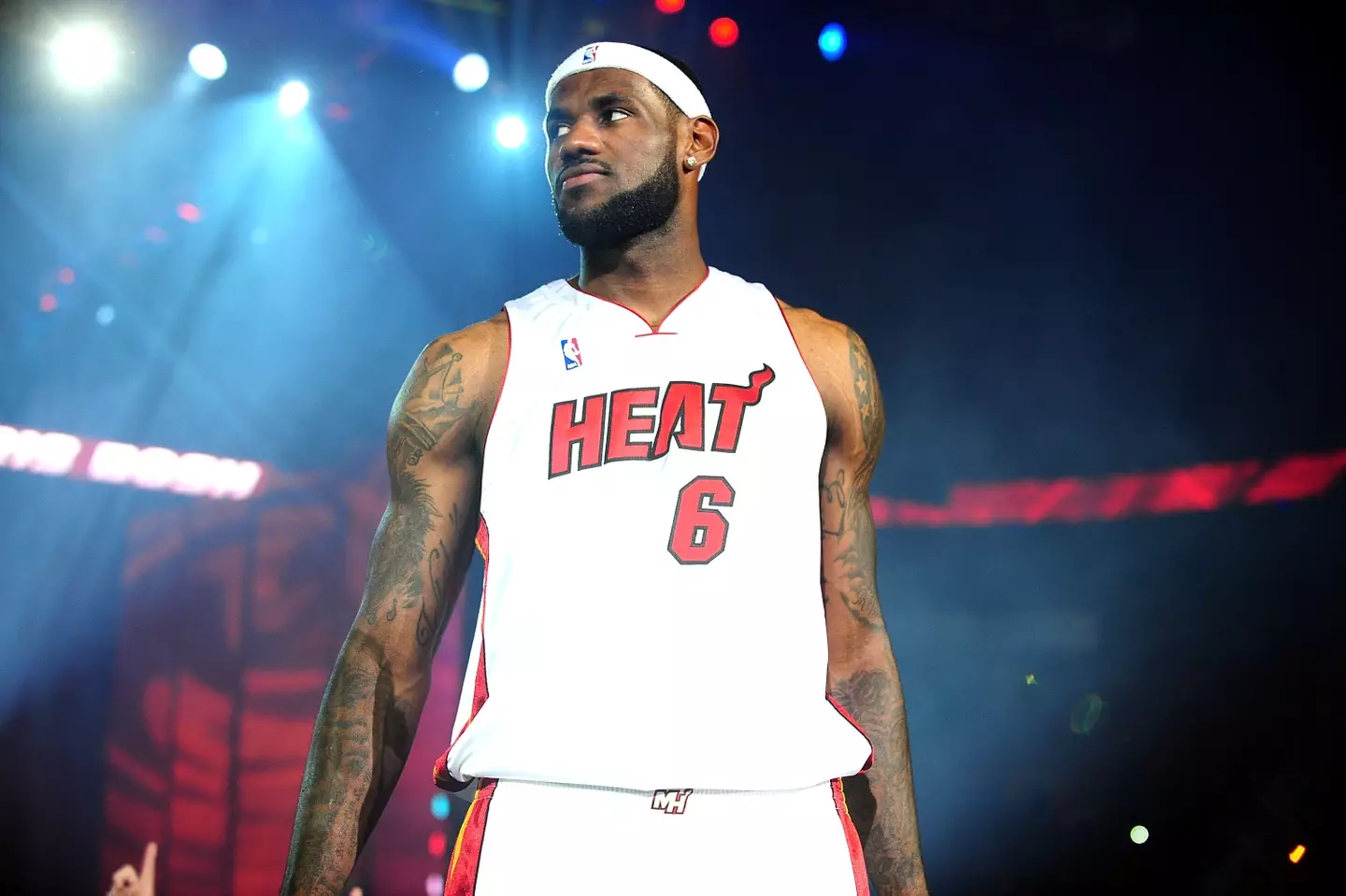
On July 8, 2010, LeBron James announced he would sign with the Miami Heat during a live ESPN special titled "The Decision." This broadcast fundamentally altered the NBA by launching the "Player Empowerment" era, establishing the modern "Superteam" model, and shifting the league’s power dynamics from front offices to superstar players.
The Prelude: Free Agency Like Never Before
The summer of 2010 was the most anticipated free-agency period in professional basketball history. For years, the NBA community had circled this date on the calendar, knowing that LeBron James—the reigning two-time MVP—would see his contract with the Cleveland Cavaliers expire. James was not just a player; he was a global icon who had carried a franchise for seven years without capturing a championship.
The stakes were uniquely high because James wasn't the only superstar available. Dwyane Wade and Chris Bosh were also free agents, creating a mathematical possibility for a seismic shift in the league's hierarchy. Several teams, including the New York Knicks, Chicago Bulls, New Jersey Nets, and Los Angeles Clippers, spent years clearing "salary cap space" specifically to court this class of talent. The recruitment process became a media circus, with billionaire owners and celebrity fans flying to Cleveland to make their pitches.
However, the internal mechanics of the move were far more calculated than the public realized. James, Wade, and Bosh had discussed the possibility of playing together as far back as the 2008 Beijing Olympics. By early July 2010, the "Big Three" had reached a consensus: they would join forces in Miami, a move that required all three to take slight pay cuts to fit under the league’s salary cap.
Anatomy of a Television Event: July 8, 2010
While the decision to join the Heat was a basketball move, the method of announcement was a media experiment. Organized by LeBron’s inner circle—including Maverick Carter—and broadcast by ESPN, "The Decision" was a 75-minute special filmed at a Boys & Girls Club in Greenwich, Connecticut.
The broadcast was heavily criticized for its perceived arrogance and the length of time it took to get to the actual news. For the first 28 minutes, interviewer Jim Gray asked a series of questions that built tension while the world waited. When the moment finally arrived, James uttered the now-infamous line: "In this fall... man, this is very tough... in this fall, I'm going to take my talents to South Beach and join the Miami Heat."
The backlash was instantaneous. Critics argued that James had publicly humiliated his hometown team, the Cleveland Cavaliers, on national television. From a business perspective, however, the event was a massive success. The broadcast generated high Nielsen ratings and raised approximately $2.5 million for the Boys & Girls Clubs of America through advertising revenue. Despite the charitable component, the spectacle cemented a "villain" narrative for James that would follow him for the next several years.
The Immediate Fallout: From Cleveland’s Heartbreak to National Backlash
The reaction in Northeast Ohio was visceral. Within minutes of the announcement, fans in Cleveland were filmed burning James’s jersey in the streets. The sense of betrayal was compounded by the fact that James was a local hero, born and raised in nearby Akron.
Perhaps the most significant reaction came from Cavaliers owner Dan Gilbert. Shortly after the broadcast, Gilbert published an open letter to fans—written in Comic Sans font—in which he called James’s move a "cowardly betrayal" and "manifestation of a shocking lack of loyalty." Gilbert famously guaranteed that the Cavaliers would win a championship before the "self-titled former King" won one. This letter further polarized the situation, with many seeing it as an unprofessional outburst from an owner who viewed players as property, while others saw it as a justified defense of a scorned city.
Nationally, the NBA's "old guard" also weighed in. Legends like Michael Jordan and Magic Johnson expressed that they would never have called up their rivals to form a team, preferring instead to compete against the best to win. This sparked a decade-long debate regarding the "correct" way to build a championship legacy.
The Birth of the "Player Empowerment" Era
"The Decision" served as the catalyst for what we now call the Player Empowerment Era. Before 2010, players generally stayed with the teams that drafted them unless they were traded or were past their prime. LeBron James changed the narrative by asserting that a player’s brand and agency were more important than franchise loyalty.
By orchestrating his move to Miami alongside other stars, James demonstrated that elite players could control their own destinies and the league’s competitive landscape. This shift forced NBA front offices to change how they operated. Teams could no longer rely on the "status quo" to keep their stars; they had to constantly prove they were building a championship-caliber environment. This led to a trend of shorter contracts and more frequent trade requests, as players realized they held the ultimate leverage: the threat of leaving in free agency.
Comparative Analysis: Pre-Decision vs. Post-Decision NBA
The following table illustrates the structural changes in the NBA that can be traced back to the events of July 2010.
| Feature | Pre-2010 Era (Traditional) | Post-2010 Era (Player Empowerment) |
|---|---|---|
| Roster Construction | Built primarily through the draft and long-term development. | Often built through star-led recruitment and free-agency "Superteams." |
| Contract Length | Stars typically signed the longest possible extensions (6-7 years). | Stars often prefer "1+1" or shorter deals to maintain leverage. |
| Media Strategy | Teams and traditional outlets controlled the narrative. | Players use their own platforms and specialized "announcements." |
| Power Dynamics | Franchise owners and GMs held the majority of the leverage. | Elite players exert significant influence over coaching and roster moves. |
| Fan Loyalty | High emphasis on "one-club" players (e.g., Kobe Bryant, Tim Duncan). | Greater acceptance of "mercenary" culture for championship pursuit. |
Long-term Legacy and the Miami Heat Dynasty
While the PR fallout was severe, the basketball results were undeniable. The Miami Heat "Big Three" went on to reach four consecutive NBA Finals from 2011 to 2014, winning two championships (2012 and 2013). This success validated James’s decision in the eyes of many, as he secured the rings that had eluded him in Cleveland.
More importantly, the move allowed James to develop a championship "blueprint." When he eventually returned to Cleveland in 2014, he did so with the knowledge of how to win at the highest level, leading the Cavaliers to their first-ever title in 2016. The "Superteam" model he pioneered was adopted (and arguably perfected) by the Golden State Warriors when they signed Kevin Durant in 2016, leading to one of the most dominant runs in sports history.
From the vantage point of 2026, we see that "The Decision" wasn't just about one player switching teams; it was the moment the NBA became a year-round soap opera driven by player movement and transactional drama as much as the games themselves.
Lessons in Sports Marketing and Personal Branding
"The Decision" remains a case study in how to—and how not to—manage a high-stakes public announcement. LeBron James himself admitted years later that there were things he would have done differently, particularly regarding the optics of the televised special.
- The Importance of Optics: Even if the intent is charitable, the "medium is the message." A 75-minute special felt like an ego trip to many viewers.
- Narrative Control: By not informing the Cavaliers until moments before the show, James allowed the "villain" narrative to take root.
- Modern Evolution: Today’s stars, like Kevin Durant or Kawhi Leonard, often announce their moves via social media or players-only platforms, avoiding the "spectacle" of 2010 while still maintaining total control over the information.
The event taught the sports world that a superstar's brand is an independent entity. LeBron's "LRMR" management team proved that athletes could bypass traditional gatekeepers to engage directly with the public, even if the first attempt was a bumpy one.
Frequently Asked Questions
Why did LeBron James decide to leave Cleveland for Miami in 2010?
LeBron James left Cleveland primarily to win championships. After seven years with the Cavaliers, the team had struggled to surround him with a secondary superstar. Joining Dwyane Wade and Chris Bosh in Miami provided a guaranteed path to title contention that the Cavaliers could not offer at that time.
How much money did "The Decision" raise for charity?
The broadcast raised approximately $2.5 million for the Boys & Girls Clubs of America. Despite the widespread criticism of the show's format, James and his team used the advertising revenue from the special to support youth programs in various cities.
What was the "Big Three" in Miami?
The "Big Three" referred to LeBron James, Dwyane Wade, and Chris Bosh. All three were members of the 2003 NBA Draft class and were in their physical primes when they decided to join the Miami Heat together in the summer of 2010.
How did "The Decision" change the way NBA players approach free agency?
It normalized the idea of players communicating with one another to form "Superteams." Before 2010, the "Superteam" was usually created by a General Manager via trades. After 2010, the players became the primary architects of their own rosters, leading to increased movement and shorter-term contracts.
Did LeBron James ever apologize for "The Decision"?
James has expressed regret over the way the announcement was handled, noting that it could have been done more gracefully. However, he has never apologized for the choice to join the Heat, often citing the championships won in Miami as the ultimate justification for his move.
Navigating the Legacy of the Player Empowerment Era
For modern sports fans and professionals, understanding the 2010 "Decision" is essential for interpreting the current landscape of professional athletics. The event serves as the demarcation point between the "Traditional Era" of franchise-led sports and the "Modern Era" of player-led movements.
To understand today's NBA, one must look back at that night in Greenwich. Whether you view it as a moment of selfishness or a revolutionary act of independence, it remains the single most influential transaction in the history of the league. Moving forward, the lesson remains clear: in the modern sports economy, the talent holds the keys to the kingdom, and how they choose to use that power defines the future of the game.