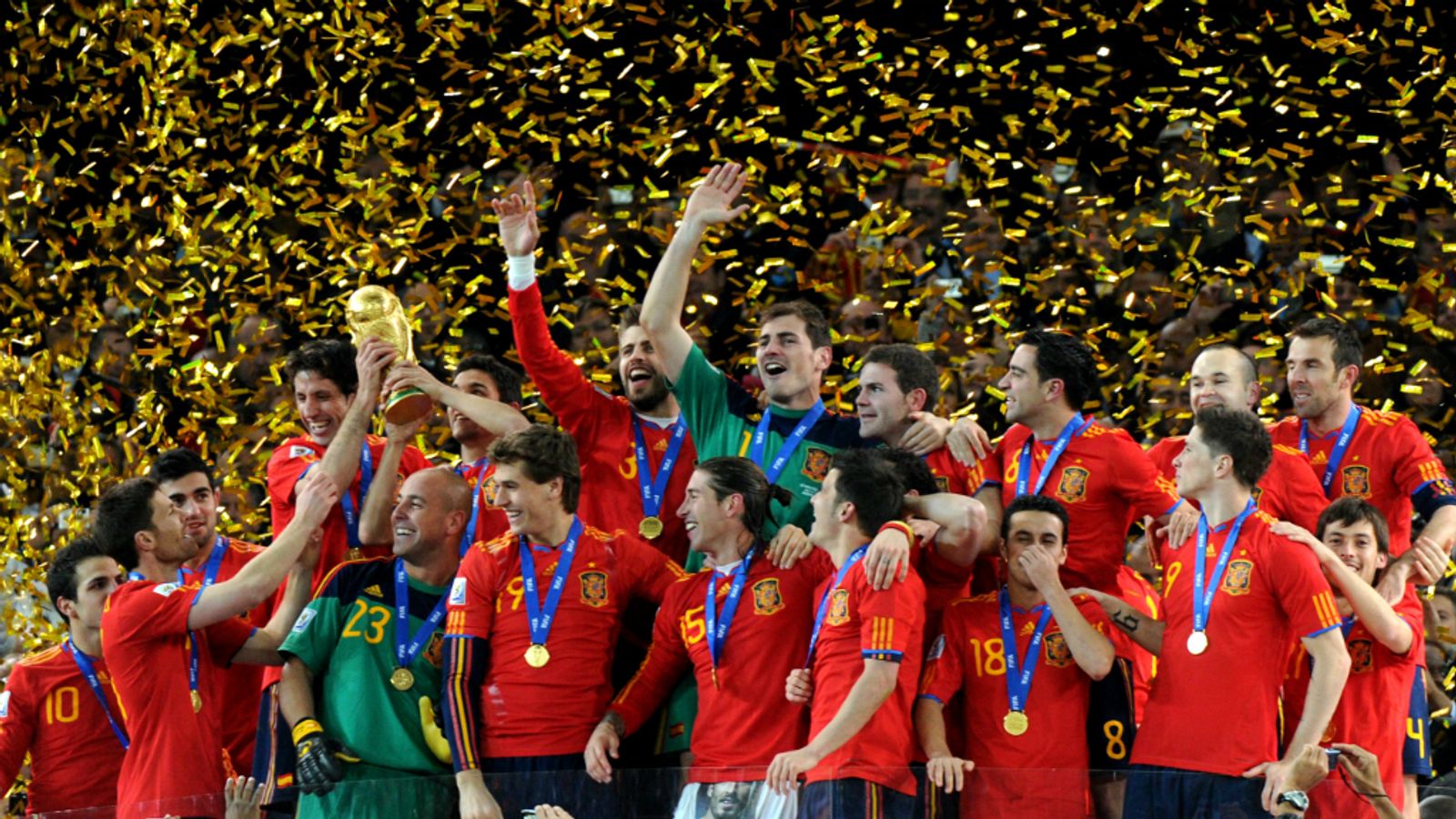
The 2010 FIFA World Cup was the 19th edition of the premier international football tournament, hosted by South Africa from June 11 to July 11, 2010. It marked the first time the event was held on the African continent, concluding with Spain capturing their first-ever title by defeating the Netherlands 1–0 in a dramatic final.
The Historic Selection and Infrastructure of South Africa
The selection of South Africa as the host for the 2010 FIFA World Cup was a milestone in sporting history. Following a rotation policy that was later abandoned, FIFA intended to bring the tournament to Africa. South Africa defeated bids from Morocco and Egypt to secure the rights. This decision was largely seen as a victory for the "Rainbow Nation" and a tribute to the legacy of Nelson Mandela, who made a poignant appearance during the closing ceremony.
Preparing for an event of this magnitude required a massive overhaul of South African infrastructure. The government invested billions of rand into the construction and renovation of ten stadiums across nine cities. Soccer City in Johannesburg (now known as FNB Stadium) was the crown jewel, redesigned to resemble an African pot (the calabash), with a capacity of nearly 95,000. Other notable venues included the Moses Mabhida Stadium in Durban, famous for its grand arch, and the Cape Town Stadium, situated between Table Mountain and the Atlantic Ocean.
Beyond the pitches, the "2010 effect" accelerated public transport projects, such as the Gautrain rapid rail link and the Bus Rapid Transit (BRT) systems in major cities. While the economic long-term viability of these "white elephant" stadiums remains a point of debate in 2026, the immediate impact was a modernized transportation network and a significant boost to South Africa’s international brand as a capable host for mega-events.
Group Stage Surprises and the Fall of Giants
The tournament kicked off with a vibrant opening ceremony and the inaugural match between South Africa and Mexico. Siphiwe Tshabalala’s stunning opening goal for the "Bafana Bafana" remains one of the most iconic moments in South African sports history. However, the group stages were more notable for the unexpected struggles of established European powers.
Italy, the defending champions from 2006, and France, the 2006 runners-up, both failed to progress beyond the group stage. Italy finished bottom of a group containing Paraguay, Slovakia, and New Zealand. France’s campaign was marred by internal strife, including a player strike at their training base in Knysna, which led to a humiliating exit. This vacuum allowed other nations to shine, most notably the South American contingent—Brazil, Argentina, Uruguay, and Chile—all of whom looked dominant in the early rounds.
The 2010 edition also highlighted the rising quality of Asian football, with both Japan and South Korea reaching the Round of 16. Meanwhile, New Zealand achieved the unique distinction of being the only undefeated team in the tournament, despite exiting in the group stage after three draws.
Tactical Evolution: The Era of Tiki-Taka
The 2010 FIFA World Cup solidified the global dominance of "Tiki-taka," a style of play characterized by short passing, maintaining possession, and fluid movement. Spain, under manager Vicente del Bosque, perfected this system. Relying heavily on a core of Barcelona players—including Xavi Hernández, Andrés Iniesta, and Sergio Busquets—Spain controlled the rhythm of every match they played.
Despite losing their opening match 1–0 to Switzerland, Spain did not deviate from their philosophy. They proceeded to win every knockout match with a 1–0 scoreline, demonstrating a defensive solidity that complemented their offensive patience. Their success forced other teams to adapt, leading to a tournament where tactical discipline and midfield control often outweighed individual flair.
Germany, by contrast, introduced a youthful, counter-attacking style that dismantled traditional powerhouses. Led by Thomas Müller and Mesut Özil, the Germans scored four goals against both England and Argentina, signaling a shift toward a more dynamic, high-transition game that would eventually lead them to the title four years later in Brazil.
Technical Specifications and Cultural Symbols
Two technical aspects of the 2010 tournament dominated headlines: the Adidas Jabulani ball and the Vuvuzela.
The Adidas Jabulani
The "Jabulani," which means "to celebrate" in Zulu, was the official match ball. It featured a new "Grip’n’Groove" technology and only eight thermally bonded panels. However, it became one of the most controversial balls in history. Goalkeepers like Iker Casillas and Gianluigi Buffon likened its flight path to a "supermarket ball," claiming it was unpredictable and moved too much in the air. Forwards also struggled with its lightness, often over-hitting long balls. FIFA later acknowledged the criticism, which led to significant design changes for the 2014 "Brazuca."
The Vuvuzela
The soundtrack of the 2010 World Cup was the constant, low-frequency hum of thousands of vuvuzelas. These plastic horns are a staple of South African football culture. While local fans argued they created a unique, intimidating atmosphere, many international viewers and players found the 120-decibel noise distracting. Broadcasters eventually used audio filters to dampen the sound for television audiences, but the vuvuzela remains the most enduring sensory memory of the event.
Key Statistical Performance and Award Winners
The 2010 tournament was a breakthrough for several individual players who would dominate the sport for the next decade.
| Award | Recipient | Nationality | Key Statistic/Reason |
|---|---|---|---|
| Golden Ball (Best Player) | Diego Forlán | Uruguay | 5 goals; led Uruguay to 4th place. |
| Golden Boot (Top Scorer) | Thomas Müller | Germany | 5 goals, 3 assists (won on tie-break). |
| Golden Glove (Best Keeper) | Iker Casillas | Spain | 5 clean sheets; saved a crucial penalty vs Paraguay. |
| Best Young Player | Thomas Müller | Germany | Breakthrough performance at age 20. |
| FIFA Fair Play Trophy | Spain | Spain | Only 8 yellow cards in 7 matches. |
The "Silver Boot" and "Bronze Boot" went to David Villa (Spain) and Wesley Sneijder (Netherlands) respectively, both of whom also finished with five goals but fewer assists than Müller.
The Dramatic Path to the Final
The knockout stages provided some of the most dramatic moments in World Cup history. The quarter-final between Uruguay and Ghana is perhaps the most debated match of the 21st century. In the final minute of extra time, Uruguay's Luis Suárez used his hands to block a goal-bound header from Dominic Adiyiah. Suárez was sent off, but Ghana's Asamoah Gyan missed the resulting penalty. Uruguay eventually won the shootout, denying Ghana the chance to become the first African nation to reach a World Cup semi-final.
In the semi-finals, Spain faced a rampant German side. A powerful header from Carles Puyol secured a 1–0 victory for the Spaniards, while the Netherlands overcame Uruguay 3–2 in a high-scoring affair. This set the stage for a final between two nations who had never won the World Cup before, ensuring a new name would be etched onto the trophy.
The Final: Spain vs. Netherlands
The final, held on July 11, 2010, at Soccer City, was a physically grueling and contentious affair. The Netherlands, under Bert van Marwijk, opted for a robust, aggressive strategy to disrupt Spain's rhythm. This resulted in a record 14 yellow cards being issued by referee Howard Webb, including a red card for Dutch defender John Heitinga in extra time. One of the most infamous moments was Nigel de Jong’s "karate kick" to the chest of Xabi Alonso, which remarkably only resulted in a yellow card.
Despite the physicality, Spain remained composed. Iker Casillas made a legendary foot-save against Arjen Robben in a one-on-one situation that could have changed history. In the 116th minute of extra time, Cesc Fàbregas found Andrés Iniesta inside the box. Iniesta took a touch and rifled the ball into the far corner. His celebration, revealing a shirt dedicated to the late Dani Jarque, became an enduring image of sportsmanship and national pride. Spain held on to win 1–0, becoming the first European team to win a World Cup outside their home continent.
Socio-Economic Impact and the 2026 Perspective
Sixeen years later, the 2010 FIFA World Cup is viewed as a mixed legacy for South Africa. Economically, the massive spending did not yield the immediate "GDP explosion" promised by some consultants. However, the "nation-building" aspect was undeniable. For a month, the country experienced a level of social cohesion and international positivity that transcended its complex political landscape.
In 2026, many of the stadiums are still in use, hosting rugby matches, concerts, and domestic football. The Cape Town Stadium and Soccer City remain premier venues for the South African national teams. The tournament also proved that Africa could host a world-class sporting event, paving the way for Morocco's involvement in hosting the 2030 FIFA World Cup.
Frequently Asked Questions
Who won the 2010 FIFA World Cup?
Spain won the 2010 FIFA World Cup, defeating the Netherlands 1–0 in the final. This was Spain's first World Cup title, and they became the eighth nation to ever win the tournament.
Which player was the top scorer in 2010?
Four players finished with five goals: Thomas Müller (Germany), David Villa (Spain), Wesley Sneijder (Netherlands), and Diego Forlán (Uruguay). Thomas Müller was officially awarded the Golden Boot because he had the most assists (three) among the group.
Why was the 2010 World Cup ball so controversial?
The Adidas Jabulani was criticized for its "knuckleball" effect. Because of its unique surface and reduced number of panels, the ball had less aerodynamic drag, making it move unpredictably at high speeds. This made it particularly difficult for goalkeepers to judge long-range shots.
What was the significance of the vuvuzela?
The vuvuzela is a traditional South African horn that produces a loud, monotone sound. It became a global phenomenon during the tournament, symbolizing the unique energy of African football fans, though it also faced criticism for drowning out stadium chants and commentary.
How did South Africa perform as hosts?
South Africa was eliminated in the group stage, becoming the first host nation in history to fail to reach the second round. Despite this, they finished on a high note by defeating France 2–1 in their final group match and were widely praised for the successful organization of the tournament.
Further Research and Official Archives
For those looking to relive the tournament or analyze the data, the official FIFA website maintains an archive of every match, including play-by-play statistics and video highlights. Researchers interested in the socio-economic data can consult reports from the South African Department of Sport, Arts and Culture, which detail the long-term maintenance and usage of the 2010 infrastructure.