The Games of the XXIX Olympiad in Beijing delivered an unprecedented array of athletic triumphs, dramatic world records, and historic cultural performances that reshaped international sports history. Defining memories from the event include Michael Phelps capturing eight gold medals to shatter a long-standing swimming record and Usain Bolt redefining human speed by sweeping the sprint events in world-record fashion.
The Architectural and Cultural Backdrop of the Beijing Games
Before exploring the athletic achievements, understanding the context of the 2008 Summer Olympics requires examining the massive infrastructure development undertaken by the host city. Beijing transformed its urban landscape to accommodate millions of visitors and athletes, introducing architectural marvels that remain iconic today. The Beijing National Stadium, universally known as the Bird's Nest due to its intricate steel lattice structure, and the Beijing National Aquatics Center, nicknamed the Water Cube for its soap-bubble-inspired ETFE membrane exterior, served as the visual centerpieces of the event.
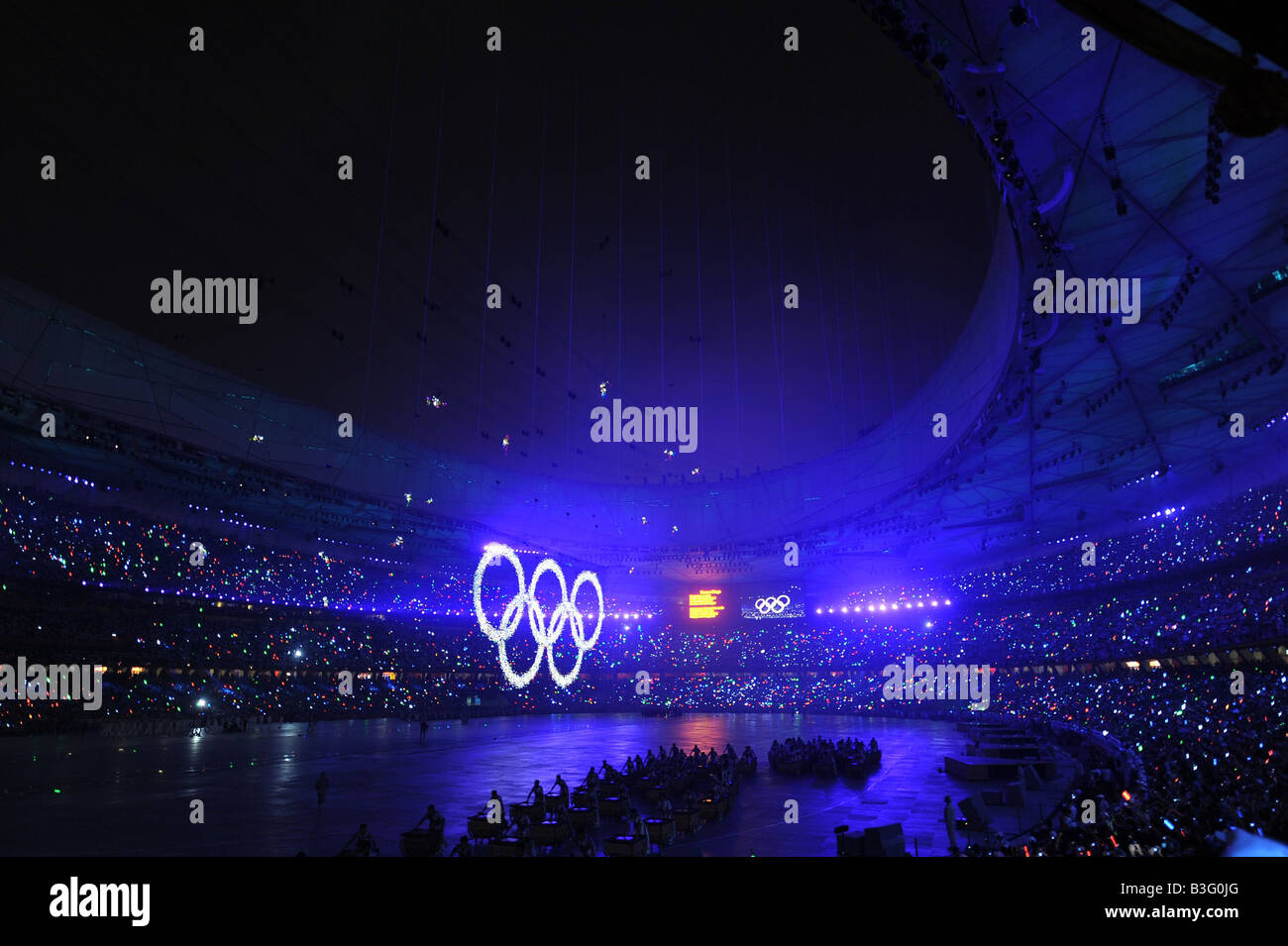
These venues were not merely aesthetic statements; they were engineered to optimize athletic performance. The Water Cube featured innovative acoustic and hydrodynamic designs that minimized wave turbulence, contributing to the staggering number of world records broken in the pool. Meanwhile, the opening and closing ceremonies, directed by renowned Chinese filmmaker Zhang Yimou, showcased thousands of performers in synchronized displays that celebrated China's four great inventions and historical timeline. This grand theatricality set a psychological stage of monumental scale, elevating the stakes for every competing athlete.
Michael Phelps and the Pursuit of Eight Gold Medals
American swimmer Michael Phelps entered the Beijing National Aquatics Center with a singular, daunting objective: surpass Mark Spitz's legendary record of seven gold medals set at the 1972 Munich Olympics. Over nine days of intense competition, Phelps participated in 17 races across individual medley, freestyle, and butterfly events, displaying extraordinary physiological recovery and tactical precision.
The pinnacle of this campaign arrived during the 100-meter butterfly final, where Phelps faced Serbian swimmer Milorad Čavić. In a dramatic finish, Phelps secured victory by a microscopic margin of one-hundredth of a second (0.01s), a result verified frame-by-frame through Omega timing systems. His eighth gold medal came as part of the 4x100-meter medley relay team, cementing his status as the most decorated Olympian of all time.
Below is a summary of the events where Phelps secured gold medals during the 2008 Beijing Olympics:
| Event | Date | Medal Result | Note |
|---|---|---|---|
| 400m Individual Medley | August 10 | Gold | World Record |
| 4x100m Freestyle Relay | August 11 | Gold | World Record |
| 200m Freestyle | August 12 | Gold | World Record |
| 200m Butterfly | August 13 | Gold | World Record |
| 4x200m Freestyle Relay | August 13 | Gold | World Record |
| 200m Individual Medley | August 15 | Gold | World Record |
| 100m Butterfly | August 16 | Gold | Olympic Record |
| 4x100m Medley Relay | August 17 | Gold | World Record |
Usain Bolt and the Redefinition of Human Velocity
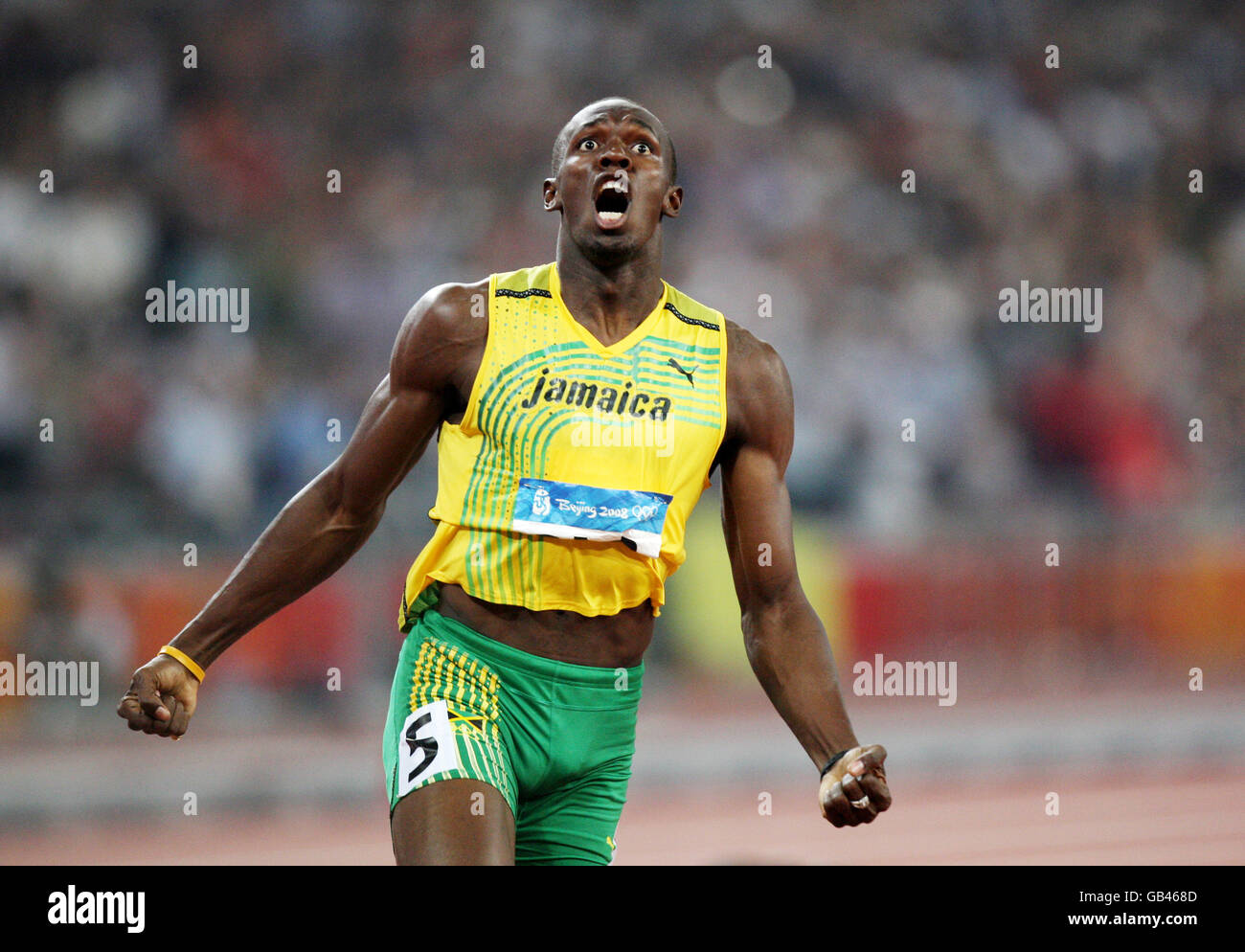
At the Beijing National Stadium, Jamaican sprinter Usain Bolt delivered performances that fundamentally altered track and field history. Entering the Games as an emerging force, Bolt captivated the global audience with his relaxed demeanor before races followed by devastating acceleration on the track.
In the 100-meter dash final, Bolt eased up and beat his chest before crossing the finish line, yet still clocked a world-record time of 9.69 seconds. Days later, he claimed the 200-meter gold medal in 19.30 seconds, breaking Michael Johnson's 1996 mark that many experts considered unbreakable. Bolt completed his triple-gold campaign by anchoring the Jamaican 4x100-meter relay team to another world record time of 37.10 seconds. His combination of height, stride frequency, and explosive power dismantled traditional biomechanical theories regarding sprinting mechanics for taller athletes.
Gymnastics Brilliance and Team Triumphs
The gymnastics competitions at the Beijing National Indoor Stadium offered high-stakes drama, featuring both individual mastery and intense team rivalries. The Chinese gymnastics delegation rebounded from disappointing results in Athens 2004 to dominate the medal table, securing both the men's and women's team gold medals.
For the United States, Nastia Liukin and Shawn Johnson engaged in a fierce internal and international rivalry. Liukin captured the coveted women's individual all-around gold medal through consistent execution and artistic elegance on the balance beam and uneven bars. Meanwhile, the U.S. men's gymnastics team claimed a hard-fought bronze medal, anchored by clear execution from specialists like Jonathan Horton. In trampoline gymnastics, a discipline integrated into the Olympic program since 2000, athletes demonstrated spatial awareness and aerial control that drew widespread public acclaim.
Breakthroughs in Endurance and Field Sports
Beyond the pool and the track, the 2008 Beijing Olympics witnessed historic milestones in endurance and field events that shifted the geopolitical landscape of international sports.
Ethiopian distance runner Kenenisa Bekele demonstrated tactical brilliance by sweeping the men's 5,000-meter and 10,000-meter events, breaking Olympic records in both. In the marathon, Samuel Wanjiru of Kenya secured his country's first-ever gold medal in the event, running a blistering tactical race in oppressive summer humidity to set an Olympic record of 2:06:32.
Field events provided equal drama. In the women's pole vault, Russian athlete Yelena Isinbayeva cleared 5.05 meters to break her own world record, securing her second consecutive Olympic gold medal. The competitions reinforced how technological advancements in equipment paired with rigorous training regimens enabled athletes to push human physiological limits further than ever before.
What Legacy Did the 2008 Beijing Olympics Leave Behind?
How many world records were broken during the 2008 Beijing Olympics?
Athletes established a staggering 85 Olympic records and 43 world records across various sports disciplines during the Beijing Games. Swimming and track cycling accounted for the vast majority of these marks, aided by advanced swimsuit technology and aerodynamic track designs.
Which country topped the overall medal table in Beijing?
China finished at the top of the medal standings for the first time in Olympic history, capturing 48 gold medals, 22 silver medals, and 30 bronze medals, totaling 100 podium finishes across the two-week event.
What technological innovations were introduced during the Beijing broadcast?
The 2008 Beijing Olympics marked a major milestone as the first Games broadcast entirely in high-definition (HD) television format on a global scale. Broadcasters also introduced multi-angle digital streaming platforms, allowing viewers to track specific athletes and events in real time.
How did the environmental conditions impact endurance events?
Beijing implemented extensive traffic restrictions and factory shutdowns prior to the Games to reduce particulate air pollution. While humidity remained a factor for outdoor endurance events like the marathon and road cycling, these mitigation measures ensured safe competing conditions for athletes.
Archiving and Accessing Historical Olympic Footage
For researchers, historians, and sports enthusiasts seeking to review official broadcasts, detailed statistics, and verified multimedia of the 2008 Beijing Olympics, navigating authorized channels is essential. The International Olympic Committee maintains the official Olympics website and archives, which house complete video libraries, athlete profiles, and historical records. Educational institutions and sports researchers can access accredited journals and historical summaries through organizations like the International Society of Olympic Historians (ISOH). When referencing specific competition data, always cross-reference times and scores with official Olympic results databases to ensure historical accuracy.