The 2008 financial crisis was the most severe global economic downturn since the Great Depression, triggered by the collapse of the U.S. housing bubble and the failure of complex mortgage-backed financial instruments. It resulted in catastrophic bank failures, unprecedented government intervention, widespread foreclosures, and a deep global recession that transformed international financial regulation.
The Root Causes: Financial Engineering, Subprime Lending, and Deregulation
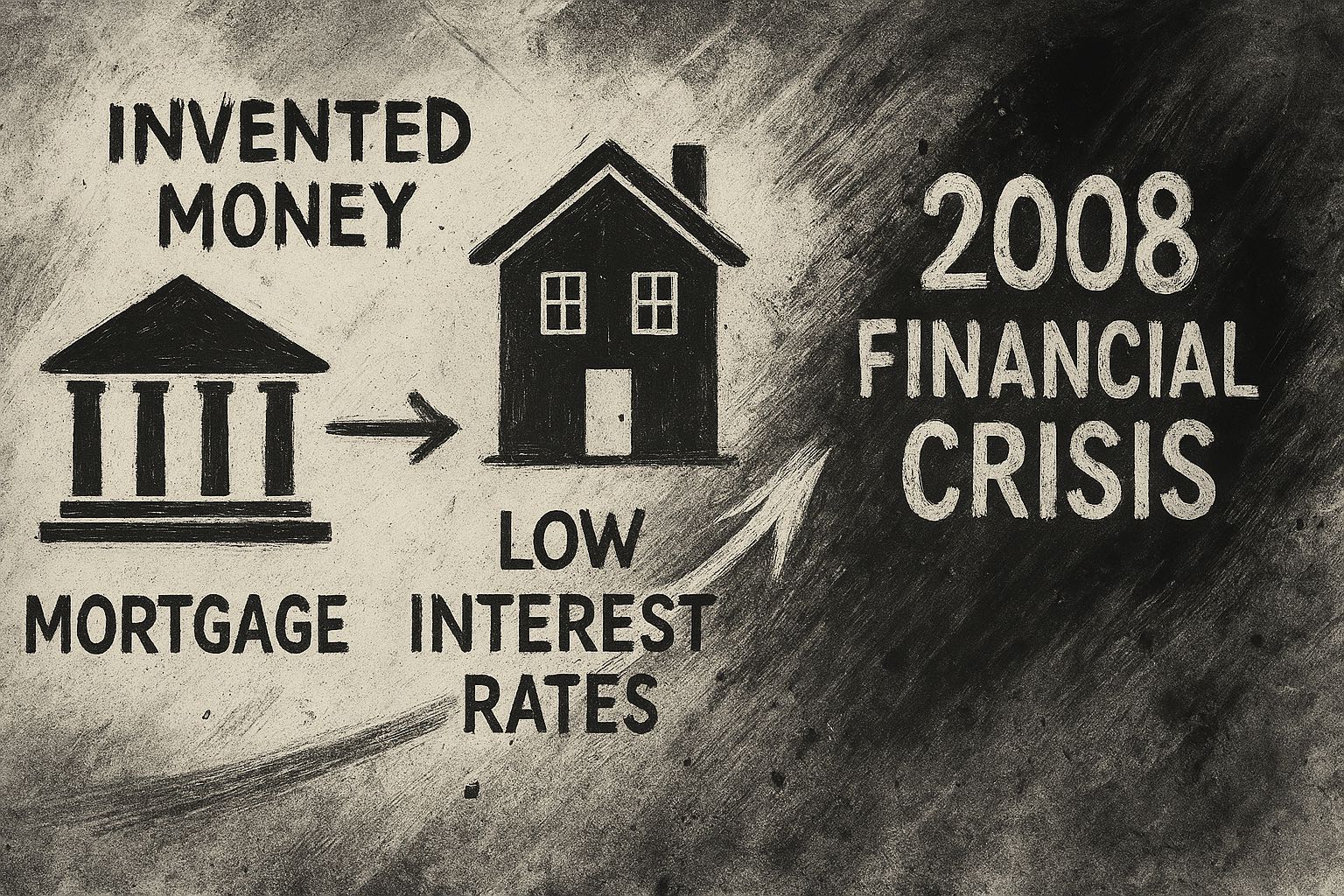
The seeds of the 2008 global financial crisis were sown years before the liquidity freeze of 2007–2008. A combination of prolonged low interest rates, aggressive financial innovation, relaxed lending standards, and inadequate regulatory oversight created a massive asset bubble in the U.S. residential real estate market.
Following the 2001 dot-com crash and the economic slowdown that followed, the Federal Reserve lowered the federal funds rate from 6.5% to 1.0% between 2001 and 2003. This low-interest environment spurred a surging demand for yield among institutional investors worldwide. Wall Street investment banks responded by dramatically expanding the market for structured finance products, particularly Mortgage-Backed Securities (MBS) and Collateralized Debt Obligations (CDOs).
- [Originators]: Unqualified Borrowers (Subprime Mortgages)
- [Securitizers]: Pool Mortgages into MBS & CDOs
- [Rating Agencies]: Assign AAA Ratings to Tranches
- [Investors/Banks]: Purchase High-Yield Structured Debt
- [CDS Insurers]: Sell Swap Protection against Default Risk
To supply mortgages for these securitization pipelines, mortgage originators increasingly relaxed underwriting standards. Lenders abandoned traditional loan-to-value ratios and income verification requirements, promoting non-traditional loan products:
- Subprime Mortgages: Loans extended to borrowers with low credit scores or poor credit histories.
- Adjustable-Rate Mortgages (ARMs): Loans offering low initial "teaser" interest rates that subsequently reset to higher variable rates after a specified timeframe.
- NINJA Loans: Mortgages issued with "No Income, No Job, and No Assets" verification.
Financial institutions packaged thousands of these mortgages into pools, divided the cash flows into risk tiers (tranches), and sold them as investment-grade instruments. Credit rating agencies frequently assigned AAA ratings to senior CDO tranches, relying on faulty mathematical models that assumed national housing prices would not fall simultaneously across all geographic regions.
Simultaneously, the widespread use of Credit Default Swaps (CDS)—unregulated OTC derivative contracts that acted as insurance against bond defaults—allowed institutions like American International Group (AIG) to underwrite billions of dollars in credit risk without maintaining adequate capital reserves against potential payouts.
Timeline of the Collapse: From Housing Bubble to Global Liquidity Freeze
The crisis unwound in distinct phases as housing prices peaked in mid-2006 and began a sharp decline, leaving millions of subprime borrowers with negative equity and unable to refinance their resetting ARMs.
- Mid-2006: U.S. Housing Prices Peak & Subprime Defaults Rise
- Feb-Aug 2007: Mortgage Lenders Collapse; BNP Paribas Freezes Funds
- Mar 2008: Bear Stearns Rescued by JPMorgan Chase / Fed Intervention
- Sept 2008: Fannie/Freddie Nationalized, Lehman Collapse, AIG Bailout
- Oct 2008: TARP Enacted; Global Central Banks Cut Rates & Inject Liquidity
1. Early Warning Signs (Early 2007 – August 2007)
Subprime default rates began climbing sharply in early 2007, causing dozens of independent mortgage lenders to declare bankruptcy. In August 2007, French bank BNP Paribas suspended withdrawals from three investment funds exposed to U.S. subprime debt, stating it could no longer value the underlying assets due to a complete absence of market liquidity. This event marked the onset of the interbank credit freeze, as financial institutions grew fearful of trading with one another due to undisclosed mortgage toxic exposures.
2. The Fall of Bear Stearns (March 2008)
As asset values plunged, short-term funding markets dried up for heavily leveraged investment banks. In March 2008, Bear Stearns, an 85-year-old Wall Street firm heavily exposed to mortgage-backed securities, faced a fatal run on its short-term liquidity. To prevent a systemic domino effect, the Federal Reserve facilitated an emergency acquisition of Bear Stearns by JPMorgan Chase, providing a $29 billion financial backstop.
3. The Peak of Systemic Failure (September 2008)
September 2008 witnessed the most intense failure of financial infrastructure in modern history:
- September 7, 2008: The U.S. government placed government-sponsored enterprises (GSEs) Fannie Mae and Freddie Mac into conservatorship under the Federal Housing Finance Agency (FHFA), guaranteeing nearly $5 trillion in residential mortgage obligations.
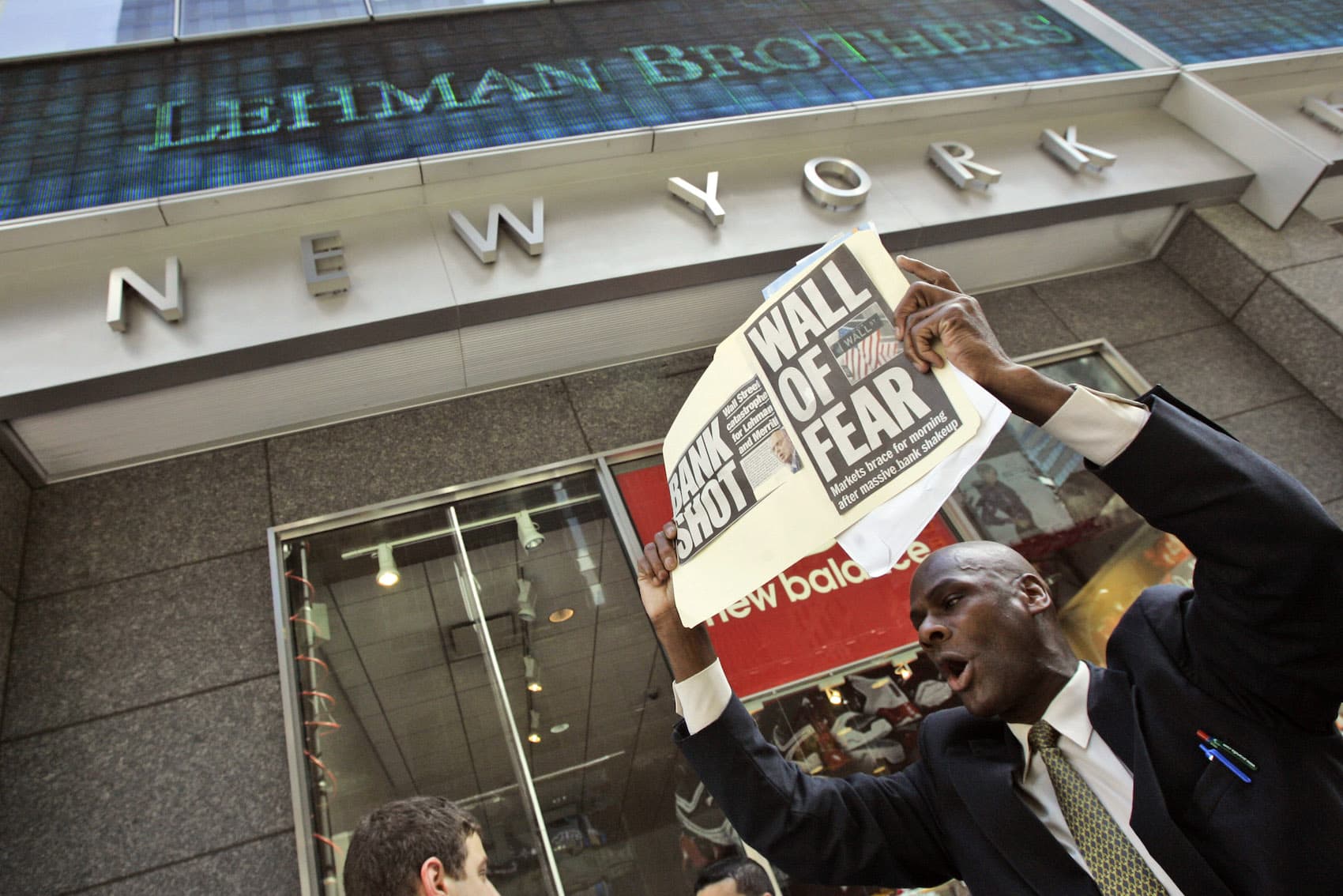
- September 15, 2008: Lehman Brothers filed for Chapter 11 bankruptcy after private buyers pulled out and federal authorities declined to provide a taxpayer bailout. Lehman’s failure triggered a panic throughout the global financial architecture.
- September 16, 2008: The Reserve Primary Fund, a prominent money market mutual fund, "broke the buck" (its net asset value fell below $1.00 per share) due to its holdings of Lehman paper, sparking a run on the short-term commercial paper market. On the same day, the Federal Reserve extended an emergency $85 billion credit facility to rescue AIG from impending insolvency caused by its CDS exposure.
- September 25, 2008: Washington Mutual was seized by the FDIC, becoming the largest bank failure in U.S. history.
Quantitative Impact: Macroeconomic Metrics of the Great Recession
The global financial system experienced severe contraction during the peak of the crisis. Below is a comparative overview of key economic and financial indicators before, during, and after the crisis period.
| Metric / Indicator | Pre-Crisis Baseline (2005–2006) | Peak Crisis Level (2008–2009) | Post-Crisis Policy Baseline |
|---|---|---|---|
| U.S. Unemployment Rate | 4.4% (October 2006) | 10.0% (October 2009) | Peak reached decade-high levels before slow decade-long recovery |
| S&P 500 Index Peak-to-Trough | ~1,565 (October 2007) | 676.53 (March 2009) | Experienced a ~56.8% market drop |
| Federal Funds Rate | 5.25% (June 2006) | 0.00% – 0.25% (December 2008) | Zero-bound interest rate regime maintained for years |
| Fed Balance Sheet Size | ~$870 Billion (Early 2007) | ~$2.2 Trillion (Late 2008) | Expanded rapidly via Emergency Credit Facilities & QE |
| U.S. Housing Prices (Case-Shiller) | All-time high (July 2006) | ~33% drop from peak (2009–2012) | Trillions of dollars in household equity liquidated |
| TARP Authorization | N/A | $700 Billion (Reduced to $475B by Dodd-Frank) | Administered by U.S. Department of the Treasury |
Government Policy Responses: Emergency Interventions and Dodd-Frank
To stop total economic collapse, governments and central banks deployed unprecedented fiscal and monetary measures.
Fiscal Stabilization and TARP
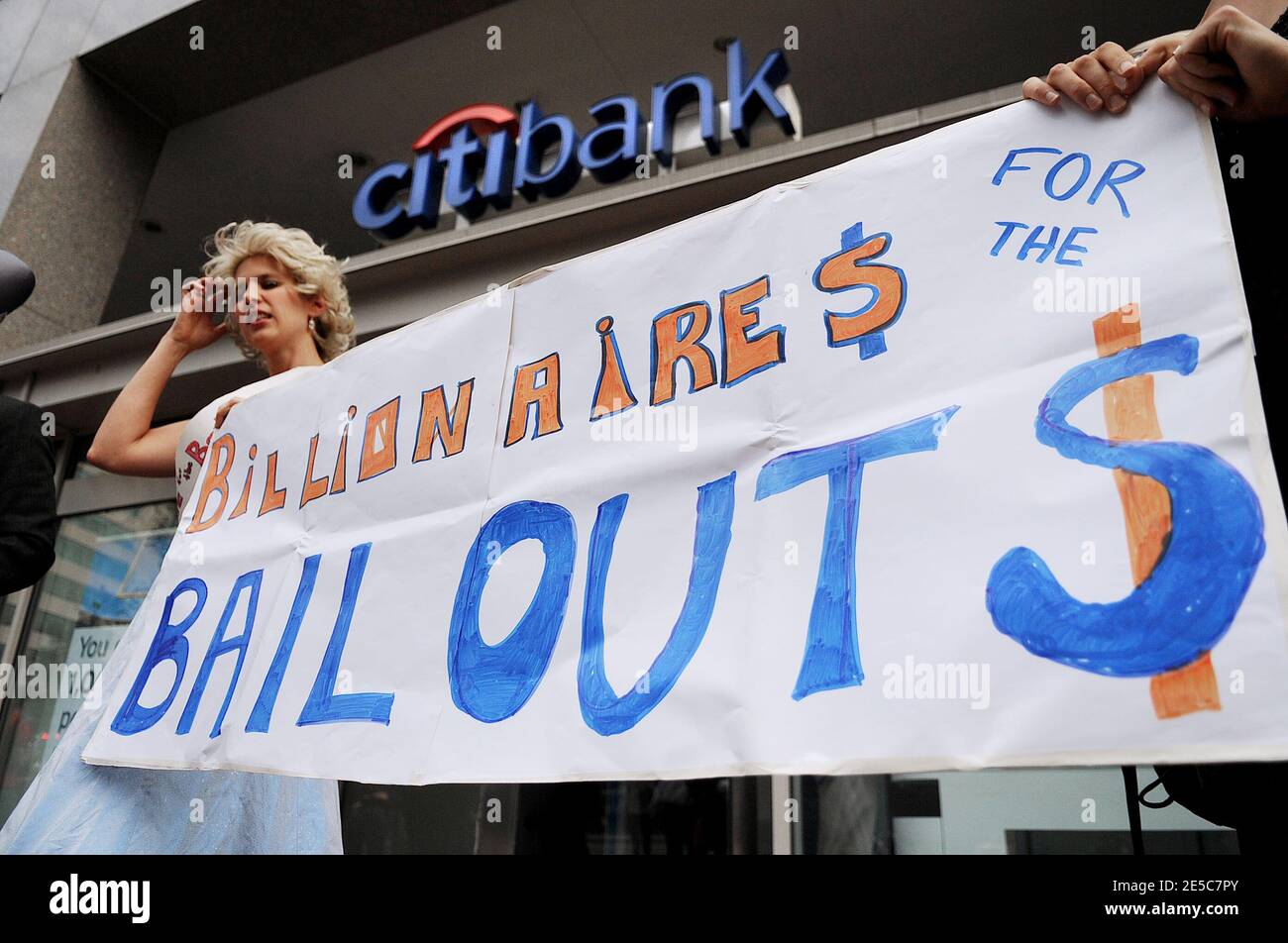
In October 2008, Congress passed the Emergency Economic Stabilization Act, creating the Troubled Asset Relief Program (TARP). TARP granted the U.S. Department of the Treasury the power to purchase toxic assets and inject capital directly into major U.S. banks through preferred stock purchases. This direct recapitalization stabilized major systemically important financial institutions (SIFIs).
Unconventional Monetary Policy
The Federal Reserve, led by Chairman Ben Bernanke, slashed short-term interest rates to zero and launched Quantitative Easing (QE)—large-scale asset purchases of U.S. Treasury securities and agency mortgage-backed securities to lower long-term interest rates and restore market liquidity. Additionally, emergency liquidity facilities were activated under Section 13(3) of the Federal Reserve Act to support money market funds, primary dealers, and commercial paper issuers.
Monetary Response Overview:
- Zero-Interest Rate Policy (ZIRP): Lowered Fed Funds Rate to 0.00%-0.25%
- Quantitative Easing (QE): Asset Purchases (Treasuries & Agency MBS)
- Section 13(3) Facilities: Emergency Credit Facilities for Non-Banks
The Dodd-Frank Wall Street Reform Act
Signed into law in July 2010, the Dodd-Frank Act represented the most sweeping overhaul of financial regulation in the U.S. since the 1930s. Key statutory mechanisms included:
- Financial Stability Oversight Council (FSOC): Established to monitor systemic risk across the financial system and designate non-bank institutions as SIFIs.
- Volcker Rule: Restricted commercial banks from engaging in proprietary trading and limited their investments in hedge funds and private equity.
- Consumer Financial Protection Bureau (CFPB): Created an independent federal entity tasked with protecting consumers from abusive financial practices in mortgages, credit cards, and consumer loans.
- Derivatives Oversight: Required standardized over-the-counter derivatives to be cleared through central clearinghouses and traded on regulated exchanges to eliminate counterparty opacity.
- Enhanced Capital and Liquidity Requirements: Mandated formal annual stress testing—such as the Comprehensive Capital Analysis and Review (CCAR)—and imposed stricter leverage limits on major institutions.
At an international level, the Basel Committee on Banking Supervision introduced Basel III, increasing common equity tier 1 (CET1) capital requirements and adding new liquidity risk frameworks, including the Liquidity Coverage Ratio (LCR) and the Net Stable Funding Ratio (NSFR).
Long-Term Economic and Regulatory Consequences
The structural changes enacted after 2008 redesigned global financial markets and macro-prudential governance for decades to come.
- [Pre-Crisis Architecture]
- High Leverage & Unregulated Derivatives
- [2008 Financial Crisis]
- Liquidity Freeze, Systemic Contagion & Bailouts
- [Modern Regulatory Environment (Post-2010)]
- Basel III & Dodd-Frank: Higher CET1 Capital
- Central Bank QE Policies: Expanded Balance Sheets
- Orderly Resolution: Living Wills Framework
Shift to Macroprudential Regulation
Before the crisis, microprudential regulation dominated: regulators analyzed individual bank balance sheets in isolation. Post-2008 policy pivoted to macroprudential oversight, focusing on interconnectedness, counterparty risk, and systemic balance-sheet contagion across shadow banking networks.
Central Bank Balance Sheet Expansion
Central bank interventions redefined the role of central monetary authorities. Massive balance sheet expansion through Quantitative Easing became a standard central bank tool during crisis periods, dramatically altering fixed-income asset markets, real estate yields, and global capital distribution.
Resolution Frameworks and "Living Wills"
To eliminate "too big to fail" moral hazard, Dodd-Frank mandated that large banking organizations submit annual resolution plans, known as "living wills." These filings map out how an institution can be safely wound down under Title 11 Bankruptcy without requiring taxpayer-funded intervention or disrupting the broader financial system.
Frequently Asked Questions
What triggered the 2008 financial crisis?
The primary catalyst was the burst of the U.S. housing bubble coupled with high rates of default on subprime mortgages. These defaults caused collateralized mortgage securities and derivative products (such as CDOs) held by major financial institutions to rapidly lose value, leading to severe institutional insolvency and an interbank credit freeze.
Why was the failure of Lehman Brothers so significant?
Lehman Brothers was a major counterparty across global money markets, short-term commercial paper, and derivatives contracts. When it entered bankruptcy without an explicit government bailout, market trust collapsed overnight. Financial institutions ceased lending to each other, resulting in an acute systemic liquidity crisis that spread globally.
What is the difference between a subprime mortgage and a prime mortgage?
A prime mortgage is issued to a borrower with a strong credit history, reliable income verification, and a low loan-to-value ratio. A subprime mortgage is granted to a higher-risk borrower with poor credit scores or unstable finances, historically featuring higher interest rates and variable rate structures to compensate the lender for elevated default risk.
What was the main purpose of the Dodd-Frank Act?
The Dodd-Frank Act was designed to prevent future financial crises by addressing systemic risk, ending taxpayer bailouts of "too big to fail" institutions, increasing financial transparency for derivatives markets, and protecting consumers from deceptive lending practices.
How did Quantitative Easing (QE) help stabilize the economy?
Through Quantitative Easing, central banks purchased massive quantities of government bonds and agency mortgage-backed securities from the open market. This injected monetary liquidity into the banking system, pushed down long-term interest rates, encouraged private borrowing and investment, and stabilized declining asset prices.
Strategic Takeaways for Institutional Risk Management
The structural vulnerabilities exposed during 2008 demonstrate that financial institutions must prioritize comprehensive liquidity monitoring and systemic risk controls alongside simple regulatory capital compliance.
Financial analysts, risk managers, and corporate treasurers should integrate the following principles into their risk management practices:
- Incorporate Stress Testing Beyond Historical Baselines: Quantitative risk models built solely on short historical data windows frequently fail during unprecedented market shocks. Risk models must run scenario analyses that incorporate simultaneous drops in asset liquidity, sharp spikes in default correlations, and abrupt credit freeze events.
- Monitor Counterparty Exposure Rigorously: Solvency on paper does not guarantee operational liquidity. Organizations must maintain full visibility over derivative counterparty exposures, collateral haircut requirements, and short-term debt rollover dependencies.
- Account for Shadow Banking Vulnerabilities: Non-bank financial intermediaries—such as hedge funds, private credit vehicles, and money market funds—operate with different regulatory constraints than commercial banks. Risk frameworks must evaluate secondary exposures to non-bank entities that rely on repo-market liquidity.
Professional Limitation: This historical analysis is provided strictly for educational and analytical purposes and does not constitute formal financial, investment, accounting, or legal advice. Readers evaluating specific asset portfolios or legal compliance obligations should consult qualified financial advisors, legal counsel, or regulatory specialists.